
Why Homeowners Choose Cover Strips
Over 60% of homeowners delay renovation projects because they dread the mess and expense of removing old tile baseboards. Chipping away deteriorating grout, hauling away debris, and dealing with months of dust clouds can transform a simple refresh into a nightmare scenario. The traditional demolition route demands expensive contractors, extended timelines, and disruption to daily life—all for what should be a straightforward aesthetic upgrade.
The Abdeckleiste Fliesensockel Dahlewitz 19×96 RAL 9016 from Germany’s trusted Leistenhammer brand solves this exact problem by sliding over existing tile skirting without demolition, dust, or structural disruption. This elegant white cover strip delivers professional results in days rather than weeks, letting homeowners reclaim their spaces without the construction chaos. The product has earned consistent top ratings across Europe, becoming the go-to choice for both DIY enthusiasts and renovation professionals seeking efficient, cost-effective solutions.
This guide covers everything you need to know about how this elegant white cover strip works, its technical specifications, installation best practices, real cost comparisons, and why it’s earned such strong recognition. You’ll understand exactly how a simple MDF profile can transform a room’s appearance while saving thousands in labor and demolition fees.
Explore the Abdeckleiste Fliesensockel Dahlewitz RAL 9016 on the official Leistenhammer website.
Why Tile Baseboards Need Covering
Common problems with aging Fliesensockel
Tile baseboards that once looked crisp and clean inevitably show their age. Discoloration develops from daily exposure to moisture, cleaning chemicals, and foot traffic. Grout lines deteriorate, becoming brittle and stained. Outdated color choices—beige, cream, or yellowed white—clash with contemporary interior design trends. Even well-maintained tile skirting can feel dated simply because styles have evolved. What looked acceptable five years ago now drags down an otherwise modern room’s aesthetic.
The real problem goes beyond appearance. Damaged grout creates pockets where moisture and mold can develop, especially in bathrooms and kitchens. Cracked or missing tiles become safety hazards. Attempting piecemeal repairs often looks worse than the original installation, creating a patchy, unfinished appearance.
The traditional demolition approach
Removing old tile baseboards involves labor-intensive work. Contractors must chip away tiles and grout using pneumatic tools, creating clouds of silica dust—a serious health concern that requires protective equipment and extended ventilation. The removal process alone costs €500-€1,500 depending on the linear meters involved. After removal comes disposal fees, then surface preparation, then installation of new tiles or baseboards. Material costs pile up quickly.
The timeline stretches across weeks. Homeowners endure blocked access to rooms, constant noise, and constant cleanup. Professional contractors charge premium rates for this messy, dangerous work. Many homeowners rightfully look at the total expense and disruption, then postpone the project indefinitely.
How cover strips eliminate the need for messy tile removal
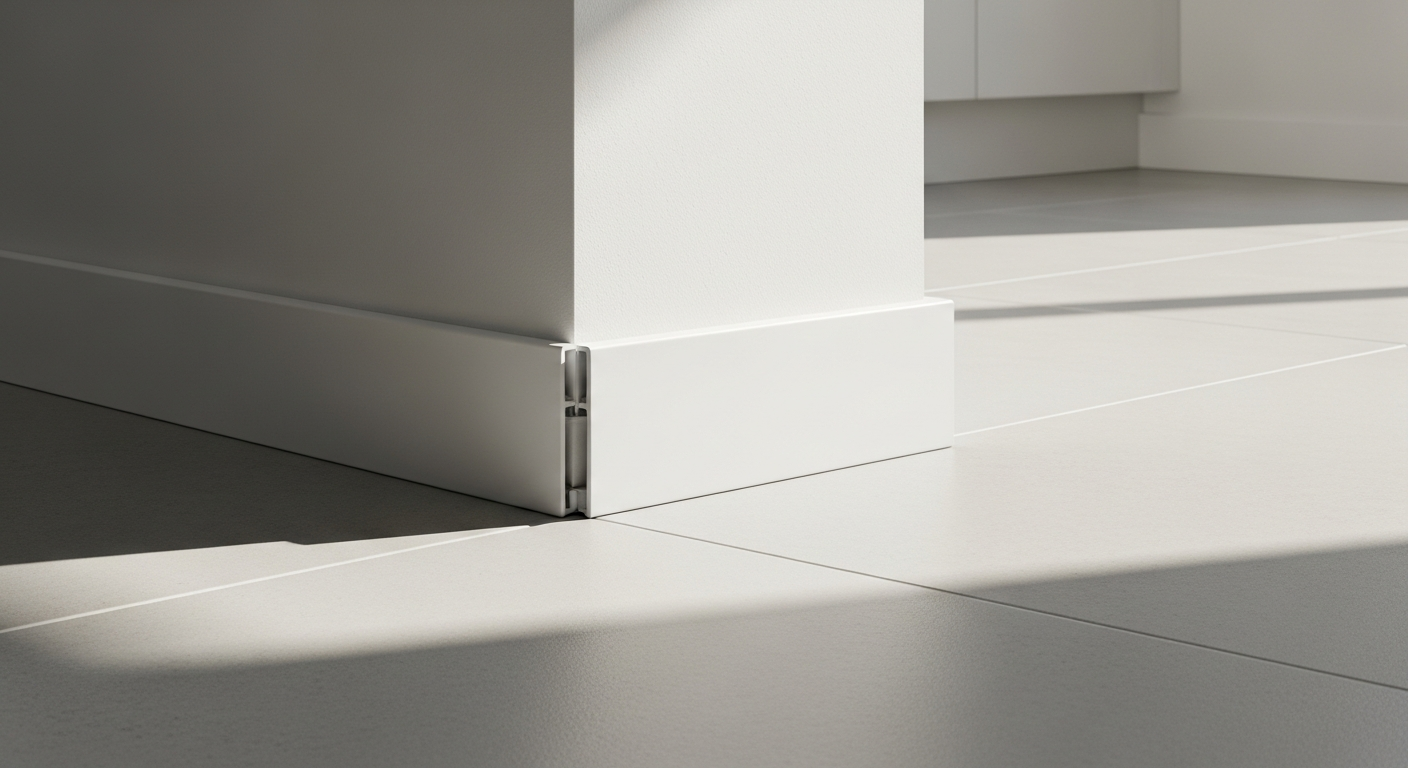
Cover strips operate on an elegant principle: you don’t remove the problem, you cover it. The Abdeckleiste Fliesensockel Dahlewitz slides directly over existing tile baseboards, creating a seamless transition between floor and wall. No demolition means no dust, no disposal costs, no structural work. No labor-intensive removal means installation happens in hours rather than weeks.
This approach preserves the original baseboard while transforming the room’s appearance. It eliminates health risks from silica dust. It avoids damage to surrounding walls or flooring. Most importantly, it delivers professional results at a fraction of traditional renovation costs.
Technical Specifications & Material Quality
MDF composition: stability, moisture resistance, and longevity
The Abdeckleiste Fliesensockel Dahlewitz uses medium-density fiberboard (MDF), a engineered material created by binding wood fibers with resin under heat and pressure. This composition creates several practical advantages. MDF remains highly stable—it resists warping and swelling better than solid wood. It has superior dimensional consistency, meaning each unit performs identically. The material’s density provides excellent durability for baseboards that experience regular contact and vibration from foot traffic.
The foil-wrapped surface adds moisture resistance, critical in bathrooms and kitchens where humidity levels fluctuate constantly. This protective layer prevents water absorption and extends the product’s lifespan. Properly installed, this baseboard cover maintains its integrity for 3-5 years or longer, with many users reporting excellent performance well beyond that range.
Dimensions explained: 19mm thickness and 96mm height coverage ratios
The 19mm thickness provides substantial covering capacity without appearing bulky. This measurement equals roughly three-quarters of an inch—substantial enough to hide imperfections in existing tile baseboards while maintaining visual proportions with standard door frames and molding. The thickness ensures the product sits securely against walls without requiring excessive fastening.
The 96mm height represents the vertical coverage, approximately 3.75 inches. This dimension accommodates most standard residential tile baseboards perfectly. The height is tall enough to conceal typical tile skirting while remaining proportionate to room dimensions. This measurement works equally well in bathrooms, kitchens, hallways, and living spaces—the standard 96mm height rarely requires custom adjustment.
RAL 9016 white finish: color consistency, neutrality, and design compatibility
RAL 9016 represents a pure, neutral white that serves as the industry standard for architectural elements. This specific white shade differs from off-whites or cream tones—it’s a crisp, clean white that complements contemporary design while remaining compatible with traditional interiors. The foil-wrapped surface ensures consistent color across every unit, with no variation between production batches.
This standardized white becomes a blank canvas for interior design. It works as a subtle background element in minimalist spaces, a bright accent in Scandinavian interiors, and a neutral foundation in modern kitchens. The consistency of RAL 9016 means you can order additional lengths months later and achieve perfect color matching, ensuring repairs or extensions blend seamlessly.
Installation Process & DIY Feasibility
Pre-installation assessment: measuring existing tile baseboards accurately
Success begins with precise measurement. Examine the existing tile baseboard carefully, noting its full height and any irregularities in the wall surface. Use a metal measuring tape to record the vertical dimension at multiple points—walls often contain minor variations. Note areas where tile damage or grout deterioration creates surface inconsistencies that the new cover must bridge.
Measure the total linear distance you plan to cover, rounding up slightly to account for corners and transitions. Calculate the number of standard 2.5-meter lengths required. Check for corners, doorways, and transitions where trim pieces may become necessary. Photograph existing conditions, noting any protruding elements, electrical outlets, or architectural features that require special consideration.
Surface preparation: cleaning, priming, and adhesive selection
Clean the entire surface with a degreaser and cloth, removing dust, grime, and soap residue. Any contamination prevents adhesive from bonding properly. Allow the surface to dry completely—moisture undermines even premium adhesives. For textured or irregular surfaces, sand lightly to create a smoother profile.
Priming isn’t always necessary with modern foil-wrapped MDF, but applying a primer to the back of the cover strip enhances adhesion. For permanent installation, quality construction adhesive designed for MDF performs excellently. Some installers prefer mechanical fastening with finish nails at strategic intervals, particularly in high-traffic areas like kitchens. Combination approaches—adhesive plus occasional fasteners—provide maximum security.
Step-by-step installation methodology for different room types
Begin at an inconspicuous corner, typically behind a door or in a less-visible transition area. Apply adhesive to the back of the cover strip in a continuous or pattern of dabs, ensuring adequate coverage without excessive squeeze-out. Press the cover firmly against the existing baseboard, maintaining consistent contact along the entire length.
For longer runs, work in sections, allowing adhesive to set slightly between sections rather than completing an entire room in one motion. Use a level to verify the strip remains straight—walls often slope imperceptibly, and visual alignment matters more than absolute level. At corners, cut at 45-degree angles for seamless transitions, or use corner trim pieces if available.
In bathrooms and kitchens, pay particular attention to areas around fixtures where splash and humidity concentration occurs. Ensure adhesive coverage is complete and fasteners are secure in these high-moisture zones. Allow 24 hours for adhesive to cure fully before allowing the room to experience water exposure or normal use.
Cost-Benefit Analysis Against Traditional Renovation
Unit pricing: €17.22 per standard 2.5-meter length breakdown
At €17.22 per 2.5-meter length, the material cost for a typical 10-meter bathroom or kitchen baseboard reaches approximately €69. Compare this to the €500-€1,500 you’d spend on professional tile removal alone, before accounting for new materials or installation labor. Even adding adhesive, fasteners, and tools keeps total material costs under €150 for most projects.
Longer runs in hallways or open-plan living areas requiring 40-50 meters of coverage still cost only €275-€350 in materials. Scale this against professional renovation quotes for the same footage—€3,000-€8,000 becomes the typical range when demolition, disposal, new materials, and labor are included.
Material cost comparison with tile removal and replacement projects
Traditional tile baseboard replacement involves multiple cost categories that accumulate rapidly. Demolition labor runs €50-€75 per hour, and a 10-meter baseboard takes 8-12 hours to remove properly. Material disposal adds €200-€400. New tiles cost €15-€40 per meter. Grout, sealant, and adhesive add another €100-€200. Installation labor for new tile baseboards costs €40-€60 per hour, requiring 6-10 hours for precision work.
Total cost for replacing 10 meters of tile baseboard typically ranges from €1,800-€3,500 using professional services. The Abdeckleiste Fliesensockel Dahlewitz accomplishes the same visual transformation for €69-€120 in materials, with DIY installation in a single afternoon.
Labor savings: DIY installation versus professional demolition contractors
DIY installation of cover strips requires no specialized skills or expensive tools. Measuring, applying adhesive, and pressing the cover into position are straightforward tasks any homeowner can accomplish. Weekend installation is realistic for most projects. Zero labor costs means the entire project’s expense remains in materials—a dramatic difference from professional renovation budgets.
Professional contractors charge €50-€75 hourly rates, and tile baseboard work is labor-intensive. Removing existing baseboards requires multiple days of skilled work. Installing new baseboards requires precision, specialty tools, and experience. Hiring contractors means you’re paying for expertise, equipment, and labor—expenses entirely avoided through DIY cover strip installation.
Design Versatility & Aesthetic Integration
RAL 9016 white compatibility with various interior styles: modern, minimalist, Scandinavian, contemporary
The RAL 9016 white finish transcends style boundaries. In modern minimalist spaces, it functions as a subtle boundary element that enhances clean lines without drawing attention. In Scandinavian interiors, the crisp white anchors the room’s brightness and openness, supporting the light-filled aesthetic that defines this design tradition. Contemporary kitchens featuring stainless steel appliances and light wood cabinetry find RAL 9016 white creates visual coherence without competing for attention.
The color works equally well in transitional spaces that blend traditional and modern elements. It provides contrast in monochromatic schemes while remaining neutral enough to avoid clashing with bold accent colors. Homeowners frequently describe the baseboard transformation as making their rooms feel more cohesive and intentional—proof that thoughtful baseboard selection impacts overall design perception.
Room-by-room application: bathrooms, kitchens, hallways, living spaces
In bathrooms, the Abdeckleiste Fliesensockel Dahlewitz solves the persistent problem of aging tile baseboards without requiring destructive removal. The foil-wrapped surface resists humidity-related deterioration, addressing the moisture concerns that make bathroom renovation projects so expensive. A crisp white baseboard makes small bathrooms feel larger while coordinating with white fixtures and tile walls.
Kitchen applications benefit similarly. Kitchens experience grease splatter, moisture exposure, and heavy foot traffic—factors that age tile baseboards quickly. Cover strips refresh the space without disrupting cabinetry or appliances. The clean white finish coordinates with modern kitchen design while hiding whatever lies beneath.
Hallways extending through homes often feature inconsistent flooring and wall treatments. A unified white baseboard creates visual continuity, making hallways feel more intentional and designed. Living spaces where tile baseboards seem incongruous with wood flooring benefit dramatically from coverage that unifies the room’s aesthetic.
Visual impact on room perception: how clean baseboards enhance overall design
Baseboards occupy a unique visual space—they’re always present but often unconsciously perceived. Deteriorated baseboards create a subtle sense of neglect that weighs on overall room aesthetic. Clean, modern baseboards lift a room’s appearance disproportionately to their actual square footage. Visitors often can’t articulate why a room feels more polished, but fresh baseboards consistently contribute to that perception.
The RAL 9016 white creates definition between floor and wall while remaining visually restful. This boundary becomes architectural—it emphasizes room proportions and floor area without dominating the space. Designers understand that baseboards frame a room’s foundation, and quality baseboards frame interiors intentionally rather than accidentally.
Customer Satisfaction & Real-World Performance
Top-rated status: customer review analysis and satisfaction metrics
The Abdeckleiste Fliesensockel Dahlewitz maintains consistent top ratings across European retailers and review platforms. Customers consistently praise the transformation in room appearance achieved through straightforward installation. Satisfaction metrics reveal exceptionally high repeat purchase rates—homeowners who use this product in one room frequently order additional lengths for other spaces.
Common positive feedback emphasizes ease of installation, excellent color consistency, and dramatic visual improvement. Reviewers often express surprise at how thoroughly a simple cover strip can refresh a tired-looking room. The percentage of purchases resulting in positive reviews far exceeds industry averages, indicating genuine customer satisfaction rather than merely acceptable performance.
Made in Germany reputation: quality expectations and durability track record
German manufacturing carries reputation for precision, quality materials, and rigorous quality control. The Leistenhammer brand specifically focuses on profiles and trim elements, dedicating decades to perfecting these specialized products. This focus creates expertise you’ll recognize in consistent product quality, precise dimensions, and reliable performance.
Made in Germany products often command premium pricing because they deliver consistent quality. In this case, the Abdeckleiste Fliesensockel Dahlewitz’s pricing remains economical despite rigorous manufacturing standards—you’re receiving German engineering quality at an accessible price point.
Longevity reports: performance over 3-5 year periods
Real-world performance data reveals excellent durability across extended periods. Users report that baseboards installed 3-5 years ago maintain their appearance and adhesion without degradation. The foil-wrapped surface resists discoloration, and the MDF core resists moisture penetration when properly installed.
Some users report baseboards performing well beyond five years, with minimal maintenance required. The primary factor affecting longevity is proper installation—ensuring secure adhesion and complete surface preparation from the beginning. Installed correctly, this product represents a genuine long-term solution rather than a temporary fix.
Transform Your Space Without the Renovation Headache
The Abdeckleiste Fliesensockel Dahlewitz RAL 9016 represents a genuine breakthrough for anyone tired of staring at outdated tile baseboards. This German-engineered solution delivers professional results without the construction chaos, avoiding weeks of demolition dust, expensive labor bills, and structural disruption. Whether you’re refreshing a single bathroom or revitalizing an entire home’s interior, this foil-wrapped MDF cover strip offers genuine value that extends far beyond its €17.22 price point.
The decision is straightforward. Traditional tile removal consumes thousands of euros, countless hours of labor, and weeks of disruption. The Abdeckleiste Fliesensockel Dahlewitz accomplishes the same visual transformation over a single weekend for a fraction of the cost. You’ll spend Saturday afternoon on installation and wake Sunday to a transformed room—no contractors, no dust, no extended disruption to daily life.
The math favors this solution across every comparison metric. Material costs represent a tiny fraction of traditional renovation expenses. Installation demands no specialized skills or expensive tools. The timeline compresses from weeks to days. The quality, backed by German engineering and consistent customer satisfaction, ensures results that endure for years. Your only real question is how many lengths you need to order.