
Over 72% of yoga practitioners now prefer practicing at home rather than attending in-person studios. This shift represents far more than temporary convenience—it’s a fundamental change in how people approach their fitness and mental wellbeing. The pandemic accelerated this transition, but what’s sustained it is the genuine effectiveness and accessibility of quality online platforms.
YogaMeHome has established itself as a trusted leader in this space, offering a comprehensive membership with over 1,100 expertly-crafted yoga videos, diverse teaching styles, and pricing that significantly undercuts traditional studio memberships. The platform caters to both beginners finding their first downward dog and advanced practitioners refining their practice.
Explore YogaMeHome’s membership options and start your 7-day free trial today.
This guide equips you with everything needed to build a sustainable home yoga practice, including how to create a dedicated practice space, navigate the extensive video library, overcome self-discipline challenges, and determine whether this membership aligns with your wellness goals.
Creating a Dedicated Practice Space at Home
Identifying the right corner or room in your home for uninterrupted practice
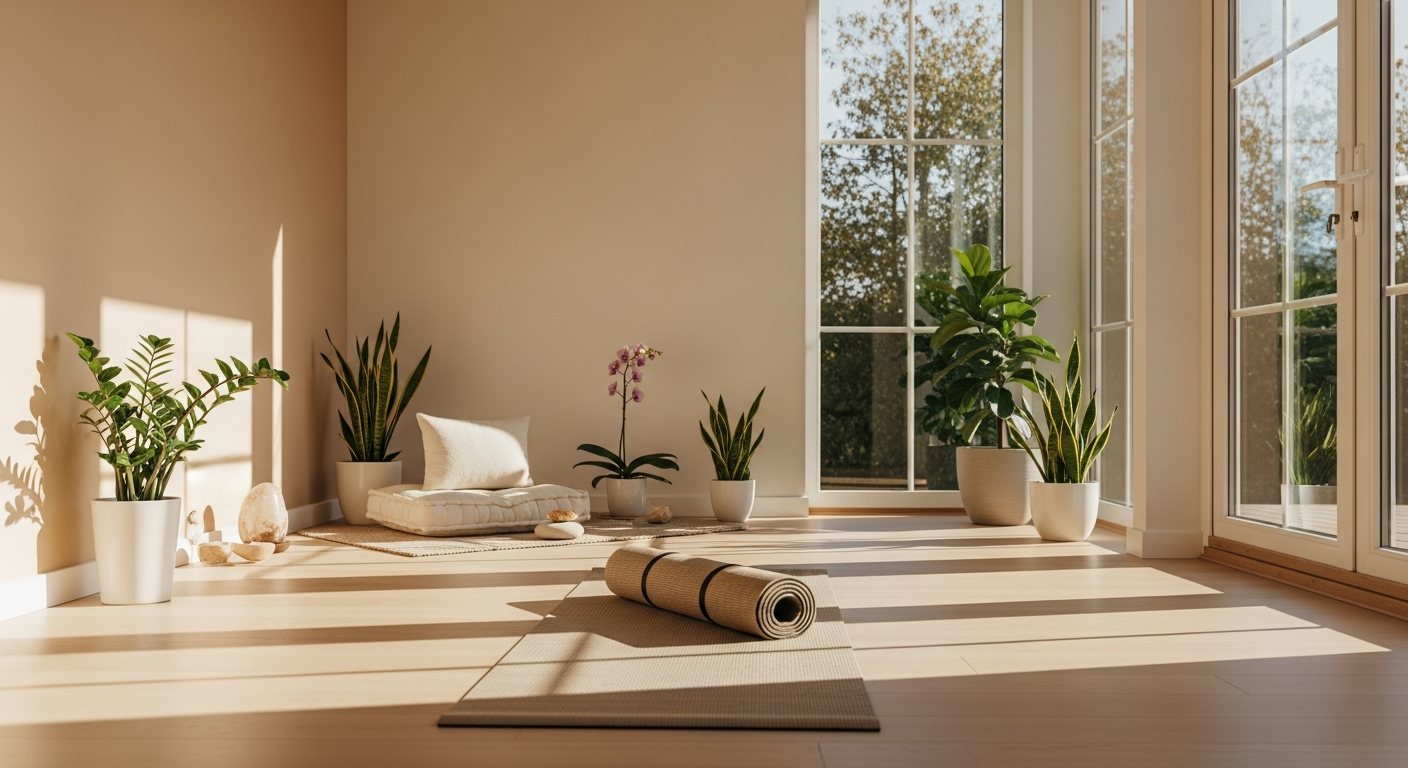
Your yoga space doesn’t demand a sprawling studio—it requires intention. A quiet corner of your bedroom, a spare room, or even a section of your living room can work beautifully. The key is choosing an area where family members and pets understand that practice time means fewer interruptions. Consistency matters more than size; practicing in the same spot signals to your mind and body that something meaningful is about to happen.
Essential equipment needs and space dimensions
A yoga mat anchors your practice. Beyond that, blocks and straps expand your options for modifications and deeper exploration of poses. Most practitioners need roughly 6 feet by 3 feet of clear space—enough to stretch your arms overhead and extend your legs fully without hitting furniture. A wall becomes invaluable for balance work and supported poses. These basics cost little and last years; budget-friendly options from mainstream retailers work perfectly well.
Minimizing distractions from family members, pets, and household noise
Set clear boundaries about practice time. Communication works better than hoping everyone magically understands. A closed door, a “do not disturb” sign, or a simple conversation about your practice schedule prevents most interruptions. For households with multiple people, early morning or evening sessions often provide the quietest windows. Pets may take time to adjust, but they typically learn to respect your space when you maintain consistent practice routines.
Setting up proper lighting and ventilation for comfort
Natural light energizes practice, but artificial lighting works when windows aren’t an option. Avoid practicing directly facing bright light, which creates glare on screens. Ensure air flows through your space—stuffiness disrupts concentration and makes physical exertion uncomfortable. A cracked window or fan solves this simply. Temperature control matters; practice demands comfort without being so warm that you feel sluggish.
How a designated space reinforces commitment and consistency
Sacred spaces work psychologically. When you step into your yoga corner, your nervous system recognizes the pattern. This environmental anchor strengthens commitment far more than practicing sporadically in different rooms. Over weeks and months, this consistency builds momentum that sustains your practice through inevitable busy periods and motivational dips.
Budget-friendly ways to transform any room into a yoga sanctuary
Begin with what you already own. A rolled blanket substitutes for blocks. Towels become straps. Soft rugs improve comfort without dedicated yoga mats. Plants, candles, or soft string lights enhance the atmosphere without expense. Your space evolves gradually; there’s no need to purchase everything at once. The investment matters far less than the intentionality you bring to your practice area.
Navigating the 1,100+ Video Library and Class Types
Understanding the breadth of yoga disciplines available
YogaMeHome’s library spans Hatha yoga’s structured foundations, Kundalini’s energetic focus, prenatal yoga’s specialized modifications, and restorative practices emphasizing deep relaxation. This diversity means you’ll discover approaches that resonate with your body and goals rather than forcing yourself into a one-size-fits-all mold. Whether you seek strengthening, stress relief, flexibility, or spiritual exploration, the breadth accommodates various intentions.
How to filter classes by experience level, duration, and instructor preference
The platform’s organization systems let you quickly find what serves you today. Filtering by beginner, intermediate, or advanced levels prevents frustration from classes either too simple or too challenging. Duration filters help you respect your schedule—a 15-minute session fits lunch breaks while 60-minute classes anchor dedicated practice mornings. As you discover instructors whose style clicks, you can follow their courses and deepen that teaching relationship.
Finding specialized programs for specific goals
Programs targeting flexibility, strength building, or stress relief provide structured progressions. Rather than randomly selecting classes, these organized sequences build on each other, accelerating your results. Specialized programs for prenatal, postnatal, or specific injuries address particular needs that general classes don’t always cover effectively.
The advantage of being able to pause, rewind, and repeat difficult poses
This is where home practice surpasses many studio classes. You can pause an instructor mid-sentence to adjust your alignment. Rewind confusing transitions. Repeat challenging sequences until they feel integrated into your body rather than intellectual concepts. This control transforms learning speed and deepens your understanding of each pose.
Balancing live classes with on-demand content for maximum flexibility
Live sessions create community energy and real-time accountability. On-demand videos accommodate irregular schedules and allow repeated practice. Most practitioners benefit from mixing both—live classes for motivation and connection, on-demand for flexibility and repetition. YogaMeHome’s combination of both formats serves different needs across your week.
Discovering niche offerings that match your unique wellness needs
Beyond mainstream classes, platforms like YogaMeHome often feature specialized offerings—yoga for runners, gentle practices for recovery days, or sequences addressing specific emotional states. These niche programs often receive overlooked attention despite offering tremendous value for practitioners seeking targeted support.
The Role of Experienced Instructors in Your Home Practice
Understanding instructor qualifications and certifications within the platform
YogaMeHome features instructors with extensive training and often additional health-related qualifications. Some teach other teachers. This expertise matters—experienced instructors understand anatomy, modify poses safely, and guide progression thoughtfully. Knowing your instructors carry legitimate credentials builds confidence in following their direction, especially when practicing alone.
How professional-quality cues replace hands-on adjustments and physical assists
Skilled instructors compensate for the absence of physical touch through precise verbal and visual cueing. They describe alignment markers—”ground through your big toe mound,” “soften your gaze”—that create the same awareness a hands-on adjustment provides. Professional production quality ensures you see demonstrations clearly. Over time, these cues train your body awareness to catch and correct misalignments independently.
Building trust with specific teachers and following their progression pathways
When an instructor’s voice, pace, and teaching philosophy resonate with you, following multiple classes deepens the relationship. Many teachers on the platform offer progressions—beginner foundations building toward more advanced variations. This sustained connection with specific teachers creates continuity in your practice that strengthens commitment and learning.
Accessing diverse teaching styles from instructors worldwide
YogaMeHome brings instructors from different traditions and countries into your home. A slow, methodical teacher from one region balances a dynamic, rhythmic instructor from another. This access to diverse styles prevents stagnation and expands your understanding of yoga’s possibilities. You discover approaches that align with your learning style and personality.
The importance of verbal alignment cues when visual feedback is limited
Without an instructor physically positioned beside you, verbal precision becomes essential. Experienced teachers anticipate common misalignments and address them proactively through language. They describe sensations—”you should feel a gentle stretch along your hamstring, not strain in your knee”—that help you self-correct. This verbal feedback actually enhances self-awareness compared to relying on an instructor’s hands.
Leveraging instructor expertise without in-person correction
Quality instruction teaches you to become your own teacher. Over consistent practice, you internalize the cues and develop an inner teacher—an intuitive knowing of proper alignment. This independence represents advanced yoga practice. Professional instructors on YogaMeHome accelerate this development through clear teaching that trains your awareness rather than creating dependency.
Overcoming Self-Discipline and Motivation Challenges
Establishing a realistic practice schedule that fits your lifestyle
Consistency trumps intensity. A 20-minute daily practice builds far more momentum than sporadic 90-minute sessions. Anchor yoga to existing routines—practice right after morning coffee, during your lunch break, or before dinner. When yoga slots into established patterns rather than demanding a new time block, sustainability increases dramatically. Be honest about your real capacity rather than setting aspirational schedules you’ll abandon.
Creating accountability through community features and progress tracking
Many online platforms feature community boards, challenge tracking, and progress monitoring. These features transform solo practice into shared experience. Knowing others are practicing creates light accountability without pressure. Some practitioners thrive with accountability partners—friends or community members who share their practice schedules and discuss their experiences.
Combating the ease of canceling or skipping sessions at home
Studio classes involve commitment—you’ve paid, you’ve traveled, you’re showing up. Home practice requires self-generated commitment. Combat this by treating practice appointments as seriously as external commitments. Use calendar reminders. Create small incentives—a favorite tea after practice, tracking streaks, or celebrating weekly consistency. The barrier to skipping must feel high enough to overcome casual procrastination.
Using habit-stacking techniques to anchor yoga into your daily routine
Link yoga to an established habit. “After I finish breakfast, I practice yoga.” This habit-stacking approach leverages existing neural pathways to build new routines. Your brain recognizes the trigger and associates it with the behavior. This technique proves remarkably effective at cementing practices without relying on willpower.
Setting achievable weekly goals rather than overwhelming yourself
One realistic goal per week outperforms five ambitious ones. Perhaps this week’s goal is practicing four times, or exploring three different instructors, or holding warrior pose three full breaths longer. Small, achievable wins build confidence and momentum. Overwhelming yourself with expectations guarantees failure and discouragement.
Managing the psychological difference between home practice and studio commitment
Studios create external pressure—you’ve paid fees, traveled, and showed up publicly. Home practice requires internal discipline. Bridge this gap by creating ceremonies—changing into practice clothes, lighting incense, or beginning with an intention-setting ritual. These small acts signal to your mind that something important is happening, replicating the psychological commitment studios provide externally.
Comparing YogaMeHome Pricing Tiers and Long-Term Value
Breaking down the three subscription options
YogaMeHome offers three pricing structures: a monthly plan at approximately 21€, a 6-month plan at around 16€ per month, and a 12-month plan for about 12€ per month. The monthly option provides maximum flexibility for those uncertain about commitment. The annual plan offers significant savings for committed practitioners—reducing cost-per-month to half the standard rate.
Calculating cost savings versus traditional studio memberships
In-person yoga studios typically charge 15-20€ per class or 100-150€ monthly for unlimited access. Even at YogaMeHome’s highest monthly tier of 21€, you’re accessing unlimited classes at below-studio rates. The annual plan drops to roughly 144€ yearly—a fraction of studio costs. For practitioners seeking multiple classes weekly, the savings compound substantially.
Understanding the 7-day free trial and what to test during this period
The free trial lets you explore whether the platform suits you before financial commitment. Test several different instructors to gauge whose style resonates. Try various class types—vigorous and restorative, structured and flowing. Assess whether your home setup works and whether you can genuinely carve out practice time. Use these seven days strategically to make an informed decision.
Evaluating which pricing tier offers the best value for your commitment level
Casual practitioners who practice 1-2 times monthly should start monthly. Regular practitioners committed to 3-4 sessions weekly benefit from 6-month or annual plans that lower per-class costs dramatically. Calculate your likely practice frequency and match it to the tier offering best value for your anticipated usage.
Hidden benefits of longer commitments beyond per-class pricing
When you commit to annual membership, you remove the mental burden of monthly renewal decisions. This unconscious relief supports consistency. You also gain psychological investment—you’ve paid for the year, so you’re more likely to use it fully. The financial commitment itself becomes a motivational tool reinforcing your practice dedication.
Assessing whether the investment delivers measurable returns on your practice quality
Track changes over three months—flexibility improvements, strength gains, stress reduction, or sleep quality shifts. Most practitioners report measurable physical and mental benefits within this timeframe. When results appear, the investment feels justified, sustaining motivation through rougher patches.
Managing Technical Obstacles and Internet Connectivity
Ensuring stable internet connection for seamless streaming
Quality streaming requires consistent bandwidth. Test your internet speed on devices where you’ll practice. If you notice buffering or frequent interruptions, contact your provider about upgrades, position your router closer to practice space, or reduce other simultaneous internet usage during practice time. A wired connection provides more stability than wifi when possible.
Troubleshooting common device compatibility issues
Check that your device—smartphone, tablet, or computer—meets minimum system requirements. Update apps and operating systems regularly. Clear cached data if apps run sluggishly. Most technical issues resolve through basic maintenance. YogaMeHome’s support team can troubleshoot specific compatibility questions.
Downloading classes for offline practice when connectivity is unreliable
The platform likely offers download options for members, allowing viewing without internet. If your home wifi proves unreliable, downloading classes during stronger connectivity times means you can practice anytime without depending on real-time streaming. This feature eliminates connectivity as an excuse for skipped sessions.
Optimizing video quality settings based on your bandwidth
When bandwidth is limited, reducing video quality improves streaming stability. You sacrifice visual clarity for uninterrupted viewing—a worthwhile tradeoff when connectivity is marginal. Adjust settings before starting class rather than mid-practice.
Having backup plans when technical issues interrupt your session
Sometimes technology fails despite precautions. Establish backup options—perhaps downloading a class weekly you can access offline, or having a simple routine you can do without video guidance. These backups prevent technical difficulties from derailing consistency.
Choosing devices that enhance your practice experience
Smartphones work but provide limited screen size for observing alignment details. Tablets offer better viewing angles and screen real estate. Televisions via streaming devices create studio-like immersion. Consider your home setup and what device size allows comfortable practice without neck strain or visual compromise.
Addressing the Absence of Hands-On Adjustments and Corrections
Learning self-correction techniques through careful observation of instructors
Watch instructors demonstrate poses from multiple angles when available. Notice their weight distribution, alignment details, and transitions. Studying carefully builds recognition of proper form, training your visual cortex to detect misalignments in your own practice. Over time, this observation skill develops into intuitive self-correction.
Using mirrors strategically to monitor your own alignment
A mirror positioned to the side allows checking alignment without creating dependency or distraction. Use it primarily during learning phases, then rely less on it as body awareness develops. Mirrors serve as external feedback until internal awareness becomes reliable.
Recognizing when you need external feedback and seeking alternatives
Some poses benefit from periodic professional assessment—handstands, arm balances, or deep backbends where subtle misalignments risk injury. Supplement online practice with occasional in-person sessions where instructors can offer hands-on guidance and corrections. This hybrid approach balances home practice flexibility with professional feedback.
Building body awareness over time to catch misalignments independently
Consistent practice sharpens proprioception—your sense of where your body occupies space. Over months of mindful practice, you develop an internal teacher that catches errors without external feedback. This represents advanced practice development that online teaching actively cultivates.
Supplementing online practice with occasional in-person sessions for form checks
Even committed online practitioners benefit from 2-3 monthly studio classes where instructors can assess form and offer hands-on refinements. These sessions strengthen your home practice by confirming alignment, introducing variations, and providing the human connection that sustains long-term motivation.
Understanding which poses require more caution without professional hands-on guidance
Advanced arm balances, deep backbends, and inversions demand careful attention when practicing alone. Build these slowly, film yourself occasionally to self-assess, and consider in-person coaching for challenging progressions. This caution prevents injuries that undermine consistency.
Leveraging Community and Social Features for Accountability
Connecting with other YogaMeHome members for motivation and support
Platforms typically feature community spaces where members share experiences, ask questions, and celebrate progress. These connections transform isolated home practice into shared endeavor. Knowing others practice alongside you creates subtle accountability and community belonging.
Sharing progress and celebrating milestones within the platform community
Many platforms allow members to share achievements—personal records, consistency streaks, or physical breakthroughs. Celebrating these milestones with supportive community strengthens commitment and creates positive feedback loops reinforcing continued practice.
Finding practice partners or accountability buddies
Connect with other members for accountability partnerships. Share your weekly practice goals, check in on progress, and celebrate successes together. Knowing someone’s expecting your check-in increases follow-through probability. These relationships transform abstract commitment into concrete social obligation.
Participating in challenges or themed programs that foster engagement
Seasonal challenges or themed monthly programs—”30 days of flexibility,” “strength-building week”—channel community energy toward shared goals. Participating in group challenges leverages social motivation to deepen practice during potentially vulnerable periods.
Using community feedback to refine your practice approach
Experienced community members often offer form suggestions, sequence recommendations, or modifications based on their experience. Feedback from fellow practitioners who understand home practice challenges often resonates differently than instructor guidance, creating learning opportunities and practical improvements.
Building momentum through collective energy, even in a digital space
Knowing thousands practice alongside you creates energetic resonance even across distance. This collective momentum—visible through community activity, challenges, and shared progress—lifts individual practice motivation. Digital community spaces successfully replicate the energetic boost that shared physical spaces provide.
Making YogaMeHome Work for Your Wellness Journey
The transition from studio yoga to home practice demands intention, but YogaMeHome removes many traditional barriers that keep people from starting. The 1,100+ professionally-taught classes, affordable pricing tiers, and worldwide instructor access create genuine value. What really matters is your willingness to show up consistently—to carve out space in your home, manage distractions, and trust the process even when no instructor is physically adjusting your alignment.
Thousands of practitioners have built powerful, sustainable yoga habits through this platform. Physical transformations happen alongside mental shifts: stress melts, sleep deepens, strength emerges, and flexibility expands. The 7-day free trial gives you a risk-free window to test whether the instructors resonate with you, whether your home setup works, and whether you can genuinely commit to consistent practice. During these seven days, choose one class that excites you and practice it twice. Notice how your body responds. Pay attention to whether you find yourself looking forward to practice or dreading it. These early signals matter far more than intellectual analysis.
Your next step is straightforward: Start the free trial, select one class that genuinely appeals to you, and practice it twice to notice how you feel and whether YogaMeHome is your path forward.
Begin your free trial with YogaMeHome and start building your sustainable home yoga practice today.