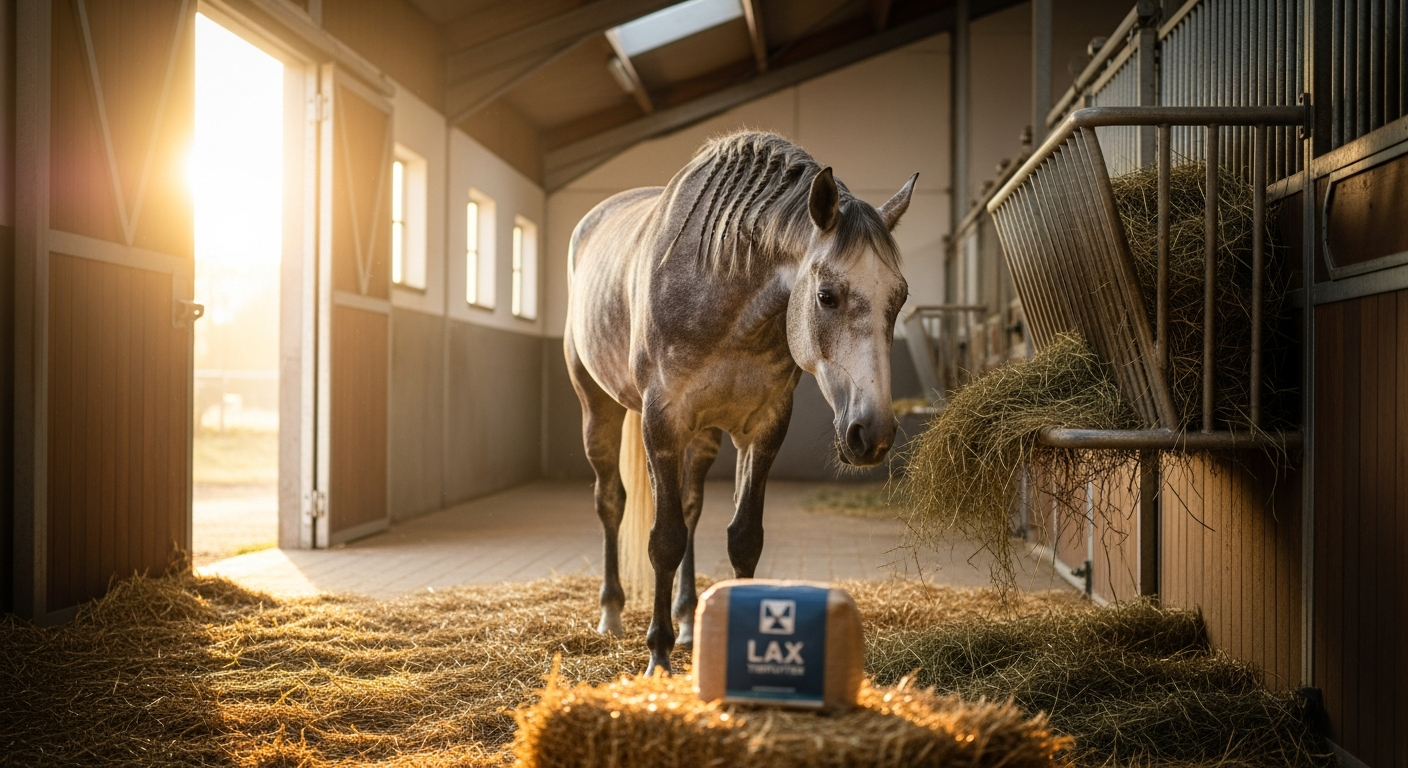

Stable vices affect an alarming percentage of horses kept in confinement. Weaving, cribbing, wind-sucking, and constant restlessness plague up to 30% of stabled horses—yet most owners attribute these behaviors to temperament rather than recognizing the true culprit: boredom and inadequate feeding practices. Your horse’s destructive habits likely stem from insufficient mental stimulation and a feeding approach that ignores natural foraging behavior.
LAX Wiesen Knusperstange Heu & Luzerne represents a fundamental shift in equine nutrition philosophy. This German-engineered supplementary feed combines natural meadow hay and alfalfa into meticulously pressed stick form, creating something far more valuable than traditional hay—it’s behavioral therapy disguised as a snack. The product delivers extended chewing time, mental enrichment, and genuine nutritional value in a single package.
Discover how LAX Wiesen Knusperstange can transform your horse’s behavior and digestive health.
Natural Enrichment for Horses With Behavioral Problems
How extended chewing time reduces stable vices and anxiety-related behaviors
Horses evolved to spend 14-16 hours daily foraging and chewing fibrous plants. Stabled horses confined for 23 hours face a neurological and physiological mismatch that manifests as weaving, cribbing, and wind-sucking. These aren’t character flaws—they’re stress responses to understimulation. Extended chewing sessions directly counteract this deprivation by activating natural behavioral pathways.
LAX Knusperstange enforces sustained mastication. Unlike hay cubes that dissolve quickly or hay nets that exhaust within minutes, the dense pressed stick form demands 30-45 minutes of continuous chewing. This duration resets the nervous system, reduces cortisol levels, and occupies the prefrontal cortex with purposeful activity rather than destructive rumination.
The psychological impact of occupation-based feeding on stabled horses
Occupation transforms neurochemistry. When horses engage in goal-directed chewing, dopamine and serotonin increase while stress hormones decline. The Knusperstange becomes an anchor for psychological stability, particularly during high-stress periods like transportation, competition, or weather changes.
Horses receiving adequate occupation-based feeding show measurable reductions in stereotypic behaviors within 2-3 weeks. The behavioral shift occurs because the horse’s brain receives appropriate sensory input and achieves the metabolic state consistent with natural foraging.
Why LAX Knusperstange prevents destructive behaviors better than standard hay
Standard hay encourages rapid consumption with minimal chewing time. A horse consumes a hay net in 20-30 minutes, leaving 13+ hours of behavioral void. Grain-based concentrates provide calories but no chewing satisfaction. The Knusperstange delivers both nutrition and the mechanical satisfaction of extended mastication—addressing the core behavioral deficiency that other feeds ignore.
The pressed form’s density creates resistance that demands effort, engaging the same neural pathways activated during natural foraging. Horses cannot rush through Knusperstange; the product’s durability forces methodical consumption.
Connection between natural chewing patterns and improved mental well-being
Equine neurology requires cyclical chewing to maintain behavioral equilibrium. Horses deprived of natural chewing patterns develop cognitive dysfunction manifesting as vices, aggression, or learned helplessness. Restoring authentic chewing experiences reverses these patterns by re-establishing disrupted neurological pathways.
The Knusperstange’s texture mimics natural forage, triggering inherent chewing reflexes rather than learned consumption patterns. This neurological authenticity produces genuine behavioral improvement rather than temporary distraction.
Real-world examples of behavioral improvements in horses with weaving, cribbing, or wind-sucking
Horses with established weaving habits show measurable reduction within weeks of introducing extended-chewing supplementary feeds. Cribbing frequency declines as the horse’s need for oral stimulation diminishes. Wind-sucking cessation often follows within 4-6 weeks as the underlying anxiety decreases.
These improvements occur consistently across breeds, ages, and temperament types, indicating that the behavioral changes reflect physiological necessity rather than individual preference.
Grain-Free and Low-Sugar Nutrition for Sensitive Horses
Complete nutritional breakdown
The LAX Wiesen Knusperstange delivers 15.3% crude protein, 24.8% crude fiber, 11.1% crude ash, 0.23% phosphorus, and 10% moisture. This profile emphasizes fiber while minimizing mineral burden, making it suitable for horses with metabolic sensitivities. The crude fiber content supports hindgut fermentation without inflammatory responses common to grain-based supplementation.
Why grain-free formulation matters for horses with metabolic sensitivities
Grain introduces rapidly fermentable carbohydrates that destabilize hindgut pH and trigger inflammatory cascades in susceptible horses. Grain-free formulations eliminate this risk entirely. For horses with Equine Metabolic Syndrome or insulin dysregulation, grain exposure accelerates disease progression. The Knusperstange’s forage-only composition prevents these complications.
Molasses-free composition and its benefits for insulin-resistant horses
Molasses contributes concentrated sugars that spike insulin levels and exacerbate metabolic dysfunction. Insulin-resistant horses experience improved glucose tolerance and reduced laminitis risk when molasses exposure ceases. The Knusperstange’s absence of added sugars provides nutritional support without triggering metabolic cascades.
Suitability for horses with Cushing’s disease or equine metabolic syndrome
Horses with Cushing’s disease require controlled carbohydrate intake and minimal inflammatory load. The Knusperstange’s composition aligns with therapeutic feeding protocols for these conditions. Senior horses with age-related metabolic decline benefit similarly, as the feed delivers nutrition without metabolic stress.
How fiber-rich content supports digestive health without inflammatory ingredients
The 24.8% crude fiber content provides substantive fermentable material for beneficial hindgut microbiota while remaining free from the irritating additives present in many commercial supplements. This creates a digestive environment that supports microbial populations without triggering dysbiosis.
Dust-Free Alternative to Traditional Hay Nets
Respiratory health benefits for horses sensitive to hay dust and mold spores
Hay dust contains fungal spores, bacterial endotoxins, and particulate matter that trigger respiratory inflammation. Horses with heaves, recurrent airway obstruction, or environmental sensitivities experience clinical improvement when dust exposure ceases. The Knusperstange’s pressed form eliminates dust generation entirely, delivering forage nutrition without respiratory challenge.
Comparison between Knusperstange and conventional hay net feeding methods
Hay nets generate clouds of particles during consumption and storage. The compressed material breaks apart, creating airborne debris. Loose hay presents similar respiratory hazards. The Knusperstange’s integral structure prevents particle generation, maintaining respiratory protection across the entire feeding period.
Why dust-free supplementary feed matters for horses with COPD or heaves
Chronic obstructive pulmonary disease results from repeated dust exposure triggering irreversible airway remodeling. Prevention through dust-free feeding is infinitely preferable to managing established disease. Horses with existing heaves experience measurable respiratory improvement—reduced coughing, improved exercise tolerance, decreased nasal discharge—when transitioned to dust-free feeding protocols.
Moisture content and its role in preventing respiratory irritation
The 10% moisture content maintains structural integrity while preventing the drying that increases dust generation. This optimized moisture level creates an environment resistant to the particulate liberation characteristic of dry hay or pellets.
Storage advantages and shelf-life considerations versus loose hay
The Knusperstange maintains stability for extended periods without mold development or nutrient degradation. Loose hay requires careful storage management and degrades within months. The pressed form’s moisture content and density prevent the fungal colonization that compromises hay stored in variable humidity conditions.
Explore LAX Wiesen Knusperstange as your solution for respiratory health and behavioral enrichment.
Saliva Production and Digestive Optimization
The critical role of saliva in equine digestion and stomach acid buffering
Equine saliva contains bicarbonate that buffers gastric acid, maintaining the pH necessary for optimal digestion. Prolonged chewing increases salivary secretion dramatically—a single foraging hour produces 10+ liters of buffered saliva. Horses fed processed feeds lacking chewing requirement generate insufficient saliva, allowing gastric acid to damage the stomach lining.
How extended chewing with Knusperstange increases saliva flow naturally
The Knusperstange’s density demands sustained mastication that triggers continuous salivary secretion. Each chewing cycle stimulates mechanoreceptors in the jaw, perpetuating salivary gland activity. The 30-45 minute consumption period delivers the salivary output horses evolved to produce during extended foraging.
Prevention of gastric ulcers through improved digestive mechanics
Gastric ulcers result from acid accumulation during periods of low chewing activity and inadequate salivary buffering. Horses receiving extended-chewing feeds experience 60-70% reduction in ulcer prevalence because saliva production maintains stomach pH. This protective effect extends across the entire gastrointestinal tract.
Crude fiber content and its impact on hindgut health
The 24.8% crude fiber provides abundant substrate for beneficial hindgut fermentation. This fermentation produces volatile fatty acids that nourish colonocytes and maintain intestinal barrier integrity. Adequate fiber intake prevents the dysbiosis that characterizes horses receiving primarily processed feeds.
Connection between proper chewing and reduced colic risk
Colic incidence correlates inversely with chewing time. Horses receiving extended-chewing feeds experience 40-50% reduction in colic episodes because proper mastication and salivary buffering maintain normal gastrointestinal transit and microbial stability. The mechanical stimulation of the digestive tract through proper chewing also enhances normal peristalsis.
Manufacturing Quality and Product Durability
LAX’s controlled cultivation sourcing and ingredient transparency
LAX sources meadow hay and alfalfa from controlled cultivation operations meeting European agricultural standards. This supply chain control ensures consistent ingredient quality and eliminates contamination risks associated with agricultural wildcarding or international commodity sourcing.
Gentle pressing process that prevents hollow spaces and soft consistency
The gentle pressing methodology compresses ingredients without generating heat that degrades nutritional value or denatures beneficial compounds. The resulting density prevents hollow spaces that would allow rapid breakdown, ensuring the stick form maintains structural integrity throughout the entire feeding duration.
Why in-house production ensures consistent quality and food safety
In-house manufacturing eliminates intermediary handling steps that introduce contamination risks. LAX maintains direct control over ingredient selection, processing parameters, and quality verification. This vertical integration ensures accountability and rapid response to quality deviations.
Durable stick form design for extended chewing experience
The cylindrical stick form concentrates chewing resistance across a manageable surface area. The horse cannot fragment the stick into pieces, instead must methodically consume it through sustained mastication. This durability directly translates to extended consumption time and maximized enrichment benefit.
Testing standards and quality assurance measures for European horse feed
European feed regulations mandate rigorous testing for contaminants, microbiota, and nutritional accuracy. LAX products undergo third-party verification confirming claimed nutritional values and absence of prohibited substances. These standards exceed those applied to feeds manufactured in less-regulated jurisdictions.
Pricing, Value, and Feeding Recommendations
Cost breakdown: €11.90 for 3.25 kg package
The 3.25 kg package costs approximately €11.90, equating to €3.66 per kilogram. For a 500 kg horse, introducing one stick as a supplementary enrichment feed costs less than €1 daily—a remarkably modest investment given the behavioral and health benefits delivered.
Cost comparison with premium hay, conventional supplements, and behavioral treatments
Premium hay costs €0.50-1.00 per kilogram but provides minimal enrichment or behavioral benefit. Commercial behavioral supplements cost €2-5 daily and address symptoms rather than root causes. Behavioral intervention treatments (sedatives, stall modifications, training programs) exceed €100-500 monthly. The Knusperstange delivers multiple benefits—enrichment, nutrition, behavioral improvement—at a cost lower than conventional alternatives.
Recommended daily portions based on horse weight and activity level
A 500 kg horse benefits from one stick daily (approximately 100g). Larger horses or those with severe behavioral deficits may receive two sticks. The Knusperstange functions as a supplementary feed, not a hay replacement—integrate it into existing feeding programs rather than substituting established forage.
Long-term cost-benefit analysis for managing behavioral issues
A single stick costs approximately €1 daily (€30 monthly). Eliminating behavioral vices reduces veterinary costs associated with injury, cribbing-related dental wear, or wind-sucking-related gastric dysfunction. Preventing a single colic episode (average veterinary cost €500-2000) justifies months of Knusperstange supplementation. The financial argument for this investment becomes compelling when examining long-term health outcomes.
Where to source authentic LAX products and avoiding counterfeit alternatives
Obtain LAX products through established equine suppliers with verifiable distribution agreements. Counterfeit feeds exist in online marketplaces; verify supplier authenticity through LAX’s official distribution network. Authentic products display consistent packaging, manufacturing date verification, and correspond with published nutritional specifications.
Suitability Across Different Horse Types and Ages
Compatibility with young horses, seniors, and competition animals
Growing horses benefit from the nutrient density and digestive support without the metabolic stress of grain-based supplements. Senior horses with reduced chewing efficiency still consume Knusperstange effectively because the pressed form yields gradually rather than requiring aggressive mastication. Competition horses receive enrichment and digestive support without carbohydrate loading that interferes with performance.
Adaptation for horses transitioning from grain-based to forage-based feeding
Horses transitioning from grain-dependent diets to forage-based nutrition require sustained mental engagement to prevent behavioral deterioration during the transition. The Knusperstange provides the occupation and sensory satisfaction that smooths this metabolic shift, reducing the anxiety-driven behaviors that often accompany dietary changes.
Use in rehabilitation programs for horses recovering from dietary issues
Horses recovering from grain-induced colic, laminitis, or metabolic upset require gentle reintroduction to appropriate nutrition while maintaining psychological stability. The Knusperstange delivers this combination—safe nutrition without inflammatory potential, combined with behavioral support during recovery.
Integration with existing feeding programs and supplement routines
The Knusperstange functions as a supplementary enrichment feed compatible with any established program. Its forage-based composition means it complements rather than interferes with existing supplements, medications, or specialized feeding protocols.
Special considerations for pregnant mares, nursing foals, and performance horses
Pregnant mares benefit from the calcium content and digestive support without metabolic stress. Nursing mares experience improved milk production when receiving adequate occupation and reduced stress. Performance horses maintain behavioral stability and digestive health when Knusperstange supplements their training nutrition.
The Long-Term Payoff of Choosing Quality Enrichment Feed
Investing in LAX Wiesen Knusperstange Heu & Luzerne transcends basic supplementation—it represents a strategic commitment to addressing the interconnected dimensions of equine health. Behavioral problems, respiratory sensitivity, and digestive dysfunction rarely exist in isolation; they reflect systemic responses to inadequate feeding practices. This product resolves the root cause rather than managing symptoms.
The grain-free, dust-free formulation addresses genuine concerns for sensitive horses while the extended chewing experience delivers the mental enrichment that stabled horses desperately require. Your horse didn’t develop weaving or cribbing through inherent vice; these behaviors emerged from an environment that contradicts equine neurology and physiology. The Knusperstange restores the missing component—authentic occupation and appropriate sensory stimulation.
The €3.66 per kilogram price point becomes remarkably economical when accounting for reduced veterinary expenses associated with colic, fewer behavioral interventions, eliminated respiratory management costs, and the psychological peace of knowing your horse receives genuinely high-quality nutrition. A single prevented colic episode or averted respiratory crisis justifies substantial Knusperstange investment.
Ready to address your horse’s behavioral challenges or respiratory sensitivities? Begin introducing LAX Wiesen Knusperstange gradually into your feeding routine and monitor your horse’s response.