
The Post-Hormonal Reset: Why Temperature Tracking Matters When Coming Off Birth Control
When women discontinue hormonal contraception, their bodies enter unfamiliar territory. Over 60% experience irregular cycles and uncertainty about their fertility window during the first three months—a vulnerable period where traditional cycle tracking methods fall short. Hormonal contraception suppresses the natural signals your body uses to communicate its reproductive status, and when you stop taking it, those signals need time to re-establish themselves.
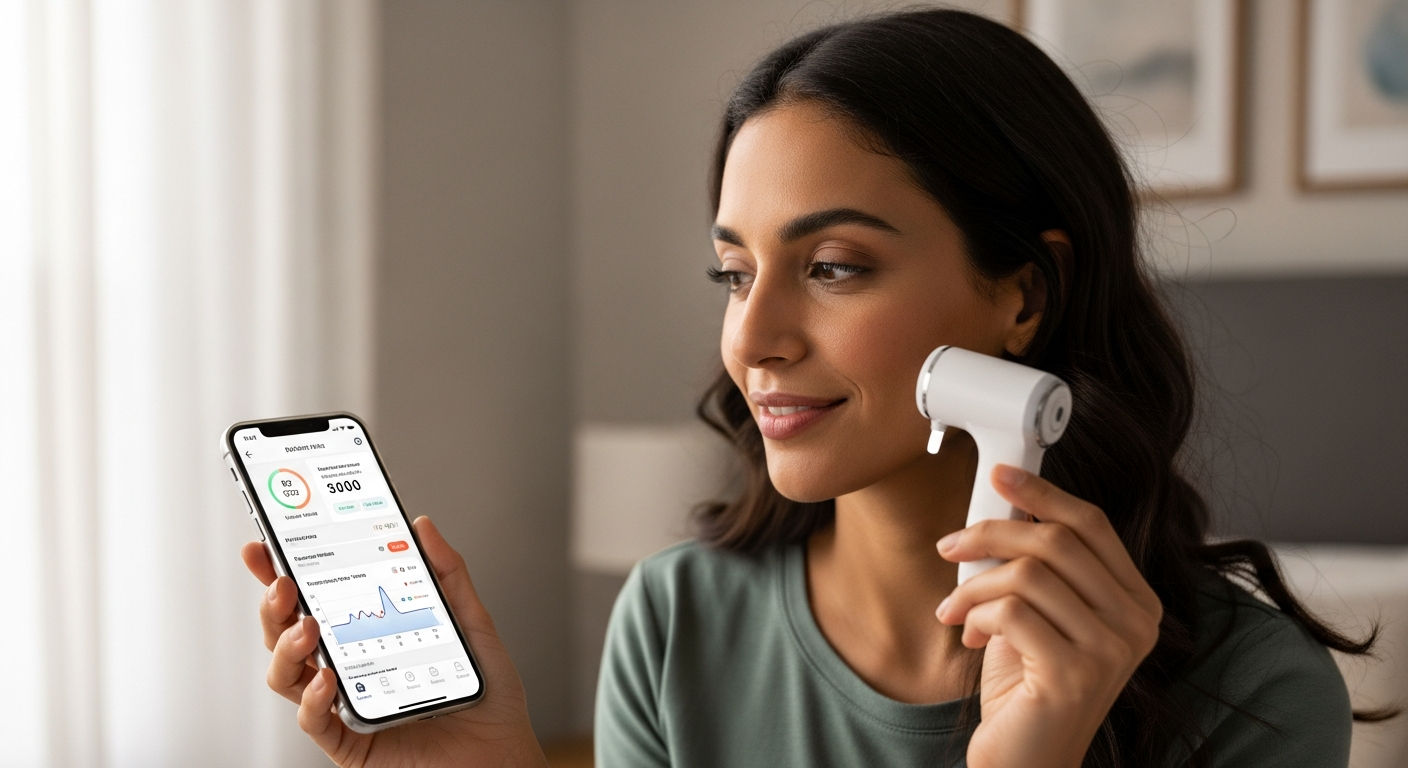
The Ovy Bluetooth Basal Thermometer was designed specifically for this critical transition period, combining medical-grade accuracy with intelligent app technology to bridge the gap between guesswork and genuine understanding. Discover how the Ovy system supports your hormonal transition with precision cycle tracking.
In this guide, you’ll understand how accurate basal body temperature tracking prevents contraceptive failure during the adjustment period, why the symptothermal method outperforms app-only predictions, and whether this investment aligns with your fertility goals.
How Hormonal Contraception Suppresses Natural Cycle Signals
Hormonal birth control works by suppressing ovulation and thickening cervical mucus—essentially silencing the hormonal cascade that drives your natural cycle. When you take the pill, patch, ring, or receive an injection, your body stops producing the luteinizing hormone (LH) surge that triggers ovulation. Your cervical mucus remains thick and inhospitable. Your basal body temperature never shows the characteristic post-ovulation rise. For as long as you remain on hormonal contraception, these signals simply vanish.
Once you discontinue hormonal contraception, your body doesn’t instantly return to baseline. It needs time to rebuild its hormone production pathways, reestablish regular ovulation patterns, and communicate fertility signals clearly again. During this 3-6 month adjustment period, your cycles may be longer, shorter, or irregular. Ovulation might occur unpredictably. This is precisely when relying on period tracking apps designed for already-established cycles becomes dangerous—they’re predicting based on patterns that don’t yet exist.
The 3-6 Month Adjustment Period and Contraceptive Risk
The first six months after stopping hormonal contraception represent a genuine contraceptive vulnerability window. Your body is relearning how to ovulate naturally, and ovulation timing can vary significantly from cycle to cycle. An app that assumes a regular 28-day cycle, or that relies on historical data you don’t have yet, can’t protect you during this period.
This is where basal body temperature becomes non-negotiable. Temperature tracking provides real-time evidence of ovulation—not a prediction, but confirmation. When your temperature rises by 0.3-0.5°C and remains elevated for at least three days, you know ovulation has already occurred. Combined with cervical mucus observations and cycle day counting (the symptothermal method), temperature tracking creates a reliable framework for identifying both fertile and infertile phases during your body’s transition.
Accurate thermometer readings prevent the false sense of security that comes from app predictions during irregular cycles. They transform fertility awareness from guesswork into observation-based knowledge.
Tracking for Contraception Versus Conception Planning
The goals differ significantly depending on whether you’re using the symptothermal method for contraception or conception planning, and this affects how you interpret temperature data.
For contraception purposes, you’re identifying the fertile window—the days when pregnancy is possible—and avoiding unprotected intercourse during that time. You need to detect ovulation reliably and understand the length of your luteal phase. Temperature rises confirm ovulation has occurred, allowing you to mark the end of the fertile window.
For conception planning, you’re pinpointing ovulation to time intercourse optimally. Temperature tracking still matters, but the focus shifts to identifying the fertile window before ovulation occurs by combining temperature patterns from previous cycles with cervical mucus observations. The precision requirement is equally high, but the application differs.
Both approaches benefit enormously from medical-grade accuracy because fertility windows are measured in days, not weeks. A thermometer that misreads temperatures by 0.2-0.3°C can shift your interpretation of when ovulation occurred, potentially by days.
Why the Symptothermal Method Outperforms App-Only Predictions
During hormonal transition, single-marker tracking—relying on temperature alone, or mucus alone, or cycle day alone—introduces unnecessary risk. The symptothermal method combines all three:
- Temperature confirms that ovulation has occurred and the luteal phase has begun
- Cervical mucus indicates the approach of ovulation and the fertile window
- Cycle day provides historical context and helps identify cycle length patterns
App-only predictions during irregular cycles fail because they’re built on patterns that don’t yet exist. When you’re three months off hormonal contraception and your cycles are still settling, an algorithm can’t reliably predict where ovulation will occur. It’s guessing based on insufficient data.
The symptothermal method, by contrast, uses direct observation of your body’s signals. Temperature data from an accurate thermometer becomes the cornerstone—it provides the certainty the other markers support but can’t guarantee alone.
Medical-Grade Accuracy You Can Trust: The ±0.05°C Advantage
Understanding Basal Body Temperature and Two Decimal Place Precision
Basal body temperature is your body’s temperature at complete rest—measured immediately upon waking, before any activity. Normally, your temperature sits around 36.2-36.5°C. After ovulation occurs, progesterone rises and shifts your temperature up by 0.3-0.5°C, creating a distinct biphasic pattern across your cycle.
This temperature shift is relatively small, which is why precision matters. A standard digital thermometer measuring to one decimal place (36.3°C versus 36.4°C) introduces ambiguity. Is that 0.1°C difference meaningful, or measurement error? The Ovy Bluetooth Basal Thermometer measures to two decimal places (36.25°C, 36.31°C) with accuracy of ±0.05°C, eliminating this uncertainty.
Two decimal places matter because they let you track the actual temperature trajectory across your cycle. You can see the gradual climb into the luteal phase and identify the three consecutive elevated temperatures that confirm ovulation has occurred. With less precision, that pattern becomes cloudy.
Class I Medical Device Certification: What It Means
The Ovy Bluetooth Basal Thermometer holds Class I medical device certification—a designation that means it meets strict safety and performance standards. Class I devices are subject to general controls including labeling requirements, manufacturing standards, and post-market surveillance. The device has undergone testing to verify it performs as claimed.
The Ovy App itself is classified as Class IIb, a higher designation indicating it’s making medical predictions (ovulation detection, fertile window identification) based on input data. This distinction matters: the thermometer itself is a straightforward measurement device, while the app providing interpretation is regulated as a medical tool. Both certifications mean you’re working with a system designed and validated for fertility awareness, not a consumer gadget repurposed for this use.
Certification doesn’t guarantee perfection, but it indicates the manufacturer has invested in validation and quality control rather than releasing an untested product.
Accuracy Comparison: Ovy Versus Standard Digital Thermometers and Smartwatches
Standard digital thermometers typically measure to one decimal place with ±0.3-0.5°C accuracy. For daily health monitoring, this suffices. For fertility tracking during hormonal transition, it’s inadequate. That ±0.5°C error range is larger than the 0.3-0.5°C temperature rise you’re trying to detect post-ovulation.
Smartwatch temperature tracking is even less reliable for this purpose. Wearables measure skin surface temperature, which fluctuates based on ambient temperature, activity, and clothing. They’re not designed for basal temperature measurement—they don’t capture the resting core temperature that matters for ovulation detection. A smartwatch might show temperature variations across your day that have nothing to do with your cycle and obscure the actual hormonal signal you’re tracking.
The Ovy thermometer’s ±0.05°C precision is specifically designed for this use case. It’s built to capture the subtle hormonal signal that standard devices miss or distort.
How ±0.05°C Accuracy Prevents False Ovulation Predictions
False ovulation predictions carry real consequences for contraceptive effectiveness. If your thermometer reads 36.35°C when the actual temperature is 36.40°C, you might incorrectly interpret where you are in your cycle. Across multiple readings, these small errors compound.
With the Ovy thermometer’s ±0.05°C accuracy, you’re confident in the readings you’re recording. When your temperature rises from 36.25°C to 36.58°C to 36.61°C across three consecutive mornings, that’s a genuine temperature shift indicating ovulation occurred—not a measurement artifact. This confidence is what allows you to accurately identify the end of your fertile window.
In contrast, someone using a standard thermometer showing 36.3°C, 36.5°C, 36.5°C has legitimate uncertainty about whether that’s a real rise or measurement variance. They must apply additional caution in interpreting the data, potentially extending their fertile window estimate conservatively.
Real-World Impact: Temperature Fluctuations Across Measurement Methods
Different measurement methods—oral, vaginal, or armpit temperature—and different thermometers produce temperature variations of 0.3-0.5°C. A vaginal measurement might read 36.65°C while an oral measurement on the same morning reads 36.40°C. This variation is normal physiology, not device error.
For cycle interpretation, consistency matters more than the absolute number. If you always measure vaginally with the same thermometer, small fluctuations day-to-day become meaningful. If you switch between measurement methods or devices, you’ve introduced noise that obscures the actual signal.
The Ovy thermometer with Bluetooth automatic data logging reduces another source of error: manual entry mistakes. You can’t mistype a temperature if the device sends it directly to the app. Over a six-month tracking period, this alone prevents errors that could distort your cycle interpretation.
Flexible Measurement Options and Reading Consistency
The Ovy thermometer supports both oral and vaginal measurement with a flexible measuring tip, accommodating comfort preferences. The illuminated LED display works in darkness, and you can customize the end-of-measurement signal to vibration, quiet beep, or silent mode—important when you’re taking your temperature before full wakefulness.
Consistency in measurement location matters. If you measure vaginally on most days but orally on days when you’re in a rush, you’ve introduced systematic variation that could mask or exaggerate temperature trends. The Ovy’s comfort design encourages consistent daily use, which supports accurate cycle interpretation.
The device stores up to 30 measurements internally and operates on a 3.7V/240mAh Lithium-ion battery sufficient for 60 measurements, making it practical for continuous tracking. Start your cycle tracking with the precision tool designed specifically for hormonal transition: the Ovy Bluetooth Basal Thermometer.
Moving Forward With Confidence: Your Next Steps
The transition off hormonal contraception demands more than wishful thinking—it requires precision, data, and a system designed specifically for your body’s reawakening. The Ovy Bluetooth Basal Thermometer delivers on all three fronts, combining medical-grade accuracy with thoughtful design and genuine privacy protection.
For women serious about reclaiming their fertility knowledge and taking control of their contraceptive decisions, the investment pays dividends in confidence and autonomy. The ±0.05°C precision eliminates the guesswork that standard thermometers introduce. The Bluetooth connection removes manual entry errors. The Ovy App—a certified Class IIb medical device—interprets your temperature data within the context of the symptothermal method, providing reliable ovulation detection during your most vulnerable adjustment period.
Your body has been speaking a language you might have forgotten—the Ovy system simply helps you remember how to listen. Start with the thermometer itself, explore the free app features, and decide about premium subscription once you’ve completed your first cycle of tracking. The device comes with a 2-year warranty, and at €79.99, it’s a one-time investment in fertility awareness that extends far beyond your initial hormonal transition.
Begin your journey toward cycle confidence with the Ovy Bluetooth Basal Thdrmometer today.