
Italian households waste approximately 15-20% more electricity than necessary, with much of that excess stemming from appliances running unnecessarily throughout the day. Smart home WiFi plugs are fundamentally changing this equation, offering a straightforward solution that’s reshaping how families approach energy management. These devices now represent Amazon Italy’s fastest-growing smart home category, with their rapid adoption reflecting a genuine shift in how modern Italian households operate.
The movement toward smart home technology has evolved beyond pure convenience. It’s about financial responsibility—taking concrete control over your household budget while reducing your environmental footprint simultaneously. WiFi smart plugs occupy a unique position at the intersection of genuine necessity and true affordability. Features that once belonged to premium smart home systems—remote control, automated scheduling, voice commands, energy monitoring—now arrive in compact devices priced between €10 and €25, making them accessible to virtually every household regardless of budget constraints.
This guide examines what WiFi smart plugs genuinely deliver, how they integrate with your existing setup, and which features produce measurable results in real households. You’ll understand the technical specifications that matter, the practical applications that address actual pain points, and the honest trade-offs worth considering before investing.
Explore the best smart home WiFi plugs available on Amazon Italy today.
Energy Savings & Cost Reduction: The Real Numbers Behind Smart Plugs
How scheduling capabilities prevent phantom power drain from always-on devices
Phantom power drain—the electricity consumed by devices sitting idle but still plugged in—silently inflates Italian electricity bills. Coffee makers maintaining warmth cycles, phone chargers drawing current despite full batteries, and entertainment systems in standby mode collectively consume surprising amounts of energy month after month. Smart plugs eliminate this waste entirely through scheduling capabilities that shut devices off automatically when not in use. A smart plug on your coffee maker can activate only during your morning routine, then completely disconnect power for the rest of the day. Your entertainment system powers down automatically at midnight. Devices that previously ran continuously now operate exclusively during the windows when you actually use them.
Real-world energy monitoring features that reveal which appliances consume the most power
Advanced smart plugs include energy monitoring that displays real-time power consumption data—measured in watts—directly within smartphone apps. This transparency fundamentally changes how households understand their energy usage. Instead of wondering which appliances drive your bills upward, you receive concrete data. You might discover your space heater consumes 1,500 watts when active, while your computer setup uses only 150 watts. Kitchen appliances often reveal surprising consumption patterns. A heated water kettle might draw 2,000 watts for just minutes, whereas a desk lamp uses 15 watts continuously. Armed with this information, families make informed decisions about which devices warrant smart plug automation and which scheduling strategies deliver the most meaningful savings.
Typical monthly and annual savings Italian households report after adopting smart plugs
Italian households consistently report monthly electricity reductions ranging from €3 to €8 per smart plug, depending on the appliance being automated and current usage patterns. For a typical family using smart plugs on heating, lighting, and kitchen appliances, annual savings frequently total €40 to €100 per plug. These numbers compound across multiple devices. A household deploying five smart plugs strategically—targeting always-on devices and high-consumption appliances—might realize €200 to €500 in annual savings while simultaneously reducing household carbon emissions proportionally. The financial math becomes compelling when considering the €15 to €25 initial investment recovers within the first two to three months through energy reduction alone.
How automated scheduling for heating, lighting, and kitchen appliances compounds savings over time
Heating systems represent the largest energy expenditure in most Italian households, particularly during winter months. Smart plugs controlling heating elements or thermostats can automatically reduce temperatures during working hours when nobody occupies the home, then resume comfort settings before family members return. Lighting automation eliminates lights left burning in empty rooms. Kitchen appliances—particularly those with heating elements like water heaters or slow cookers—can operate during off-peak electricity hours when rates drop, shifting consumption away from peak periods. The compounding effect of multiple small automations creates substantial results. A home reducing heating consumption by 15% while simultaneously shifting kitchen appliance operation to off-peak hours and eliminating phantom drain can genuinely achieve those €40-€100 annual savings per plug.
Cost-benefit analysis: calculating ROI based on your current electricity rates
Return on investment calculations depend directly on your regional electricity rates and consumption patterns. Italian households currently average €0.25 to €0.35 per kilowatt-hour. At €0.30 per kWh, eliminating 100 watts of phantom drain running 24/7 saves approximately €26 annually. A smart plug eliminating phantom drain from multiple devices or automating a higher-consumption appliance could yield €50-€80 annual savings. With purchase costs between €10 and €25, payback occurs within three to six months for most applications. Households adopting multiple plugs experience cumulative returns that justify expansion investments within the first year of deployment.
Using smart plugs to create away mode profiles that reduce consumption when nobody’s home
Away mode transforms how households consume energy during extended absences. Comprehensive away mode profiles automatically power down unnecessary devices—entertainment systems, decorative lighting, secondary heating zones—while maintaining essential systems. Security lighting remains active to simulate occupancy and deter intrusion. Heating systems reduce to minimal maintenance temperatures, preventing pipe freezes while eliminating unnecessary conditioning of empty rooms. Refrigeration and essential systems continue operating normally. Families departing for weekend trips or vacations can activate these profiles with a single smartphone tap, immediately reducing daily consumption by 30-40% during absence periods. Month-long summer vacations create particularly substantial savings opportunities through comprehensive away mode automation.
Integration with time-of-use electricity plans for maximum savings during off-peak hours
Italian electricity providers increasingly offer time-of-use pricing structures where electricity costs substantially less during off-peak hours—typically evening and night periods. Smart plugs enable households to shift flexible consumption toward these discounted windows. Dishwashers, laundry machines, water heating systems, and charging stations can activate automatically during low-rate hours, then cease operation during peak periods. A household shifting half their daily consumption from peak to off-peak hours might reduce their electricity costs by 15-20%, a savings that accumulates substantially over months and years.
Discover how smart plugs maximize your savings with time-of-use rate optimization.
Essential Features That Deliver Practical Value
Remote on/off control via smartphone apps and what appliances work best with this feature
Remote control represents the foundational smart plug feature—the ability to switch connected devices on or off using smartphone apps from anywhere with internet access. This capability addresses genuine household pain points. Forgotten hair straighteners or clothing irons turn off remotely instead of running unattended all day. Coffee machines activate from bed before you wake, delivering fresh coffee as you rise. Forgotten heating systems shut down after you’ve left home. Lights turn off when family members realize they’ve left them burning in empty rooms. This feature works best with devices that tolerate immediate power disconnection—lighting, heating elements, fans, simple appliances without complex operating cycles. Basic appliances like lamps, space heaters, coffee makers, and fans respond perfectly to remote control. More sophisticated appliances with multiple cycles or displays may require testing to ensure remote shutdown doesn’t disrupt normal operation.
Scheduling and timer functions for automating daily routines (coffee makers, lights, heaters)
Scheduling transforms smart plugs from reactive tools into proactive automation systems. You set the schedule once, then the plug executes your automation indefinitely without additional input. Coffee makers activate at 6:45 AM each weekday morning, ensuring fresh coffee awaits your wake time. Bedroom lights gradually brighten starting at 6:30 AM, simulating a natural sunrise. Heating systems warm to comfortable temperatures by the time family members wake, then reduce costs during working hours. Evening routines trigger automatically—living room lights illuminating at dusk, entertainment systems powering down at midnight. Overnight heating reductions save substantially while maintaining comfortable morning temperatures. The ability to set different schedules for weekdays versus weekends accommodates varying routines, maximizing both comfort and efficiency. Complex multi-step scheduling across numerous plugs creates the sensation of a genuinely intelligent home that anticipates household needs.
Voice assistant compatibility with Amazon Alexa and Google Assistant for hands-free operation
Voice control transforms smart plugs into truly convenient tools for busy households. Standing in the kitchen with hands full, you simply say “Alexa, turn off the bedroom light” instead of searching for your phone. Voice commands eliminate friction from smart home interaction, making automation feel less like technology and more like a natural extension of your home. Most smart plugs compatible with Alexa or Google Assistant integrate quickly through standard account linking. Commands work reliably across properly functioning WiFi networks. Voice commands become particularly valuable for elderly family members or younger children who might struggle with smartphone navigation but can easily speak commands. The ability to control multiple plugs with single compound commands (“Alexa, activate away mode”) creates genuinely sophisticated automation from simple voice interactions.
Energy monitoring capabilities: understanding real-time power consumption data
Premium smart plugs display real-time power consumption data measured in watts, along with accumulated energy consumption shown in kilowatt-hours. This transparency allows households to understand exactly how much electricity specific appliances consume. Smartphone apps show consumption graphs over hours, days, and months, revealing usage patterns invisible in standard electricity meters. You discover which appliances consume the most power during peak hours. You identify devices with surprisingly high standby consumption. You measure the effectiveness of your automations by comparing consumption before and after scheduling changes. This data-driven approach transforms energy management from guesswork into informed optimization. Households with energy monitoring capabilities consistently achieve greater savings than those without, as concrete visibility motivates behavioral changes and scheduling adjustments.
Compact design benefits: connecting multiple plugs without blocking adjacent outlets
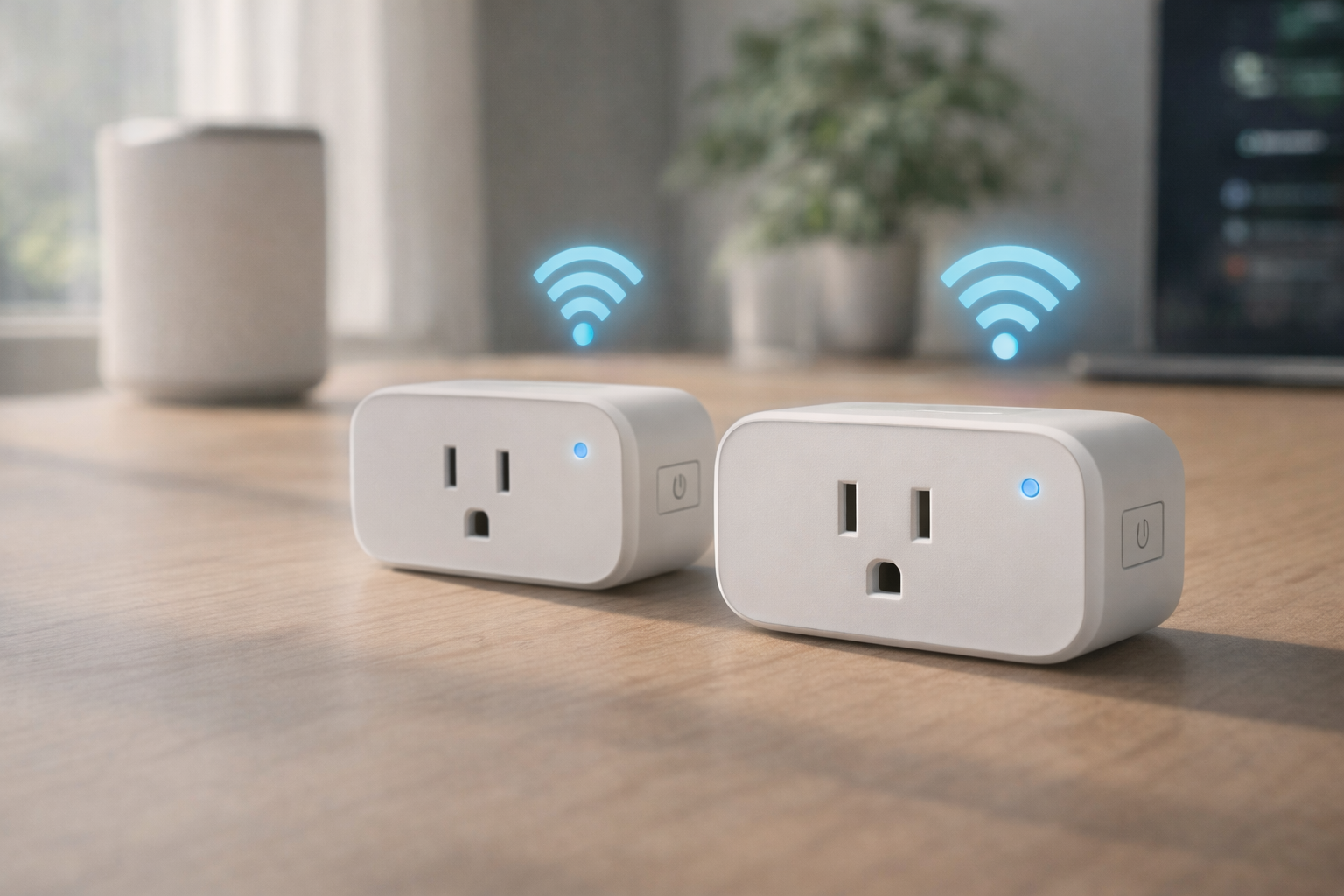
Poor design renders smart plugs impractical—a bulky plug design blocking access to adjacent outlets defeats the purpose of adding automation to your home. Quality smart plugs maintain compact proportions, allowing multiple plugs to occupy a single power strip or wall outlet arrangement without interference. Streamlined designs that angle downward rather than protruding straight from the outlet eliminate obstruction issues. European outlet standards require consideration when selecting plugs, as some models designed for other markets don’t fit Italian outlets efficiently. Compact, well-designed plugs integrate seamlessly into existing outlet arrangements, enabling you to automate multiple appliances in the same location without rewiring or adding extra power strips.
Universal app compatibility through Tuya and Smart Life platforms for cross-brand control
Premium smart plugs increasingly support universal control platforms like Tuya and Smart Life, allowing households to manage devices from different manufacturers through a single unified app. This approach eliminates the frustration of maintaining multiple brand-specific applications. A household with smart plugs from three different manufacturers can control all devices within one coherent ecosystem. Cross-brand compatibility also future-proofs your investment—new devices compatible with the same universal platform integrate seamlessly into your existing system regardless of manufacturer. These platforms typically offer advanced features like complex automation sequences, integration with weather data, and voice assistant compatibility across all connected brands.
Safety features including overload protection and temperature monitoring
Responsible smart plug design incorporates safety mechanisms preventing damage to devices or creation of fire hazards. Overload protection automatically disconnects power when connected appliances draw excessive current, preventing damage from power surges or device malfunctions. Temperature monitoring shuts down plugs that overheat during operation, preventing dangerous conditions. These safety features particularly matter in older Italian homes where electrical infrastructure might not meet modern standards. Premium smart plugs from reputable manufacturers include certifications confirming safety testing compliance with European electrical standards.
Compatibility & Technical Specifications Explained
WiFi connectivity requirements: 2.4GHz network compatibility with standard home routers
Smart plugs connect to home WiFi networks operating at 2.4GHz frequency—the standard frequency band used by virtually all home routers. This universal compatibility ensures smart plugs work with existing router hardware without requiring upgrades or additional equipment. The 2.4GHz band offers broader range and better wall penetration compared to 5GHz, making it more reliable for devices positioned throughout homes. However, this reliability depends on adequate signal strength. Plugs positioned far from routers or separated by multiple walls may experience connectivity issues. Testing signal strength in target locations before purchasing multiple plugs ensures successful deployment. Most smart plugs include LED indicators showing WiFi connection status, allowing quick diagnosis of connectivity problems.
Power ratings and which household appliances are safe to connect (lamps, coffee machines, fans, heaters)
Smart plugs carry power ratings specifying maximum wattage they safely handle—typically between 2,500 and 3,500 watts for standard models. Most common household appliances fall comfortably within these specifications. Lamps and lighting (typically 40-100 watts) are extremely safe. Coffee makers and water kettles (1,500-2,500 watts) work well. Space heaters and heating elements (up to 1,500 watts for most models) function reliably when connected to appropriately-rated plugs. Fans and ventilation systems (50-300 watts) pose no issues. Small kitchen appliances like toasters or slow cookers operate safely. Avoid connecting appliances exceeding the plug’s rated capacity, as this creates dangerous overheating conditions. Exercise particular caution with major appliances—refrigerators, ovens, or air conditioning systems—which typically exceed smart plug power ratings. These devices require hardwired installation rather than plug connection.
Plug design variations: European outlet standards and multi-plug adaptations
Italian outlets follow European Type C/E/F standards featuring two round pins or round pins with grounding contacts. Quality smart plugs designed for European markets maintain full compatibility with these outlet standards. Some adaptors allow connection of non-European plugs, though these adaptations may compromise design compactness. Multi-outlet smart plugs enabling connection of multiple devices to a single smart plug exist, though they operate as simple extension solutions without individual device control. These multi-outlet adaptations work best for low-power applications and shouldn’t substitute for proper circuit expansion when powering multiple high-consumption devices.
Setting up your first smart plug: step-by-step connection process and app installation
Smart plug setup involves three straightforward steps. First, download the manufacturer’s app or compatible universal platform app (Tuya, Smart Life) on your smartphone. Second, physically connect the smart plug to your outlet. Third, open the app and initiate the WiFi pairing process—typically involving entering your network name and password, which the plug then uses to connect. Most quality smart plugs complete this entire process within five minutes. Plugs display LED indicators confirming successful WiFi connection. After initial setup, the plug maintains the connection automatically, reconnecting if the WiFi network restarts or the plug loses power momentarily. First-time users rarely encounter difficulties, as manufacturer instructions and in-app guides walk through each step clearly.
Troubleshooting common WiFi connection issues and signal strength requirements
Connection problems typically stem from inadequate WiFi signal strength. Smart plugs positioned far from routers or separated from the router by multiple walls may struggle to maintain consistent connections. Solutions include relocating the router closer to plug locations, adding WiFi range extenders, or testing connection strength using smartphone WiFi analyzer apps. Most smart plugs require minimum signal strength around -70dBm for reliable operation. Restarting routers and plugs frequently resolves temporary connection losses. If a plug consistently fails to connect, testing it in a location closer to the router determines whether the issue stems from signal strength or plug malfunction. Resetting the plug to factory settings and repeating the setup process resolves software-related connection problems in rare cases.
Firmware updates and long-term compatibility with evolving smart home ecosystems
Manufacturers regularly release firmware updates improving functionality, adding features, and addressing security vulnerabilities. Quality smart plugs automatically notify users of available updates and prompt installation. These updates ensure long-term compatibility as smart home ecosystems evolve and new standards emerge. Plugs that no longer receive updates from manufacturers may gradually lose compatibility with updated voice assistants or smart home platforms. When selecting smart plugs, consider the manufacturer’s track record for update support. Established companies with large market presence consistently provide years of firmware updates, while smaller manufacturers may discontinue support quickly. This durability consideration matters when planning smart home investments meant to function for 5-10 years.
Network security considerations when connecting devices to your home WiFi
Connecting smart plugs to your home WiFi network involves minimal security risk if approached thoughtfully. Use strong, unique WiFi passwords preventing unauthorized network access. Select plugs from reputable manufacturers with track records of addressing security vulnerabilities promptly. Avoid connecting smart plugs to guest WiFi networks if you want them to function continuously. Review privacy policies to understand what data manufacturers collect regarding usage patterns. Most quality smart plugs use encryption for communication between the device and manufacturer servers, preventing data interception. Manufacturers typically store usage data on secure servers separate from personal information. While some privacy concerns exist—manufacturers could theoretically analyze consumption patterns—these concerns apply equally to other smart home devices and represent acceptable trade-offs for most households.
Real-World Use Cases That Transform Daily Life
Automating morning routines: pre-heating coffee makers before you wake up
Morning routines become genuinely effortless with smart plug automation. Schedule your coffee maker to activate at 6:45 AM on weekday mornings. Fresh, hot coffee awaits you when you stumble into the kitchen at 7:00 AM. Simultaneously, bedroom lights brighten gradually starting at 6:30 AM, simulating natural sunrise and easing your transition from sleep to wakefulness. A smart plug on your shower water heater ensures hot water arrives immediately when you step in, eliminating the wasteful delay while cold water drains from pipes. These small automations eliminate morning friction and create the sensation of a home designed around your actual routine rather than a static environment requiring constant manual adjustment.
Security benefits: scheduling lights to simulate occupancy while you’re away on vacation
Extended absences create security vulnerabilities—dark homes obviously unoccupied appear as prime targets for theft and break-ins. Smart plugs simulate occupancy by activating lights and entertainment systems according to realistic schedules. Evening lights activate at dusk, mimicking family members returning home. Entertainment systems power on during typical evening hours, creating visual activity visible from outside. Lights turn off at midnight, suggesting bedtime. Morning lights activate at your typical wake time. This consistent pattern, maintained throughout your vacation, convinces potential intruders that the home remains occupied. Security advantages combine with the energy savings of away mode—you maintain the appearance of occupancy while actually running minimal systems, creating genuine security enhancement without excessive electricity waste.
Managing children’s screen time by automating device shutdowns at bedtime
Parental management of screen time becomes less confrontational when automation enforces limits. Schedule entertainment systems, gaming consoles, and streaming devices to automatically power down at bedtime—say 9:30 PM on school nights. Children know the systems will disconnect regardless of their preferences, transforming screen time management from a parental battle into an established household rule. The automation eliminates negotiation entirely. Parents no longer argue about shutdown time because the plug makes that decision objectively. Morning screen blockades work similarly—tablets and gaming systems remain unpowered until specified times, preventing children from commandeering devices before school preparation completes. This automation approach often proves more effective than parental controls requiring manual enforcement.
Preventing forgotten appliances: remotely turning off forgotten hair straighteners or irons
Forgotten personal grooming appliances—hair straighteners, clothing irons, heated styling tools—represent ongoing safety and energy waste concerns. These devices run at high temperatures and can cause fires if left unattended for hours. Smart plugs connected to these appliances enable remote shutdown from your phone. Realize mid-commute that you forgot to turn off your hair straightener? Use your phone to cut power immediately. Forget whether you unplugged the iron before leaving home? Remotely verify it’s off rather than spending hours worrying about potential fire hazards. This simple safety feature eliminates a persistent source of household anxiety while preventing expensive equipment damage and genuine safety risks.
Controlling heating and cooling systems for optimal comfort without constant adjustment
Heating and cooling consume the most electricity in Italian households, yet many families settle for static temperature settings that don’t adapt to changing conditions or schedules. Smart plugs controlling supplemental heating systems allow dynamic temperature management. Daytime temperatures reduce to save energy while everyone’s away, then automatic increase to comfortable levels before return times. Evening temperatures drop several degrees once bedtime approaches, allowing comfortable sleeping conditions while reducing heating costs. Weekend schedules differ from weekday settings, accommodating different occupancy patterns. Over seasons, these dynamic adjustments substantially reduce heating and cooling consumption compared to static thermostat settings. Families gain comfort through responsive automation rather than settling for compromise temperatures that dissatisfy everyone.
Protecting expensive equipment by limiting runtime and preventing overheating
Expensive equipment like space heaters, power-hungry amplifiers, or industrial-grade appliances risks damage from excessive continuous operation. Smart plugs with timer functionality automatically disconnect these devices after specified periods, preventing overheating and extending equipment lifespan. A space heater accidentally left running for eight hours automatically shuts down after four hours. A powerful amplifier used for occasional events turns off automatically, preventing unnecessary wear. Temperature monitoring on advanced smart plugs provides additional protection, automatically disconnecting devices that overheat, preventing damage that could require expensive repairs or replacement.
Creating seasonal routines for holiday decorations and outdoor lighting
Holiday decoration management becomes substantially simpler with smart plug automation. Rather than manually switching holiday lights on and off daily, schedule them to activate at dusk and deactivate at bedtime automatically. Seasonal lighting schemes change automatically on specified dates—holiday lights throughout December automatically become standard landscape lighting in January. Festival lights activate during specified holiday periods, creating festive atmosphere without requiring remembering specific dates or manual switches. Weather-dependent automation adjusts outdoor lighting based on sunset times, maintaining consistent darkness-responsive activation regardless of seasonal daylight variations.
Navigating the Price-to-Value Proposition
Individual plug pricing (€10-€25) versus multi-pack bundle deals on Amazon Italy
Individual smart plug pricing on Amazon Italy typically ranges from €10 to €25 depending on feature sophistication. Basic models featuring simple on/off functionality and scheduling cost toward the lower end—€10 to €15 per unit. Standard models including energy monitoring and advanced scheduling occupy the mid-range—€15 to €20. Premium models with extensive integration capabilities and robust safety features cost toward the upper range—€20 to €25. Multi-pack bundles offering 2-4 plugs together typically provide per-unit savings of €2 to €5 compared to individual purchases. A two-pack that would cost €35 to €50 if purchased individually frequently sells for €28 to €42 as a bundle. These bundle discounts make expanding your smart home ecosystem substantially more affordable. Households planning to deploy multiple plugs should prioritize bundle purchases, achieving meaningful cost reductions on total expenditure.
Comparing basic models versus advanced models with energy monitoring capabilities
Basic smart plugs offer simple on/off control and scheduling without consumption monitoring. These models suit households prioritizing convenience and basic automation over energy optimization. Advanced models add real-time power consumption displays and historical energy usage graphs, enabling data-driven optimization. For households specifically targeting energy cost reduction, advanced models’ monitoring capabilities justify the €5 to €10 premium over basic options. The consumption visibility drives better scheduling decisions and appliance selection, often generating extra savings exceeding the premium within the first year. Households focused primarily on convenience may find basic models sufficient—they deliver substantial functionality without the energy monitoring features some users won’t utilize.
Hidden costs to consider: electricity for the plug itself and app subscription fees
Smart plugs themselves consume minimal electricity—typically 0.5 to 1 watt continuously. Over a year, this represents approximately €0.40 to €0.80 in electricity costs, a negligible amount. However, accumulating costs across many plugs can compound slightly. Most manufacturers offer free basic apps and cloud connectivity. Premium features—advanced scheduling, integration with specific ecosystems, or extended data history—sometimes require subscription fees ranging from €0.99 to €4.99 monthly or €9.99 to €49.99 annually. Factor these potential subscription costs when evaluating total cost of ownership, though most users accomplish their goals through free app features without premium subscriptions.
Where to find the best deals and seasonal promotions on smart plugs
Amazon Italy regularly features smart plug promotions, particularly during major shopping events. Black Friday and Cyber Monday typically offer 20-30% discounts. Back-to-school seasons (August-September) feature competitive pricing. Pre-Christmas promotions appear November through December. Spring cleaning seasons (March-April) often include deals. Rather than waiting for specific seasons, monitoring price history through Amazon’s tools reveals natural price fluctuations—products frequently drop €3 to €5 below average prices during promotional windows. Subscribe to price alert services providing notifications when followed products drop below target prices. Building your smart plug collection gradually, purchasing during promotional windows, substantially reduces total expenditure compared to buying immediately at full prices.
Budget-friendly starter kits for households new to smart home technology
Many manufacturers offer starter kits designed for smart home beginners, bundling a basic hub with 2-3 smart plugs at attractive combined pricing. These kits typically cost €35 to €60, substantially less than purchasing components individually. Starter kits eliminate decision paralysis for newcomers—manufacturers preselect compatible components, ensuring reliable function without requiring research into compatibility. These kits provide excellent entry points for households curious about smart home capabilities but uncertain about commitment levels. Starter kit buyers frequently become repeat purchasers, expanding their systems with additional plugs and compatible devices once they experience genuine benefits.
Premium options worth the investment for frequent travelers or large households
Frequent travelers benefit substantially from premium smart plugs with robust remote control, comprehensive away mode features, and reliable cloud connectivity. These premium models handle the complexity of managing homes from international locations with varied WiFi connectivity. Large households with numerous devices warrant investment in advanced energy monitoring—the consumption visibility enables optimization strategies across many devices, generating savings that justify premium pricing. Households with complex automation needs—multiple zones, different schedules for various family members, complex integrations—benefit from premium models offering sophisticated scheduling and integration capabilities.
Long-term value: calculating total cost of ownership over 3-5 years
Smart plugs prove extraordinarily cost-effective across 3-5 year ownership periods. Initial purchase costs of €15-€25 per plug recover within 3-6 months through energy savings alone. Over five years, a single plug generating €50 annual savings produces €250 total savings against €20 initial investment—a 12.5x return on investment. Multiple plugs compound these returns substantially. A household deploying ten plugs across five years might achieve €2,500 in cumulative savings against €150-€250 total investment, a 10-15x return. Replacement costs remain minimal—most quality smart plugs function reliably for 5-10 years with no maintenance requirements. Even accounting for eventual replacement, long-term cost of ownership proves remarkably favorable compared to alternative home automation investments requiring professional installation or major infrastructure changes.
Advantages That Make Smart Plugs Worth Adopting
Unmatched convenience: controlling appliances from anywhere, anytime via your phone
Convenience represents smart plugs’ primary appeal—the ability to control connected devices from anywhere using your phone transforms how households interact with their homes. Traveling for business, you receive a call from a concerned family member asking whether they left the heating on. Rather than reassuring them blindly, you open your smartphone app and check or adjust the heating yourself. Vacationing in another country, you receive a security alert and immediately activate lights throughout your home to simulate occupancy, potentially deterring break-in attempts. This level of control genuinely transforms the home experience, replacing anxiety with confidence. Tasks you previously couldn’t accomplish remotely—adjusting heating mid-trip, turning off forgotten appliances, activating security lighting—become as simple as smartphone taps.
Measurable energy savings through automated scheduling and consumption awareness
Energy savings provide concrete financial justification beyond convenience benefits. Automated scheduling eliminates phantom drain, reduces heating and cooling waste, and shifts consumption toward lower-cost hours. Consumption monitoring reveals which appliances generate the highest bills. These data-driven insights drive behavioral changes that compound savings. A household reducing phantom drain by 100 watts, shifting heating by 15%, and optimizing kitchen appliance timing might reduce electricity costs by 20-25%—€20 to €40 monthly on typical Italian bills. Over years, these savings accumulate substantially while simultaneously reducing environmental impact proportionally.
Minimal setup friction: most models connect in under 5 minutes without technical expertise
Smart plug adoption requires zero technical expertise. No wiring. No installation appointments. No infrastructure upgrades. You remove the plug from packaging, insert it into an outlet, download the app, and complete WiFi setup through intuitive in-app prompts. Most users accomplish this entire process within five minutes. This minimal setup friction eliminates barriers that deter smart home adoption for non-technical households. Anyone capable of operating a smartphone can successfully deploy smart plugs without assistance or special training. This accessibility democratizes smart home benefits—no longer reserved for technology enthusiasts with installation expertise, but available to any household willing to try automation.
Broad ecosystem compatibility: works with multiple brands and platforms simultaneously
Modern smart plugs increasingly support multiple platforms—universal apps like Tuya and Smart Life working alongside brand-specific ecosystems and voice assistants like Alexa and Google Home. This compatibility reduces vendor lock-in concerns. A household with smart plugs from three different manufacturers can control all devices through a single unified app. New device purchases don’t require ecosystem commitment—compatible devices simply add to existing systems. This flexibility creates genuine scalability—households expand their smart home gradually without concerns that each new device requires a different app or forces ecosystem standardization.
Problem-solving capability: addressing specific household pain points (forgotten appliances, security concerns)
Smart plugs directly address specific household problems. Forgotten appliances causing anxiety? Remote shutdown eliminates worry. Vacations creating security concerns? Light scheduling simulates occupancy. Heating costs consuming excessive budgets? Automation reduces consumption. Children wasting electricity leaving lights burning? Automated shutdowns eliminate waste. Rather than offering generic technology solutions seeking problems to solve, smart plugs directly address genuine household challenges. This problem-solving capability drives adoption rates and user satisfaction. Households adopting smart plugs specifically to address understood problems report higher satisfaction than those purchasing for abstract convenience benefits.
Scalability: start with one plug and expand your smart home gradually without major investment
Smart home expansion requires no major commitments. Start with a single smart plug controlling your highest-consumption appliance or addressing your primary pain point. Monitor results. Expand gradually with additional plugs as you identify further automation opportunities. Each plug functions independently—no complex integration challenges. Start small, learn through experience, then expand confidently based on proven benefits. This modular approach eliminates smart home adoption risk. You don’t invest hundreds of euros in complete systems requiring professional configuration. You test concepts with €15 investments, refining your approach before expanded spending. Most households find this gradual approach far more comfortable than comprehensive installations requiring large upfront commitments.
Contribution to household sustainability goals and reduced carbon footprint
Reduced electricity consumption directly decreases household carbon emissions. A family reducing consumption by 25% through smart plug optimization simultaneously reduces their carbon footprint proportionally. Quantifying this impact provides motivation beyond purely financial incentives. A household saving 2,500 kWh annually through smart optimization prevents approximately 1.5 tons of CO2 emissions—the equivalent of a significant portion of household transportation impact. For environmentally conscious families, these sustainability contributions represent genuine value beyond financial savings. Smart plugs enable households to meaningfully reduce environmental impact through practical technology adoption, contributing to climate goals while improving household finances.
Limitations & Honest Considerations Before You Buy
WiFi dependency: plugs become useless during internet outages or weak signal areas
Smart plugs fundamentally require WiFi connectivity to function. Without internet access, remote control and cloud-based scheduling cease functioning. Local control through direct app connection sometimes continues during WiFi outages if the phone retains router connectivity through backup hotspot functions, but this represents unreliable functionality. Households in areas experiencing frequent internet disruptions should consider smart plugs as convenience enhancements rather than essential systems. Critical systems like security lighting or heating shouldn’t depend solely on smart plug automation if WiFi reliability proves questionable. The most advanced smart plug means nothing if your internet connection drops regularly. Verify WiFi reliability and signal strength in target locations before deploying numerous plugs dependent on continuous connectivity.
Basic model constraints: simple on/off functionality without advanced controls for complex appliances
Basic smart plugs offer only binary control—on or off. This matches simple appliances like lamps and heating elements perfectly, but proves insufficient for complex devices requiring multiple settings or operational states. Air conditioning systems with temperature controls, washing machines with cycle selection, and multi-setting appliances don’t integrate well with simple on/off plugs. These applications require more sophisticated control mechanisms. Basic smart plugs represent a limitation primarily for users expecting them to control complex appliances beyond their design scope. Understanding which appliances suit simple on/off control versus those requiring more sophisticated interfaces prevents frustration with purchased plugs operating outside their functional range.
Privacy and data security concerns with certain smart home brands and data collection practices
Smart plugs transmit usage data to manufacturer servers—when devices activate, consumption levels, and usage patterns. Some manufacturers collect this data transparently for operational purposes only. Others utilize usage data for purposes that raise privacy concerns. Households uncomfortable with data collection should research manufacturer privacy policies before purchasing. Reputable manufacturers provide transparent privacy policies, secure data transmission, and limited data retention periods. Smaller manufacturers or those headquartered in jurisdictions with weaker data protection regulations may collect and utilize data in ways that concern privacy-conscious households. This limitation isn’t unique to smart plugs—all connected smart home devices create similar privacy considerations. Weighing convenience benefits against privacy concerns represents a personal decision each household must make.
Potential compatibility issues between older routers and newer WiFi standards
Smart plugs designed for current WiFi standards may experience compatibility challenges with older routers using outdated WiFi specifications. Most modern plugs support standard 802.11n WiFi, compatible with routers from the past decade. However, extremely old routers or those with disabled WiFi features may lack compatibility. Testing smart plug connectivity with your existing router before purchasing multiple units prevents expensive incompatibility discoveries. Router specifications clearly state WiFi standards—modern routers support 802.11ac or newer, compatible with contemporary smart plugs. Older routers from 2010 or earlier may require updates or replacement for reliable smart plug operation. This limitation affects relatively few users but matters for households with aging networking infrastructure.
Learning curve for users unfamiliar with smartphone apps and smart home ecosystems
Smart plug operation assumes comfort with smartphone apps and basic smart home concepts. Users unfamiliar with app navigation, WiFi setup, or cloud-based device control may struggle with initial configuration. Younger users typically find this interface natural and intuitive. Older users or those avoiding smartphone technology may find the required app interaction uncomfortable. Comprehensive instruction manuals and in-app guidance minimize this learning curve, but some users will find the smart home ecosystem intimidating regardless. This limitation particularly affects households where older family members primary device users. Testing whether household members feel comfortable with required app operation before investing substantially in smart home automation ensures realistic expectations.