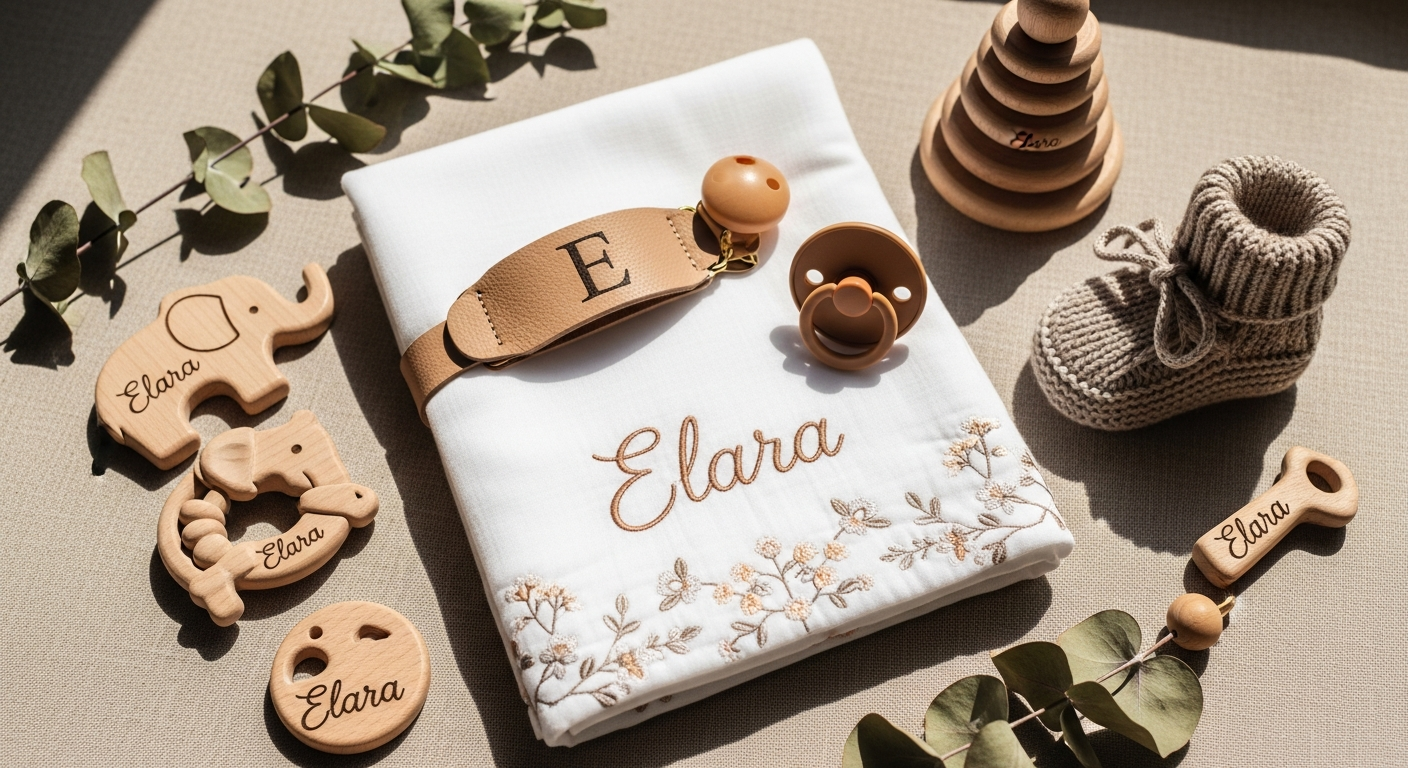

Parents spend an average of 2,000+ hours in the nursery during their baby’s first year—and they’re increasingly investing in items that do double duty: soothing their baby while creating lasting memories. The nursery has become more than just a sleeping space; it’s a sanctuary where parents and infants bond during some of the most vulnerable and precious moments of early parenthood.
Personalized baby comfort items aren’t just trendy; they’re becoming the go-to gift choice for new parents who want something meaningful, functional, and utterly unique to their child. Custom comfort items, particularly personalized cuddly cloths embroidered with your baby’s name and birth date, represent a shift in how modern parents approach nursery essentials. Rather than settling for generic products, families are seeking out pieces that reflect their baby’s identity from day one.
The Psychology Behind Personalized Baby Comfort Objects
How Babies Respond to Familiar Sensory Cues
Newborns arrive in the world overwhelmed by sensation. They’re accustomed to the muffled sounds, contained warmth, and gentle pressure of the womb. When faced with the vastness of the external world, familiar objects become anchors. Babies respond powerfully to specific scents, textures, and visual cues that feel safe and recognizable. A soft fabric with a particular smell—perhaps infused with your scent or a calming lavender essence—immediately signals security to your infant’s developing brain.
The texture matters enormously too. Some babies find smooth cotton deeply comforting, while others prefer the sensory feedback of crinkly elements or strategically placed tags. These tactile experiences engage your baby’s developing sensory pathways and create neural pathways associated with safety and comfort.
The Developmental Role of Transitional Objects
Child development researchers have long recognized the importance of transitional objects—items that help babies navigate the emotional distance between one state and another. A transitional object eases the shift from being held by a parent to sleeping alone, or from home to daycare. These objects become psychological bridges, maintaining the sense of connection even when a caregiver steps away.
Personalized comfort items amplify this developmental function. When your baby clutches a cuddly cloth embroidered with their own name, they’re not just holding fabric—they’re holding a tangible representation of their identity and their place within your family. This creates a powerful psychological anchor that strengthens emotional regulation capabilities.
Why Personalization Creates Stronger Emotional Attachment
Personalization transforms a comfort item from a functional tool into a statement of belonging. The moment a name is embroidered into fabric, that object becomes irreplaceably yours. Your baby develops awareness of their own name during the early months, and encountering it on a beloved comfort item reinforces their sense of self and identity.
For parents, personalization deepens attachment as well. You’re not just providing a generic soother; you’re creating a keepsake. The act of choosing fonts, selecting colors, and deciding on exact wording involves intentional decisions that reflect your hopes and values for your child.
Scientific Research on Custom Items and Separation Anxiety
Research on attachment and self-soothing demonstrates that familiar objects with distinctive characteristics reduce cortisol levels (the stress hormone) in infants during separation from caregivers. Babies with personalized comfort items show measurable decreases in separation anxiety during naps and sleep transitions compared to those relying on generic items.
Studies indicate that the combination of tactile comfort, scent, and visual recognition—enhanced by personalization—creates a multi-sensory experience that calms the nervous system more effectively than single-feature items. This explains why parents consistently report easier sleep transitions when personalized comfort items are introduced early.
What Sets Premium Personalized Comfort Items Apart
Material Quality Standards
Not all baby fabrics are created equal. Premium personalized comfort items prioritize materials specifically tested for sensitive skin. Organic cotton stands out for its breathability and softness without chemical residues. Bamboo blends offer exceptional silkiness and natural temperature regulation, keeping babies comfortable whether they’re too warm or cool.
Hypoallergenic fabrics minimize the risk of skin irritation or allergic reactions—a critical consideration when items will be in constant contact with your baby’s delicate skin and mouth. Quality providers source materials that meet international safety standards and hold certifications confirming their safety for infants.
Embroidery Techniques That Last
The embroidery itself separates quality from mediocre personalized items. Premium personalization uses thread that bonds securely to fabric fibers rather than sitting on the surface. High-quality embroidery withstands frequent washing, repeated handling, and years of use without fading, fraying, or unraveling.
The stitching technique matters too. Proper embroidery distributes thread tension evenly, preventing puckering or distortion of the fabric. Quality providers use thread colors specifically formulated to resist fading from washing and sun exposure, ensuring your baby’s name remains vibrant through years of use.
Safety Certifications and Testing
Reputable personalized comfort item providers submit their products to rigorous testing. Items must pass safety standards for products intended for infants, including tests for dye stability (ensuring colors don’t bleed or transfer to skin), thread security (confirming embroidered elements can’t be easily picked or pulled loose), and overall fabric integrity.
Look for providers who willingly share information about certifications like OEKO-TEX Standard 100 or similar international safety standards. These certifications provide independent verification that products meet strict criteria for chemical safety and quality.
Design Options Available
Customization possibilities range from simple monograms to elaborate designs incorporating birth dates, full names, and custom artwork. Premium providers offer font selections that complement various aesthetic preferences, from modern and minimalist to classic and ornate.
Some providers offer embroidery placement options—names centered on the cloth, initials in corners, birth dates woven into borders. These choices allow you to create something that matches your nursery aesthetic while honoring your baby’s identity.
Personalized vs. Generic Comfort Items: A Practical Comparison
Cost Analysis and Long-Term Value
Generic comfort items cost significantly less upfront—often half or less than personalized options. However, the cost-per-use calculation shifts dramatically when you consider lifespan and sentimental value. A personalized cuddly cloth, properly maintained, remains useful through multiple years and can be safely passed to younger siblings or preserved as a keepsake.
The keepsake value adds a dimension generic items simply cannot match. Years later, that embroidered cloth becomes a tangible memory of your child’s infancy—something you’ll instinctively reach for when feeling nostalgic. This emotional value justifies the higher initial investment for many families.
Functional Differences in Baby Response
While all comfort items serve soothing functions, babies frequently respond more intensely to personalized versions. The distinctive visual cue—seeing their own name—registers as uniquely theirs in ways generic patterns cannot replicate. Parents report that babies identify and reach for personalized items with noticeably more enthusiasm than unmarked alternatives.
This heightened engagement translates into more effective soothing. A baby who actively seeks out their special cloth experiences deeper self-regulation than one passively accepting any available comfort item. The psychological ownership created by personalization strengthens the item’s efficacy.
Gift-Giving Advantages
In a sea of standard baby shower gifts, personalized comfort items stand out dramatically. They signal thoughtfulness and uniqueness while remaining genuinely practical. Unlike many novelty baby items that lose utility quickly, personalized comfort pieces integrate seamlessly into daily routines.
Gift-givers appreciate that personalized items solve the problem of finding something original. Recipients treasure receiving something crafted specifically for their baby rather than off-the-shelf generic alternatives.
Emotional Value for Parents
Beyond practical function, personalized items become memory vessels. Embroidered dates preserve the exact moment your child entered the world. Watching your toddler carry a cloth bearing their own name becomes a moment of recognition—your child understanding themselves as a distinct person with an identity.
These items document milestones in ways photographs alone cannot. They’re tactile evidence of your child’s babyhood, something to hold when that phase inevitably passes.
Choosing the Right Personalized Comfort Item for Your Baby
Age-Appropriate Selection
Newborns benefit most from soft, texture-rich comfort items they can safely mouth and hold. At this stage, simplicity works best—a cuddly cloth with minimal embellishments that could potentially be pulled loose. The personalization serves parents more than the newborn, who responds primarily to tactile and olfactory cues.
Older infants (around 6+ months) develop stronger visual recognition and can appreciate the distinctive appearance of personalized items. They begin reaching for their specific cloth rather than accepting any available comfort object. By toddlerhood, children recognize their own names visually and emotionally, making personalization deeply meaningful.
Texture Preferences
Every baby exhibits individual texture preferences. Some gravitate toward silky smoothness, while others prefer slight texture variation. Observing which surfaces your baby touches longest during diaper changes, playtime, or floor time reveals their preferences.
Crinkly elements add sensory interest for some babies, while others find them overstimulating. Tags—whether woven into seams or hanging freely—fascinate many infants. Thoughtfully chosen textures transform a comfort item into a fuller sensory experience that matches your specific baby’s preferences.
Color Psychology in Nursery Context
Soft pastels create calming environments, while warmer tones introduce energy and warmth. Cooler colors promote relaxation, whereas brighter hues stimulate visual development. Your baby won’t have color preferences based on psychology, but you’ll interact with this item daily, and its color should complement your nursery aesthetic.
Consider how the personalized item’s colors work within your existing nursery palette. Should it coordinate harmoniously or serve as an intentional accent? These aesthetic choices matter because you’re creating an environment where you’ll spend countless hours.
Budget-Friendly Options Without Quality Compromise
Premium personalization doesn’t require luxury pricing. Seek providers offering high-quality materials and embroidery at moderate price points. Simpler design choices—monograms rather than elaborate scenes, solid colors rather than complex patterns—reduce costs while maintaining quality.
Seasonal sales, registry discounts, and bundle pricing often make personalized items more accessible. Waiting until after your due date allows you to order with certainty about your baby’s name and exact birth date, which some providers offer at standard pricing.
Real Parent Experiences: Why Personalized Items Become Nursery Staples
Sleep Transitions and Separation Anxiety
Parents consistently report that personalized comfort items dramatically eased transitions to independent sleep. Babies clutching cloths embroidered with their names settled more quickly for naps and nighttime sleep than babies without such items. The psychological reassurance—a tangible symbol of connection to their parent and their identity—genuinely reduced fussiness.
One parent described her daughter’s immediate recognition of her personalized cloth at two months old: “She’d see her name embroidered on the fabric and visibly relax. It was like she recognized something fundamentally hers.” Sleep transitions that typically involve weeks of adjustment occurred in days with the personalized comfort item present.
Security Blankets Through Toddlerhood
Personalized comfort items frequently outlast typical baby items in terms of emotional significance. Toddlers develop intense attachments to these cloths, carrying them through daily transitions. A cloth embroidered with a toddler’s name becomes a tangible anchor during the significant stress of starting daycare or preschool.
Parents report their toddlers requesting their personalized cloth when tired, scared, or overwhelmed. The item becomes a self-soothing tool that children learn to use independently—a skill that builds emotional resilience.
Durability and Longevity Through Multiple Children
Well-made personalized items maintain integrity through intensive use and repeated washing. Parents who’ve passed personalized comfort items to younger siblings report that quality items look nearly new after years of use. The embroidery remains vibrant, fabric retains softness, and the item continues functioning as effectively as when new.
This durability makes personalized items exceptional value investments. You’re not purchasing something that deteriorates within months; you’re acquiring something that remains useful and cherished for years.
Unexpected Benefits in Daily Life
Beyond the nursery, personalized comfort items prove surprisingly useful. The distinctive appearance helps with daycare communication—teachers instantly recognize whose cloth belongs to whom when multiple comfort items occupy the crib area. The personalization also prevents mix-ups when items get accidentally grabbed by other children.
During travel, personalized items provide significant comfort for babies experiencing new environments. Airplane flights, hotel stays, and unfamiliar sleeping spaces become less stressful when accompanied by a familiar item bearing your baby’s own name. Parents also report that older siblings enjoy seeing their younger brother or sister’s personalized item as a tangible representation of the new baby’s arrival.
Care, Maintenance, and Longevity of Personalized Baby Items
Washing Instructions That Preserve Embroidery
Personalized items require slightly more careful washing than standard baby clothes. Turning the cloth inside out before washing protects embroidery from friction with other fabrics. Using gentle cycles and lukewarm water prevents color fading and thread weakening.
Avoid fabric softeners, which can coat embroidered areas and cause discoloration. Bleach and harsh chemicals compromise both fabric and thread integrity. Mild detergents specifically formulated for delicate items provide effective cleaning without damaging personalization.
Air drying preserves embroidery better than high-heat dryer cycles. If you use a dryer, select low heat and remove items promptly to prevent wrinkles. Many parents who want their personalized items to last generations opt for line drying exclusively.
Stain Removal Techniques
Despite careful handling, nursery accidents happen. Immediate treatment prevents permanent staining. For milk or formula spills, rinse with cool water immediately—hot water can set protein-based stains.
For stubborn stains, create a gentle paste using mild detergent and cool water, applying it to the affected area and allowing it to sit briefly before gentle rubbing. Test any stain treatment on an inconspicuous area first to ensure the approach won’t damage embroidery or fabric. Harsh stain removers should be avoided entirely on personalized items, as they can harm both the base fabric and thread.
Storage Methods to Prevent Deterioration
Long-term storage requires attention to prevent fading and mildew. Store personalized items in breathable cotton bags rather than plastic containers, which trap moisture. Keep storage areas cool, dry, and away from direct sunlight to prevent color fading.
Some parents preserve personalized comfort items by placing them in memory boxes with photos, birth announcements, and other keepsakes from their baby’s early months. This approach honors both the item’s function during infancy and its evolving role as a cherished memory container.
When to Retire Versus When to Pass Along
Well-maintained personalized comfort items can safely pass to younger siblings. However, if an item shows signs of fraying embroidery, compromised seams, or fabric deterioration, it’s time to retire it. Items that have been heavily used and show material wear should be removed from active use before they pose any risk.
Rather than discarding beloved personalized items, consider preserving them in shadow boxes, framing embroidered sections, or incorporating them into quilts. These creative approaches honor what the item meant to your child while creating new keepsakes.
Making Your Nursery Personal: Taking the Next Step
Personalized baby comfort items represent far more than a trendy nursery addition—they’re functional tools that support your baby’s emotional development while creating tangible memories of these fleeting early years. From the moment you embroider your newborn’s name onto a soft cuddly cloth, you’re crafting something that bridges the gap between practical baby gear and cherished keepsake.
The investment pays dividends through countless soothing moments, easier transitions, and the genuine joy of watching your little one bond with something uniquely theirs. Whether you’re a first-time parent building your nursery from scratch or a seasoned caregiver looking to elevate your collection, personalized comfort items deserve a prominent place in your planning. The combination of quality materials, thoughtful customization, and proven developmental benefits makes these pieces worth prioritizing on your registry or gift list.
The decision to personalize transforms your approach to nursery essentials. Rather than accepting whatever comfort items happen to be available, you’re intentionally creating something matched to your baby’s identity and your family’s values. This intentionality extends beyond the practical into the emotional—every time you see that embroidered name, you’re reminded of your child as a distinct individual worthy of personalized care and consideration.