
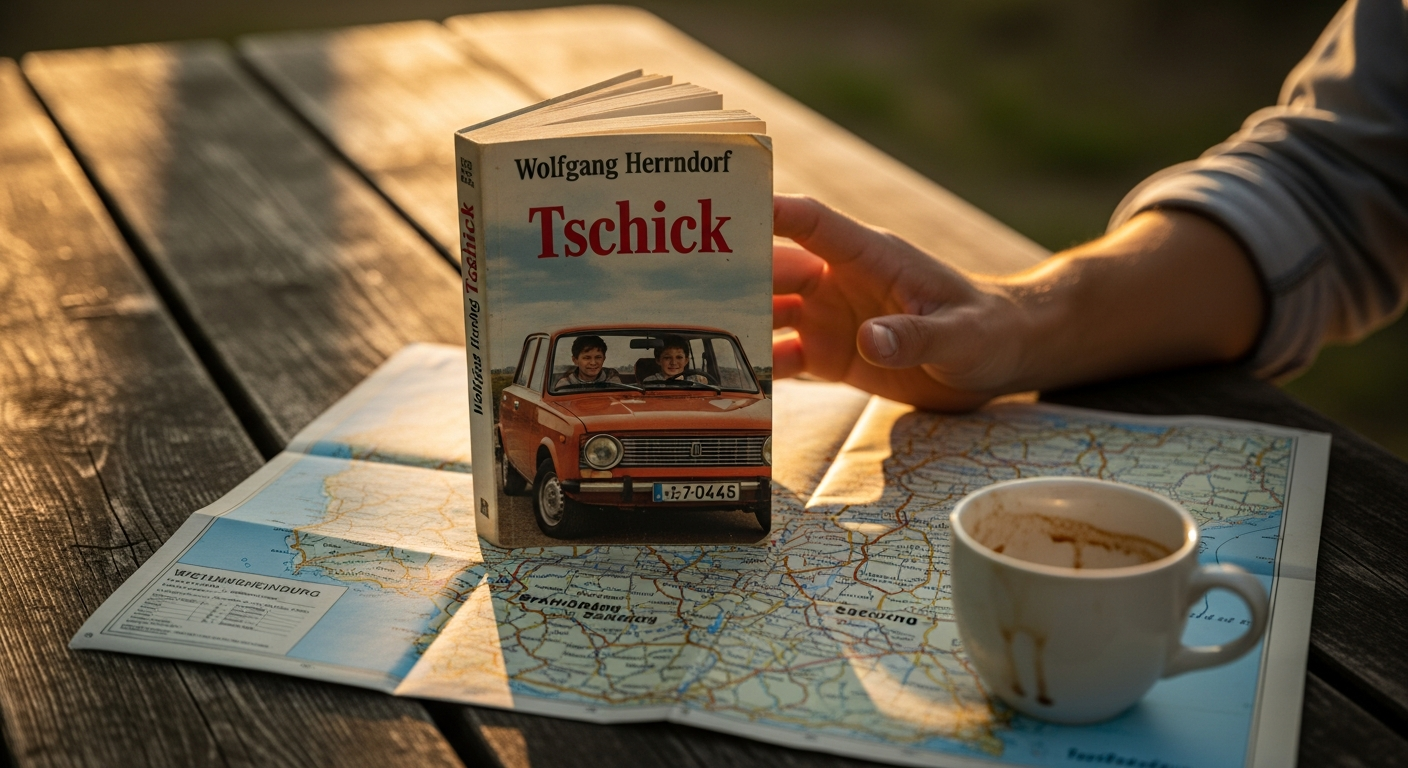

Over 4 million copies sold in Germany alone—yet most English-speaking readers have never heard of Tschick. Wolfgang Herrndorf’s 2010 masterpiece has quietly become one of the most beloved coming-of-age road trip novels of the 21st century, winning multiple prestigious awards and capturing hearts across 42 countries. Originally published as Why We Took the Car, this German youth novel tells the unforgettable story of two 14-year-old outsiders—Maik and Andrej Tschick—who embark on an impulsive summer journey in a stolen light blue Lada through the German countryside.
What makes this road trip narrative stand out isn’t just the adventure itself, but how Herrndorf captures the raw, unfiltered experience of adolescence: the absurdity, the vulnerability, the moments of genuine connection that change us forever. The novel speaks to teenagers with complete honesty while offering adults a chance to remember what it felt like to be 14 and desperate for something real.
The Story Behind Tschick’s Unlikely Journey to Literary Stardom
Wolfgang Herrndorf’s Vision and the Transformation of German Youth Literature
Wolfgang Herrndorf brought something revolutionary to German youth literature when he published Tschick in 2010. His writing style eschewed pretension and complexity, instead embracing unpretentious, fresh language that spoke directly to readers. Herrndorf understood adolescence not as a phase to be explained away but as a profound human experience worthy of serious artistic attention. His characters felt alive on the page—imperfect, contradictory, achingly real.
Publication History and Rapid International Expansion
When Rowohlt Verlag first released Tschick in 2010, the novel found immediate resonance within German literature circles. What began as a domestic success quickly transformed into a global phenomenon. Publishers recognized the story’s universal appeal, and within years, Tschick had been translated into 42 countries, breaking language and cultural barriers with remarkable ease. The novel’s journey from German publication to international sensation speaks to its fundamental power—the ability to transcend its origins and speak to readers everywhere.
Award Recognition and Cultural Impact
The accolades arrived swiftly and numerous. Tschick earned the German Youth Literature Award in 2011, followed by the Clemens Brentano Prize that same year and the Hans Fallada Prize in 2012. These weren’t marginal honors; they represented recognition from the highest echelons of the literary establishment. Schools across Germany began assigning it, and it achieved something rare: status as both critical darling and beloved classroom text. Teachers recognized in Tschick a tool for reaching adolescent readers—a book that didn’t talk down to them but instead met them exactly where they lived.
Two Outsiders, One Stolen Car, Infinite Possibilities—The Plot That Captivates Readers
Meet Maik Klingenberg: The Quiet Observer
Maik Klingenberg appears at first glance as an unremarkable 14-year-old from an affluent Berlin family. His parents are absent, perpetually traveling or absorbed in their own concerns. Wealth surrounds him, yet emotional connection remains distant. Maik is introspective, observant, skilled at rendering himself invisible. He exists on the periphery of teenage social hierarchies, never quite fitting into any established group. This quiet outsider status becomes crucial to the narrative—Maik’s perspective allows readers to witness everything with fresh eyes.
Tschick’s Arrival: The Catalyst
Then Andrej Tschichatschow arrives. Tschick is everything Maik isn’t: loud, confident, unafraid of authority, unapologetically himself. As a German-Russian immigrant, Tschick carries the double burden of never fully belonging anywhere. Yet instead of retreat, he charges forward with complete disregard for social convention. When Tschick appears at Maik’s house one summer day with a stolen light blue Lada, he brings possibility itself. The car isn’t just transportation; it’s a portal to freedom.
The Summer When Everything Changes
What unfolds next is pure spontaneity. Maik’s parents have left for vacation. Tschick has a vehicle. The two boys decide to drive—not toward any particular destination, but simply away. They head into the sun-drenched German provinces without maps, without plans, without any clear sense of where they’re going. This is the entire premise, and somehow it contains everything.
The Journey Unfolds: Between Absurdity and Revelation
The road trip becomes a series of encounters—some darkly comic, others deeply moving. They steal gasoline. They sleep in the car. They meet strangers who offer unexpected kindness or inexplicable cruelty. Herrndorf balances these absurd moments with quiet instances of genuine connection. A conversation about family becomes unbearably tender. An argument about music shifts into something more profound. The narrative pacing creates rhythm, allowing the book to accelerate and decelerate, matching the emotional intensity of each scene.
Transformation Through Adversity
Both characters transform across the journey. Maik discovers courage he didn’t know he possessed. Tschick reveals vulnerability beneath his confident exterior. Neither boy emerges unchanged. The friendship between them deepens through shared experience, through having no one else to rely on except each other. This is the novel’s true subject—not the road trip itself, but what happens to two people when they’re forced to confront who they actually are.
Universal Themes That Resonate Across Age Groups and Generations
Coming-of-Age Authenticity
Herrndorf refuses to sentimentalize adolescence. The novel captures it with unflinching honesty—the shame, the hunger for connection, the desperate need to matter. Teenagers recognize themselves in these pages because Tschick doesn’t pretend adolescence is simple. It’s messy, contradictory, sometimes cruel. Yet it’s also achingly beautiful.
Friendship as Transformation
The unlikely bond between two misfits becomes the emotional core. Neither Maik nor Tschick would normally be friends—they come from different worlds, possess different temperaments, want different things. Yet circumstance and choice bring them together, and something genuine emerges. The friendship doesn’t fix either of them; it simply allows them to become more fully themselves.
Identity and Belonging
Throughout the journey, both characters grapple with fundamental questions: Who am I? Where do I belong? Maik struggles with his privilege—the guilt of having money while Tschick navigates immigrant marginalization. Tschick questions whether Germany will ever truly be home. These aren’t abstract concerns; they’re lived, embodied, immediate.
Defying Authority and Finding Responsibility
Stealing a car is fundamentally an act of rebellion against authority. Yet Herrndorf complicates this narrative. The boys aren’t heroes simply because they break rules. They’re children engaging in genuinely dangerous behavior with real consequences. The novel holds space for both the thrill of rebellion and the weight of responsibility.
Class, Privilege, and Experience
Maik’s affluent background contrasts sharply with Tschick’s precarious existence. This tension runs throughout the narrative, challenging easy assumptions about what privilege actually means. Money hasn’t made Maik happy or protected him from loneliness. Yet Tschick’s lack of resources creates genuine hardship. Herrndorf doesn’t reduce this to moral simplicity—both perspectives hold truth.
The Tonal Balance: Heartbreak and Laughter
What makes Tschick remarkable is its ability to be simultaneously hilarious and devastating. A scene might begin as comedy and shift into pathos without warning. Readers laugh, then find themselves moved to tears. This tonal complexity mirrors actual adolescent experience, where joy and sorrow exist side by side.
Self-Discovery Through Movement
The road trip structure becomes more than plot device—it becomes method. Movement catalyzes change. By placing these characters in motion, Herrndorf creates conditions for genuine transformation. The landscape becomes character itself, and the journey becomes the thing that matters most.
Finding Affordable Copies—Your Guide to Buying Tschick on Medimops.de
Format Options and Availability
Medimops.de specializes in second-hand media, and Tschick maintains consistent bestseller status on the platform. Multiple format options cater to different reading preferences. Paperback editions dominate the offerings, though hardcover copies appear regularly. For audio enthusiasts, CD versions occasionally become available. This variety means readers can choose the format that best suits their needs and budget.
Pricing Breakdown and Condition Categories
Paperback copies typically range from €3.49 to €5.49 depending on condition. A book graded “Gebraucht – Gut” (used – good condition) costs around €3.99. Step up to “Gebraucht – Sehr gut” (used – very good condition) and prices hover near €4.79. The top tier, “Gebraucht – Wie neu” (used – like new condition), sits at approximately €5.49. Hardcover editions command slightly higher prices, ranging from €3.49 to €5.89. These prices represent savings up to 70% compared to new book purchases.
Quality Assurance and Medimops Standards
Medimops maintains rigorous grading standards. Each condition category comes with specific criteria, allowing buyers to understand exactly what they’re purchasing. A book marked “Wie neu” will arrive in pristine condition, while “Gut” means minor wear but complete functionality. This transparency builds confidence in purchasing second-hand.
Why Medimops Stands Out for Budget-Conscious Readers
Medimops doesn’t simply offer cheap books—it offers quality literature at sustainable prices. The platform focuses specifically on used media, creating a marketplace where affordability aligns with environmental responsibility. For readers wanting to experience Tschick without financial barrier, Medimops provides the ideal solution.
The Sustainability Factor—Why Buying Second-Hand Tschick Matters
Circular Economy and Extended Book Life
Every used copy purchased from Medimops extends the life of a beloved book. Instead of remaining on a shelf or relegated to storage, that copy finds a new reader. This circulation models the circular economy—goods continuing to provide value through multiple ownership cycles rather than becoming waste.
Environmental Impact of Second-Hand Purchasing
New book production requires resources: paper from trees, ink, energy for printing and binding, fuel for transportation. Purchasing used copies eliminates these environmental costs entirely. When you buy Tschick second-hand, you’re choosing the book that already exists rather than demanding new production. This seemingly small choice, multiplied across millions of readers, creates genuine environmental benefit.
Conscious Consumption as Personal Value
Buying second-hand from Medimops aligns with broader values of environmental stewardship. It represents a conscious choice to consume responsibly, to recognize that excellent books needn’t be new to be valuable. This approach to reading becomes part of a larger commitment to sustainability.
Supporting Literary Culture Through the Used Book Market
The used book market sustains literary culture by making books accessible to readers who might otherwise be priced out. Students, young people, and readers on limited budgets gain access to exceptional literature. This democratization of reading strengthens communities and ensures that brilliant books reach broader audiences.
Affordability Meets Environmental Responsibility
Perhaps most powerfully, buying used books proves that affordability and environmental responsibility aren’t opposing forces—they’re aligned. You save money while protecting the planet. This rare convergence makes second-hand book purchasing particularly compelling.
The Road Trip That Never Ends—Why Tschick Remains Essential Reading
Tschick isn’t just a coming-of-age road trip novel—it’s a mirror held up to adolescence itself, reflecting both the absurdity and the profound beauty of growing up. Herrndorf captured something rare: a story that speaks to teenagers with complete honesty while offering adults a chance to remember what it felt like to be 14 and desperate for something real. The friendship between Maik and Tschick transcends the page because it’s rooted in universal human needs—connection, belonging, freedom.
What makes this novel even more accessible today is the ability to grab an affordable copy from Medimops.de, where pristine used editions sell for a fraction of the new book price. You’re not just purchasing a story; you’re participating in sustainable consumption practices that give beloved books a second life. Whether you’re a teenager searching for a character who truly understands your world, a parent wanting to reconnect with adolescence, or a reader simply hungry for exceptional storytelling, Tschick delivers.
The journey through sun-drenched German provinces in a stolen Lada awaits—one that has changed millions of readers across 42 countries and continues to resonate with each new generation discovering it.