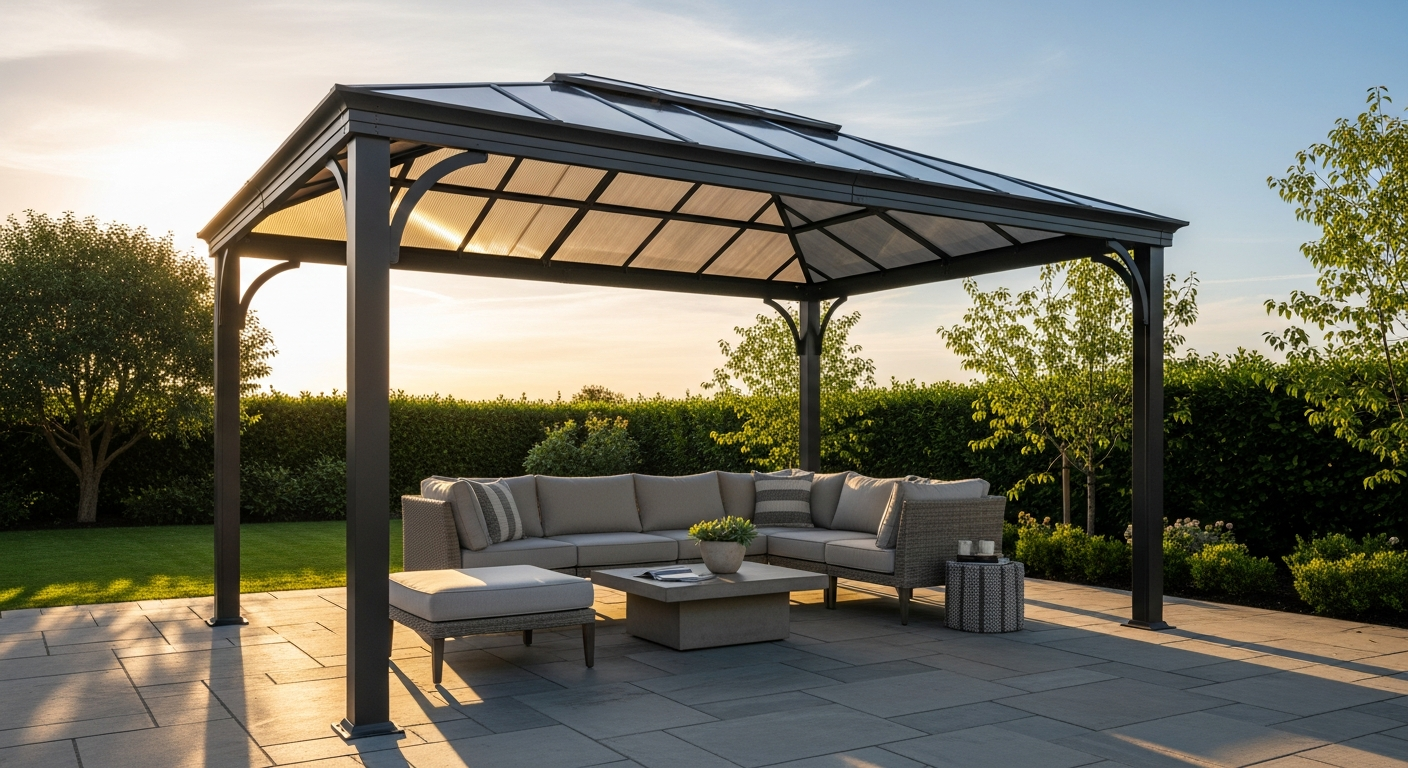

Most outdoor structures crumble under pressure—literally. When winter snow piles up or summer storms roll through, flimsy gazebos become liabilities rather than assets. The Kozyard Alexander Hardtop Gazebo flips this script entirely, engineered to handle whatever Mother Nature throws at it. This structure represents a fundamentally different approach to outdoor living: permanent, reliable, and built to perform across all seasons.
The real difference lies in the engineering. While typical gazebos rely on lightweight materials and hope for the best, the Alexander model employs heavy-duty aluminum frames, galvanized steel roofs, and reinforced beam structures designed for extreme conditions. Understanding these technical choices reveals why this gazebo commands respect from customers and stands out in a crowded market of outdoor pavilions.
Your backyard deserves protection that actually works. Discover how the Kozyard Alexander Hardtop Gazebo can transform your outdoor space into a year-round sanctuary.
Engineering Materials That Actually Resist Rust and Corrosion
The foundation of any durable outdoor structure starts with material selection. The Kozyard Alexander uses a heavy-duty aluminum frame constructed with 4.7″ x 4.7″ triangular poles—a deliberate choice that matters significantly. Triangular cross-sections distribute stress more effectively than rectangular alternatives, providing superior load-bearing capacity without requiring additional materials.
The aluminum frame itself receives a powder-coated finish that prevents oxidation and extends the frame’s lifespan substantially. This isn’t a thin paint job; powder coating creates a durable barrier that resists weathering, salt spray, and UV exposure far better than standard finishes.
The roof represents the second critical component. The Kozyard Alexander employs 29-gauge galvanized steel—noticeably thicker than standard alternatives found on competitor models. Galvanization creates a zinc layer that actively prevents rust formation, meaning the roof doesn’t just resist corrosion; it actively protects itself.
The double-roof design serves multiple purposes beyond aesthetics. This architectural feature creates an air gap between layers that reduces heat buildup during summer months while simultaneously improving structural integrity. Wind can’t exert as much downward pressure on a vented double roof, and snow loads distribute more evenly across the surface.
Water management is another thoughtful detail. An integrated gutter system channels rainfall away from the structure rather than allowing water to pool or cascade unpredictably. This prevents moisture accumulation that could eventually compromise the frame or create standing water on the roof.
Powder-Coated Protection
The powder coating process involves electrostatically applying a dry powder to the aluminum, then heating it to create a unified, durable surface. This approach provides superior adhesion and protection compared to liquid paint, resulting in a finish that withstands temperature fluctuations, humidity, and UV exposure without peeling or cracking.
Galvanized Steel Advantage
Galvanization works through a chemical process where steel is immersed in molten zinc. The zinc bonds metallurgically with the steel, creating multiple layers of protection. When scratches occur, the zinc actually prevents rust from spreading, making galvanized steel self-healing to a degree that painted steel simply cannot match.
Snow Load Capacity and Winter Performance
Winter performance separates genuine outdoor structures from seasonal shelters. The Kozyard Alexander is engineered to support up to 2,500 pounds of accumulated snow—a specification that translates directly to real-world safety. For context, wet snow at ground level weighs approximately 14 pounds per cubic foot, meaning this gazebo can handle roughly 180 cubic feet of snow accumulation.
The reinforced beam structure distributes this weight efficiently across the foundation. Rather than concentrating force at weak points, the Alexander’s engineering spreads loads evenly, preventing localized failures that could trigger catastrophic collapse.
The triangular pole design plays a crucial role here. When weight loads from above, triangular shapes resist deformation more effectively than rectangular profiles. The three points distribute stress along multiple vectors simultaneously, creating structural redundancy that prevents failure even if one support point experiences excessive loading.
Ventilation features prevent ice damming—a common problem where melting snow refreezes at the roof’s edge, backing water up underneath the roof structure. The double-roof design allows air circulation that maintains consistent surface temperature, preventing the melt-and-freeze cycle that damages less sophisticated structures.
Load Distribution Engineering
The beam structure connects multiple poles in patterns that create triangulated support systems. These triangles are nature’s strongest geometric shape because internal angles force loads to travel along multiple paths simultaneously rather than concentrating at single points. This redundancy means the structure remains safe even if one component experiences temporary stress.
Wind Resistance and Storm-Ready Design
Hurricane-force winds test the integrity of any outdoor structure. The Alexander is rated to withstand wind speeds between 40-60 MPH when properly anchored—a specification that holds true across most North American climates. This rating assumes anchoring to a concrete or stable foundation, making proper installation absolutely essential.
The double-roof ventilation design actively reduces wind pressure. Rather than presenting a solid surface that wind pushes against, the vented design allows air to flow through, reducing the dynamic pressure that creates lift and swaying. The air gap essentially converts the roof from a solid barrier into a wind-permeable structure.
Frame stability features prevent lateral movement during storms. The triangulated pole structure resists swaying by forcing lateral loads to distribute across multiple support points. Reinforced connections between beams and posts eliminate the flex and wobble that characterize lesser gazebos.
Proper anchoring transforms wind ratings from theoretical to actual protection. Wind force increases exponentially with speed—a 60 MPH gust exerts four times the force of a 30 MPH breeze. Anchoring to concrete footings, permanent posts, or approved ground anchors ensures that wind pressure pushes down into the earth rather than lifting the entire structure.
Invest in a hardtop gazebo engineered for storm-force conditions and year-round stability.
Anchoring Systems Matter
Wind resistance exists only when the structure stays anchored. Neglecting this step essentially wastes the engineering built into the frame. Professional installation ensures anchors penetrate deep enough to resist uplift forces while distributing lateral loads safely into surrounding soil or concrete.
UV Protection and Summer Sun Management
Summer sun presents different challenges than winter snow. The Kozyard Alexander addresses heat and UV exposure through multiple integrated features. The hardtop roof itself prevents direct heat penetration—aluminum and steel both reflect thermal energy rather than absorbing it. Temperature studies show that covered space beneath the Alexander roof stays approximately 10-15 degrees Fahrenheit cooler than exposed outdoor areas.
The gray polyester curtains offer the next layer of protection. This material blocks harmful UV rays while maintaining adequate light transmission for visibility. Unlike transparent plastic that transmits UV directly, the polyester acts as a filter that protects skin and prevents fabric fading on furniture inside the gazebo.
Double-layer sidewalls combine mesh netting with polyester panels, creating versatility. The mesh provides ventilation and visibility while blocking insects, while the polyester curtains can be deployed for additional UV blocking or privacy. The dual-track zipper system allows independent operation of different panels, enabling customized sun and shade control.
Heat Reflection Technology
Metal roofs excel at reflecting thermal radiation. The galvanized steel and aluminum surfaces don’t absorb solar energy the way dark materials do. This reflective property explains why the interior temperature differential is so significant—the roof actively bounces heat away rather than conducting it downward into the covered space.
Fabric Performance
The gray polyester selected for curtains represents a deliberate balance. Darker colors would block more light and UV, but would also absorb and re-radiate heat inside the enclosure. Gray provides adequate UV protection while preventing the heat-trapping effect that would make the interior feel like an oven.
Mosquito and Insect Control Features
Season extension depends on keeping insects out while maintaining comfort. The Kozyard Alexander employs a fully enclosed double-sided zipper design that eliminates entry points. The dual-track system allows one person to enter and exit without leaving gaps where insects can slip through.
The mesh netting provides visibility without compromise. Unlike solid walls that block views entirely, the mesh maintains sightlines to the surrounding yard while creating an impenetrable barrier to flying insects. The weave is tight enough to exclude mosquitoes while allowing air circulation for ventilation.
Maintenance of the mesh ensures long-term effectiveness. Accumulated debris can block air circulation and compromise visibility. Regular cleaning with a soft brush or gentle spray preserves the netting’s function. The mesh material itself resists UV degradation better than earlier synthetic netting materials, extending its useful lifespan.
Zipper System Design
Double-sided zippers allow the curtains and netting to open from either direction, providing flexibility for traffic flow. The dual-track system ensures that when zippers are closed, no gaps remain where insects could enter. This attention to detail separates premium gazebos from budget alternatives.
Assembly Reality Check: What to Expect
The Alexander’s durability comes with an assembly trade-off. Customers report a typical installation time of 8-12 hours for a two-person team. This isn’t a weekend afternoon project; it’s a genuine commitment requiring planning and preparation.
Complexity factors include the number of components, the precision required for proper alignment, and the skill needed to secure bolted connections safely. The heavy materials mean components are substantial—not dangerous, but requiring proper handling and positioning.
Tools and equipment needed include basic hand tools (wrenches, screwdrivers), a level to ensure proper foundation preparation, and ideally a power drill for efficient bolt installation. Some individuals choose professional assembly, which adds cost but eliminates installation headaches and ensures proper execution.
Foundation preparation precedes assembly and deserves serious attention. The ground must be level and stable. Proper anchoring requires either concrete footings poured before assembly or ground anchors installed during the process. Skipping this step compromises all the engineering built into the structure.
Assembly Timeline Reality
Eight hours represents the optimistic scenario with experienced installers. Add time for foundation preparation, unforeseen complications, and the inevitable moment when a component doesn’t align perfectly and requires adjustment. Budgeting 10-12 hours eliminates frustration.
Investment Cost Versus Long-Term Value
The Kozyard Alexander typically costs between $1,100-$1,700 depending on size and retailer. A 10’x12′ model generally lands around $1,145, while larger configurations cost proportionally more. This positioning places it in the premium category but below ultra-luxury brands.
Longevity calculations justify the investment for long-term users. The structure is engineered for 15+ years of reliable performance with proper maintenance. Comparing this to replacing a cheaper gazebo every 3-5 years reveals the true cost advantage. The engineered materials mean replacement parts remain available throughout the lifespan, preventing the frustration of discontinued products.
Cost-per-square-foot analysis illustrates value more clearly. A 10’x12′ structure equals 120 square feet. At $1,145, that breaks down to approximately $9.50 per square foot for a premium, all-season outdoor structure—comparable to modest deck construction and substantially cheaper than enclosed room additions.
Return on investment operates through multiple channels. Direct financial returns come from increased home value when prospective buyers see a permanent, high-quality outdoor living space. Indirect returns come from actual increased outdoor enjoyment. Families who stop treating their backyards as seasonal spaces and start living in them year-round experience measurable quality-of-life improvements.
Maintenance Cost Considerations
Annual maintenance is minimal. Periodic cleaning of roof surfaces and mesh netting, occasional re-anchoring inspection, and potential curtain replacement after many years of sun exposure represent the primary expenses. These costs remain negligible compared to structure replacement or major repairs.
Transform Your Backyard Into a Year-Round Outdoor Sanctuary
The Kozyard Alexander Hardtop Gazebo represents a genuine investment in your outdoor lifestyle—one that pays dividends through decades of reliable performance. From crushing snow loads to relentless summer heat, from coastal salt spray to inland wind gusts, this structure stands firm. The engineering is thoughtful, the materials are premium-grade, and the versatility is genuinely impressive.
The real question isn’t whether this gazebo is durable—the engineering and customer data confirm it absolutely is. The question is whether you’re ready to stop treating your outdoor space as seasonal and start living in it year-round. Spring mornings, summer entertaining, autumn gatherings, winter holiday celebrations—all become possible when your outdoor structure actually protects you.
Assembly challenges fade into irrelevance compared to years of reliable performance. Fading curtains can be replaced inexpensively. These minor considerations pale against the genuine benefits of a structure that functions as intended, year after year, in whatever weather conditions your climate delivers.
If your current outdoor space feels seasonal and temporary, if you’ve hesitated to invest in furniture or entertaining because you weren’t sure how long a gazebo would last, if you want to reclaim your backyard as usable living space rather than decorative afterthought—the Kozyard Alexander merits serious consideration.
Start your journey to permanent outdoor living with the Kozyard Alexander Hardtop Gazebo today.