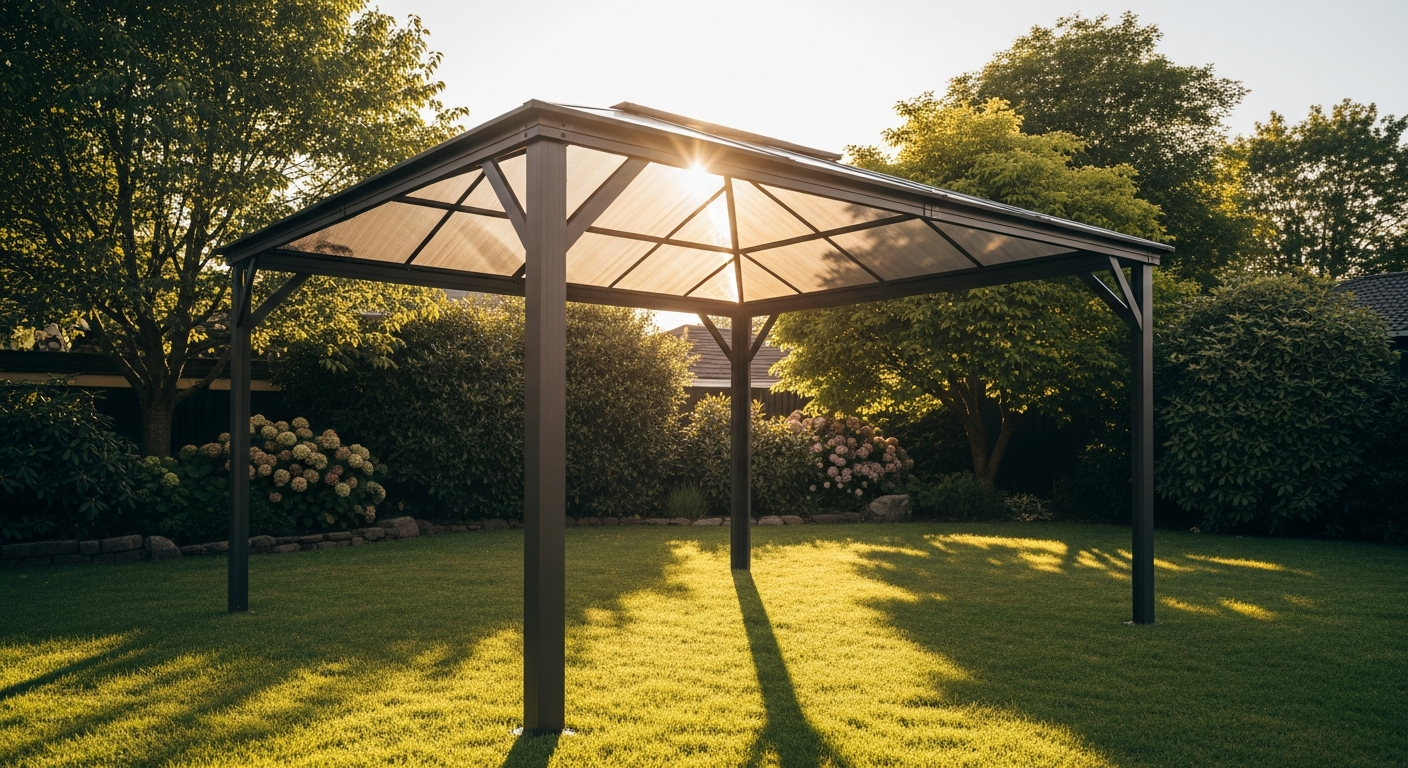

Did you know that 73% of homeowners who invest in permanent outdoor structures cite weather durability as their top priority? The difference between a gazebo that crumbles after two winters and one that stands strong for decades comes down to engineering, materials, and smart design choices. The Kozyard Alexander Hardtop Gazebo has earned its reputation as a best-selling outdoor pavilion precisely because it was engineered with real-world weather challenges in mind.
Unlike fabric canopies or flimsy aluminum structures, this permanent solution features a galvanized steel roof and reinforced aluminum frame that actually perform under pressure—handling 2,500 lbs of snow load and 60 MPH winds. When weather turns unpredictable, you need a structure designed to handle it, not just survive it. This comprehensive guide will walk you through exactly how the Alexander stands up to extreme conditions, what makes its construction fundamentally different from competitors, and whether the investment truly pays off for homeowners serious about outdoor durability.
Explore the Kozyard Alexander Hardtop Gazebo and see how it performs under pressure.
The Engineering Behind Weather Resistance: What Sets the Alexander Apart
29-Gauge Galvanized Steel Roof Construction
The foundation of the Alexander’s weather resistance lies in its roof material. A 29-gauge galvanized steel construction isn’t just thicker than typical alternatives—it’s fundamentally different in how it protects your outdoor space. The gauge measurement refers to the thickness of the metal, and at 29-gauge, you’re getting substantial material that resists denting and warping under snow or hail impact. Galvanization is the process of coating steel with a protective zinc layer, which forms a barrier that prevents rust from taking hold. This matters because rust doesn’t just look bad—it compromises structural integrity and spreads quickly once it starts. With galvanization, the zinc oxidizes first, sacrificing itself to protect the underlying steel.
Double-Roof Ventilation System
The Alexander’s dual-layer roof design serves multiple purposes that directly enhance longevity and performance. Heat buildup under a single-layer roof can degrade materials faster and make the interior unbearably hot during summer months. The gap between the two roof layers creates an air space that allows hot air to escape, reducing internal temperatures significantly. This ventilation also prevents moisture from accumulating on the underside of the roof, which would otherwise create ideal conditions for rust formation and material degradation. When freezing temperatures arrive, this ventilation system becomes even more critical—it helps prevent ice dams from forming along the edges, which can lead to water intrusion and structural stress.
Rust-Resistant Aluminum Frame with Powder-Coated Finish
Not all aluminum is created equal, and the difference between standard and powder-coated aluminum is substantial. Standard aluminum can oxidize and corrode, particularly in coastal or humid environments where salt and moisture accelerate degradation. The Kozyard Alexander uses a powder-coated finish, which applies a thick, durable polymer layer that acts as a barrier against environmental contaminants. This coating doesn’t chip or peel like paint; it bonds to the metal at a molecular level during a specialized curing process. The result is a finish that maintains its appearance and protective properties for years, even in harsh conditions.
Built-In Gutter System
Water management is critical for any permanent outdoor structure, and the Alexander’s integrated gutter system handles this intelligently. Rather than allowing rainwater to cascade off the roof edges and pool around the foundation, gutters direct water away from the structure. This prevents several problems: it stops water from accumulating at anchor points and weakening the foundation, it prevents splashing that could damage curtains or create mud around the base, and it eliminates standing water that could lead to mold growth in nearby soil. The gutter system essentially extends the lifespan of both the structure and its surroundings.
Structural Anchoring Requirements
The weather ratings you see on paper—2,500 lbs snow load, 60 MPH winds—only apply when the gazebo is properly anchored. This is perhaps the most overlooked aspect of gazebo installation, yet it’s absolutely critical. Anchoring depth, bolt specifications, and ground conditions all affect whether your structure actually achieves its rated performance. Without proper anchoring, even the most robust frame can shift, rock, or fail under stress. This is why rushing through installation can turn superior engineering into a liability.
Get expert guidance on proper installation and anchoring for maximum weather performance.
Snow Load Capacity and Winter Performance: Real Numbers You Should Know
2,500 lbs Snow Load Rating
A 2,500-pound snow load capacity means the roof can support approximately 2.5 feet of wet, heavy snow in most climate zones—the kind of snow that causes lesser structures to collapse. To put this in perspective, wet snow is far heavier than dry powder snow, and it’s what causes most gazebo failures in winter. This rating assumes proper installation and doesn’t account for ice that might add additional weight. For homeowners in the Northeast, Midwest, and Mountain regions where snow is a regular fact of life, this rating represents the difference between a gazebo that survives winter intact and one that becomes a debris field.
Compared to fabric alternatives like retractable canopies or pop-up gazebos, the Alexander’s capacity is incomparable. Those structures typically aren’t rated for snow at all and will collapse under moderate accumulation.
Structural Integrity During Freeze-Thaw Cycles
Metal expands when heated and contracts when cooled—a simple physics principle that becomes critical in cold climates where temperatures fluctuate above and below freezing multiple times per day or week. As the aluminum frame and steel roof expand and contract, stress accumulates at connection points. The Alexander’s design accommodates this movement through properly engineered joints that allow slight flex without failing. This controlled expansion and contraction prevents the catastrophic cracking that occurs when rigid structures can’t move. Understanding this principle helps explain why hasty installation—where bolts might be overtightened or connections misaligned—creates vulnerability to freeze-thaw damage.
Ice Dam Prevention Through Roof Design
Ice dams form when warm air under the roof melts snow, which then refreezes at the cold eaves, creating a barrier that traps water. This water can seep under roofing materials and cause interior damage. The Alexander’s pitched roof design and ventilation system work together to prevent this. The slope encourages water to run off rather than pool, while the dual-layer ventilation keeps temperatures consistent, preventing the temperature gradient that creates ice dams. Homeowners in areas with roof-to-eave temperature variations need to understand this benefit—it’s not just about aesthetics; it’s about protecting interior components.
Regional Winter Testing and Customer Feedback
Users in heavy snow climates consistently report that the Alexander performs as advertised. Owners in Vermont, Michigan, and Colorado describe gazebos that survived winters that would have destroyed fabric or thin-gauge alternatives. One notable pattern emerges from customer testimonials: those who took installation seriously and properly anchored their structures report zero weather-related failures, while those who cut corners often encountered problems. The Alexander doesn’t fail because the design is flawed—it fails when the fundamentals of installation are skipped.
Maintenance Tips for Winter Protection
Clearing snow from the roof before accumulation reaches dangerous levels is important, but homeowners should never use salt or harsh chemicals on the roof. Snow can be gently brushed or allowed to melt naturally with the structure’s ventilation system helping manage moisture. Checking anchor points before winter arrives ensures that soil hasn’t shifted and bolts haven’t loosened. After major storms, a visual inspection for bent frame components or dislodged roof panels takes just minutes and can prevent small issues from becoming structural failures.
Wind Resistance and Storm Durability: Tested to 60 MPH
60 MPH Wind Speed Rating and What It Represents
A 60 MPH wind speed rating places the Alexander in the category of structures designed to withstand severe thunderstorms and tropical storm conditions. To contextualize this, 60 MPH winds are sustained winds that cause significant damage to buildings—roof shingles blow off, tree limbs snap, and unsecured objects become projectiles. This isn’t a gentle breeze; this is the kind of wind that demands serious engineering. Hurricane-force winds start at 74 MPH, so the Alexander’s rating falls short of true hurricane protection, but it exceeds typical regional storm severity in most areas of the continental United States.
Anchor Point System and Installation Depth
The difference between adequate and inadequate anchoring often comes down to inches of bolt penetration. Anchor bolts must sink deep enough into concrete or earth to create genuine resistance to lateral movement. Shallow anchoring creates a false sense of security—the structure might not move visibly, but the foundation connection is only partial. When wind pressure hits, the connection fails where it’s weakest. Professional installers understand these nuances; DIY installers often don’t. This single factor explains why some owners report storm damage while others with identical gazebos report zero issues.
Frame Rigidity and Lateral Stress Distribution
The aluminum frame distributes wind pressure across multiple connection points rather than concentrating stress at single locations. This design principle prevents the swaying and flexing that leads to fatigue failure. Over time, repeated flexing under wind stress can crack welds and loosen bolts. A rigid frame resists this movement, keeping connection points stable year after year. The powder-coated finish protects the welds from oxidation that could compromise their strength, creating a comprehensive approach to wind durability.
Polyester Curtain and Mesh Durability in Storms
The gray polyester curtains and mesh netting aren’t load-bearing components, so they don’t need to withstand the full force of 60 MPH winds directly. However, when wind hits the frame, the curtains can experience significant pressure and abrasion against the metal structure. Quality polyester with proper reinforcement at attachment points survives this stress better than cheaper alternatives. The mesh maintains structural integrity better than single-layer fabrics because the weave distribution spreads stress rather than concentrating it. Homeowners in storm-prone regions should inspect curtain attachment points after significant wind events to ensure connections remain tight.
Post-Storm Inspection Checklist
After any major storm, examine the frame for bent aluminum components—these indicate the structure absorbed impact force without complete failure, but they need addressing. Check that all roof panels remain seated in their frame channels. Inspect curtain and mesh attachment points for tears or separated seams. Look at anchor bolts to confirm none have backed out due to vibration. Verify that the gutter system hasn’t accumulated debris that could trap water. These inspections take 15 minutes and can catch emerging issues before they become serious problems.
Moisture Management and Humidity Control: Staying Dry Year-Round
Double-Layer Sidewalls with Mesh and Curtain Combination
The Alexander’s sidewall design includes both mesh panels and polyester curtains, creating a sophisticated system that manages moisture while maintaining protection. The mesh allows air circulation that prevents moisture from accumulating inside, while the curtains block wind and rain when deployed. This two-component approach beats single-layer fabric because it gives homeowners flexibility—they can deploy only the mesh on mild days for maximum ventilation, deploy only the curtains during rain, or use both together for full protection. The dual-track system allows each component to move independently, optimizing for current conditions.
Polyester Material Properties for Rain Shedding
Polyester isn’t inherently waterproof, but the tight weave of quality polyester fabric creates a barrier that sheds water rather than absorbing it. When treated with water-resistant coatings, polyester becomes genuinely weather-resistant. The material doesn’t retain moisture the way natural fabrics do, which means it dries quickly and resists mold growth. The gray color choice, while prone to showing dust and dirt, actually reflects more heat than darker colors would, helping keep the interior cooler.
Gutter System Efficiency and Drainage Pathways
The integrated gutter system doesn’t just catch water—it directs it strategically away from high-stress areas. Water flowing away from anchor points prevents soil saturation that could compromise foundation stability. Gutters prevent water from cascading onto curtains, which would add weight and stress to attachment points. The system requires seasonal cleaning to prevent debris accumulation, but this maintenance is straightforward and takes minutes.
Humidity Levels Inside the Enclosed Gazebo
The double-layer sidewalls with ventilation create a microclimate that’s drier than a sealed structure but less humid than open-air. The mesh allows moisture to escape while the frame and roof protect from external water intrusion. In tropical or subtropical climates where humidity is a constant challenge, the ventilation system becomes even more valuable. Some owners run ceiling fans inside their Alexander gazebos to enhance air circulation further, creating genuinely comfortable spaces even in humid conditions.
Mold and Mildew Prevention Strategies
The key to preventing mold is preventing moisture accumulation, which the ventilation system accomplishes naturally. Periodic cleaning with mild soap and water removes organic matter that mold spores feed on. Brushing out leaves and debris from the roof and gutter area prevents organic material from accumulating and creating damp conditions. In extremely humid climates, allowing the curtains and mesh to dry completely between uses prevents mold colonies from establishing. A few minutes of preventive maintenance prevents hours of remediation later.
UV Protection and Material Longevity: Combating Sun Damage
Polyester Curtain Fade Resistance Over Time
The gray polyester curtains show wear patterns over extended exposure to sunlight, a limitation that homeowners should acknowledge upfront. UV radiation breaks down polymers, causing colors to fade and material to become brittle. The gray color fades more noticeably than darker colors would, making age visible over time. However, this is a cosmetic issue rather than a functional one—faded curtains still provide rain and wind protection. Expecting perfect appearance after years of constant sun exposure isn’t realistic for any outdoor fabric. Some owners choose to replace curtains periodically as a maintenance item rather than as an emergency repair, spreading costs over time.
UV-Blocking Properties of the Mesh Netting
The mesh netting provides valuable UV protection for people and furniture inside the gazebo. UV-blocking mesh reduces harmful radiation exposure while maintaining visibility and airflow. Unlike clear plastic windows that allow full UV transmission, the mesh diffuses sunlight and blocks a significant portion of harmful rays. This protection extends the life of furniture and cushions stored inside the gazebo, preventing sun damage that would otherwise occur in open-air settings.
Aluminum Powder-Coat Durability Under Constant Sun
The powder-coated aluminum frame resists UV degradation far better than raw aluminum or painted finishes. The polymer coating has inherent UV absorbers that prevent the finish from breaking down, chalking, or peeling under years of sun exposure. This durability is one reason the powder-coat finish justifies its cost—it requires minimal maintenance and maintains appearance for decades. Homeowners won’t need to repaint or refinish the frame components, eliminating a maintenance category that would otherwise demand attention.
Seasonal Maintenance to Extend Material Life
Spring cleaning after winter exposure removes accumulated debris and allows inspection of material condition. Summer care focuses on keeping curtains and mesh dry and clean, preventing organic growth that accelerates UV damage. Fall preparation involves clearing leaves and ensuring the gutter system is clear before winter. Annual inspection of the powder-coat finish for any cracks or damage allows spot treatment before exposure allows rust to develop. These tasks are minimal but significantly extend the lifespan of all components.
Comparison of Material Degradation Across Different Climates
Coastal environments accelerate material degradation due to salt exposure, but the powder-coated frame handles this better than uncoated aluminum would. Desert climates with intense UV but low humidity cause rapid color fading but slower structural degradation. Temperate regions with moderate sun and seasonal weather changes create the most balanced wear patterns, with cosmetic fading occurring alongside normal weathering. Understanding your climate helps set realistic expectations for maintenance frequency and component replacement timing.
Assembly Challenges and Their Weather Impact: Why Installation Matters
Complex Assembly Process and Time Requirements
The Kozyard Alexander isn’t designed for 30-minute assembly in the driveway. Realistic installation takes 8-16 hours depending on size and the number of people involved. This complexity exists because the engineering that provides weather durability requires precise assembly—the double-roof system must be aligned correctly, the frame must be square, and anchor points must be positioned accurately. Rushing through assembly to save time inevitably creates vulnerabilities. The plastic connector pieces that join metal sections must be positioned exactly or they’ll create stress concentrations that fail under snow or wind load.
Plastic Connector Pieces and Their Role in Roof Stability
These small components might seem insignificant, but they’re critical connection points. Plastic pieces connect the outer roof panel edges to the metal frame, and they also provide some flexibility to accommodate expansion and contraction. If these pieces are cracked, misaligned, or forced into position incorrectly during assembly, they become failure points. Inspecting connector pieces during installation and correcting any installation errors prevents weather-related failures later. Many assembly issues trace directly to mishandled plastic components.
Instruction Clarity Issues and Workaround Solutions
Some owners report that the printed instructions lack clarity for certain assembly stages, particularly around roof panel alignment and electrical diagram explanation if a model includes lighting. Experienced installers recommend laying out all components before starting, taking photos as you progress to help with troubleshooting, and watching installation videos from other users if available. Online communities of gazebo owners often provide specific guidance for tricky assembly steps. Taking time to understand the manual completely before beginning prevents mistakes that must be corrected later.
Professional Installation vs. DIY Considerations
The cost-benefit analysis depends on your comfort level with complex assembly and your available time. Professional installation costs $500-$2,000 depending on location and gazebo size, but it eliminates assembly errors that could compromise weather durability. For homeowners without experience or available help, professional installation is worthwhile insurance. For mechanically inclined owners with available assistance and time flexibility, DIY assembly saves money and provides the satisfaction of understanding your structure completely. Either way, the assembly quality directly affects weather performance, making this a critical decision.
Post-Assembly Inspection for Weather-Readiness
Before your first major weather event, verify that all bolts are tight and haven’t backed out due to assembly vibration. Confirm that the roof panels are seated securely and the connector pieces show no visible cracks. Test the curtain and mesh deployment systems to ensure they operate smoothly and fasten securely. Check anchor bolts for protrusion depth and stability. These checks take 30 minutes and ensure you’ve achieved the advertised weather ratings before the gazebo faces real-world conditions.
Size Options and Their Weather Implications: Choosing the Right Fit
10’x12′ Model Performance in Different Conditions
The 10’x12′ model offers the best balance between coverage and installation simplicity. At this size, wind pressure is distributed across a smaller surface area, reducing the peak forces that hit the frame. Snow load weight is proportional to roof area, so this model handles snow naturally more easily than larger versions. Assembly is more manageable with fewer components, reducing opportunities for errors. This size works well for moderate-sized patios or decks, providing shade and weather protection without dominating the landscape. In regions with heavy snow or frequent storms, this size performs reliably when properly anchored.
12’x16′ and 12’x20′ Models for Larger Coverage
Larger models extend weather protection over more space, making them suitable for entertaining or covering substantial patio areas. However, increased footprint means greater wind exposure and higher peak snow loads. These models demand more robust anchoring and more careful assembly to maintain structural integrity. The larger surface area concentrating on the same anchor system means installation quality becomes even more critical. Homeowners choosing larger models should seriously consider professional installation to ensure proper anchoring and assembly alignment.
Footprint Considerations for Anchor Stability
A larger footprint requires proportionally stronger anchoring. Installing a 12’x20′ model with the same anchor bolt depth as a 10’x12′ creates vulnerability despite identical anchoring systems. The longer frame spans create greater lever forces at anchor points, demanding deeper, more robust fastening. Soil conditions also matter—sandy soil requires deeper penetration than clay or rock. Understanding these variables helps homeowners and installers make appropriate decisions about anchor specifications.
Color Selection (Brown and Gray) and Heat Absorption
Gray reflects more solar heat than brown, keeping the interior cooler during summer months. Brown absorbs more heat, making interiors slightly warmer during cooler seasons and cooler times of day. This might seem like a minor distinction, but it affects material durability—higher temperatures accelerate fading and polymer degradation. Gray also shows dirt and dust more readily, requiring more frequent cleaning to maintain appearance. Brown masks dust better but retains more heat. The choice should consider your climate and aesthetic preferences, understanding that color does affect both comfort and maintenance.
Expansion and Contraction Across Size Variations
Larger structures experience different expansion and contraction patterns than smaller ones, primarily because longer spans amplify movement. A 10’x12′ frame with a 10-foot span might move a quarter-inch during freeze-thaw cycles, while a 20-foot span on a 12’x20′ model might move a half-inch. These aren’t catastrophic differences, but they’re why larger models require even more attention to joint flexibility and bolt tension management. The engineering accounts for these differences, but proper installation becomes increasingly critical as size increases.
Real Customer Experiences: Weather Performance in the Field
Testimonials From Harsh Winter Climates
Owners in Vermont, upstate New York, and Colorado report consistent satisfaction with the Alexander’s winter performance. One Minnesota owner described his gazebo surviving back-to-back winters with 200+ inches of snowfall per season, with no structural damage or failure. These testimonials consistently emphasize that winter performance depends on snow removal before dangerous accumulation occurs and proper anchoring. Owners who neglect these factors report problems, while those who maintain their structures report durability that justifies the investment.
Summer Storm Survival Stories
Users in tornado-prone regions and high-wind coastal areas describe gazebos that remained standing during storms that damaged surrounding structures. An owner in Oklahoma reported her Alexander withstanding straight-line winds associated with a severe thunderstorm that knocked branches off nearby trees, while the gazebo remained intact with minimal visible impact. These accounts consistently emphasize proper anchoring—owners who anchored securely report survival; those who didn’t sometimes experienced structural movement.
Long-Term Durability Reports From Multi-Year Owners
Owners who’ve maintained their Alexander gazebos for 5, 7, and 10 years report that the structures remain solid and functional with only routine maintenance. The most common aging observation is cosmetic—curtains fade, the aluminum develops a natural patina, and the powder coat shows no significant degradation. Structural failures are rare in long-term reports, suggesting that the engineering delivers on durability promises when installation and maintenance are handled properly.
Common Repair Needs and Replacement Parts
Curtain replacement appears most frequently in repair discussions, with owners often replacing original curtains after 5-7 years of constant exposure. Plastic connector pieces occasionally crack from impact or stress, but these are inexpensive to replace. Gutter sections rarely require replacement but sometimes need resealing at connection points. Anchor bolts sometimes back out slowly and require retightening periodically. These repairs are minor compared to structural failures that plague poorly engineered alternatives.
Seasonal Usage Patterns and Their Impact on Longevity
Owners who use their gazebos year-round and maintain them seasonally report better longevity than those who install them and largely ignore maintenance. The act of regular inspection and seasonal preparation catches problems early before they compound. Interestingly, constant use doesn’t accelerate degradation the way some might expect—the weathering is relatively consistent regardless of usage pattern. What matters is maintenance responsiveness, not usage frequency.
Investment Value and Weather Protection ROI: Is It Worth the Price?
Price Range Analysis Relative to Durability
The $1,207.99–$1,999.99 price range for the Alexander seems substantial until compared to the cost of replacing fabric canopies every 2-3 years or dealing with weather damage to your patio area. A $1,500 investment that delivers 10 years of reliable service breaks down to $150 per year. Replacing a damaged $400 canopy three times over the same period costs $1,200, leaving you without protection during replacement periods and still spending nearly as much money. The permanent construction commands a premium, but that premium reflects genuine value when longevity is considered.
Longevity Calculations and Cost-Per-Year Breakdown
Assuming a 15-year lifespan for a properly installed and maintained Alexander (conservative estimate based on user reports), the cost-per-year for a $1,500 investment is $100. During this same period, temporary structures would need replacement 5-7 times, costing $2,000-$2,800 total. The permanent structure saves money while providing consistent, reliable protection. Even if repairs eventually become necessary after 10-15 years, the total cost remains competitive with the replacement cycle of temporary alternatives.
Warranty Coverage and Weather-Related Claims
Kozyard provides warranty coverage that varies by component—frame typically covered for several years, while fabric components have shorter coverage periods. Weather-related damage that results from improper installation or maintenance typically isn’t covered, which reinforces the importance of installation quality. Homeowners should review warranty details before purchasing and understand which components are covered for how long. The warranty provides some protection but doesn’t eliminate the need for proper maintenance and care.
Comparison to Fabric Canopies and Temporary Structures
Fabric canopies offer lower upfront costs ($200-$600) but deteriorate rapidly when exposed to weather. They provide seasonal protection suitable for temporary shade rather than permanent outdoor living spaces. They collapse under snow, tear in strong winds, and fade in sunlight. Comparing them to the Alexander is like comparing a tent to a house—different purposes, vastly different durability. If your priority is weather-proof permanent structure, the Alexander’s cost premium becomes obvious when temporary alternatives fail.
Resale Value and Property Appeal
A well-maintained Alexander gazebo contributes measurable appeal to outdoor spaces, and real estate agents consistently note that quality permanent structures enhance home value. Potential buyers viewing a property with an elegant, sturdy gazebo see an outdoor space that’s immediately usable and comfortable. While it’s difficult to calculate exact resale value contribution, the tangible improvement to outdoor appeal is undeniable. Some homeowners report that their gazebo was specifically mentioned as a positive feature during property viewings.
Maintenance Schedule for Maximum Weather Resilience: Keeping It Protected
Spring Preparation After Winter Exposure
As winter ends, inspect the gazebo for any damage that occurred during snow, ice, and freeze-thaw cycles. Check that all bolts remain tight and haven’t backed out due to vibration or contraction. Clean the roof and gutter system of accumulated debris, winter salt residue if applicable, and mold or mildew. Check plastic connector pieces for cracks and replace any that show damage. Test the curtain and mesh systems to ensure they operate smoothly after winter storage. These spring tasks take 1-2 hours and prevent small damage from becoming major issues.
Summer Care During Peak UV and Heat Stress
Summer brings intense sun and heat that stresses materials in different ways than winter does. Keep curtains and mesh clean to prevent organic growth that accelerates UV damage. Ensure ventilation systems are unobstructed, allowing heat to escape and preventing moisture accumulation. Inspect the powder-coat finish for any cracks or blistering that would allow moisture to reach underlying aluminum. Clean the roof periodically to prevent dirt and debris from accumulating and creating damp conditions that promote rust. These summer maintenance tasks are minimal but keep the structure in optimal condition.
Fall Weatherproofing Before Winter Arrives
Fall is the final preparation window before heavy snow and frozen weather arrive. Clean gutters thoroughly to ensure water drains properly without debris blocking channels. Seal any gaps in the gutter system where water might accumulate. Check anchor bolts and ensure they’re tight and won’t back out under winter stress. Inspect the roof and frame for any repairs needed before winter weather arrives. Clear any debris from inside the structure that might trap moisture or ice. An hour or two of fall preparation prevents weather-related failures in winter.
Annual Deep Cleaning and Protective Treatments
Once yearly, consider a thorough cleaning with mild detergent and water, using soft brushes that won’t damage the finish. After cleaning, allow everything to dry completely. Inspect the entire structure methodically, checking frame integrity, bolt tightness, connector piece condition, and finish quality. If any finish damage is visible, light sanding and touch-up can prevent rust development. For the gutter system, consider applying a rust-inhibiting sealant to any exposed fasteners. These annual deep maintenance sessions take 3-4 hours but extend structure life significantly.
When to Replace Curtains, Mesh, and Other Components
Curtains typically remain functional for 5-7 years of constant exposure before fade becomes severe and material begins to deteriorate. Mesh netting sometimes lasts longer if it’s not subjected to direct sun or constant wind abrasion. When replacement becomes necessary, the process is straightforward—remove the old component and install new material. Other components like plastic connectors or gutter sections typically last longer and only require replacement if damage occurs. Understanding expected component lifespans helps budget for maintenance and prevents emergency repairs.
Your Next Step: Turning Weather Concerns Into Confidence
The Kozyard Alexander Hardtop Gazebo isn’t just another backyard shade structure—it’s engineered to handle the unpredictable. From snow that could crush lesser structures to winds that would shred fabric alternatives, this permanent pavilion delivers the durability that matters when weather turns serious. What separates owners who love their gazebos from those who regret the purchase often comes down to understanding what you’re buying and respecting the installation process. The investment—ranging from around $1,200 to $2,000 depending on size—pays dividends year after year when you’re not replacing a damaged structure or dealing with weather damage.
The engineering behind the Alexander—the galvanized steel roof, powder-coated aluminum frame, double-layer ventilation, and integrated gutter system—exists for one purpose: to create outdoor living space that genuinely weathers all seasons. Whether you’re facing heavy snow winters, storm-prone summers, or constant UV exposure, the fundamental design handles these challenges. Long-term owners consistently report that their gazebos have delivered reliable performance decade after decade, provided installation and maintenance are handled properly.
The path forward starts with honest assessment of your needs. Measure your outdoor space to determine which size makes sense for your layout. Consider your climate and what weather challenges are most pressing—heavy snow, frequent storms, intense sun, or some combination. Commit to proper installation, whether you choose to handle it yourself or hire professionals who understand the importance of anchoring and assembly alignment. Plan for seasonal maintenance that takes just hours per year but extends the structure’s lifespan measurably.
Ready to transform your outdoor space into a weather-proof retreat? Start by measuring your space, choosing your size, and committing to proper installation.
Discover the Kozyard Alexander Hardtop Gazebo today and build your year-round outdoor sanctuary.