
Smart Home Without Permission: How Renters Transform Apartments with Amazon Echo Dot (5th Gen)
Over 60% of renters want to upgrade their living spaces with smart technology—yet they’re stuck. Landlords won’t allow permanent installations, and most traditional smart home systems require wall mounting, wiring, and official approval. The situation feels frustrating until you realize there’s a better path forward.
The Amazon Echo Dot (5th Gen) has become a game-changer for renters across Sweden and beyond. It requires zero wall mounting, zero wiring, and zero landlord approval. Just plug it in, and you’ve got a fully functional smart home hub that moves with you when your lease ends. The device transforms how tenants interact with their living spaces—from voice-controlled lighting to automated temperature management—without crossing any lines with landlords.
Explore the Amazon Echo Dot (5th Gen) on Amazon Sweden today
This guide shows how this compact device works for renters. We’ll cover which features matter most for tenants, how to set up smart routines without violating rental agreements, whether the improved audio quality justifies the 500–700 SEK investment, and what privacy protections actually mean for your situation. By the end, you’ll know exactly whether the Echo Dot (5th Gen) fits your rental lifestyle.
Renter-Friendly Smart Home Setup: No Landlord Permission Needed
Why the Echo Dot (5th Gen) is the ultimate plug-and-play smart speaker for tenants
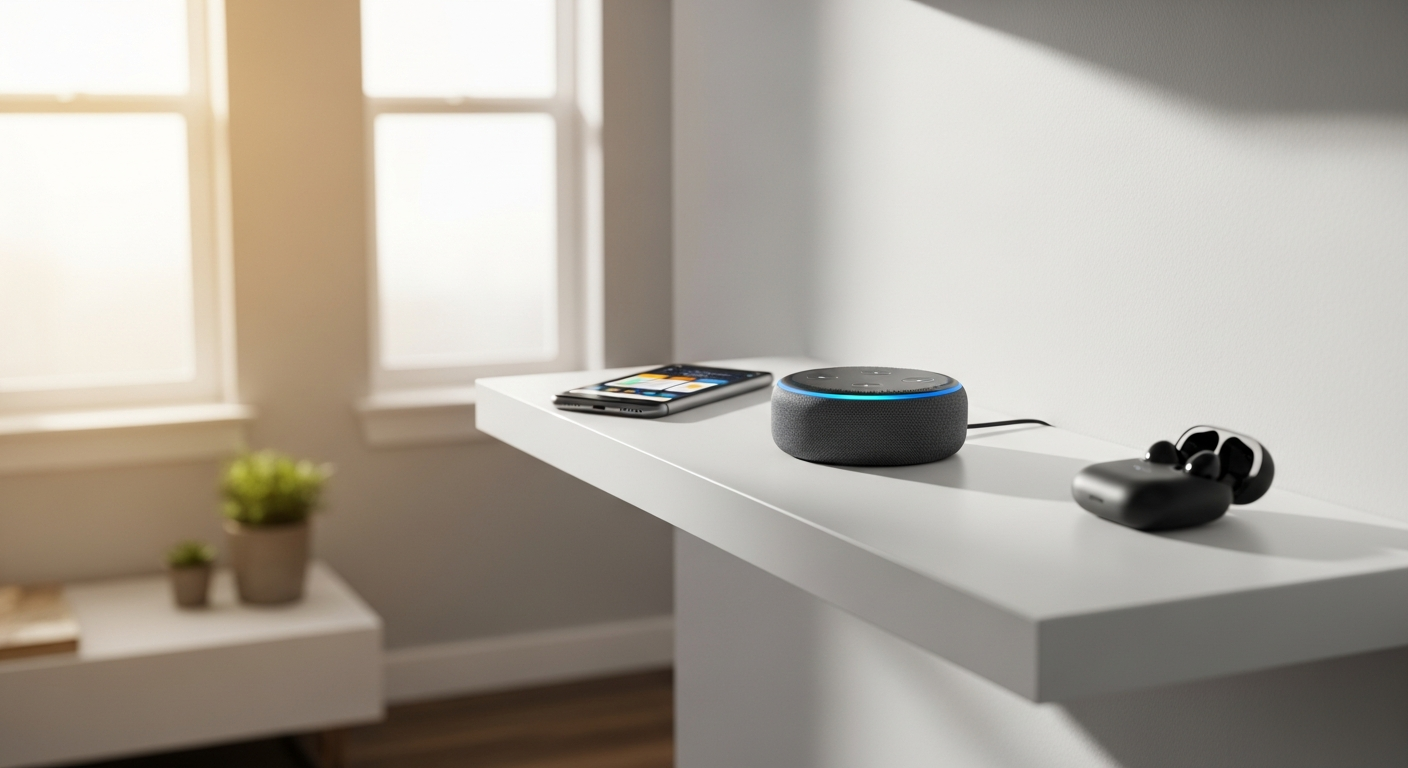
Renters face a unique constraint: permanent installations are forbidden. Installing smart thermostats, rewiring light switches, or mounting devices on walls can trigger lease violations and security deposit disputes. The Echo Dot (5th Gen) solves this entirely. It sits on a nightstand, kitchen counter, or bookshelf—anywhere with a power outlet. No mounting brackets, no drilling, no landlord conversations required.
The device acts as your smart home command center without needing to touch your apartment’s infrastructure. You control everything through voice commands or the Alexa app on your phone. This separation between the control device and the actual smart devices makes the entire system portable. When your lease ends, you unplug, pack it away, and take your smart setup to your next place.
Zero-installation smart home features that don’t violate rental agreements
Smart lighting represents the first major upgrade. You don’t need to replace your apartment’s light fixtures. Instead, you purchase smart bulbs or smart plugs that sit between your existing bulbs and their sockets, or wireless smart lighting strips that attach with adhesive. The Echo Dot controls these devices through voice commands—”Alexa, dim the living room lights” or “Alexa, turn off the bedroom lights”—without modifying a single wire.
Temperature management follows the same principle. Rather than installing a smart thermostat (which landlords typically prohibit), you pair the Echo Dot with a compatible smart fan or portable heater. The device’s built-in temperature sensor monitors your room, and you create automated routines: when the temperature rises above 22°C, the fan automatically turns on. This is automation without landlord drama.
Security devices work the same way. Smart door locks, security cameras, and motion sensors connect wirelessly. You control them through Alexa without installing anything permanently. Even if your lease forbids smart locks, a security camera pointed at your front door costs nothing to install and everything to peace of mind.
Comparison: permanent smart home upgrades vs. Echo Dot portability
Traditional smart home installations involve permanent commitments. You hire electricians, install smart thermostats, replace light switches, and route wiring through walls. This costs thousands of SEK and takes weeks. When you move, you remove everything and restore the apartment to its original condition. For renters, this financial and logistical burden makes traditional smart homes impractical.
The Echo Dot (5th Gen) requires none of this. Your investment stays with you. Five years from now, whether you’ve moved three times or stayed put, your smart home setup still functions perfectly. The Alexa ecosystem grows stronger each year as more devices gain compatibility. Your initial 500–700 SEK investment becomes smarter over time, not depreciated.
How to position and hide the device discreetly in rental spaces
Positioning matters for both function and aesthetics. The Echo Dot (5th Gen) measures only a few inches across, so it fits naturally in most spaces. Kitchen countertops work well for controlling lights and appliances. Bedside tables place it within arm’s reach for voice commands before sleep. Living room shelves blend it into existing décor.
Some renters prefer hiding the device. Placing it on a high shelf behind other items obscures the microphone while maintaining Alexa’s ability to hear commands. Others keep it visible—the compact design and available colors (Charcoal, Glacier White, Deep Sea Blue) make it blend into modern apartments naturally.
The microphone off button is always accessible regardless of placement. This matters for renters who share apartments or value privacy during certain hours. The physical mute ensures complete microphone disconnection, adding security that hidden placement alone cannot provide.
Moving day advantages—take your smart setup with you
Rental life means eventual moves. Most smart home investments get left behind or require painstaking removal and reinstallation. The Echo Dot (5th Gen) eliminates this friction. You unplug it from the power outlet, pack it in a box, and carry it to your next apartment. Your Alexa account seamlessly reconnects to the device once it joins your new Wi-Fi network.
All your routines, preferences, and smart device pairings transfer instantly. You don’t reprogram anything or lose your setup. This portability transforms how you think about smart home investments. Rather than a sunk cost tied to one apartment, the Echo Dot becomes an asset that appreciates through use.
Compatibility with battery-powered and wireless smart home devices (no rewiring required)
The Echo Dot (5th Gen) pairs exclusively with wireless smart devices. This is actually its greatest strength for renters. Battery-powered smart bulbs, wireless motion sensors, Bluetooth speakers, and Wi-Fi connected plugs all work seamlessly. You never need to consider rewiring, electrical work, or infrastructure modifications.
The dual-band Wi-Fi connectivity (2.4 and 5 GHz) ensures stable connections throughout your apartment. Battery-powered devices connect through Bluetooth or low-energy protocols, eliminating wiring concerns entirely. This wireless-first approach makes the Echo Dot genuinely renter-friendly.
Setting up Alexa routines without touching your apartment’s infrastructure
Alexa routines represent the real power of the Echo Dot (5th Gen). Routines are automated sequences triggered by time, voice commands, or sensor data. Your morning routine might activate: lights fade on gradually, bedroom temperature reaches your preferred setting, and news briefing plays automatically at 7 AM. None of this requires touching your apartment’s systems.
Custom routines multiply the value exponentially. Create an “away from home” routine that turns off lights and locks compatible smart devices with a single voice command. Build a “bedtime” routine that dims lights, lowers temperature, and silences notifications. These automations make apartment living smoother without permanent installations.
Browse compatible Alexa devices and smart home accessories on Amazon Sweden
Audio Performance That Doesn’t Compromise on Compact Design
Enhanced speaker quality in the 5th Gen: clearer vocals and deeper bass explained
The 5th Generation represents a significant leap in audio performance. The 1.73-inch front-firing speaker delivers clearer vocals, deeper bass, and more vibrant sound compared to earlier Echo Dot models. For a device this small, the improvement is noticeable immediately. Podcast dialogue comes through crisper. Music vocals sound fuller. Bass frequencies add presence without distortion.
This matters because renters often use their speakers for more than smart home commands. Streaming music, audiobooks, and podcasts happens daily. The improved audio means the Echo Dot (5th Gen) functions as a genuine portable speaker, not just a voice interface. You’re not sacrificing sound quality for convenience or compact size.
Listening experience for music, podcasts, and audiobooks in small spaces
Studio apartments and small bedrooms benefit most from the Echo Dot (5th Gen)’s focused audio. The front-firing design projects sound outward rather than dispersing it omnidirectionally. In tight spaces, this creates a more immersive listening experience. Sitting six feet away from the device produces full, engaging sound without muddiness.
The improved bass response makes streaming services like Spotify, Apple Music, and Tidal sound significantly better than through basic phone speakers. For renters who spend evenings in compact apartments, this audio quality enhancement becomes surprisingly valuable. The difference between mediocre sound and genuinely good sound affects how enjoyable your living space feels.
The 1.73-inch front-firing speaker: what to expect for bedroom or kitchen use
The compact speaker size creates legitimate expectations. The Echo Dot (5th Gen) doesn’t match floor-standing Bluetooth speakers or multi-driver systems. It won’t fill a large living room with concert-hall-quality sound. What it does provide is clear, detailed audio suitable for bedroom or kitchen use—spaces where a renter typically spends focused time.
In bedrooms, the speaker works perfectly for falling asleep to audiobooks or white noise. In kitchens, it streams music while cooking. In bathrooms, it handles podcasts during morning routines. The speaker quality matches these use cases exactly. Expectations properly calibrated make the device feel premium rather than compromised.
Bluetooth connectivity for streaming from your phone or tablet
Beyond Alexa’s native music services, Bluetooth connectivity lets you stream from any app on your phone. Spotify, YouTube Music, Tidal, podcasting apps—all stream wirelessly to the Echo Dot (5th Gen). This flexibility means you’re never locked into Amazon’s ecosystem for audio content.
Pairing is instant. One-time setup, and future connections happen automatically when devices come within range. Renters appreciate this flexibility because it works with whatever services they already subscribe to. You control what plays, while the Echo Dot (5th Gen) handles the quality playback.
Dual-band Wi-Fi (2.4 and 5 GHz) for stable, lag-free audio
Wi-Fi stability determines whether music streams smoothly or buffers constantly. The dual-band capability lets the Echo Dot (5th Gen) choose the strongest available connection. In most Swedish apartments, this means rock-solid streaming without interruptions. The 5 GHz band handles high-bandwidth music and video, while 2.4 GHz provides longer range throughout the apartment.
For renters in older buildings with thick walls, this flexibility prevents the frustration of constant buffering. The device intelligently switches between bands depending on signal strength and available bandwidth. This technical feature makes the everyday experience noticeably better.
Sound quality comparison: Echo Dot vs. standalone Bluetooth speakers
Comparing the Echo Dot (5th Gen) directly to dedicated Bluetooth speakers reveals its actual position in the market. Larger portable speakers from brands like UE Boom or JBL offer superior audio depth and power. However, they cost significantly more and serve only audio purposes.
The Echo Dot (5th Gen) competes differently. Yes, audio quality ranks below premium Bluetooth speakers. But audio represents only one of its functions. For the 500–700 SEK price point, the combination of audio quality plus smart home control plus voice interface delivers remarkable value. Most renters find the audio quality sufficient while appreciating the additional capabilities.
Volume limits and acoustic considerations for apartment living
Apartment living means considering neighbors. The Echo Dot (5th Gen) reaches appropriate volumes for bedroom or kitchen use without disturbing adjacent units. Maximum volume isn’t particularly loud—it fills a small to medium room comfortably without excessive level.
Renters benefit from this restraint. You’re never tempted to blast music at problematic volumes. The speaker’s natural volume curve encourages respectful listening levels. For apartment dwellers, this acoustic profile feels perfectly suited to shared living.
Temperature Sensing & Automated Climate Control for Renters
How the built-in temperature sensor creates intelligent smart routines
The 5th Generation includes a built-in temperature sensor—a feature absent from earlier Echo Dot models. This sensor continuously monitors the room’s temperature, enabling automation impossible with previous versions. The sensor feeds data directly into Alexa routines, allowing the device to trigger actions based on real-time temperature conditions.
This capability transforms comfort management. Rather than manually adjusting fans or heaters, you establish automated rules. When temperature exceeds your preferred threshold, compatible devices activate automatically. When it drops below a minimum, heating engages. The system learns your preferences and adapts throughout the day.
Automatic fan activation when rooms get too warm—no thermostat access needed
Many rental leases forbid thermostat adjustments. Landlords control central heating and cooling, leaving tenants powerless during temperature extremes. The Echo Dot (5th Gen)’s temperature sensor bypasses this constraint. Pair it with a compatible smart fan or portable air conditioning unit, and suddenly you have independent climate control.
Set a routine: “If temperature exceeds 24°C, turn on the bedroom fan.” The Echo Dot (5th Gen) monitors conditions and executes the command automatically. No manual adjustments required. During warm Swedish summers, this automation prevents overheating without violating lease terms or requiring landlord permission.
Creating custom Alexa routines based on real-time temperature data
Temperature-triggered routines open creative possibilities. Morning routines can include: activate fan if the bedroom exceeded 22°C overnight (indicating stuffy conditions), gradually increase lighting, and start coffee. Evening routines might: activate a portable heater if temperature dropped below 18°C, dim lights, and play relaxing music.
Seasonal routines adapt to changing conditions. Summer routines prioritize cooling, while winter routines emphasize heating. The Echo Dot (5th Gen) executes these complex automations without requiring you to think about temperature at all. Comfort becomes automatic.
Pairing with compatible smart fans, heaters, and air purifiers
The device works with numerous compatible products. Smart fans from brands like Meaco or Tuya integrate seamlessly. Portable smart heaters provide heating control. Air purifiers with smart connectivity improve air quality automatically. Each device connects wirelessly without installation requirements.
Building a climate control ecosystem costs more than the Echo Dot (5th Gen) alone, but remains far cheaper than permanent HVAC modifications. A smart fan (300–500 SEK) plus the Echo Dot (500–700 SEK) provides temperature-responsive automation for under 1,200 SEK—a fraction of traditional smart thermostat costs.
Energy-saving automation without touching your landlord’s HVAC system
Automated temperature management reduces energy waste. Rather than leaving fans running continuously, they activate only when needed. Rather than manually adjusting portable heaters, they engage automatically based on temperature readings. This intelligent automation lowers electricity consumption while maintaining comfort.
For renters on tight budgets, energy savings accumulate monthly. During summer months, fan automation might reduce cooling costs by 15–20%. During winter, smart heater management similarly cuts unnecessary heating expenses. The environmental benefit compounds alongside financial savings.
Seasonal routines: summer cooling and winter heating strategies
Summer routines in Swedish apartments often focus on preventing overheating. Stockholm’s July temperatures can reach the low 20s°C (Celsius), and apartment buildings without air conditioning become uncomfortable. Temperature-triggered fan activation manages this naturally. Create a routine: between 6 AM and 11 PM, if bedroom temperature exceeds 23°C, activate the smart fan. This maintains comfort without continuous operation.
Winter routines address heating differently. Although Swedish landlords typically provide adequate heating, poorly insulated rooms or apartments near external walls benefit from supplemental heating. Create a winter routine: between 5 PM and 9 AM, if bedroom temperature falls below 19°C, activate the portable smart heater. This ensures comfort during sleeping hours without wasting energy during occupied daytime.
Privacy-first temperature monitoring that stays local to your device
Temperature data remains private. The Echo Dot (5th Gen) monitors conditions locally, and only the aggregated data needed for routine execution transmits to Amazon’s servers. You’re not sharing detailed climate logs with third parties. The privacy implications are minimal compared to smart thermostats that traditionally track detailed HVAC usage.
This privacy-first approach reassures renters concerned about data collection. Your temperature preferences stay between you and your device. Alexa routines trigger based on local sensor readings, not cloud processing of your personal climate data.
Privacy & Security: The Microphone Off Button That Actually Matters
Physical microphone disconnect button: how it works and why it’s essential
The Echo Dot (5th Gen) features a dedicated physical microphone off button. This isn’t a software mute; pressing it electronically disconnects the microphones from the device’s processor. When the button is engaged, the device cannot hear anything—no voice commands, no background noise, no ambient sound. Amazon cannot access audio because the microphones themselves are disconnected.
This hardware-level mute addresses fundamental privacy concerns. You don’t need to trust software to protect your privacy. The mechanical button provides absolute assurance. When you toggle the mute, a red LED illuminates, providing visual confirmation that microphones are offline.
Always-on microphone concerns and how Amazon addresses them
Concerns about always-on microphones in smart speakers are legitimate. Devices listening constantly theoretically could record private conversations. Amazon’s actual practices receive scrutiny from privacy advocates, regulatory bodies, and customers.
Amazon’s official position: the device listens for the “Alexa” wake word, but does not transmit audio unless the wake word is detected. When activated, audio streams to Amazon’s servers for processing. The company claims this architecture protects privacy while enabling voice functionality.
However, the physical microphone off button represents the definitive solution. Rather than debating whether software protections work, the hardware mute provides certainty. No electricity flows through the microphones when the button is engaged. No processing, no transmission, no theoretical vulnerabilities.
Electronic vs. mechanical mute options explained
Mechanical mutes physically disconnect microphones from power or signal paths. Electronic mutes use software to disable microphone input while hardware remains powered. The Echo Dot (5th Gen) uses an electronic mute system with a physical button trigger. This hybrid approach combines convenience (a simple button press) with reliability (electrical disconnection).
The distinction matters for privacy-conscious users. Electronic mutes could theoretically be overcome through software exploits. Mechanical mutes cannot be defeated by code. The Echo Dot (5th Gen)’s electronic disconnection triggered by physical button provides both—the simplicity of electronic control with the assurance of mechanical disconnection.
Privacy settings in the Alexa app for data control
The Alexa app provides granular privacy controls beyond the mute button. You can review and delete voice recordings, manage which data Amazon retains, and control permissions for individual skills and integrations. These settings let you fine-tune what information Amazon’s ecosystem accesses about you.
For renters, these controls prove particularly valuable. You can restrict location sharing, disable shopping permissions to prevent accidental purchases, and limit what data third-party skills access. The app transforms your privacy from all-or-nothing to customizable levels.
What Amazon hears and what stays on your device
Understanding the system architecture demystifies privacy concerns. The device continuously listens for the “Alexa” wake word locally, on the device itself. This processing happens entirely offline without transmitting anything to Amazon’s servers. Only after detecting the wake word does the Echo Dot (5th Gen) transmit audio to Amazon for processing.
This distinction matters significantly. The device doesn’t hear everything you say—it processes wake word detection locally. Once activated, your voice command transmits to the cloud for Alexa’s processing. This architecture balances functionality with privacy, though it requires trusting that Amazon’s local processing works as described.
Building trust with family members through transparent privacy features
Renters often share apartments with roommates or partners. Transparent privacy practices reduce conflict. Explaining that the microphone off button truly disconnects microphones proves easier than defending against fears of constant surveillance.
Roommates appreciate knowing they can toggle the mute when privacy feels important. Setting transparent expectations—this device records audio after wake word detection for processing—prevents misunderstandings about how the system actually works. Honesty about data handling builds trust faster than privacy claims alone.
Renter-specific privacy considerations when sharing apartments
Shared apartments create unique privacy scenarios. Multiple people live in proximity, sometimes with incomplete trust relationships. The Echo Dot (5th Gen) must accommodate these dynamics. The microphone off button allows individuals to disable recording when privacy feels important, regardless of who else lives there.
Creating device usage guidelines with roommates prevents privacy conflicts. Establishing when the device should be muted, discussing which information gets shared with Alexa, and respecting individual comfort levels around voice recording makes shared living smoother. The device itself supports these boundaries through its hardware mute.
Voice Control Capabilities That Simplify Rental Living
Hands-free control of compatible smart lights, plugs, and switches
Voice control represents the Echo Dot (5th Gen)’s core functionality. After establishing Wi-Fi connectivity and connecting compatible smart devices, voice commands control everything. “Alexa, turn on the living room lights” activates connected bulbs. “Alexa, set the kitchen lights to 50 percent” dims them proportionally. “Alexa, turn off all lights” switches everything off simultaneously.
This convenience multiplies throughout the day. Returning home with arms full of groceries, voice commands turn on lights without fumbling for switches. Reading in bed, “Alexa, dim the lights” adjusts brightness without leaving the mattress. Leaving the apartment, “Alexa, turn off everything” secures the space without manual checking of each room.
Smart plugs extend control to standard appliances. Plug a fan into a smart plug, and it becomes voice-controllable. Connect a space heater, and you adjust heat through voice commands. This flexibility means upgrading any electrical device to smart functionality without replacement or installation.
Voice commands for music, news, weather, and smart reminders
Beyond smart home control, voice commands handle daily information needs. “Alexa, play my morning mix” starts your preferred playlist. “Alexa, what’s the weather?” delivers current conditions and forecasts. “Alexa, play the Swedish news” streams news briefings. “Alexa, remind me to call my mom at 5 PM” sets automatic reminders.
These capabilities transform the Echo Dot (5th Gen) from smart home controller to personal assistant. Rather than checking your phone repeatedly for information, voice queries deliver answers instantly. The convenience accumulates through the day, saving mental energy and time.
Making calls and sending messages through Alexa
The device functions as a communication tool. Call contacts directly through voice: “Alexa, call my friend Maria.” Send messages to other Alexa users: “Alexa, message David that I’ll be 10 minutes late.” For renters living away from family, these capabilities reduce the friction of staying connected.
Drop-in messaging to other Alexa devices in your home creates intercom functionality. Announce “dinner is ready” throughout your apartment from the kitchen. Request “can you turn off my bedroom light” from another room. These voice-based communications prove surprisingly convenient for apartment living.
Setting multiple alarms and timers without touching your phone
Kitchen timers represent a simple but valuable use case. Say “Alexa, set a 10-minute timer for the pasta,” and the device handles timing without your phone. Set multiple timers simultaneously: “Alexa, set a 15-minute timer for cooking and a 5-minute timer for the sauce.” The device manages both independently.
Alarms follow similar patterns. “Alexa, set an alarm for 6 AM on weekdays” creates recurring alarms. “Alexa, snooze my alarm” silences the current alarm without touching anything. For renters who dislike phone-based alarms, voice-controlled alarms provide natural alternatives.
Controlling smart locks, door cameras, and security devices (where permitted)
Some rental leases permit smart lock installations, while others forbid them. When permitted, the Echo Dot (5th Gen) controls smart locks through voice commands. “Alexa, lock the front door” secures the apartment. “Alexa, unlock the front door” opens it for expected guests.
Security cameras work similarly. “Alexa, show me the front door camera” displays the live feed on compatible devices. Motion-triggered notifications alert you if movement occurs. For renters with landlord approval, these security upgrades provide genuine peace of mind without permanent installations.
Creating voice-activated routines for morning, evening, and away-from-home scenarios
Routines represent advanced voice control. Instead of issuing individual commands, one phrase triggers multiple actions. “Alexa, good morning” could activate lights, play your favorite station, deliver weather and news, and adjust the temperature simultaneously.
“Alexa, good night” might dim lights, lock doors, activate security cameras, and set alarms. “Alexa, leaving home” could turn off lights, adjust thermostat to energy-saving settings, and lock the door. These automated sequences replace tedious manual steps with single voice commands.
Integration with third-party apps and services through Alexa Skills
Alexa Skills extend the device’s functionality far beyond Amazon’s direct offerings. Third-party developers create Skills that add capabilities. A food delivery Skill lets you order pizza through voice. A fitness Skill tracks workouts. A productivity Skill manages to-do lists. Transport Skills provide public transit information.
For renters, Skills unlock personalized functionality. Swedish-specific Skills provide local information, transit schedules, and services. The growing Skills ecosystem ensures the Echo Dot (5th Gen) becomes more capable over time without hardware upgrades. Your 500–700 SEK investment gains functionality as Amazon’s ecosystem expands.
Your Rental Just Got Smarter—Without Breaking Your Lease
The Amazon Echo Dot (5th Gen) isn’t just another gadget collecting dust on a shelf. For renters, it’s genuinely transformative. You get professional-grade smart home automation without permanent installations, landlord drama, or the financial commitment of wired systems. The improved audio quality means you’re not sacrificing sound for convenience. The temperature sensor and tap gestures add layers of functionality that feel natural, not gimmicky. And that microphone off button? It’s the privacy assurance you actually need.
Yes, you’re tethered to a power outlet, and yes, you’re buying into Amazon’s ecosystem. Those trade-offs matter, but they’re small compared to what you gain. At 500–700 SEK, the Echo Dot (5th Gen) represents remarkable value for renters who want to upgrade their living experience without permanent commitments. Whether you’re in a Stockholm studio or a Gothenburg apartment, this speaker moves with you—literally and figuratively.
The combination of voice control, wireless smart home integration, temperature automation, and privacy protections makes the Echo Dot (5th Gen) exceptionally suited to rental living. You transform your apartment without violating your lease. You create comfort and convenience that travels with you to the next place. You invest in technology that respects your renter status rather than fighting it.