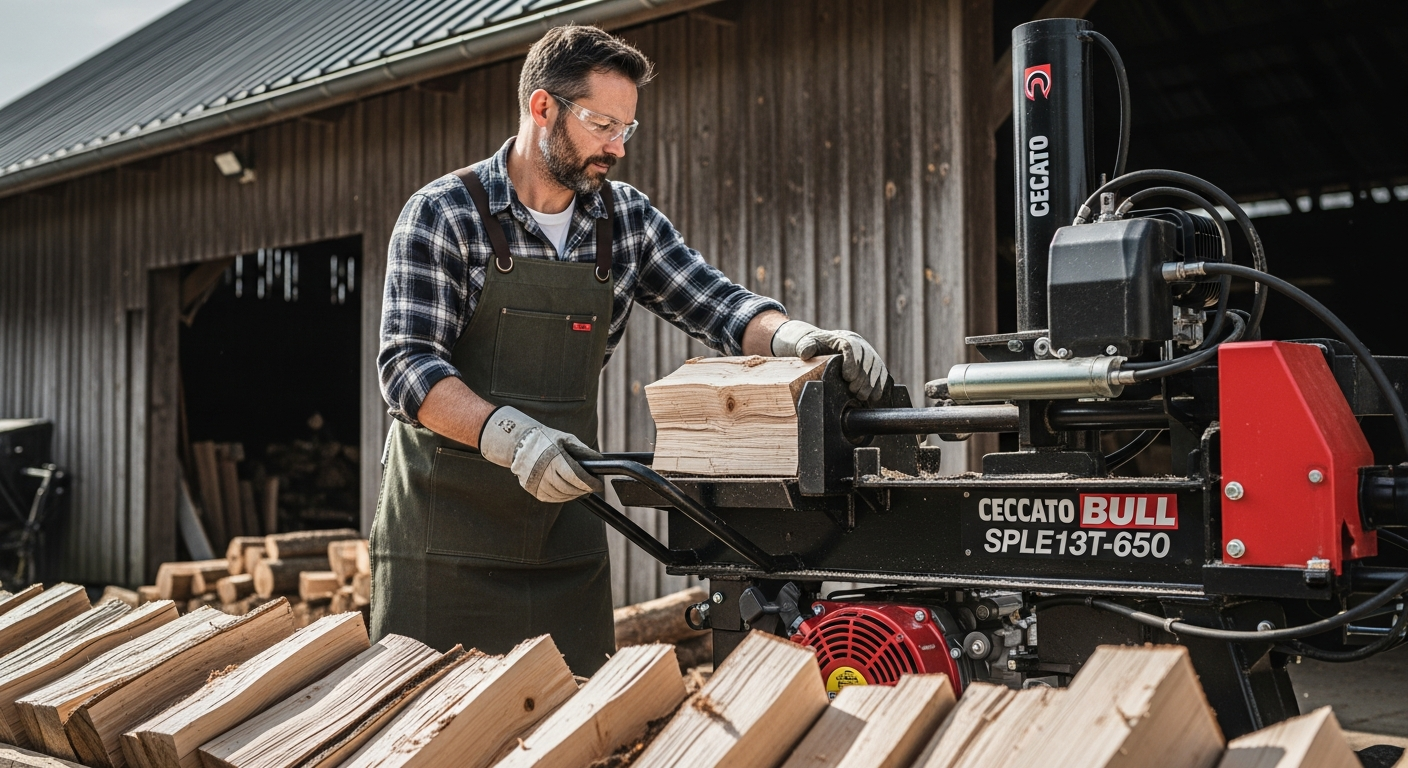

Firewood processors who handle 5+ cords of wood annually face a critical challenge: finding equipment that balances raw power with reliability without breaking the bank. The Ceccato BULL SPLE13T-650 has emerged as the go-to solution for semi-professional firewood operations across Europe. This Italian-engineered vertical electric log splitter delivers the muscle needed for consistent, high-volume wood processing without the complications of gas-powered alternatives.
The market for firewood processing equipment has evolved significantly. Operators no longer accept trade-offs between power and practicality. They demand machines that handle serious workloads while respecting operational budgets and environmental concerns. The SPLE13T-650 addresses these demands head-on with specifications that match the requirements of professional users.
Check the available configurations and pricing on AgriEuro today. You’ll discover its technical specifications, how its 13-ton splitting force handles different wood types, the practical advantages of its electric design, and whether the €2,022–€2,139 investment aligns with your operation’s goals. By the end, you’ll have the clarity needed to determine if this bestseller deserves a spot in your equipment lineup.
The 13-Ton Splitting Force: What It Actually Means for Your Operation
Splitting force ratings matter significantly when selecting a log splitter. The SPLE13T-650’s 13-ton capacity places it in the mid-to-upper range of vertical splitters designed for semi-professional use. This force level handles the majority of firewood processing tasks without requiring auxiliary equipment or multiple passes.
Understanding Splitting Force and Competitive Performance
Thirteen tons of splitting force translates to genuine capability across diverse wood types. This rating means the machine applies consistent pressure throughout the splitting stroke, pushing the wedge through logs efficiently. Competitor models in similar price ranges often offer 10–12 tons, making the SPLE13T-650 competitively positioned. The additional force proves invaluable when processing harder materials or wood with irregular grain patterns.
Real-World Performance on Hardwoods and Softwoods
Hardwoods like oak, maple, and ash demand more splitting force than softwoods such as pine or spruce. The SPLE13T-650 cuts through hardwoods cleanly, typically requiring a single pass for logs up to 30 cm in diameter. Softwoods process even faster, allowing operators to maintain rapid cycle times without strain on the machine. Mixed batches—common in real firewood operations—aren’t problematic; the splitter adapts to varying wood density without losing momentum.
Piston Stroke and Log Diameter Capacity
The 650 mm piston stroke accommodates logs up to 65 cm in diameter. This measurement represents the distance the splitting wedge travels, directly influencing the maximum log length the machine can handle. Practically, this means fewer pre-cut logs before processing, reducing preparation time and labor costs. Operators processing variable log sizes appreciate this flexibility.
Processing Speed and Cycle Efficiency
Cycle time—the duration from one complete split to the next—determines throughput. The SPLE13T-650 features a double-speed distributor system that optimizes splitting cycles. This design allows operators to select faster cycles for smaller logs and slower, more forceful cycles for demanding wood. Semi-professional operations processing 10–20 cords weekly benefit from this adaptive approach, maintaining steady output without equipment stress.
Limitations and Additional Considerations
The 13-ton force has practical boundaries. Extremely dense or knotted logs sometimes require two passes, particularly those approaching 65 cm diameter. Pre-cutting the largest logs—a standard practice anyway—ensures consistent, efficient processing. Operators shouldn’t expect this splitter to handle every situation in a single pass; that expectation applies to much larger, stationary equipment in higher price brackets.
Energy Efficiency Against Gas-Powered Alternatives
Electric operation eliminates fuel consumption and associated emissions. The 3 HP (2.2 kW) single-phase and 4 HP (3.0 kW) three-phase motors consume electricity proportional to workload, unlike gas engines running continuously. For operators processing firewood near homes or in noise-restricted areas, the silent operation provides genuine advantages. The long-term cost per cord favors electric power over fuel-dependent equipment.
Single-Phase vs. Three-Phase: Choosing the Right Electric Configuration
Electrical specifications determine which model works for your operation. The SPLE13T-650 comes in two configurations, each serving different infrastructure scenarios.
230V Single-Phase Setup
The single-phase model operates on standard 230V household electrical connections available in most locations. The 3 HP (2.2 kW) motor provides adequate power for domestic users and smaller semi-professional operations processing 5–10 cords annually. This configuration doesn’t require specialized electrical installation, making it accessible to operators with standard home or workshop wiring. Cost is lower than three-phase alternatives, and availability of 230V supply is virtually universal.
400V Three-Phase Configuration
The three-phase model demands 400V industrial electrical infrastructure. The 4 HP (3.0 kW) motor delivers superior performance, maintaining consistent power during extended work sessions. Operations processing 15+ cords weekly justify three-phase installation due to the performance advantage. Maximum force delivery remains stable even when the splitter operates continuously, reducing fatigue on mechanical components.
Electrical Infrastructure Requirements
Three-phase installation requires certified electrical work. Operators must confirm their location has three-phase supply available—common at agricultural facilities and commercial properties but rare in residential settings. Single-phase requires nothing beyond a standard outlet, making setup instantaneous. Assessing your existing infrastructure before purchasing prevents costly surprises.
Cost Differences Between Configurations
The three-phase model commands a premium price compared to single-phase. The price differential reflects the more powerful motor and enhanced performance capability. For operations unable to justify the expense or lacking three-phase access, the single-phase alternative remains highly functional. Calculating projected annual processing volume helps determine which configuration offers better value.
Motor Performance and Extended Work Sessions
Three-phase motors handle continuous operation more efficiently than single-phase. Extended work sessions—processing 10+ hours daily—stress single-phase equipment more heavily. Three-phase motors maintain reserve capacity, reducing component wear and extending equipment lifespan. Operators planning year-round processing benefit from three-phase reliability.
Electrical Connection Availability at Your Location
Before committing to either model, confirm what’s available at your primary processing site. Rural operations might have limited three-phase access, while commercial forestry sites typically do. Domestic firewood processing usually relies on single-phase. This simple verification prevents purchasing a machine you can’t practically operate.
Contact AgriEuro’s team to verify electrical compatibility with your setup.
Ergonomic Design Features That Reduce Operator Fatigue
Extended firewood processing generates fatigue. The SPLE13T-650’s design specifically addresses this reality through multiple ergonomic features.
Double-Speed Distributor System
The double-speed distributor allows operators to toggle between fast and slow splitting cycles. Fast cycles suit smaller logs requiring minimal force, accelerating throughput. Slow cycles apply maximum force to demanding wood, preventing repeated attempts on stubborn logs. This flexibility maintains operator engagement and reduces repetitive strain during long processing sessions.
Control Positioning at Comfortable Working Height
Operating controls sit at waist height, eliminating awkward reaching or bending. This positioning reduces spinal strain and allows operators to maintain natural posture throughout work sessions. Poorly positioned controls introduce cumulative stress that becomes problematic over 8–10 hour days. The SPLE13T-650’s design acknowledges this human factor.
Wheel Design and Terrain Navigation
Specially engineered rubber wheels resist stone accumulation, a persistent problem with standard log splitter wheels. Stones wedged in treads create imbalance and increase towing effort. The SPLE13T-650’s wheels maintain clean treads, improving portability across varied terrain. Moving the splitter between processing sites becomes simpler, reducing setup time and labor.
Optional Mechanical Log Lifting System
The mechanical log lifting system—available as an add-on—dramatically reduces manual handling. Loading heavy logs onto the splitter platform without mechanical assistance creates injury risk and accelerates operator fatigue. The lifting system positions logs automatically, transforming the work process from physically demanding to operator-controlled. For operations processing 500+ logs daily, this option justifies its investment immediately.
Safety Features and CE Compliance
European safety standards (CE regulations) mandate specific safety features. The SPLE13T-650 meets these requirements through dual-handed controls, emergency stop mechanisms, and protective guarding. These aren’t afterthoughts; they’re integral to the design. Operators gain confidence knowing the machine meets professional safety benchmarks.
Italian Engineering and Build Quality That Lasts
Ceccato’s manufacturing heritage shapes the SPLE13T-650’s identity. This Italian company has engineered agricultural and forestry equipment for decades, establishing a reputation for durability and performance.
All-Italian Construction and Manufacturing Standards
Every component manufactured in Italy means consistent quality control throughout production. Italian engineering standards emphasize attention to detail that distinguishes professional equipment from commodity machines. The 235 kg weight reflects robust construction using quality materials rather than cost-cutting measures.
Hydraulic Specifications and Motor Customization
Hydraulic hoses aren’t generic parts; they’re customized for the SPLE13T-650’s specific pressure requirements. The motors are tailored to match performance demands, not repurposed from other applications. This integration means components work in harmony rather than as assembled parts.
Durability for Semi-Professional Use
Semi-professional operations—processing 10–30 cords annually—demand equipment lasting 10+ years with minimal downtime. The SPLE13T-650 delivers this reliability. Italian construction standards ensure components withstand repeated, demanding use without premature failure. Operators report consistent performance across multiple seasons.
Corrosion Resistance and Weather Durability
Firewood processing occurs outdoors, exposing equipment to moisture and temperature variations. The SPLE13T-650 uses corrosion-resistant materials in critical components. Storage between seasons doesn’t degrade functionality. Unlike equipment compromised by outdoor exposure, this splitter tolerates variable weather.
Premium Pricing Justified by Engineering Quality
The €2,022–€2,139 price range reflects manufacturing standards and engineering sophistication. Chinese-manufactured competitors cost less but sacrifice longevity. Italian engineering commands premium pricing because it delivers equipment lasting significantly longer, reducing the true cost per year of operation. Semi-professional operators understand this economics; they invest in durability.
Investment Analysis: Cost Per Cord and ROI Timeline
Equipment investment requires financial justification. Understanding the true cost of ownership helps determine whether the SPLE13T-650 makes business sense.
Purchase Price and Configuration Factors
The €2,022–€2,139 price range (excluding VAT) varies based on electrical configuration and current promotions. Single-phase models fall toward the lower end; three-phase models toward the upper range. Additional options like the mechanical log lifting system increase the total investment. AgriEuro frequently updates pricing and offers, making direct inquiry worthwhile.
Operating Costs: Electricity vs. Fuel
Electric operation costs roughly 20–30% less per processing hour than comparable gas-powered equipment. The SPLE13T-650’s motors consume electricity proportional to workload, unlike gas engines burning fuel constantly. For operations processing 500+ cords annually, electricity savings exceed €200–300 yearly. Accumulated across a machine’s lifespan, this advantage becomes substantial.
Maintenance Expenses and Spare Parts Availability
Routine maintenance for electric splitters—mainly hydraulic fluid checks and component inspections—costs significantly less than gas engine servicing. Electric motors require no oil changes or spark plug replacements. Spare parts availability through AgriEuro ensures repairs happen quickly without extended downtime. The supply chain reliability translates to predictable maintenance budgets.
Calculating ROI Based on Processing Volume
Operations processing 20 cords weekly at commercial rates (€15–25 per cord) generate €300–500 weekly revenue. A €2,080 investment recovers within 4–7 weeks of operation, assuming modest profit margins. Operators processing firewood for personal use see different economics; the investment justifies itself through fuel savings and convenience rather than direct revenue. Either scenario supports the purchase decision quickly.
Warranty Coverage and After-Sales Support
AgriEuro’s after-sales support distinguishes the purchase experience. Warranty terms ensure manufacturing defects don’t become customer problems. The availability of responsive customer service means questions get answered without frustration. For equipment investments, this support infrastructure adds genuine value beyond the machine itself.
Resale Value and Equipment Longevity
Italian-made equipment retains resale value better than commodity machines. Should circumstances change, selling the SPLE13T-650 after 5–7 years of use recovers 40–50% of the purchase price. This residual value reduces the effective investment cost when planning long-term ownership.
Financing Options for Business Purchases
AgriEuro often provides financing solutions for equipment purchases, allowing operators to spread costs across multiple months. Financing a €2,080 purchase across 12 months costs roughly €173 monthly, manageable for operations generating consistent revenue from firewood processing. Exploring available payment plans makes the investment more accessible.
Real-World Applications: Where the SPLE13T-650 Excels
Different operations have different demands. The SPLE13T-650 serves multiple market segments effectively.
Firewood Supply Businesses
Commercial firewood suppliers depend on consistent processing capacity. The SPLE13T-650’s reliable 13-ton force and optimized cycle times support business operations processing 15–30 cords weekly. The electric design eliminates fuel logistics, simplifying operations. Suppliers appreciate the quiet operation when processing near residential areas where gas equipment creates noise complaints.
Property Management and Heating Wood Preparation
Large properties relying on wood heating require substantial cord quantities. Estate managers and property owners processing 10+ cords seasonally benefit from the SPLE13T-650’s capability to handle mixed wood batches. The optional log lifting system reduces labor requirements for large-scale processing.
Forestry Operations and Land Clearing
Forestry contractors clearing land generate substantial log quantities. The SPLE13T-650 processes this material efficiently, though contractors handling extremely large diameter logs might choose heavier equipment. For mixed forestry work combining land clearing with firewood production, this splitter handles the firewood component competently.
Seasonal Processing and Year-Round Operation
Seasonal operations (fall/winter firewood processing) demand equipment ready when needed. The SPLE13T-650 requires minimal preparation—just electrical connection and a brief startup check. Year-round operations benefit from the electric design’s reliability and low maintenance, maintaining consistent productivity across seasons.
Mixed Wood Batches and Variable Log Sizes
Real firewood operations rarely process uniform logs. Mixed hardwoods and softwoods, variable diameters, and irregular shapes characterize actual work. The SPLE13T-650 adapts to this variability, handling diverse materials without requiring extensive equipment adjustment between logs.
Climate Resilience and Seasonal Demands
Electric operation performs consistently across temperature ranges. Gas engines struggle in cold weather; electric motors start reliably regardless of ambient temperature. Operators in northern climates appreciate this consistency when processing wood in winter conditions.
Maintenance, Support, and Spare Parts Accessibility
Long-term equipment ownership depends on reliable maintenance infrastructure and parts availability.
Routine Maintenance Schedule
Electric log splitters follow straightforward maintenance routines. Hydraulic fluid checks occur monthly during processing seasons. The electric motor requires no oil changes or seasonal winterization. Cleaning debris from the splitting platform and inspecting hoses for damage should happen weekly. These simple tasks prevent most problems.
Common Wear Items and Replacement Parts
Hydraulic hoses, seals, and the splitting wedge eventually wear and require replacement. AgriEuro stocks these common parts, ensuring availability without excessive wait times. Component failure rarely means downtime exceeding a few days when parts are accessible.
AgriEuro’s After-Sales Support
The reputation of retailers matters significantly. AgriEuro’s direct sales model and support infrastructure mean customers work with the same company providing the equipment. Questions about operation, maintenance, or performance get answered by knowledgeable staff familiar with the SPLE13T-650 specifically. This ongoing relationship proves invaluable when issues arise.
Troubleshooting Without Professional Service
Many issues resolve through straightforward troubleshooting. Pressure inconsistencies, slow cycles, or unusual sounds often indicate simple maintenance items—loose connections, debris in hydraulic lines, or low fluid levels. Operators learning basic diagnostics avoid unnecessary service calls, reducing downtime and costs.
Spare Parts Inventory and Shipping
AgriEuro maintains spare parts inventory, shipping components quickly when needed. The supply chain efficiency means equipment downtime stays minimal. Operators can plan repairs around operational schedules rather than waiting weeks for parts.
Warranty Terms and CE Compliance Coverage
Warranty coverage protects against manufacturing defects for specified periods. CE compliance ensures the machine meets safety and performance standards. Understanding warranty terms before problems arise prevents disputes about covered repairs.
Building a Preventive Maintenance Plan
Developing a regular maintenance schedule prevents unexpected failures. Recording routine service dates and performed tasks creates a maintenance history. This documentation supports warranty claims if problems arise, demonstrating proper equipment care. Preventive maintenance consistently costs less than emergency repairs.
Making the Right Choice for Your Firewood Operation
The Ceccato BULL SPLE13T-650 stands out because it solves specific problems that semi-professional operators face daily—processing volume, reliability, and operational costs. Its 13-ton splitting force tackles demanding wood types, the electric design eliminates fuel hassles and emissions concerns, and the Italian engineering ensures you’re investing in equipment built to last. The €2,022–€2,139 investment quickly pays for itself when you’re processing multiple cords weekly, and AgriEuro’s support infrastructure means you’re never left stranded with a broken machine.
If your operation demands consistent performance, minimal downtime, and the ability to scale processing capacity without constant maintenance headaches, this bestseller deserves serious consideration. The double-speed distributor maintains operator efficiency across varied work, ergonomic controls reduce fatigue during long sessions, and the specialized wheel design simplifies portability between sites.
The purchasing decision ultimately depends on your specific processing volume, available electrical infrastructure, and budget parameters. Confirming whether single-phase or three-phase matches your location prevents costly mistakes. Calculating your cost per cord based on projected processing volumes demonstrates financial viability. Considering the optional log lifting system determines whether the full package justifies additional investment.