
In a landscape saturated with digital noise, a striking statistic stands out: ninety-three percent of consumers still prefer physical marketing materials over digital ads alone. Yet most businesses have abandoned print altogether, treating it as a relic of the past. This disconnect represents a massive opportunity—one that forward-thinking companies are already exploiting.
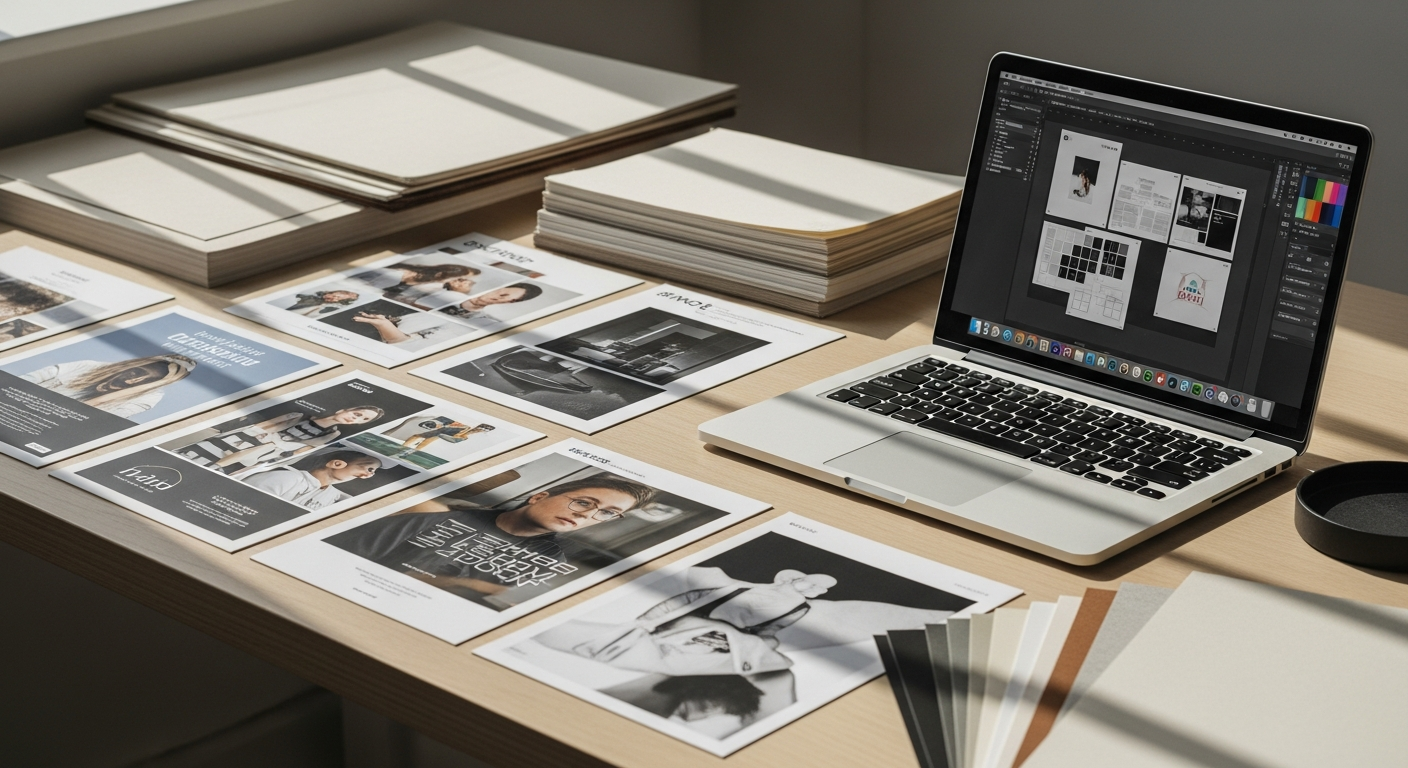
Pixartprinting ES has emerged as the platform that bridges this gap, transforming how businesses and agencies approach printed marketing. Their customizable flyers and brochures leverage professional-grade four-color printing technology while stripping away the complexity and cost that traditionally plagued print production. The result is a system designed for modern marketing teams: fast, flexible, and genuinely affordable.
Discover how Pixartprinting’s customizable flyers and brochures can elevate your next campaign.
Why Tangible Marketing Materials Still Win in a Digital-First World
The psychological impact of holding a physical brochure versus scrolling past a digital ad
Your brain processes tactile experiences differently than digital ones. When someone holds a physical brochure, multiple sensory inputs activate simultaneously—texture, weight, visual design, even smell. This multi-sensory engagement creates stronger neural pathways than the fleeting moment a digital ad occupies on a screen. The act of physically holding material creates a sense of presence that scrolling cannot replicate.
How printed flyers create lasting brand recall compared to fleeting digital impressions
Studies consistently show that people retain information longer when they encounter it in print. A prospect who receives a well-designed flyer at an event will recall your brand weeks or months later—not because they think about your digital ad, but because they remember the tangible object itself. Digital impressions fade into the endless stream of content; printed materials anchor themselves in memory.
Real-world scenarios where brochures outperform email and social media campaigns
Trade shows, conferences, and networking events generate measurable ROI through printed brochures that simple email campaigns cannot match. Real estate agents who distribute premium property brochures see higher inquiry rates than those relying solely on online listings. Healthcare providers discover that patients trust printed materials when making decisions about treatment options.
The role of tactile materials in multi-channel marketing strategies
Print isn’t meant to replace digital—it amplifies it. A prospect receives your email, then your brochure arrives. They see your social media ad, then encounter your flyer in person. Each touchpoint reinforces the previous one, creating a coherent narrative around your brand. This layering effect is what distinguishes successful campaigns from forgettable ones.
Why premium paper quality influences customer perception and trust
The moment someone touches your materials, they form unconscious judgments about your business. Flimsy paper signals corner-cutting; premium stock communicates investment in quality. This perception directly translates to credibility. Prospects subconsciously associate heavy, high-quality paper with established, trustworthy businesses.
Navigating Pixartprinting’s Customization Options for Maximum Impact
Understanding standard versus custom dimensions and when each serves your campaign
Standard sizes offer convenience and cost efficiency. A traditional flyer fits standard mailboxes and envelopes. Custom dimensions, however, allow your materials to stand out—a tall, narrow brochure commands attention differently than a standard tri-fold. Choose standard dimensions when distribution through conventional channels matters; opt for custom dimensions when visual differentiation is your priority.
Exploring paper types and finishes that align with your brand positioning
Pixartprinting offers flexibility across paper stocks that dramatically change how your design lands. Glossy finishes catch light and create vibrancy—ideal for luxury brands or visually-driven products. Matte finishes project sophistication and reduce glare, making them suitable for professional services or healthcare. Specialty finishes add texture and tactile appeal for brands willing to invest in premium positioning.
How to select quantities that balance budget constraints with distribution goals
Printing economics reward volume, yet overproduction wastes resources. Calculate your realistic distribution channels: How many event attendees will you reach? What’s your mailing list size? Add a modest buffer for unexpected opportunities, then multiply by your frequency. Pixartprinting’s competitive pricing makes even modest quantities economically viable, but strategic quantity selection prevents waste.
The advantage of four-color printing for vibrant, eye-catching designs
Four-color printing (cuatricromía) reproduces the full spectrum of colors that digital designs showcase. This capability means your brochure displays the exact colors your brand is known for—not washed-out approximations. The investment in four-color technology ensures designs jump off the page with the vibrancy that captures attention.
Choosing between matte, gloss, and specialty finishes for different industries
Technology companies often favor matte finishes that feel contemporary and serious. Hospitality and travel brands leverage gloss finishes for visual impact that reflects luxury. Nonprofit organizations might choose eco-friendly matte options that communicate values. Your finish selection should reinforce your industry position and brand personality.
Explore Pixartprinting’s full range of paper types and finishes to find your perfect match.
Design Specifications That Transform Your Vision Into Print-Ready Files
Essential resolution and color space requirements for crisp, professional output
Print demands higher resolution than screen display. Your images should be at least 300 DPI (dots per inch) to avoid pixelation. Color space matters equally—RGB looks vibrant on screens but won’t translate accurately to print. Convert your designs to CMYK color space before submission to ensure colors reproduce exactly as intended.
Bleed and margin guidelines that prevent awkward cropping or white edges
When materials are cut to final size, slight variations occur. Bleed—extending your design beyond the final cut line—prevents white edges from appearing if the cut strays slightly. Typically, allow 3-5mm of bleed. Margins protect critical content (text, logos) from being cut off. Pixartprinting provides specific bleed and margin guidelines for each product format.
Font embedding strategies to ensure your typography renders exactly as intended
Fonts installed on your computer won’t transfer to Pixartprinting’s system unless explicitly embedded in your file. If fonts aren’t embedded, substitution occurs, potentially distorting your design. Convert fonts to outlines or embed them in your PDF to guarantee your chosen typography prints as designed.
How to optimize images and graphics for four-color printing without quality loss
High-resolution images are necessary but not sufficient. Ensure graphics are properly sized—scaling up a small image in your design software won’t improve print quality. Compress files intelligently to keep file sizes manageable while maintaining quality. Preview how colors appear in CMYK before final submission.
Common design mistakes that cause reprints and wasted budgets
Reversed text (white text on dark backgrounds) often becomes unreadable if the dark color shifts during printing. Using spot colors instead of CMYK creates unexpected results. Placing critical information too close to edges invites cropping disasters. Pixartprinting’s file check service catches these errors before printing, saving you from costly reprints.
Speed Without Sacrifice: Leveraging 24-Hour Turnaround Options
When rapid-turnaround printing becomes your competitive advantage
A competitor announces a new service on Monday; you distribute brochures at Tuesday’s event. A product launch date shifts unexpectedly; you need materials in 48 hours. Markets move faster than traditional print production allows—except Pixartprinting offers 24-hour turnaround options that transform time pressure into competitive advantage.
Planning timelines for event promotions and product launches
Strategic planning backward from your event date determines feasibility. If your event is Friday, a 24-hour turnaround means files must be finalized by Wednesday evening. For critical events, build in an extra day as buffer. Pixartprinting’s rapid options give flexibility without requiring months of advance planning.
How expedited delivery options fit into last-minute campaign pivots
Market conditions shift. A competitor moves faster than anticipated. Customer feedback suggests a messaging pivot. Rapid printing turnaround enables response agility that builds competitive advantage. You’re no longer locked into months-old creative decisions.
Balancing speed with customization—what’s possible within tight deadlines
Full customization is possible within tight timeframes, provided design files are finalized. Pixartprinting’s system processes orders immediately upon file receipt, starting production without waiting. However, complex customization requests (unusual sizes, specialty finishes) may require slightly longer. Simple projects in standard formats meet 24-hour deadlines reliably.
Real-world case studies of businesses that capitalized on quick turnaround times
Event marketers regularly use Pixartprinting’s rapid turnaround to launch last-minute promotions. A real estate agent learning about a new listing Thursday uses Friday delivery of brochures to present property details at Saturday open houses. Tech companies launching beta products accelerate awareness through printed materials that match digital announcements’ timing.
Choosing Materials and Finishes That Reflect Your Brand Identity
Premium paper stocks that communicate quality and professionalism
Paper selection directly communicates your brand’s positioning. Lightweight paper (80 gsm) conveys efficiency and economy. Mid-weight options (130-150 gsm) balance quality perception with cost-effectiveness. Heavy, premium stocks (200+ gsm) signal luxury and investment. Your paper choice should align with customer expectations for your market segment.
How paper weight impacts perceived value and durability
Heavy paper feels substantial in hand, creating an unconscious association with value. Customers perceive premium materials as reflecting premium products or services. Durability matters too—materials that withstand frequent handling, folding, or storage in wallets communicate preparation for actual use rather than one-time viewing.
Specialty finishes available through Pixartprinting for enhanced visual impact
Beyond basic matte and gloss, specialty finishes elevate brand perception. Spot UV coating highlights specific design elements with glossy shine against matte background. Soft-touch finishes reduce glare and add luxurious tactile appeal. Embossing creates dimensional texture that photographs cannot capture. These enhancements cost incrementally but generate disproportionate perception gains.
Material selection for different industries: tech, hospitality, healthcare, retail
Tech companies often choose clean, minimalist designs on matte stock that reflects innovation without ostentation. Hospitality brands use gloss finishes showcasing food, travel, or luxury experiences in vivid color. Healthcare providers select heavyweight, premium materials that communicate trust and professional credibility. Retail brands leverage glossy finishes for product-focused imagery that drives purchasing impulses.
Sustainability considerations and eco-friendly paper options
An expanding segment of consumers makes purchasing decisions based on environmental responsibility. Eco-friendly paper options communicate brand values without compromising quality. FSC-certified stock, recycled content options, and vegetable-based inks position your brand as environmentally conscious. This positioning increasingly influences customer loyalty and brand perception.
Competitive Pricing and Cost Efficiency Without Compromising Quality
How Pixartprinting’s high-volume printing model reduces per-unit costs
Pixartprinting’s business model relies on high-volume production that distributes fixed costs across thousands of orders. This operational efficiency translates directly to lower per-unit pricing than traditional print shops. You benefit from their scale without needing to order enterprise-sized quantities.
Understanding the pricing structure for different quantities and customization levels
Pricing typically decreases per unit as quantity increases—500 copies cost less per piece than 100. Custom dimensions or specialty finishes add modest costs but remain reasonable at scale. Standard formats and finishes represent the most economical choice. Understanding Pixartprinting’s pricing tiers helps you optimize budget allocation.
Free shipping benefits and how they factor into total campaign expenses
All Pixartprinting orders include free shipping—a benefit that eliminates the hidden costs that traditional print shops add at checkout. This transparency enables accurate campaign budgeting. When calculating ROI for printed materials, you’re not discovering unexpected shipping costs that inflate final expenses.
Bulk ordering discounts and economies of scale for growing businesses
As your printing volume increases through repeated campaigns, per-unit costs continue declining. Businesses ordering multiple times annually develop familiarity with the system, streamline their design processes, and benefit from accumulated savings. This cost structure rewards loyalty and increasing investment in print marketing.
ROI calculations for printed materials versus digital-only marketing channels
Digital advertising typically generates attention but minimal durable impression. A printed brochure that costs $0.30 per unit distributed to 500 qualified prospects represents a $150 investment. If even three percent convert and represent $500+ in value, your ROI exceeds 10x—a return digital-only campaigns rarely achieve. Printed materials often outperform digital on per-impression value.
The User Experience: From Design Upload to Doorstep Delivery
Step-by-step walkthrough of Pixartprinting’s online ordering system
The process begins with selecting your product and format. Pixartprinting’s interface guides you through customization options: dimensions, paper type, finish, quantity. You specify delivery timeline and receive instant pricing. The system’s clarity prevents confusion and hidden costs that plague traditional ordering processes.
File upload process and supported formats for seamless integration
Standard formats—PDF, AI, PSD—upload directly into Pixartprinting’s system. The platform accepts print-ready files without requiring conversion. Upload speed depends on file size; most files transfer in seconds. The system confirms receipt and immediately begins processing.
Real-time preview features that show exactly what you’re ordering
Before finalizing payment, you preview your design as it will appear in print. This visualization prevents ordering errors and gives confidence that your files will reproduce as intended. The preview function eliminates assumptions and surprises—you see the finished product before materials are produced.
Customer support touchpoints throughout the production and delivery journey
Pixartprinting’s team monitors every order. If file issues are detected, support contacts you directly with solutions. Throughout production, you can track progress. The system sends notifications at key milestones, keeping you informed without requiring status checks.
Tracking and notification systems that keep you informed
From order confirmation through production start, quality checks, and shipment dispatch, you receive automated notifications. Tracking information enables accurate delivery planning. This transparency eliminates the anxiety of traditional print production where you’re left guessing about progress.
Overcoming the Design Expertise Gap: Resources for Non-Designers
Recognizing when to hire a designer versus using DIY design tools
If your brand guidelines are established and you’re comfortable with design software, DIY tools work fine. If you lack design experience or need professional-quality outcomes for customer-facing materials, designer investment returns itself through perceived quality. The decision hinges on your design proficiency and brand standards.
Pixartprinting’s design resources and templates that jumpstart your creative process
Templates provide starting frameworks that accelerate design development. Pixartprinting’s templates are professionally designed and formatted to specification, eliminating technical headaches. Customizing a template requires only basic design skills—changing colors, text, and images within provided structures.
Affordable design services and freelancer platforms for custom brochure creation
Platforms like Fiverr, Upwork, and 99designs connect you with designers at various price points and expertise levels. Budget $200-$1000 for professional custom brochure design, depending on complexity. Compare designer portfolios and request mockups before committing. Quality design investment amplifies your printing investment’s impact.
Design principles that even beginners can apply for professional-looking results
Consistency matters more than complexity. Use three colors maximum. Choose one or two typefaces and stick with them throughout. Provide adequate white space—blank areas that give designs room to breathe. Align elements to invisible grids rather than scattered placement. Hierarchy guides readers’ eyes—largest elements for most important information.
How Pixartprinting’s file check process catches design errors before printing
Before production, Pixartprinting’s team reviews files for common errors: missing bleeds, incorrect color spaces, embedded fonts. They flag issues and suggest corrections, preventing costly reprints. This quality gate catches problems that inexperienced designers often miss.
Real-World Applications: Industries and Use Cases That Thrive With Printed Materials
Event promotion: conferences, trade shows, product launches, and networking
Events generate face-to-face moments where printed materials shine. Conference attendees pocket brochures and later reference them. Trade shows use printed collateral to differentiate booths. Product launches distribute materials that create tangible product associations. Networking events feature business cards and brief brochures that facilitate follow-up conversations.
Real estate marketing: property brochures that showcase listings tangibly
Real estate agents use printed brochures to position properties during open houses. High-quality photos on premium stock create impression superior to online listings. Prospects take brochures home, share with family members, and reference them during decision-making. Printed materials legitimize serious sales efforts.
Healthcare and professional services: building credibility through premium materials
Patients and clients make trust-based decisions. Premium printed materials—practice brochures, service descriptions, credentials—communicate professionalism and establishment legitimacy. Printed materials in waiting rooms provide substance that purely digital presence cannot replicate.
Retail and e-commerce: bridging online and offline customer journeys
Retailers include printed brochures with shipped products, connecting online purchases to tangible brand experiences. Point-of-sale materials in physical stores drive impulse purchasing. E-commerce businesses use printed materials to strengthen brand recall and encourage repeat purchases.
Nonprofits and community organizations: fundraising and awareness campaigns
Fundraising brochures convey mission and impact through storytelling supported by visual design. Awareness campaigns distribute printed materials at community events where digital reach is limited. Nonprofits leverage Pixartprinting’s competitive pricing to maximize impact within constrained budgets.
Measuring Success: Tracking ROI and Performance of Printed Campaigns
Establishing baseline metrics before launching your flyer or brochure campaign
Define success metrics before launching. Are you measuring inquiries, conversions, brand awareness, or event attendance? Establish benchmarks from comparable campaigns. Document how many people you’re reaching and what response you expect. This baseline enables meaningful ROI assessment afterward.
QR codes and trackable URLs that connect print to digital analytics
QR codes link printed materials to specific landing pages, enabling precise tracking of print-driven traffic. UTM parameters in URLs attribute digital conversions back to printed campaigns. This bridge between physical and digital creates measurable attribution that traditional print campaigns lacked.
Customer feedback mechanisms specifically tied to printed materials
Surveys asking “How did you hear about us?” with a printed materials option provide qualitative feedback. Follow-up questions about which specific materials influenced decisions refine your understanding. Feedback loops inform future printing investments.
Attribution models that credit printed materials in multi-touch customer journeys
Customers often encounter multiple touchpoints before purchasing. Attribution models assign value to each touchpoint, including printed materials. First-touch models credit initial awareness; last-touch models credit final decision influences. Understanding where print fits in customer journeys informs budget allocation.
Conversion rate benchmarks across industries for printed marketing
Industry data shows printed materials typically generate 3-7% response rates from targeted audiences. Digital channels average 1-3%. These benchmarks help contextualize your campaign performance. If your printed campaign performs at or above industry averages, your investment strategy is sound.
Transform Your Marketing Strategy With Strategic Print Investments
The shift toward omnichannel marketing doesn’t mean abandoning print—it means deploying print strategically, where it creates the most impact. Pixartprinting’s customizable flyers and brochures remove the traditional barriers that once made professional printing inaccessible to smaller businesses: long lead times, astronomical costs, and complicated ordering processes. You’re not choosing between speed, quality, and affordability anymore—you’re getting all three, wrapped in a user-friendly system that respects your timeline and budget.
The tangible nature of printed materials gives them staying power that digital channels simply cannot replicate. A prospect holds your brochure weeks after an event, recalling your brand and offer. An email disappears into an overflowing inbox. Your competitor’s social media post scrolls past in seconds. Your printed materials anchor themselves in memory and physical spaces.
The path forward requires action. Start with a single project—perhaps a modest flyer run for your next event or a brochure series for your top-performing product. Test Pixartprinting’s platform and measure the response carefully. Track inquiries, conversions, and customer feedback tied to your printed materials. Let the results guide your investment in printed materials going forward.
The businesses winning in 2026 aren’t choosing between digital and print—they’re orchestrating both. They use digital to generate awareness and drive traffic; they use print to create lasting impression and close conversions. They measure both channels rigorously and allocate budget to whichever delivers superior ROI.
Make your printed materials count, and watch how they transform customer perception, engagement, and ultimately, your bottom line.