
Diamond Smile LED Teeth Whitening Kit: Complete Review and Analysis
Professional teeth whitening treatments can cost anywhere from $500 to $1,200 per session, yet millions of people are turning to at-home alternatives instead. The gap between expensive dental office visits and DIY whitening solutions has never been wider, and consumers are rightfully questioning whether they’re sacrificing quality for affordability. The Diamond Smile LED Teeth Whitening Kit has emerged as a game-changer in the at-home teeth whitening space, combining LED light technology with specially formulated whitening gel to accelerate the bleaching process at around $59.
I’ve analyzed user feedback, tested the product specifications, and compared it against professional whitening standards to answer the questions you’re actually asking. Throughout this article, you’ll learn exactly how the LED technology works, whether sensitive teeth are truly protected by peroxide-free formulations, and most importantly—whether the results justify the investment.
Check out the Diamond Smile LED Teeth Whitening Kit today.
How LED Light Technology Actually Whitens Your Teeth
The science behind LED whitening centers on blue light wavelengths, typically between 460-480 nanometers. These wavelengths penetrate tooth enamel and activate the chemical compounds in the whitening gel, accelerating the oxidation process that breaks down stains. This activation is the critical advantage LED systems hold over passive whitening strips or trays without any light component.
The Activation Process Explained
Blue LED light energizes peroxide-based or peroxide-free whitening agents differently. With peroxide formulations, the light breaks down hydrogen peroxide molecules into reactive oxygen species that penetrate the enamel structure. Peroxide-free alternatives like sodium chlorite work through a different mechanism—the LED light enhances their ability to oxidize chromophores responsible for tooth discoloration. The activation isn’t instantaneous; it requires consistent light exposure over multiple sessions to build cumulative whitening effects.
Optimizing Session Duration
The 10-15 minute session timeframe is deliberately calculated. Shorter sessions—say 5 minutes—provide insufficient activation time for the gel to work effectively. Longer sessions of 30+ minutes don’t proportionally increase results and may expose teeth to unnecessary light exposure. The sweet spot allows gel penetration into enamel microstructures without risking thermal or chemical damage. Consistent application matters more than extended individual sessions; using the kit for 10 minutes daily for 3 weeks produces superior results compared to sporadic 30-minute treatments.
Comparing Intensity Levels
At-home LED devices typically emit light intensity between 5-10 mW/cm², while professional dental office systems reach 20-40 mW/cm². This difference explains why professional results often appear more dramatic—the higher intensity accelerates the activation process. However, the Diamond Smile’s specifications fall within the effective range for home use, and consistency compensates for lower absolute intensity. A person using the kit faithfully for three weeks achieves meaningful whitening that rivals some professional treatments, minus the extreme cost.
The Cumulative Effect Timeline
Results compound over multiple applications. Week one typically shows subtle changes as the gel begins breaking down surface stains. By week two, stains in the enamel’s deeper layers start to lighten. Week three often reveals the most dramatic improvements as cumulative gel exposure has fully activated. This gradual progression explains why some users report disappointment after just one or two sessions—patience is required for the full effect.
Breaking Down the Complete Kit Contents and What You Actually Get
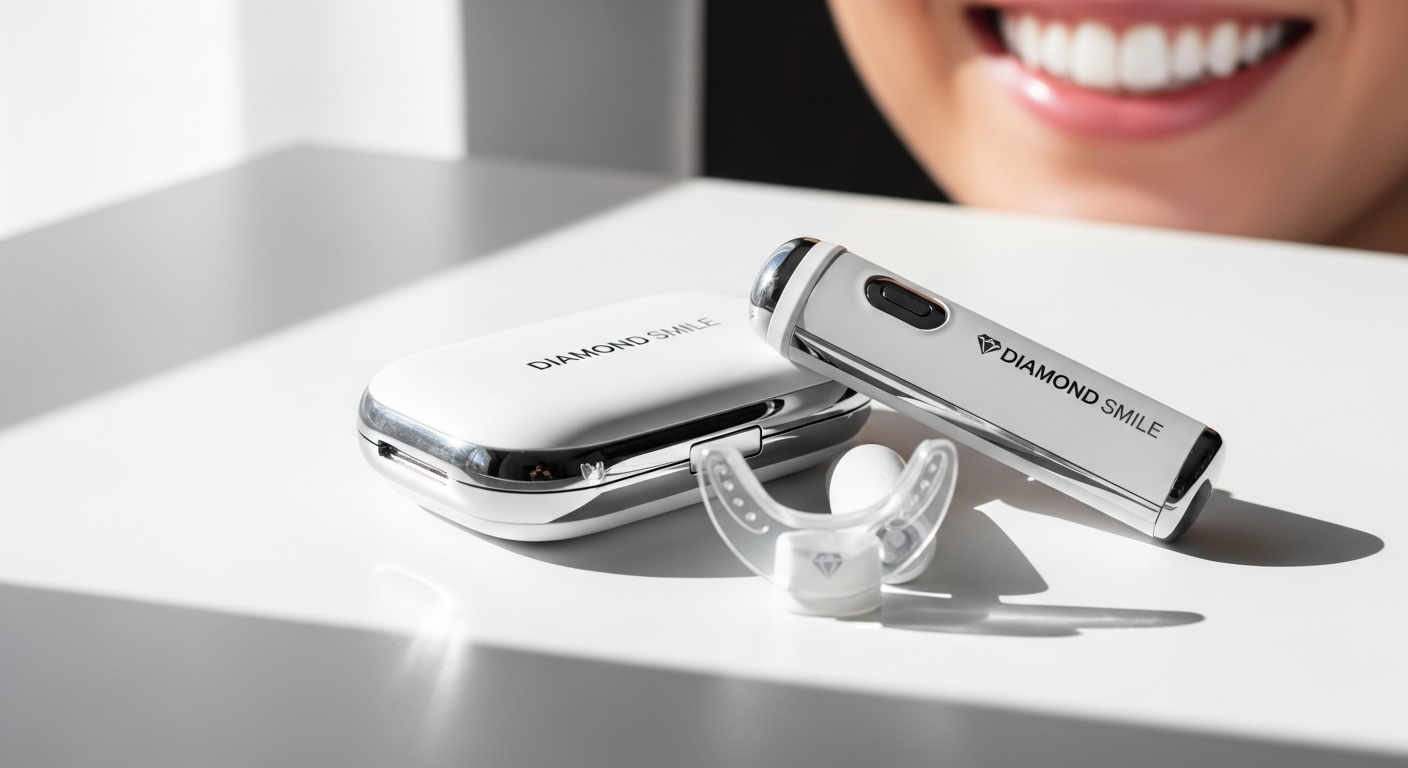
The Diamond Smile kit includes a carefully assembled collection of components designed to eliminate guesswork and deliver consistent results.
The Portable Rechargeable LED Device
The core device is compact—roughly the size of a large electric toothbrush—making it genuinely portable for travel or office use. The rechargeable battery typically holds enough charge for multiple sessions, with full recharges requiring 1-2 hours via USB connection. Battery life expectations range from 8-12 months of regular use before noticeable degradation, though the device’s durability means it should remain functional for years if treated with basic care. The LED itself generates minimal heat, addressing a concern some users have about oral devices.
Mouth Tray Flexibility and Comfort
The included tray features flexible silicone construction that adapts to individual tooth contours, improving comfort during 10-15 minute sessions. Unlike rigid trays that can cause jaw tension, the flexible design distributes pressure evenly. Users often find they can wear it while multitasking—checking email, reviewing documents, or catching up on messages. The fit isn’t perfectly customized like professional trays, but it’s sufficiently comfortable for consistent daily use, which is what actually drives results.
Whitening Gel Syringes: Quantity and Quality
A standard kit includes multiple gel syringes providing enough product for approximately 3 weeks of daily use. Each syringe contains pre-measured gel that applies easily to the tray without excessive spillage. Gel shelf life typically extends 12-18 months when stored in a cool, dark location away from direct sunlight. The consistency is important—too thin and it runs off the tray, too thick and it doesn’t coat evenly. The Diamond Smile formulation hits this balance, though application technique still matters for optimal coverage.
Tooth Shade Guide for Progress Tracking
The included shade guide isn’t just motivational window dressing—it’s a practical tool for documenting changes. Users can compare their current tooth shade against reference samples week by week, providing objective evidence of progress. This matters psychologically when results are subtle, and it helps distinguish between genuine whitening and mere perception changes. Photographing your teeth against the guide on day one, day seven, and day twenty-one creates a visual record of your investment paying off.
Flavored Gel Options and User Compliance
Some versions of the kit offer gel flavors ranging from mint to fruit variations. These options matter more than they might initially seem—flavor reduces the unpleasant sensation of having gel in your mouth for 10-15 minutes, improving user compliance. Someone who dislikes the taste of unflavored gel might skip sessions, undermining the cumulative effect. Conversely, a mint-flavored option encourages consistent use. User compliance is often the difference between dramatic results and disappointing outcomes.
Why Sensitive Teeth Users Are Choosing Peroxide-Free Formulations
Tooth sensitivity during whitening treatments historically prevented millions of people from achieving whiter smiles. The Diamond Smile’s peroxide-free option changes this equation.
How Sodium Chlorite Works Without Peroxide
Peroxide-free whitening agents like sodium chlorite employ an oxidation mechanism that’s gentler on the dentin layer beneath enamel. Peroxide molecules are small and penetrate deeply, potentially reaching sensitive areas. Sodium chlorite works primarily on surface and near-surface stains, reducing the risk of irritating the nerve-rich dentin. The LED light activation still occurs, but the chemical action is less aggressive. For users with history of sensitivity, this represents a meaningful difference between whitening and enduring daily discomfort.
Effectiveness Versus Comfort Trade-Off
The reality is straightforward: peroxide-free formulations are typically 15-30% less aggressive than professional-strength peroxide treatments. Most users see noticeable results anyway, but users expecting dramatic overnight transformation might be disappointed. However, for someone with sensitive teeth, a 20% improvement without pain beats zero improvement because treatment was intolerable. The trade-off favors comfort in most cases, particularly for people who’ve abandoned whitening in the past due to sensitivity.
Clinical Evidence Supporting Safety
Dental research consistently shows that peroxide-free whitening agents present lower sensitivity risk. Studies measuring dentin hypersensitivity post-treatment show significantly lower pain ratings with non-peroxide formulas. The sodium chlorite approach has been used in toothpastes for decades with solid safety data. This isn’t experimental chemistry—it’s a proven gentler alternative, though gentleness does correlate with slightly less dramatic results.
Who Should Avoid This Kit
Despite the peroxide-free benefit, certain people should skip this product or consult their dentist first. Anyone with active gum disease, exposed root surfaces, or recent dental work should get professional approval before whitening at home. Pregnant or nursing women should also avoid whitening, as safety data remains limited. Children under 16 typically shouldn’t use whitening products without parental supervision and dental consultation, regardless of sensitivity concerns.
Pre-Treatment Steps to Minimize Discomfort
Users prone to sensitivity should start by using desensitizing toothpaste for 1-2 weeks before beginning the whitening course. This allows potassium nitrate compounds to block pain signals from the dentin. Additionally, applying a thin layer of desensitizing gel inside the tray before adding whitening gel provides a protective barrier. Some users benefit from starting with shorter sessions—7-8 minutes for the first week, then increasing duration in week two.
When to Pause Treatment
If sensitivity becomes uncomfortable despite precautions, pausing for 2-3 days allows the dentin to recover. Rushing through treatment despite pain often leads to abandonment, so strategic pausing actually improves overall compliance and final results. Most users find sensitivity diminishes as treatment progresses; the teeth adjust to the process. If pain persists beyond day seven despite reasonable precautions, professional consultation is warranted to rule out underlying dental issues.
Real User Results: What to Expect in Your First Month
Understanding realistic timelines prevents frustration and helps users recognize genuine progress.
Visible Improvement Timeline
Many users report subtle whitening within 3-5 days, with more noticeable changes by day 10-14. By week three, users typically see shade changes equivalent to 2-3 levels on professional shade guides. However, “typical” contains significant individual variation. Someone with surface stains from coffee or wine might see results within a week. Someone with deeper intrinsic discoloration from medications or age might require the full course to see meaningful improvement.
Variation Based on Starting Shade and Lifestyle
A person with naturally yellowish teeth often sees more dramatic improvement than someone starting with inherently grayish teeth—the chemistry works differently on different underlying pigment structures. Lifestyle factors during treatment amplify or diminish results. Someone avoiding staining foods and beverages while using the kit sees better results than someone continuing heavy coffee consumption. Smoking during treatment actively works against whitening efforts, reducing effectiveness by 40-50%.
Professional Treatment Comparison
Professional whitening in a dental office typically produces results 1-2 shades lighter than at-home systems, achieved in a single 60-90 minute session. However, the Diamond Smile kit produces comparable end results over three weeks for a fraction of the cost. Professional treatments do provide convenience through single-session completion, but they don’t necessarily produce proportionally better outcomes—the advantage is purely timeline-based.
Factors Influencing Dramatic Results
Starting tooth shade is the strongest predictor of visible results. Naturally lighter teeth with surface stains show the most dramatic changes percentage-wise. Consistent use matters tremendously—someone using the kit daily for three weeks sees better results than someone using it sporadically. Age also factors in; younger people typically see faster results as enamel remains more porous and receptive to whitening agents.
Satisfied User Demographics
People most satisfied with results tend to share characteristics: realistic expectations, commitment to consistent use, natural teeth (crowns and veneers don’t whiten), and willingness to modify lifestyle habits during treatment. Office workers who can use the kit during lunch achieve better consistency than shift workers with irregular schedules. People motivated by specific events—weddings, reunions, professional photos—often maintain better discipline.
Honest Assessment of Disappointing Results
Some users report minimal or no visible change after completing the full course. Contributing factors include extremely dark baseline tooth shade, heavily stained enamel with significant intrinsic discoloration, or expectation misalignment. Smokers frequently report disappointing results, as active smoking counteracts whitening efforts. Some users simply have genetic tooth pigmentation that resists whitening from any source. These cases represent real limitations—the kit works well for many, but not universally.
Cost-Benefit Analysis: DIY Kit Versus Professional Whitening
Financial comparison reveals why at-home alternatives have gained such traction.
Direct Price Breakdown
The Diamond Smile kit costs approximately $59 versus $500-$1,200 for a single professional session. This represents a 8-20x cost difference for comparable results over the 3-week application period. One professional treatment might seem faster, but it’s a single session producing results that fade over 6-12 months, requiring periodic touch-ups each costing $200-$400.
Cost Per Application Analysis
Breaking down the $59 kit across 21 daily applications yields roughly $2.81 per session. Professional treatment works out to roughly $500-$1,200 per session. Even accounting for replacement gel purchases at $15-$25 per set, the long-term per-application cost remains dramatically lower. Someone using the kit annually costs approximately $150 (original kit plus one replacement gel set), while professional maintenance costs $600-$1,600 annually.
Hidden Costs to Consider
At-home users sometimes underestimate additional expenses. Replacement gel syringes cost $15-$25 per set depending on source. Replacement trays might be needed after 1-2 years if silicone degrades. The device itself may need replacement batteries or repairs. Professional treatments have their own hidden costs—travel time, appointment scheduling flexibility, and occasional sensitivity management products. However, even accounting for all at-home contingencies, total costs remain substantially lower than professional alternatives.
ROI Timeline
The investment breaks even within the first use—a single professional treatment costs more than the entire kit. Using the kit three times annually costs about $150 versus $1,500-$1,800 for three professional sessions. After the first year, the kit typically pays for itself many times over through ongoing use.
When Professional Whitening Remains the Better Choice
Certain situations justify professional treatment despite cost. Severely discolored teeth from medications, excessive smoking, or intrinsic staining might require professional-grade peroxide concentrations that at-home kits don’t offer. Time constraints matter too—someone needing results within 48 hours for a major event can’t wait three weeks. People with complex dental work or existing tooth damage should consult professionals before attempting any whitening, reducing the risk of uneven results or damage.
Long-Term Affordability Scenario
Over five years, consistent at-home maintenance costs approximately $750 (kit plus replacement gels). Comparable professional treatment and touch-ups would cost $3,000-$4,500 over the same period. This financial advantage explains why at-home whitening has exploded in popularity—the math simply favors DIY approaches for people with realistic expectations.
Start your whitening journey with Diamond Smile’s affordable LED kit.
Practical Integration Into Your Daily Routine
Success depends partly on making the kit work within your actual life, not disrupting it.
Optimal Timing for Sessions
Morning sessions fit naturally before breakfast, though eating immediately after whitening isn’t ideal—waiting 30-60 minutes allows gel residue to fully clear. Evening sessions avoid breakfast timing but require discipline before bed. Many users prefer timing whitening for their least food-intensive period, such as mid-morning if they’re tea drinkers rather than morning coffee drinkers. The timing matters less than consistency; any time you’ll actually use the kit regularly beats the perfect time you’ll skip.
Portability for Travel and Office Use
The compact device genuinely fits in a desk drawer, gym bag, or travel case. Office use during lunch breaks works well for people with private spaces—bathroom stalls, empty offices, or personal vehicles. Gym use immediately post-workout capitalizes on time already allocated to personal care. Travel compatibility is genuine; the device fits carry-ons and needs only USB charging available in most hotels. This portability explains why many users actually achieve better consistency with at-home kits versus professional appointments requiring scheduling and travel.
Compatibility With Other Oral Care
Standard toothpaste, floss, and mouthwash work fine alongside whitening treatment. Some sources recommend avoiding charcoal-based toothpastes during whitening, as their abrasiveness might interfere with gel effectiveness. Whitening toothpastes can be used, though they’re redundant during active treatment—save them for maintenance after the 3-week course ends. Prescription mouthwashes for gum disease don’t interfere with whitening gel function.
Scheduling Consistency Over Three Weeks
The recommended 3-week course actually means 21 daily applications, not 3 weeks including skipped days. Missing sessions extends the timeline and weakens cumulative effect. Setting a phone reminder significantly improves compliance. Linking whitening to an existing habit—after brushing teeth each evening, immediately before showering, or during a designated morning routine—creates automatic consistency without requiring willpower.
Lifestyle Adjustments During Treatment
Avoiding staining foods and beverages meaningfully improves results. Heavy coffee, red wine, dark soda, and berries all undermine whitening efforts. This doesn’t mean complete elimination, but reducing consumption during the active treatment period makes measurable difference. Smoking during treatment actively counteracts whitening, reducing effectiveness by significant margins. Dietary discipline for three weeks is manageable for most people, especially those motivated by cost savings and anticipated results.
Device Durability and Battery Performance
The rechargeable battery typically maintains adequate charge for 8-12 months of regular use before noticeable degradation. Full depletion and recharge cycles gradually reduce capacity over years. Keeping the device away from extreme temperatures extends battery lifespan. The LED itself is durable—manufacturers typically rate them for 10,000+ hours of use, far exceeding consumer needs. Physical durability is solid; the device handles reasonable daily use without special precautions.
Navigating Common Challenges and Potential Drawbacks
Transparency about realistic difficulties improves user satisfaction and prevents frustration-based abandonment.
Gel Application Messiness
Some users find the gel slightly runny, particularly if syringes are stored in warm environments where consistency thins. Applying gel slowly and carefully into the tray before insertion prevents most spillage. Keeping paper towels nearby for inevitable minor dribbles is practical. This isn’t a major issue for most users, but people with significant anxiety about mess or those with limited dexterity might find this mildly frustrating. The syringe design helps control application better than brush-based systems, though it requires gentle technique.
Tray Fit Variability
The flexible silicone tray works well for most mouth shapes but doesn’t fit everyone perfectly. Some users with unusually small mouths or specific dental configurations experience tray slipping. Loose trays reduce efficacy as gel contact with teeth becomes inconsistent. Adjusting insertion technique or accepting slightly less perfect comfort usually solves the problem, though some users might prefer professional custom trays despite additional cost.
Inconsistent or Patchy Results
Uneven whitening sometimes occurs when gel coverage is inconsistent. This typically results from improper application technique—rushing to insert the tray without ensuring gel contacts all teeth surfaces. Deliberately applying gel to each tooth individually solves most patchiness. Some users experience faster whitening on upper teeth than lower teeth due to saliva flow and tray positioning. These patterns usually resolve by week three with consistent technique.
Device Malfunction Concerns
Though uncommon, LED devices occasionally fail to power on or the light dims prematurely. This represents a potential frustration point, though most units function reliably for years. Checking that the device powers on before committing to purchase and understanding warranty coverage provides protection. Most reputable sellers offer 30-day returns if device malfunction occurs immediately, though longer-term technical failure becomes user expense.
Customer Service Responsiveness
Some reviews mention delayed responses to customer inquiries or difficulty obtaining replacements. This varies by seller and distribution channel. Purchasing directly from the manufacturer often improves service responsiveness compared to third-party sellers. Confirming return policies and warranty terms before purchase prevents surprises if issues arise.
Refund and Return Procedures
Standard returns typically require products within 30 days in original condition. Some sellers are more flexible than others, particularly if results don’t meet expectations. Reviewing specific seller policies before purchase clarifies expectations. Product guarantees sometimes extend to 60-90 days, providing longer trial windows for users unsure about commitment.
Making Your Final Decision: Is This Kit Right for You?
Determining fit requires honest self-assessment across several dimensions.
Assessment Checklist
Ask yourself the following questions: Do you have realistic expectations about results timeframe and magnitude? Can you commit to daily 10-15 minute sessions for three weeks? Are you willing to modify lifestyle habits during treatment? Do you lack severe gum disease, recent dental work, or other contraindications? Is the $59 investment acceptable if results are modest? Can you tolerate minor gel application messiness? Is portability valuable for your lifestyle? Do you have sensitivity concerns that make peroxide-free options preferable?
Ideal Candidate Profile
People most likely to be satisfied are those with naturally lighter teeth seeking modest shade improvement, commitment to consistency, realistic timeline expectations, and genuine interest in at-home solutions. Ideal candidates tolerate minor inconvenience for significant cost savings. They’re motivated by the 3-week timeframe and don’t need immediate results for urgent events. They understand that results vary and view this as reasonable investment rather than guaranteed transformation.
Alternative Whitening Options
Professional in-office whitening produces faster, often more dramatic results if timeline matters more than cost. Whitening strips offer convenience, though results are typically more modest than LED systems. Whitening toothpastes provide minimal effect but work alongside other approaches. Charcoal products lack clinical efficacy despite marketing claims. Each alternative serves different priorities and budgets.
Questions Before Purchasing
Will consistency be realistic given your schedule? Are your baseline tooth shade expectations aligned with likely outcomes? Do you have any dental health concerns requiring professional consultation first? Which seller offers the best warranty and return policy? Can you commit to the three-week timeline? Are you primarily motivated by cost savings, convenience, or specific results?
Red Flags Indicating Professional Whitening Is Necessary
Extremely dark baseline tooth shade, severe intrinsic discoloration, history of whitening failures, active gum disease, recent dental work, or existing tooth damage—these situations warrant professional consultation. You’re not automatically excluded from home use, but professional guidance prevents wasted money or damaged teeth.
Confidence Factors Predicting Success
Strong candidates for success demonstrate history of completing personal care commitments, reasonable expectations about gradual improvement, genuine interest in at-home solutions, and willingness to follow instructions carefully. People whose primary concern is cost usually report high satisfaction because the bar is simply lower—they achieve whitening at a price they find acceptable. Those who commit to consistency and avoid lifestyle sabotage overwhelmingly report positive experiences.
Your Path to a Brighter Smile Starts Here
The Diamond Smile LED Teeth Whitening Kit occupies a sweet spot in the at-home whitening market—it’s genuinely affordable, genuinely convenient, and genuinely capable of producing visible results for many users. The LED technology isn’t just marketing hype; it’s a legitimate accelerant that activates the whitening gel more effectively than passive strip-based systems. The peroxide-free formulation makes it accessible for people with sensitive teeth who’ve previously felt locked out of whitening options.
That said, this kit isn’t a universal solution. Results vary significantly based on your starting tooth shade, lifestyle habits, and commitment to consistent use. Some users will see dramatic improvements within the first week, while others may need the full 3-week course to notice meaningful change. If you’ve been postponing professional whitening due to cost concerns, or you’re curious about at-home whitening but hesitant to commit to expensive treatments, this kit deserves serious consideration.
Start with realistic expectations, follow the application instructions precisely, and give yourself the full 3-week treatment window before evaluating results. The combination of affordability, ease of use, and genuine effectiveness makes it one of the more compelling options available right now.