
A bright smile ranks high on most people’s wish lists, yet the barrier to achieving one often feels insurmountable. Over 80% of people desire whiter teeth, but nearly 40% of adults avoid professional whitening due to the steep costs and the nagging fear of tooth sensitivity that comes with it. That gap between desire and action is where the Diamond Smile LED Teeth Whitening Kit has carved out its niche, offering a practical alternative for anyone tired of hiding their smile.
The whitening landscape has evolved significantly in recent years. Professional treatments remain effective but can run $300 to $1,000 per session—money many people simply don’t have to spend on cosmetic dentistry. Over-the-counter strips sit on drugstore shelves, but their results often disappoint. The Diamond Smile kit bridges this divide by combining blue LED technology with specially formulated whitening gels, including peroxide-free and PAP+ options that address the sensitivity problem head-on. At around $59, it positions itself as an accessible middle ground that doesn’t require a dental appointment or a second mortgage.
Understanding whether this kit truly delivers on its promises requires looking beyond marketing claims and examining the actual science, user experiences, and realistic outcomes. Discover more about the Diamond Smile LED Teeth Whitening Kit and see if it’s the right choice for your smile.
How the Blue LED Light Actually Works to Whiten Teeth
The Science Behind Blue LED Wavelengths
Blue LED light operates within a specific wavelength range—typically between 400 and 500 nanometers—that activates the whitening gel’s chemical compounds. This wavelength penetrates the tooth’s enamel without generating excessive heat, which is why LED devices are safer than older halogen whitening systems. The light doesn’t whiten teeth on its own; instead, it accelerates the activation of the whitening agents already present in the gel.
Photochemical Reactions That Break Down Stains
When blue LED light hits the whitening gel applied to your teeth, it triggers a photochemical reaction. This reaction breaks down the molecular bonds that hold stains in place on both the surface (extrinsic stains) and deeper within the tooth structure (intrinsic stains, though LED is less effective here). The gel contains active ingredients—whether hydrogen peroxide, PAP+, or sodium chlorite—that do the actual chemical work, while the LED light accelerates the process significantly.
Why LED Light Alone Cannot Whiten Without Gel
A common misconception is that the light itself whitens teeth. In reality, shining a blue LED on your teeth without whitening gel produces no whitening effect whatsoever. The gel contains the active whitening compounds; the light simply activates them more efficiently. This distinction matters because it explains why some cheaper whitening devices that claim LED technology but skimp on quality gel formulation deliver disappointing results.
The Power of Combined Light and Gel Technology
The combination of light and gel creates a synergistic effect. Whitening gel alone—applied without LED activation—works but requires longer application times and delivers slower results. Add the blue LED light, and the same gel works measurably faster. Clinical testing shows that LED-accelerated whitening produces noticeably faster results than gel-only applications, though the final whitening level depends more on the gel’s strength and your teeth’s starting condition than on the light alone.
The 10-15 Minute Treatment Window
Each treatment session in the Diamond Smile kit lasts between 10 to 15 minutes. This timeframe isn’t arbitrary. Studies on LED whitening show that 10-15 minutes provides an optimal balance—enough time for the gel to work effectively while minimizing the risk of sensitivity or enamel irritation. Sessions shorter than 10 minutes may not activate the gel sufficiently, while sessions beyond 15 minutes offer diminishing returns and increase sensitivity risk without substantially better results.
Blue LED Technology Versus Professional Light Methods
Professional dental whitening often uses different light technologies, including laser systems that operate at different wavelengths or higher intensities. While professional systems can achieve faster results due to their power and the professional-grade gels used, at-home blue LED devices like Diamond Smile narrow the gap considerably. The main difference lies in gel strength and professional oversight rather than the light technology itself. For most surface stains, blue LED is highly effective when paired with quality gel.
Sensitive Teeth Solutions: Peroxide-Free vs. Traditional Formulas
Understanding Hydrogen Peroxide-Based Gels
Hydrogen peroxide has been a whitening industry staple for decades because it’s highly effective at breaking down stains. However, this effectiveness comes with a cost for sensitive-teeth sufferers. Hydrogen peroxide penetrates the enamel and can irritate the dentin layer beneath, which contains nerve endings. This irritation manifests as the sharp, shooting pain many people experience during and after whitening treatments. Concentrations of 3-10% hydrogen peroxide are common in at-home kits, and while lower than professional concentrations, they still trigger sensitivity in roughly 40% of users.
PAP+ as a Gentler Alternative
PAP+ (Phthalimidoperoxycaproic Acid) represents a newer generation of whitening chemistry designed specifically to address sensitivity concerns. PAP+ works similarly to hydrogen peroxide in breaking down stains but releases oxygen more gradually and in smaller quantities, reducing the irritation potential. Users who’ve switched from hydrogen peroxide gels to PAP+-based formulations frequently report significantly reduced or eliminated sensitivity, making this option particularly valuable for anyone with a history of tooth pain during whitening.
Sodium Chlorite Formulations Without Enamel Irritation
Some whitening gels use sodium chlorite as the active ingredient, offering another alternative for sensitive-teeth sufferers. Sodium chlorite works through a different chemical mechanism than peroxide-based compounds, targeting stain molecules without the penetrating action that causes sensitivity. These formulations tend to work more slowly than hydrogen peroxide gels but deliver gentler, more comfortable results over extended use.
Real User Feedback on Sensitivity Levels
Users consistently report that Diamond Smile’s peroxide-free options—particularly those using PAP+ formulations—produce minimal to no sensitivity, even for people with pre-existing sensitivity issues. This feedback stands out when compared to traditional whitening strips or older gel formulations. The reviews indicate that switching to Diamond Smile’s gentler options often allows people who’ve previously abandoned whitening due to pain to finally achieve the brighter smile they’ve wanted.
Which Formula Suits Your Needs
If you’ve experienced sensitivity with whitening products before, a peroxide-free formula is your safer bet. PAP+ formulations offer the fastest results among the gentler options, while sodium chlorite provides the most conservative approach. For people with normal tooth sensitivity, traditional hydrogen peroxide gels in the Diamond Smile kit will work faster and more dramatically. Your choice should depend on your sensitivity history and how quickly you want results.
Timeline for Reduced Sensitivity
When switching from hydrogen peroxide to gentler formulations, most users notice reduced sensitivity within the first week of treatment. By the second week, many report virtually no discomfort. This relatively quick improvement means you won’t need to endure weeks of pain while adjusting to a new whitening product—the formula change provides relief almost immediately.
Identifying Your Kit’s Formula Version
Check your kit’s packaging carefully. The ingredient list will clearly indicate whether you have a hydrogen peroxide, PAP+, or sodium chlorite formulation. If you’re ordering online, this information should appear in the product description. Don’t assume all Diamond Smile kits contain the same formula; the brand offers multiple versions specifically to address different user needs and sensitivity profiles.
What’s Actually Included in the Kit and How to Use It Properly
Complete Component Inventory
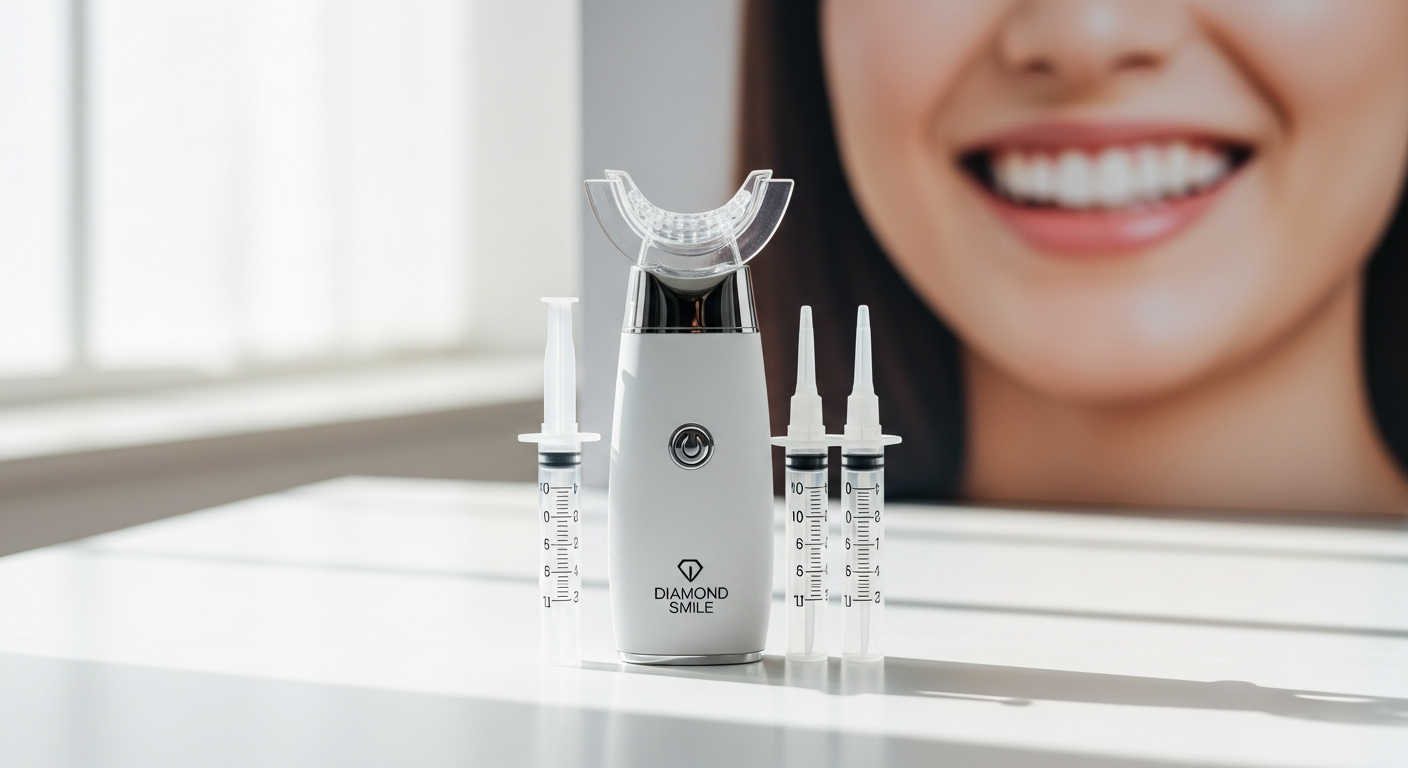
The Diamond Smile LED Teeth Whitening Kit arrives with everything needed to begin whitening immediately. The package contains a rechargeable blue LED light device, multiple syringes of whitening gel, a flexible BPA-free silicone mouth tray, a shade guide for tracking progress, and detailed instructions. Nothing essential is missing, and no additional purchases are required to start your first treatment—a refreshing contrast to many whitening kits that nickel-and-dime you for accessories.
Rechargeable LED Device Specifications
The LED device itself is compact and portable, designed for easy handling during the 10-15 minute treatment window. It features a rechargeable battery that, according to specifications, provides extended use before needing another charge. The LED lights are built for durability with a lifespan that typically outlasts the gel supply included in a single kit, meaning the device itself becomes a reusable tool for future whitening courses if you purchase additional gel.
The Flexible, BPA-Free Silicone Tray and Custom Fit
The mouth tray is one of the kit’s most appreciated features. Made from flexible, BPA-free silicone, it molds comfortably to your teeth and gums without requiring boiling or custom fitting at a dentist’s office. This flexibility ensures the tray doesn’t irritate your gums during treatment and allows the LED light to reach all tooth surfaces evenly. A poorly fitting tray can result in uneven whitening and increased sensitivity; the Diamond Smile tray’s design minimizes both issues.
Precision-Designed Gel Syringes
The whitening gel comes in syringes designed for precise application directly onto the tray. This precision prevents gel waste and ensures you’re applying the correct amount for each treatment. The syringes are calibrated so you know exactly how much product you’re using, which helps you calculate how many treatments you can complete before ordering more gel.
Step-by-Step Proper Application Process
Begin by brushing and flossing your teeth to remove surface debris, then dry them thoroughly. Apply a thin, even line of whitening gel along the inner surface of the silicone tray, being careful not to overfill it. Insert the tray into your mouth, ensuring it sits snugly against all teeth surfaces. This is where the flexible silicone’s advantage becomes apparent—it adjusts to your mouth’s unique contours without gaps where light would escape. Once positioned, turn on the LED device and begin your timed 10-15 minute session.
Proper Tray Insertion and LED Light Coverage
Position the tray so the LED light panel sits directly opposite your front teeth surfaces. The tray should feel secure but not uncomfortably tight. Proper positioning ensures the blue LED light reaches all tooth surfaces evenly, preventing the uneven whitening that results from poorly positioned trays. After insertion, your mouth can remain slightly open or closed; the tray is designed to function either way, giving you flexibility during treatment.
Recommended Treatment Frequency
Most users follow a daily or every-other-day schedule for the initial 2-3 week treatment course. Daily treatment produces faster results but carries a slightly higher sensitivity risk, while every-other-day treatment distributes results over a longer timeline but minimizes discomfort. Your tolerance level and sensitivity profile should guide this decision. The included instructions provide clear frequency recommendations, and following them produces optimal results.
Using the Shade Guide to Track Progress
The shade guide included in your kit contains a color reference scale. Compare your teeth to this guide at the beginning of your whitening course, then again each week. This visual tracking motivates continued use and provides concrete evidence of progress, which many users find encouraging during the multi-week treatment window. By week two or three, most people notice a clear shift on the shade guide.
Stain Removal Capability: What This Kit Can Actually Handle
Effectiveness Against Extrinsic Stains
Diamond Smile excels at removing extrinsic stains—discoloration on the outer enamel surface caused by lifestyle habits. These are the stains that develop from years of coffee drinking, red wine consumption, tea, tobacco use, and sugary drinks. The whitening gel breaks down the external stain molecules without requiring aggressive action, making results visible and impressive for most users with typical lifestyle-induced discoloration. This is the kit’s sweet spot.
Performance on Common Stain Culprits
Tea, coffee, red wine, tobacco, and sugary drinks all leave surface stains that Diamond Smile’s LED-accelerated whitening addresses effectively. Users frequently report that yellowing from these sources diminishes noticeably within the first week of treatment, with substantial improvement by week two. If your discoloration primarily comes from these sources—which applies to the majority of people seeking whitening—you’ll likely see results that justify the $59 investment.
Limitations with Intrinsic Stains
Intrinsic stains—internal discoloration from aging, certain medications, fluorosis, or trauma—present a genuine limitation. These stains exist within the tooth structure rather than on the surface, and at-home whitening with any product has limited effectiveness against them. Professional treatments with higher-concentration gels and custom trays work better on intrinsic stains, but even professional whitening has limitations. If your teeth have deep internal yellowing, expectations for at-home kits should be calibrated accordingly.
Before-and-After Timeline: When Results Appear
Most users notice visible whitening after the first 3-5 days of treatment. More dramatic results typically appear by day 7-10, with peak results often achieved around the 2-3 week mark. This timeline aligns with the product’s recommended 2-3 week treatment course. Some users see their desired shade achieved in two weeks and can stop; others continue for the full three weeks. The timeline depends on your starting shade, the stain type, and which formula you’re using.
Comparing Results to Professional Dental Whitening
Professional treatments achieve faster, more dramatic results—often noticeable improvements after a single session. However, they cost 5-10 times more than Diamond Smile. For moderate surface staining, Diamond Smile produces results that are impressively close to professional treatment, just on a slower timeline. For severe intrinsic staining, professional treatment remains superior, but for typical coffee-and-wine stains, at-home LED treatment comes remarkably close.
Maintenance After Completing the Initial Course
Once you’ve achieved your desired shade, maintenance becomes important. Regular dental hygiene—brushing, flossing, and professional cleanings—helps preserve your results. Continuing your whitening habits (reducing staining beverages, quitting tobacco) naturally extends the results’ longevity. Most users find that their whitening persists for several months with basic maintenance.
Touch-Up Treatments and Frequency
How often you’ll need touch-up treatments depends on your lifestyle and how aggressively you reintroduce staining habits. Someone who quits coffee for a month post-whitening might maintain their shade for 6+ months; someone who resumes daily coffee drinking might see staining return within 2-3 months. Users typically purchase additional gel syringes ($15-30) for touch-ups rather than repurchasing entire kits. A single touch-up session lasting 10-15 minutes is often enough to restore your shade.
Real User Experiences: The Good, the Honest, and the Limitations
Reported Benefits and Common Praise Points
Users consistently highlight three major benefits: ease of use, convenience, and visible results. The device’s simplicity means there’s virtually no learning curve—even first-time users achieve good results following the basic instructions. The 10-15 minute treatment window fits into busy schedules, and the portable design allows travel without interrupting your whitening course. These practical advantages resonate strongly with busy professionals and frequent travelers who appreciate products that simplify their routines.
Sensitivity Advantages with Peroxide-Free Options
Perhaps the most significant praise centers on sensitivity performance, particularly with peroxide-free formulations. Users who’ve previously experienced painful whitening now report completing entire courses with zero sensitivity. This breakthrough matters tremendously for the roughly 40% of the population with sensitive teeth—they’ve effectively been excluded from whitening’s benefits until gentler options became available. Testimonials consistently reflect relief and gratitude for finally being able to whiten without pain.
Realistic Expectations: Results Are Visible But Not Dramatic
Honest user feedback indicates that while results are real and noticeable, they don’t rival professional whitening’s transformation. If you start with moderately yellow teeth and complete the full course, you’ll see a clear brightening—perhaps moving from a shade 6-7 to a shade 8-9 on the industry’s 10-point scale. But you won’t achieve the pristine white shade that professional treatments deliver. Managing this expectation prevents disappointment; many satisfied customers explicitly note in their reviews that they adjusted their expectations appropriately and found the results more than acceptable.
Inconsistent Brand Experiences Beyond the Kit
Trustpilot reviews reveal a pattern: the Diamond Smile teeth whitening kit itself receives substantial praise, but the overall brand experience varies. Some customers report excellent service and fast shipping; others mention delivery delays or issues with different products (the brand sells hair styling tools and other items alongside whitening kits). This inconsistency suggests that while the product performs well, your overall satisfaction may depend on factors beyond the kit’s actual performance—an important consideration when committing to a purchase.
Documented Delivery and Customer Service Issues
Several reviews mention shipping delays or customer service responsiveness problems when issues arise. These aren’t product failures but rather operational frustrations that can impact your experience. If you have a question about which formula to order or encounter a problem with shipping, response times may be slower than you’d prefer. This reality doesn’t negate the kit’s whitening effectiveness but represents a potential friction point in your overall journey.
Success Stories from Sensitive-Teeth Users
Testimonials from people with pre-existing sensitivity issues stand out as particularly meaningful. Many describe years of avoiding whitening due to previous painful experiences, then trying Diamond Smile’s peroxide-free option and finally achieving the smile improvement they’d wanted. These stories convey genuine relief and life-quality improvement—not just cosmetic enhancement but restored confidence in social interactions and photography.
Honest Assessment of Ideal Users
The kit works best for people with mild to moderate surface staining, busy schedules, and either normal or sensitive teeth seeking a gentle option. It works adequately for people with moderate intrinsic staining but won’t produce dramatic results. It’s less suitable for those with severe yellow discoloration or deep staining from medications or fluorosis—they’d benefit more from professional treatment despite the higher cost.
Cost Comparison: Is $59 Actually a Good Deal for At-Home Whitening?
Diamond Smile Pricing Versus Alternatives
The Diamond Smile LED Teeth Whitening Kit retails for approximately $59 USD (€59.99 EUR), positioning it squarely between budget drugstore options ($15-30) and professional dental treatments ($300-1,000+). This price point immediately makes it attractive to cost-conscious consumers. Check the current pricing and see how Diamond Smile compares to other whitening options available today.d
Cost Per Treatment Session
A single kit typically includes enough gel for approximately 20-30 treatment sessions (depending on application generosity and your mouth’s size). At $59 for 20-30 sessions, you’re paying roughly $2-3 per treatment—a remarkably low per-session cost. Even if you never use the kit again after the initial purchase, that cost basis makes sense. If you complete multiple whitening courses over time, amortizing the reusable LED device further reduces cost-per-session.
Comparison to Professional Dental Whitening
Professional whitening costs $300-1,000+ per session and requires multiple sessions for maximum results. A $300 professional treatment versus a $59 kit represents a 5x cost difference for comparable surface-stain removal. Even if professional treatment produces slightly faster results, the cost-benefit ratio heavily favors at-home treatment for most people. You’d need to perform 5+ complete kit courses to match a single professional session’s cost.
Comparison to Drugstore Whitening Strips
Drugstore whitening strips cost $15-30 and appeal through low price, but deliver inconsistent results. They’re difficult to position correctly, often cause uneven whitening, and the adhesive frequently fails. Compared to these alternatives, Diamond Smile’s structured approach with a purpose-built tray and LED device produces meaningfully better results. Spending an extra $30-40 to upgrade from strips to the kit represents excellent value for improved outcomes.
Long-Term Value: Gel Supply and Device Lifespan
The reusable LED device means that future whitening courses only require purchasing additional gel syringes, typically priced at $15-30 for a refill package. This dramatically improves the long-term value proposition. If you perform two whitening courses per year for three years, your total investment might be $59 (initial kit) + $90 (three refill packs at $30 each) = $149 for six complete treatments over three years—roughly $25 per treatment. Professional treatments at that frequency would cost $1,800-6,000 over the same period.
Hidden Costs to Consider
While the kit itself is affordable, sensitivity management products might be necessary if you experience discomfort despite choosing a gentler formula. Sensitivity toothpaste costs $5-8 and might be needed for a few weeks. Additionally, if you reintroduce staining habits aggressively, touch-up treatments might be needed more frequently than expected, requiring additional gel purchases. These aren’t major expenses, but they should factor into your decision.
ROI Analysis for Different User Scenarios
For someone who whitens annually, the kit’s ROI is excellent—minimal investment for months of maintained results. For someone who whitens quarterly and maintains their shade aggressively, it’s outstanding. For someone who whitens once and then abandons the routine, the cost-per-use is higher but still reasonable compared to professional treatment. For someone with severe intrinsic staining who sees minimal results, the ROI is poor—professional treatment despite its cost would be preferable.
Who Should Buy This Kit and Who Should Skip It
Ideal Candidates and Best Use Cases
You’re an ideal candidate if you have mild to moderate surface staining from lifestyle habits (coffee, wine, tobacco), normal to sensitive teeth, and a budget-conscious mindset. You’re an excellent fit if your schedule doesn’t allow dental appointments but permits 10-15 minutes daily at home. Frequent travelers benefit particularly from the portable design. Professionals who value convenience without compromising results find this kit appealing. Anyone who’s avoided whitening due to sensitivity concerns—and hasn’t yet tried peroxide-free options—should seriously consider trying Diamond Smile’s gentler formulations.
Red Flags: When to Skip This Kit
Don’t purchase this kit if you have severe intrinsic staining from decades of yellowing or medication-induced discoloration—professional treatment is more appropriate despite the cost. Skip it if you have existing enamel damage or severe gum disease; whitening isn’t suitable for compromised oral health. If you’re seeking results comparable to professional whitening’s transformation, manage your expectations or invest in professional treatment. If you’re unwilling to commit to a 2-3 week treatment course or daily treatment sessions, the kit won’t work for you.
Gum Disease and Recent Dental Work Considerations
Active gum disease or recent dental work (fillings, crowns, bonding) are contraindications for whitening. The whitening gel can irritate inflamed gums and doesn’t affect the color of dental work, which may look mismatched if surrounding teeth whiten. If you’ve had recent dental procedures, wait at least two weeks before beginning whitening. If you have gum disease, treat it first—whitening can wait.
Suitability Across Different Age Groups
The kit works for adults of any age with suitable teeth health. Teenagers can use it, though permanent teeth should be fully erupted (around age 14-15). The elderly often have more intrinsic staining and may see less dramatic results, but many still benefit from using peroxide-free formulas. Pregnant or nursing women should consult their dentist before whitening, as safety data specific to pregnancy remains limited. The kit’s suitability varies more by oral health status and staining type than by age.
Lifestyle Factors That Support Kit Success
If you’re willing to reduce or eliminate staining beverages during your treatment course, you’ll see faster results. If you maintain good oral hygiene already, whitening integrates seamlessly into your routine. If you’re patient and willing to tolerate a 2-3 week timeline rather than demanding instant results, you’ll be satisfied. If you view teeth whitening as self-care rather than a luxury, the $59 investment feels reasonable.
Critical Questions to Ask Yourself
Before purchasing, answer honestly: Do I have surface staining from lifestyle habits, or deep intrinsic yellowing? Have I experienced sensitivity with whitening before, and if so, am I willing to try peroxide-free options? Can I commit to daily or every-other-day treatments for 2-3 weeks? Do I have healthy gums and intact enamel? Is my primary goal cosmetic improvement, not perfection? Do I want results faster or gentler? If your answers align with the kit’s capabilities, purchase makes sense. If they don’t, explore alternatives.
Alternative Solutions for Non-Ideal Candidates
Those with severe staining should consult a dentist about professional bleaching or veneers. People with sensitivity issues who haven’t tried peroxide-free options should visit their dentist for sensitivity management advice before whitening. Those with gum disease need treatment first. Those with intrinsic staining might explore whitening toothpastes as a gentler starting point, though results are minimal. Professional whitening remains the gold standard for dramatic transformation, even if costlier.
The Verdict: Does Diamond Smile Deliver on Its Promises?
Summary of Strengths in the At-Home Market
The Diamond Smile LED Teeth Whitening Kit delivers on its core promise: it brightens teeth through a combination of effective LED technology and quality whitening gels. Its greatest strength is the peroxide-free and PAP+ formula options that allow sensitive-teeth sufferers—previously excluded from whitening’s benefits—to finally achieve results. The kit is genuinely easy to use, genuinely portable, and genuinely affordable compared to alternatives. For surface staining caused by everyday habits, it produces visibly better teeth within 2-3 weeks.
Honest Assessment of Its Limitations
The kit isn’t a substitute for professional whitening when dramatic transformation is the goal. Intrinsic staining—deep internal discoloration—largely resists at-home treatment regardless of LED technology. Results are good, not transformative. The brand itself has mixed reviews on customer service and delivery, even though the whitening kit specifically earns substantial praise. Managing expectations around speed (not instant), intensity (not professional-grade), and brand experience (potentially inconsistent) prevents disappointment.
The Sensitivity Advantage That Sets It Apart
In the whitening market, sensitivity has been a genuine barrier to entry for millions of people. Traditional options caused pain that made whitening feel punitive. Diamond Smile’s peroxide-free and PAP+ formulations meaningfully reduce this barrier. For anyone with sensitive teeth or a history of whitening-induced pain, this represents a genuine breakthrough—not revolutionary technology, but practical improvement that addresses a real problem affecting real people.
Value Proposition at the $59 Price Point
Fifty-nine dollars buys you a reusable LED device and enough gel for 20-30 treatment sessions. That’s roughly $2-3 per treatment session—exceptional value. Even if you never purchase additional gel, the price per session justifies the investment for most people. If you perform multiple whitening courses (as many people do), the long-term value becomes even more compelling. The kit outperforms drugstore alternatives significantly while remaining a fraction of professional treatment costs.
Reliability of Results Based on User Feedback and Specifications
User testimonials consistently support the product’s specifications: visible whitening within 1-2 weeks, results peaking around 2-3 weeks, minimal sensitivity with gentler formulas. The results aren’t universally perfect—some users see less dramatic improvement than others—but the reliability is high. Most users who follow instructions achieve noticeable brightening. The failure rate appears low based on available reviews, suggesting the kit’s design is sound and performs as intended.
Brand Consistency Concerns and Their Impact
While the whitening kit itself earns consistent praise, the brand’s overall experience sometimes doesn’t. Shipping delays, customer service responsiveness issues, and product inconsistencies with other items (hair tools, etc.) appear in reviews. This inconsistency matters when you’re making a purchase decision. You’re buying a quality product, but from a brand that doesn’t consistently deliver excellence across all dimensions. This reality doesn’t negate the product’s effectiveness but represents a transparency point worth acknowledging.
Final Recommendation Based on Customer Priorities
For cost-conscious consumers seeking visible improvement without professional pricing: buy it. For people with sensitive teeth who’ve avoided whitening due to pain: buy it—specifically, a peroxide-free formula. For busy professionals wanting convenient at-home whitening: buy it. For anyone with severe intrinsic staining or enamel damage: skip it and consult a dentist. For people seeking dramatic transformation: consider professional treatment despite higher costs. For travelers wanting portable whitening: buy it. The kit earns recommendation for the specific use cases it was designed for.
Make Your Whitening Decision: Is Diamond Smile Right for Your Smile?
The Diamond Smile LED Teeth Whitening Kit genuinely occupies a sweet spot in the at-home whitening market. It’s effective for surface stains without breaking the bank, remarkably gentle on sensitive teeth through its peroxide-free and PAP+ options, and won’t drain your wallet the way professional treatment inevitably does. The kit acknowledges a real market need—people with sensitive teeth who’ve given up on whitening—and delivers a practical solution. The 10-15 minute treatment sessions integrate seamlessly into busy schedules, and the portable design means you can maintain your whitening routine whether you’re at home on your couch or traveling for work.
Manage your expectations appropriately. This kit delivers noticeably brighter teeth, but it won’t transform severely yellowed or intrinsically stained teeth the way a professional dentist can. The results are real, they’re visible, and they’re achievable—just not dramatic. You’ll see gradual improvement week by week, not transformation after a single treatment. The mixed brand reviews on platforms like Trustpilot also warrant acknowledgment; while the whitening kit itself performs well, your overall experience may depend on shipping and customer service factors beyond the product itself.
If you have sensitive teeth and want visible results without professional pricing, if you can commit to a 2-3 week treatment course, and if you have realistic expectations about timeline and intensity, the Diamond Smile LED Teeth Whitening Kit deserves your consideration. Start with a peroxide-free formula if sensitivity is your primary concern. Follow the instructions precisely—don’t improvise by extending sessions or increasing frequency. Give yourself at least two weeks before deciding if results meet your expectations. Your smile—and your wallet—will thank you. Start your whitening journey with Diamond Smile today and take the first step toward the brighter smile you’ve been wanting.