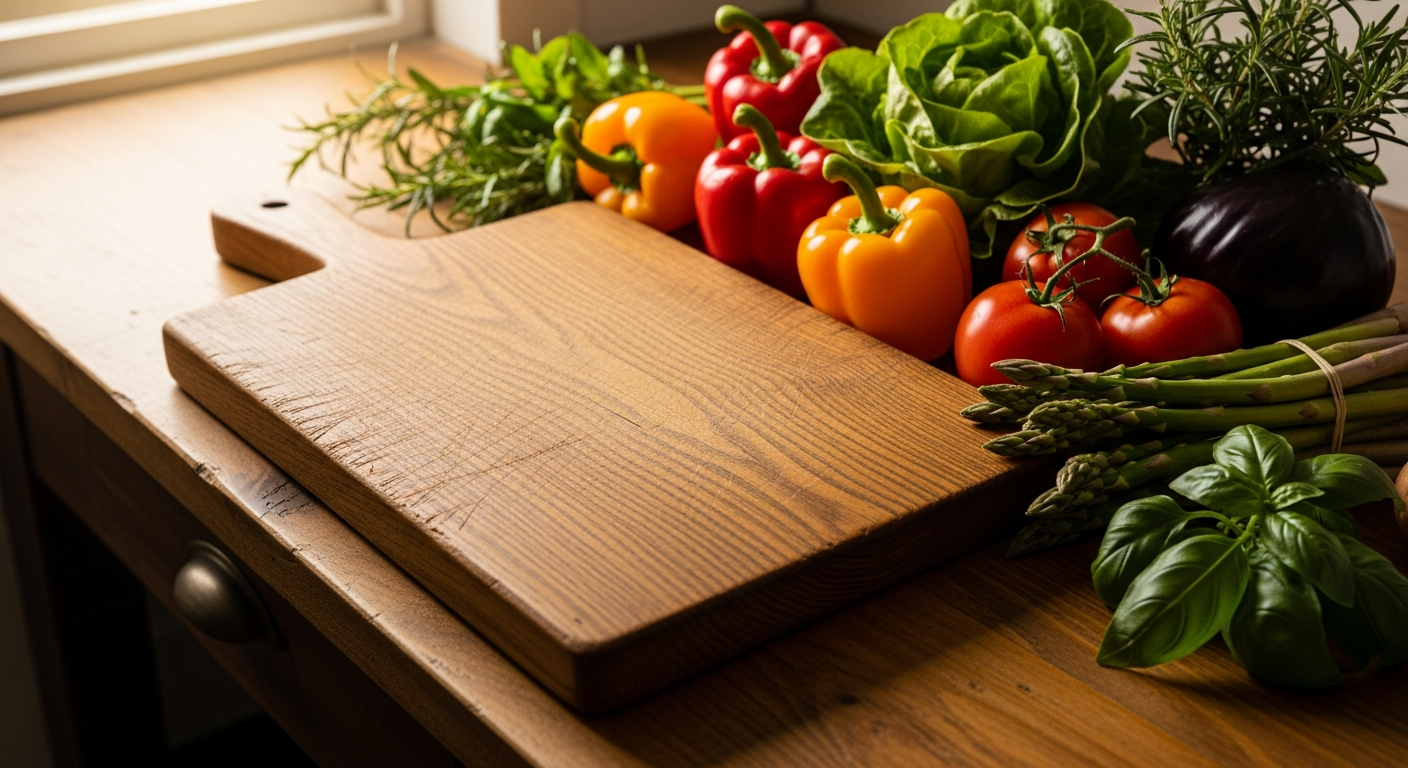

Handcrafted Solid Oak Cutting Board Article
The average kitchen cutting board ends up in a landfill within 3-5 years. Yet there’s a growing movement of home chefs rejecting disposable kitchen culture altogether. They’re seeking tools that last decades, look beautiful, and align with their environmental values—and they’re finding their answer in handcrafted wooden boards.
The Baumhirsch handcrafted solid oak cutting board represents something increasingly rare in modern kitchens: a product built to become a family heirloom. This German-made board combines centuries of woodworking tradition with contemporary sustainability practices, creating a cutting surface that performs as beautifully as it looks. When you choose a board like this, you’re not simply buying a kitchen tool—you’re making a statement about the kind of home you want to build.
Discover the Baumhirsch handcrafted oak cutting board that’s transforming sustainable kitchens.
The Sustainability Story Behind German-Crafted Oak Boards
Baumhirsch’s commitment to environmental responsibility goes far beyond marketing language. For every tree processed into cutting boards, the company plants a new tree. This tangible pledge creates a genuine carbon-neutral approach that consumers increasingly demand from brands claiming sustainability credentials.
The sourcing practices reflect this philosophy. The oak used in these boards comes from responsibly managed forests with proper certification standards. Rather than stripping forests bare, Baumhirsch works with suppliers committed to regenerative forestry. This approach ensures that wood harvesting supports ecosystem health rather than depleting it.
Reduced Carbon Footprint in Production
Manufacturing a handcrafted wooden board in Germany produces significantly fewer emissions than the industrial processes required for plastic and composite alternatives. Mass-produced cutting boards undergo energy-intensive manufacturing, involve petroleum-based materials, and typically ship from factories across the globe. The German-made oak board, by contrast, relies on traditional woodworking techniques that have remained largely unchanged for centuries.
Longevity as the Ultimate Sustainability Metric
The most overlooked aspect of sustainable consumption is durability. A single Baumhirsch oak board, properly cared for, replaces dozens of disposable plastic alternatives over a lifetime. When calculated across 30 or 40 years of use, the environmental impact per year of ownership becomes remarkably low. One heirloom-quality board outperforms hundreds of cheap boards sent to landfills.
Transparent Supply Chain and Ethical Manufacturing
German manufacturing standards are rigorous. Every board is handcrafted by skilled artisans in Germany, not mass-produced in distant factories. This transparency matters—you know exactly where your board comes from, how it was made, and who benefited from its creation. Supporting artisanal production sustains traditional craftsmanship and keeps manufacturing jobs in stable economies with strong worker protections.
Natural Oak’s Biodegradability
Unlike plastic boards that will persist in landfills for centuries, oak is a natural material that biodegrades. At the end of its life cycle—whether that’s 50 years from now or beyond—the board returns to the earth without leaving a synthetic footprint.
Explore how Baumhirsch oak boards support sustainable forestry with every purchase.
Understanding Langholz Construction and Knife-Friendly Design
The Langholz structure represents a specific grain orientation that fundamentally changes how a cutting board interacts with your knives. The term refers to wood fibers running parallel to the cutting surface. This arrangement creates a crucial advantage: your blade passes between the fibers rather than cutting across them.
Traditional end-grain boards, where fibers are perpendicular to the surface, actually close around the blade after each cut—almost like self-healing. While this sounds ideal, it requires significantly more maintenance and knife sharpening. Long-grain construction prioritizes preservation of your blade’s edge from the moment the knife makes contact.
How Parallel Wood Fibers Protect Blade Sharpness
When you cut with a long-grain board, the blade’s edge slides cleanly between fibers without the resistance that end-grain boards create. This means your knives stay sharper longer. Professional chefs recognize this advantage immediately—a knife used on a long-grain board requires sharpening weeks or months later than the same knife used on end-grain alternatives. Over years of daily cooking, this difference translates into hundreds of dollars saved on knife maintenance and replacement.
Oak’s Natural Properties: Inherent Resistance
Oak possesses natural density that provides built-in resistance to cuts and scratches. The wood doesn’t dent easily or develop deep gouges from daily use. This resilience is why oak has been used for kitchen work surfaces for generations. Unlike softer woods, oak maintains its surface integrity through years of chopping, slicing, and food preparation.
Stability Advantages and Even Cutting Surfaces
Long-grain construction creates a more stable surface that resists the warping and cupping that can develop in other designs. An unstable cutting board rocks on your counter, making food preparation awkward and dangerous. The inherent stability of Langholz construction ensures your board remains flat and level, providing a consistent working surface that’s both safer and more efficient.
Essential Care Protocols for Decades of Performance
Handcrafted oak boards require genuine maintenance—this isn’t a drawback, but rather the price of ownership for something built to last. The care regimen is straightforward, but consistency matters. Hand washing is non-negotiable; dishwashers expose the wood to extreme heat and prolonged moisture that cause warping and degradation. Simply rinse with hot water and mild soap after use, then dry immediately with a cloth.
Food-Safe Wood Oil Application
Regular oiling keeps the oak nourished and maintains its protective surface. Apply a food-safe wood oil every two to four weeks under normal use conditions. This isn’t a complicated process—simply spread the oil evenly across the surface, let it absorb for several hours, and wipe away any excess. The oil replenishes the wood’s natural properties and deepens its color over time, making the board increasingly beautiful with age.
Preventing Warping Through Environment Management
Wood responds to moisture and temperature fluctuations. Store your board in a stable environment, away from direct sunlight and extreme humidity. Avoid leaving it wet or damp for extended periods. Never prop it vertically where one edge receives constant moisture exposure. Seasonal adjustments matter in climates with distinct wet and dry seasons—slightly more frequent oiling during humid months helps counteract moisture absorption.
Stain Removal and Deep Cleaning
For stubborn stains, create a paste of baking soda and lemon juice, apply it to the affected area, and gently scrub with the grain. For deeper cleaning, salt and oil together work as a gentle abrasive. Avoid harsh bleach or vinegar-based cleaners that strip the wood. Remember that minor stains and marks add character to a board that’s genuinely being used, not displayed.
Recognizing When Refreshing is Needed
Over time, the wood may lose its luster or feel slightly dry to the touch. These signs indicate it’s time for a deep oil treatment. If the surface develops minor scratches or dull patches, additional oiling typically restores its appearance. With proper care, you’re not fighting against aging—you’re partnering with it, allowing the board to develop a patina that tells the story of countless meals prepared.
Building Your Sustainable Kitchen Foundation
The handcrafted solid oak cutting board isn’t simply a kitchen purchase—it’s a declaration of values. You’re choosing durability over disposability, craftsmanship over mass production, and environmental responsibility over convenience. The Baumhirsch board delivers exceptional knife-friendly performance while embodying a sustainability commitment that actually matters: one tree planted for every tree harvested.
Yes, the investment is steeper than grabbing a plastic board at the supermarket. But when you calculate the real cost over decades of use, factor in the reduced knife maintenance, and consider the aesthetic pleasure of a truly beautiful tool in your kitchen, the value becomes undeniable. This is the board you’ll reach for every single day. This is the board your children might inherit.
The question isn’t whether you can afford a handcrafted oak cutting board. It’s whether you can afford not to invest in a kitchen tool that aligns with your values, performs beautifully, and lasts a lifetime.
Start building your sustainable kitchen with a Baumhirsch handcrafted oak cutting board today.