
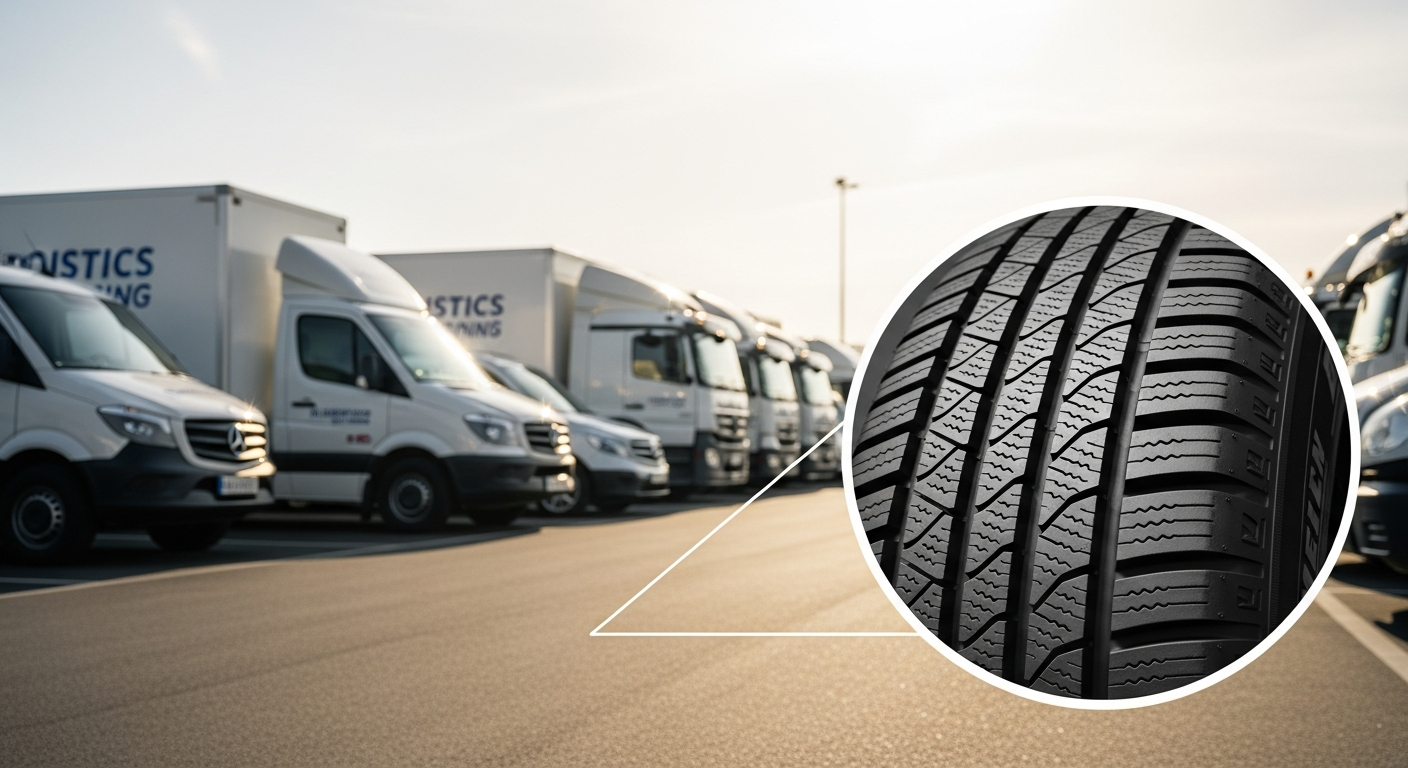

Fleet managers face a relentless operational challenge: managing seasonal tire rotations consumes an average of 40+ hours annually while generating unnecessary complexity across inventory management, storage logistics, and labor coordination. The hidden costs accumulate silently—separate summer and winter tire inventories require dedicated warehouse space, seasonal changeovers divert mechanics from critical maintenance tasks, and the coordination burden alone represents a significant drain on fleet budgets and operational efficiency. Yet a strategic tire choice can eliminate this entire problem.
The Michelin CrossClimate 2 has fundamentally changed how forward-thinking fleet operators approach tire management. Rather than treating seasonal transitions as an unavoidable logistics headache, organizations are discovering that a premium all-weather tire engineered for year-round performance actually reduces operational complexity, minimizes vehicle downtime, and strengthens safety compliance across their entire fleet. This tire represents more than just a product—it’s a fundamental shift in how fleets can operate more efficiently.
Discover how the Michelin CrossClimate 2 can transform your fleet operations at Reifendirekt.
The Real Cost of Seasonal Tire Management in Fleet Operations
Inventory management overhead: storage space requirements, tracking systems, and organizational complexity
Maintaining separate tire inventories for summer and winter driving creates substantial overhead. Fleet managers must track two complete sets of tires per vehicle, manage inventory across multiple storage locations, and coordinate complex tracking systems that account for tire specifications, rotation schedules, and maintenance histories. Warehouse space dedicated to tire storage represents real estate costs that compounds annually, while organizing dual inventories introduces opportunities for inventory mismanagement, lost records, and inefficient stock rotation.
Downtime expenses: labor hours spent on tire changeovers, vehicle off-road time during transitions
Seasonal tire changeovers demand significant labor investment. Each vehicle requires removal, storage, and reinstallation of tire sets, translating to 2-4 hours of mechanic time per vehicle annually. When you multiply this across 50, 100, or 500-vehicle fleets, the cumulative labor cost becomes staggering. More critically, vehicles sitting in service bays during changeover periods generate opportunity costs—delivery vehicles not making routes, service vehicles unable to respond to calls, and revenue-generating assets sitting idle during seasonal transitions.
Seasonal purchasing cycles: bulk buying pressures, inventory obsolescence risks, and cash flow constraints
Seasonal tire purchasing follows predictable cycles driven by weather transitions rather than actual fleet needs. Fleet managers face pressure to purchase large quantities before winter or summer seasons, creating cash flow constraints and inventory obsolescence risks. Tires stored for months may experience degradation from temperature fluctuations or oxidation, requiring inventory writedowns. Seasonal pricing fluctuations also limit purchasing flexibility—buying when inventory is abundant versus buying when supply is tight creates significant cost variability.
Compliance documentation: maintaining records of tire specifications, installation dates, and rotation schedules
Regulatory compliance requires meticulous record-keeping of tire specifications, installation dates, and rotation schedules. Fleet managers must maintain documentation proving winter tire compliance during Alpine winter periods, track seasonal transitions across multiple vehicles, and ensure all records pass regulatory audits. Managing these compliance documents across dual tire systems creates administrative burden and audit risk.
Hidden logistics costs: transportation between storage facilities, tire disposal, and environmental compliance fees
Transporting tires between storage facilities, disposal sites, and service locations generates transportation costs that accumulate throughout the year. Environmental compliance fees for tire disposal continue to rise, and the logistics of managing tire waste streams across seasonal cycles creates additional overhead that doesn’t appear in obvious budget lines.
Opportunity cost: mechanic labor diverted from preventive maintenance and repairs
Perhaps the most significant hidden cost involves mechanic time. When technicians spend hours performing seasonal tire changeovers, they’re unavailable for preventive maintenance, brake inspections, fluid changes, and repairs. This diversion of skilled labor from core maintenance tasks ultimately increases vehicle downtime and reduces the fleet’s ability to perform proactive maintenance that extends vehicle lifespan.
How All-Weather Tires Streamline Fleet Maintenance Schedules
Single tire inventory model: eliminating the need for dual tire sets per vehicle
Transitioning to all-weather tires immediately reduces tire inventory requirements by approximately 50%. Instead of maintaining separate summer and winter sets, fleet managers stock only CrossClimate 2 tires. This reduction directly translates to lower storage costs, simplified inventory tracking, and reduced inventory obsolescence risk. Warehouse space previously dedicated to tire storage becomes available for other operational needs.
Simplified rotation protocols: standardized maintenance procedures across the entire fleet
All-weather tire standardization enables uniform maintenance procedures across the entire fleet. Rather than managing different rotation schedules for summer and winter tire sets, mechanics follow a single standardized protocol. This simplification reduces training requirements, minimizes procedural errors, and streamlines maintenance scheduling software.
Reduced equipment requirements: fewer storage facilities, specialized racks, and handling equipment
Eliminating seasonal tire sets reduces the equipment infrastructure needed to support fleet operations. Fewer storage facilities are required, specialized tire racks and handling equipment can be reduced, and the capital investment in storage infrastructure decreases significantly. This equipment cost reduction contributes directly to the ROI calculation for fleet conversion.
Predictable maintenance windows: aligning tire service with regular vehicle inspections rather than seasonal calendars
All-weather tires enable predictable maintenance windows aligned with regular vehicle service cycles rather than external seasonal calendars. Fleet managers can schedule tire rotations and inspections based on mileage or time intervals without concern for seasonal timing, providing better control over maintenance scheduling and improved predictability for fleet planning.
Workforce efficiency gains: mechanics can focus on core maintenance tasks instead of seasonal changeovers
Eliminating seasonal changeover work frees mechanic labor for tasks that directly extend vehicle lifespan and improve safety. Technicians can focus on brake maintenance, fluid changes, suspension work, and other preventive maintenance that improves vehicle reliability. This workforce reallocation directly improves fleet maintenance quality and vehicle availability.
Technology integration: easier fleet management software tracking with single tire specification per vehicle
Fleet management systems operate more efficiently with single tire specifications per vehicle. Integration becomes simpler, data entry errors decrease, and reporting becomes more reliable. Software systems designed for seasonal tire management contain unnecessary complexity that becomes obsolete with all-weather tire standardization.
Michelin CrossClimate 2 Engineering for Commercial Durability
V-shaped directional tread pattern: water evacuation capabilities that reduce hydroplaning risk on highways
The CrossClimate 2’s distinctive V-shaped directional tread pattern channels water away from the tire contact patch with exceptional efficiency. This engineering specifically targets hydroplaning prevention on highways where standing water creates the greatest risk. Commercial fleets operating in regions with heavy rainfall benefit significantly from this water evacuation design, which reduces emergency braking situations and improves driver confidence during wet conditions.
Advanced rubber compound technology: maintaining grip consistency across temperature extremes (from -20°C to +50°C conditions)
The tire’s advanced rubber compound maintains flexibility across extreme temperature ranges. Traditional tires harden in cold conditions, reducing grip and increasing braking distances, while softening in heat, reducing stability. The CrossClimate 2’s compound maintains consistent grip performance whether exposed to Alpine winter conditions or desert-like summer heat. This temperature resilience directly addresses the operational challenge of vehicles transitioning between climate zones or regions experiencing dramatic seasonal temperature swings.
Central steel belt reinforcement: enhanced load-bearing capacity for heavier commercial vehicles
The internal structure features a central steel belt surrounded by two-ply polyester reinforced with polyamide. This construction provides superior load-bearing capacity for commercial vehicles carrying cargo or towing loads. The reinforced structure maintains tire shape under sustained highway speeds, reducing heat buildup and extending tire lifespan for commercial applications.
Two-ply polyester core with polyamide reinforcement: superior structural integrity under sustained highway speeds
The combination of two-ply polyester and polyamide reinforcement creates structural integrity that performs reliably during extended highway driving sessions common in commercial fleet operations. This design reduces sidewall flex, improves handling stability, and contributes to the tire’s ability to maintain performance across thousands of miles of continuous service.
Sipelock 3D Technology: micro-grip enhancement in wet and cold conditions without sacrificing dry-road stability
Sipelock 3D Technology employs three-dimensional sipe structures that enhance grip on wet and cold surfaces by increasing the number of micro-edges that bite into road surfaces. Critically, this technology achieves wet and cold grip enhancement without compromising dry-road stability and handling—a balance that eludes many all-weather tire designs. This technology directly supports the tire’s positioning as a genuine all-weather solution rather than a compromise design.
Explore the CrossClimate 2’s technical specifications and performance data on Reifendirekt.
Tread depth retention: extended usable life cycle that maximizes mileage warranty benefits (60,000-100,000 km coverage)
The tire’s advanced compound and reinforced structure contribute to exceptional tread depth retention throughout the tire’s lifespan. Extended mileage warranties—typically 60,000 to 100,000 km—reward fleet operators with lower per-mile tire costs. The CrossClimate 2’s durability characteristics mean fleets maximize warranty benefits rather than replacing tires before warranty coverage exhausts.
Winter Performance Credentials That Matter for Year-Round Operations
Three-Peak Mountain Snowflake (3PMSF) certification: meeting stringent Alpine winter performance standards
The 3PMSF symbol represents more than a marketing designation—it signifies independent verification that the tire meets rigorous Alpine winter performance standards. This certification proves the CrossClimate 2 performs reliably in severe winter conditions where marginal tire performance creates accident risk. For fleet managers operating in Alpine regions or winter-weather corridors, this certification eliminates the argument that all-weather tires represent safety compromises.
Snow traction testing: verified braking and acceleration performance on snow-covered surfaces
Third-party testing laboratories verify snow traction performance through rigorous braking and acceleration tests on snow-covered surfaces. The CrossClimate 2’s credentials demonstrate performance comparable to dedicated winter tires in these critical safety scenarios. This testing provides objective data supporting the tire’s capability for winter operations without seasonal tire switching.
Severe weather compliance: meeting regulatory requirements in Alpine regions and winter-weather corridors
Alpine regions and winter-weather corridors impose regulatory requirements for winter tire performance during defined seasonal periods. The CrossClimate 2’s 3PMSF certification satisfies these regulatory requirements, eliminating the need for seasonal tire switching to maintain compliance. Fleet managers can operate vehicles continuously throughout winter without disrupting service to manage tire changes.
Elimination of mandatory winter tire switching: regulatory compliance without seasonal logistics
The most operationally significant benefit emerges from eliminating mandatory winter tire switching. Regions requiring winter tires during defined periods force seasonal changeovers regardless of actual weather conditions. The CrossClimate 2’s winter certifications satisfy regulatory requirements year-round, enabling continuous operation without seasonal transitions. This capability transforms fleet operational flexibility—vehicles can maintain consistent service schedules even during mandatory winter periods.
Confidence for unpredictable weather events: reliable performance when sudden cold snaps or early snow arrive
Weather unpredictability creates operational risks for seasonal tire strategies. Early snow events arriving before scheduled winter tire installation or late spring snow appearing after seasonal transitions create scenarios where vehicles operate on inappropriate tires. The CrossClimate 2’s all-weather design eliminates this vulnerability—vehicles maintain appropriate tire performance regardless of unexpected weather events.
Reduced accident risk: documented braking distances comparable to dedicated winter tires in emergency situations
Testing data demonstrates that CrossClimate 2 braking distances on snow-covered surfaces approach or match dedicated winter tire performance. This capability means fleet operators maintain comparable safety profiles without seasonal tire switching. Emergency braking situations—the most critical safety metric—show the tire delivering performance that protects drivers and cargo.
Measuring ROI: The Financial Case for Fleet Conversion
Tire inventory reduction: calculating savings from eliminating 50% of tire stock per vehicle
The most straightforward ROI calculation begins with inventory reduction. A 100-vehicle fleet operating with dual tire sets maintains 200 tires in inventory. Converting to CrossClimate 2 all-weather tires reduces inventory to 100 tires—a 50% reduction. At typical tire costs of €80-150 per tire, this inventory reduction frees €8,000-15,000 in capital while eliminating storage costs for the removed inventory.
Labor cost analysis: quantifying hours saved on seasonal changeovers, typically 2-4 hours per vehicle annually
Labor represents a major cost component. A 100-vehicle fleet requiring 2-4 hours per vehicle for seasonal changeovers demands 200-400 annual labor hours. At mechanic billing rates of €40-60 per hour, this represents €8,000-24,000 in annual labor costs. Eliminating seasonal changeovers recovers this labor entirely, redirecting mechanic time to revenue-generating or maintenance-critical tasks.
Storage facility optimization: reducing warehouse space requirements and associated overhead
Warehouse space dedicated to tire storage consumes valuable real estate. Commercial warehouse space costs €10-20 per square meter annually. A storage area containing 100 additional tires (eliminating one complete inventory set) might occupy 15-20 square meters. Reclaiming this space saves €150-400 annually in direct rent, plus utility costs, climate control, and management overhead. Over multiple storage facilities, these savings multiply significantly.
Warranty leverage: understanding how extended treadwear warranties (100,000 km) lower per-mile tire costs
The CrossClimate 2’s extended warranty coverage—up to 100,000 km in many markets—directly reduces per-mile tire costs. A tire lasting 80,000 km costs more per kilometer than a tire lasting 100,000 km. Fleet managers should structure ROI calculations based on per-kilometer tire costs rather than per-tire purchase costs. The extended warranty coverage makes this tire economically superior despite potentially higher upfront pricing.
Fuel efficiency variations: analyzing real-world fleet data on consumption changes with all-weather tires
Real-world fleet data shows mixed fuel efficiency results—some fleets report slight improvements while others observe minor decreases. Fleet managers should conduct baseline fuel consumption testing before conversion and continue monitoring post-implementation. Even modest fuel efficiency improvements (1-2%) across larger fleets generate significant annual savings. Conversely, managing realistic expectations about potential fuel efficiency decreases prevents disappointment if fleet data shows modest consumption increases.
Downtime prevention: calculating revenue protection from vehicles remaining in service during changeover periods
The most critical financial benefit involves preventing downtime. Commercial vehicles generate revenue while operating. A delivery vehicle sitting in a service bay during seasonal tire changeover represents lost revenue. Calculating the daily revenue generation of vehicles prevents quantifying the downtime prevention benefit. A 50-vehicle commercial fleet with average daily revenue of €200 per vehicle experiences €10,000 daily revenue loss during changeover periods. Even if seasonal transitions occupy 2-3 days fleet-wide, the prevented revenue loss exceeds €20,000.
Multi-year payback modeling: 3-5 year financial projections comparing seasonal versus all-weather tire strategies
Comprehensive ROI analysis requires multi-year projections. A 100-vehicle fleet might calculate:
- Year 1: €30,000 inventory reduction + €16,000 labor savings + €300 storage savings + €25,000 downtime prevention = €71,300 total benefit
- Year 2: €16,000 labor savings + €300 storage savings + €25,000 downtime prevention + €12,000 warranty extension benefit = €53,300 total benefit
- Year 3 and beyond: Recurring annual benefits of €53,300+
If average CrossClimate 2 conversion costs €50-80 per tire (premium over budget alternatives) across 100 vehicles, the conversion investment of €5,000-8,000 achieves payback within 1-2 months of implementation. Multi-year projections demonstrate sustained financial benefits extending 3-5 years and beyond.
Real-World Performance Data from Fleet Testing
ADAC testing results: dry braking distances and winter performance ratings from independent evaluations
ADAC testing—Germany’s leading automotive testing organization—has evaluated the CrossClimate 2 extensively. Results confirm strong dry braking distances comparable to premium summer tires, and winter performance ratings demonstrate reliable snow traction and safe handling in severe winter conditions. These independent test results provide objective validation supporting fleet deployment across diverse climates.
Wet handling assessment: understanding satisfactory ratings and implications for highway safety
ADAC testing rates wet handling as “satisfactory” rather than “excellent”—an important distinction for fleet managers evaluating performance characteristics. “Satisfactory” rating indicates reliable wet-road handling suitable for normal highway operations but potentially not ideal for extreme handling maneuvers. For fleet operations focused on consistent, predictable driving at legal speeds, “satisfactory” wet handling represents appropriate performance rather than a significant limitation. Fleet drivers operating commercial vehicles aren’t executing aggressive handling maneuvers, making satisfactory wet-road stability adequate for commercial applications.
Noise level documentation: managing driver comfort expectations with decibel measurements
Noise level performance varies slightly across individual tire models. Some drivers report the CrossClimate 2 as quieter than expected, while others perceive marginally higher noise levels compared to certain premium summer tires. Documented decibel measurements help establish realistic expectations. Fleet managers should communicate actual noise level data to drivers during implementation rather than allowing anecdotal reports to create unmanaged expectations.
Tread wear patterns: field data on actual mileage performance across different vehicle types and driving conditions
Real-world fleet data demonstrates consistent tread wear performance across diverse vehicle types and driving conditions. Passenger cars, SUVs, and commercial vans all achieve mileage performance within expected warranty coverage ranges. Tread wear patterns remain relatively uniform across the tire contact patch, indicating balanced wear characteristics that support the tire’s longevity claims.
Temperature resilience: documented performance in extreme heat and cold climates
Fleet operations in extreme climates benefit from documented temperature resilience. Desert fleet operations report reliable performance in 50°C+ conditions without thermal degradation, while Alpine fleet operations confirm consistent grip in -20°C conditions. This temperature range documentation supports deployment across geographically diverse operations without climate-specific tire selection.
Comparative benchmarking: how CrossClimate 2 performance stacks against competitor all-weather options
Comparative data positions the CrossClimate 2 as a premium all-weather option. Performance metrics exceed budget all-weather alternatives across dry, wet, and snow conditions. Performance approaches specialized summer and winter tires in their respective domains while maintaining consistent capability across seasonal transitions. This positioning justifies premium pricing within all-weather tire categories.
Driver feedback: qualitative data from fleet operators on handling, comfort, and confidence
Fleet drivers report strong confidence in CrossClimate 2 performance across seasonal transitions. Handling characteristics remain consistent throughout temperature and weather changes, reducing the adjustment period drivers typically experience when switching seasonal tire sets. Comfort levels remain high, with most drivers reporting satisfactory noise levels and vibration characteristics. Driver confidence translates directly to reduced accident risk and improved safety outcomes.
Implementation Strategy for Fleet-Wide Conversion
Phased rollout approach: converting vehicles by maintenance cycle rather than all at once
Converting an entire fleet simultaneously creates implementation risk and inventory challenges. A phased approach distributes implementation across existing vehicle maintenance cycles. Converting vehicles during scheduled maintenance avoids disrupting operations, allows inventory gradual buildup, and provides opportunity to validate performance and cost metrics across different vehicle types before committing entire fleet resources.
Inventory transition planning: managing existing tire stock while building CrossClimate 2 reserves
Phased implementation requires careful inventory management. Existing tire stock doesn’t disappear immediately—it continues supporting vehicles maintaining seasonal tire strategies. Fleet managers should maintain existing tire inventory for vehicles not yet converted while building CrossClimate 2 reserves for conversion phases. This approach prevents inventory obsolescence while ensuring supply availability for implementation phases.
Driver communication: educating operators about performance characteristics and handling adjustments
Driver communication prevents confusion and manages expectations. Fleet drivers need to understand that CrossClimate 2 tires provide year-round performance without seasonal changes, but handling characteristics may differ slightly from tires they’ve operated previously. Communicating realistic expectations about noise levels, comfort, and performance builds driver confidence and prevents anecdotal reports from undermining implementation.
Mechanic training: ensuring service teams understand tire specifications and maintenance protocols
Service teams require training on CrossClimate 2 specifications and maintenance protocols. While all-weather tires simplify maintenance procedures compared to seasonal tire management, mechanics need to understand tire pressure specifications, rotation protocols, and warranty conditions. Proper training prevents installation errors and ensures warranty benefits are captured correctly.
Tracking system updates: modifying fleet management software to reflect single-tire specifications
Fleet management software requires updating to reflect single tire specifications per vehicle. Software designed for seasonal tire tracking contains complexity unnecessary with all-weather tire standardization. Updating systems to reflect standardized tire specifications simplifies data entry, improves reporting accuracy, and streamlines maintenance scheduling.
Warranty documentation: establishing processes for capturing and managing extended warranty benefits
Extended warranty benefits only materialize if properly documented and managed. Fleet managers should establish processes for capturing warranty details, tracking mileage accumulation, and submitting warranty claims when coverage limits are approached. Proper documentation ensures the extended mileage warranties provide expected financial benefits.
Performance monitoring: establishing baseline metrics to measure cost savings and operational improvements
Baseline metrics establish measurement frameworks for validating ROI projections. Fleet managers should document tire inventory levels, labor hours spent on seasonal maintenance, storage costs, fuel consumption, and vehicle downtime before implementation. Post-implementation monitoring of identical metrics validates cost savings and provides data supporting continued fleet-wide conversion.
Addressing Common Fleet Manager Concerns
Wet handling performance: clarifying satisfactory ratings and real-world highway implications
The “satisfactory” wet handling rating from ADAC testing requires context. Satisfactory wet-road handling means the tire performs adequately for normal highway operations without excessive oversteer or understeer. Commercial fleet operations don’t involve aggressive cornering or extreme handling maneuvers—vehicles maintain legal speeds and predictable driving patterns. For these operational contexts, satisfactory wet handling represents appropriate performance. Fleet managers concerned about wet handling should review actual ADAC test data rather than relying on rating descriptors alone.
Noise level expectations: managing driver comfort with accurate decibel information and comparison data
Driver comfort with noise levels varies individually, making communication essential. Providing decibel measurements and comparative data helps establish realistic expectations. Some drivers perceive tires as quieter than expected, while others find them noisier than previous options. Setting expectations before implementation prevents disappointment and allows drivers to acclimate to actual performance rather than imagined concerns.
Fuel efficiency variability: understanding why some fleets report improvements while others see slight decreases
Real-world fuel efficiency results depend on numerous variables including driving patterns, vehicle condition, fuel quality, and driver behavior. The CrossClimate 2’s advanced compound may improve fuel efficiency in some conditions while showing negligible changes in others. Fleet managers should establish baseline fuel consumption metrics before conversion and monitor continuously post-implementation. Data-driven analysis prevents anecdotal conclusions and identifies actual efficiency trends.
Load capacity verification: confirming suitability for commercial vehicles with specific weight requirements
Commercial vehicles often operate near maximum load capacity. Fleet managers should verify tire load ratings match vehicle specifications and actual operating loads. The CrossClimate 2’s reinforced structure supports commercial vehicle loads, but proper verification prevents specification mismatches that could compromise safety or void warranties.
Tire lifespan consistency: addressing concerns about tread wear variations across different driving patterns
Different driving patterns produce different tread wear rates—highway miles wear slower than urban stop-and-go driving. The CrossClimate 2 demonstrates consistent tread wear across diverse driving patterns, but variations within acceptable ranges naturally occur. Fleet managers should establish realistic tread wear expectations based on actual fleet driving profiles rather than assuming uniform wear across all vehicle types.
Cost justification to stakeholders: building the business case with transparent ROI calculations
Stakeholders require transparent ROI calculations demonstrating financial benefits. Detailed breakdowns of labor cost savings, inventory reduction benefits, storage optimization, downtime prevention, and warranty benefits provide credible justification. Multi-year projections showing sustained benefits strengthen the financial case and support organizational commitment to fleet-wide conversion.
Supplier relationships: navigating transitions from existing tire vendors while maintaining service quality
Existing supplier relationships may be disrupted during conversion to CrossClimate 2 tires. Fleet managers should communicate early with suppliers about conversion plans, negotiate transition terms, and establish clear expectations about service quality during implementation. Alternative suppliers—including Reifendirekt—can provide reliable service during transitions while potentially offering superior pricing or service terms.
Seasonal Transition Strategies for Mixed-Climate Regions
Geographic deployment planning: positioning all-weather tires in regions with unpredictable weather patterns
Mixed-climate regions benefit most from all-weather tire deployment. Positioning CrossClimate 2 tires in geographic regions experiencing unpredictable seasonal transitions eliminates the need for seasonal tire changes while maintaining safety compliance. Vehicles operating in regions with clear seasonal separation might maintain specialized tire strategies, while vehicles in transitional climates benefit from all-weather standardization.
Regional performance data: understanding CrossClimate 2 effectiveness in specific climates (Alpine, coastal, continental)
Performance varies across climate types. Alpine regions experience severe winter conditions where the 3PMSF certification provides crucial validation. Coastal regions may experience variable weather patterns requiring all-weather flexibility. Continental regions with extreme temperature swings benefit from the tire’s broad temperature resilience. Understanding regional performance characteristics enables climate-appropriate deployment decisions.
Hybrid fleet approaches: combining all-weather tires for mixed-use vehicles with specialized tires for extreme-use vehicles
Not all fleet vehicles require identical tire strategies. Specialized vehicles—snow plows, off-road utility vehicles, or vehicles operating in extreme environments—may benefit from dedicated tire selection while mixed-use vehicles gain efficiency from all-weather standardization. Hybrid approaches balance operational efficiency with specialized performance requirements.
Buffer inventory strategy: maintaining small reserves of dedicated winter tires for severe weather events
Conservative fleet managers concerned about extreme weather events can maintain small reserves of dedicated winter tires while standardizing on CrossClimate 2 for routine operations. This buffer inventory provides additional safety margin for unprecedented weather events while avoiding the expense of maintaining complete dual tire inventories.
Driver route optimization: leveraging all-weather capability to maintain service schedules during weather events
All-weather tire capability enables consistent service schedules despite weather disruptions. Commercial operations can maintain delivery schedules during seasonal weather events without reduced service capability. This operational advantage represents a competitive benefit for fleets serving regions with significant seasonal weather variation.
Safety protocol updates: establishing performance expectations and speed/handling guidelines for winter conditions
All-weather tires perform reliably in winter conditions but may require different handling approaches than dedicated winter tires. Establishing clear safety protocols—appropriate speed adjustments during severe snow conditions, increased following distances, and handling limitations—ensures drivers operate vehicles within safe performance envelopes. Updated protocols establish realistic performance expectations and promote safe operations.
Contingency planning: developing response procedures if unexpected severe weather exceeds all-weather tire capabilities
Unprecedented weather events may exceed even all-weather tire capabilities. Contingency planning—identifying backup tire suppliers, establishing vehicle reduction protocols if extreme weather requires fleet reduction, and developing alternative routing—ensures operational continuity if extreme weather overwhelms all-weather tire capabilities. Contingency plans typically require activation only during truly exceptional circumstances.
Beyond Cost Savings: Operational and Safety Benefits
Enhanced vehicle availability: reducing planned downtime from seasonal maintenance windows
All-weather tire standardization eliminates seasonal maintenance windows that temporarily reduce fleet availability. Vehicles remain in service throughout the year without scheduled downtime for tire changes. This continuous availability improves fleet utilization and enables consistent service delivery regardless of seasonal timing.
Improved service reliability: maintaining consistent fleet performance across seasons without changeover delays
Service reliability improves when vehicles maintain consistent performance throughout seasonal transitions. Customers experience consistent service quality without the disruptions created by seasonal tire changeovers. This reliability enhancement strengthens customer relationships and improves competitive positioning.
Environmental impact reduction: decreasing tire waste through extended lifespan and eliminated seasonal disposal
Extended tire lifespan reduces overall tire waste. Additionally, eliminating seasonal tire changes removes a source of tire disposal—the tires set aside during seasonal transitions. Environmental compliance costs decrease, and organizational sustainability metrics improve through reduced tire waste generation.
Driver satisfaction: eliminating seasonal handling transitions and improving confidence in vehicle performance
Drivers appreciate consistent vehicle handling throughout the year. Seasonal tire transitions create adjustment periods where drivers adapt to different handling characteristics. All-weather tire standardization eliminates this adjustment requirement, improving driver satisfaction and reducing the learning curve for new drivers.
Regulatory compliance simplification: meeting winter performance standards without complex seasonal documentation
Winter performance regulations require extensive documentation when managing seasonal tire strategies. The CrossClimate 2’s 3PMSF certification satisfies regulatory requirements year-round without seasonal documentation complexity. Compliance becomes simpler, audit requirements decrease, and regulatory risk diminishes.
Brand reputation enhancement: demonstrating commitment to year-round safety and operational excellence
Organizations standardizing on premium all-weather tires demonstrate commitment to year-round safety and operational excellence. Commercial customers recognize the operational benefits and safety focus. This reputation enhancement becomes a competitive advantage, particularly for fleets serving safety-conscious industries.
Scalability advantage: establishing standardized tire specifications across growing fleet operations
Growing fleets benefit from established tire standardization. New vehicles added to the fleet automatically receive CrossClimate 2 tires, maintaining operational consistency. Standardized specifications enable efficient scaling without renegotiating tire strategies for each expansion phase.
The Strategic Advantage of Standardized All-Weather Tires
The operational complexity of managing seasonal tire rotations represents a significant yet often-overlooked drain on fleet resources that extends far beyond simple inventory costs. By standardizing on the Michelin CrossClimate 2, fleet managers unlock immediate benefits: simplified inventory management frees warehouse capacity and capital, reduced labor overhead redirects mechanic expertise toward revenue-generating work, and consistent year-round performance eliminates the vulnerability created by seasonal transitions. The financial case is compelling and measurable. When calculated properly—incorporating storage costs, changeover labor, downtime expenses, and warranty benefits—the premium price of all-weather tires typically achieves payback within 1-2 years while simultaneously improving safety compliance and vehicle availability.
The 3PMSF certification and advanced engineering technologies mean standardization involves no compromise on winter performance—vehicles gain the flexibility to maintain service schedules regardless of weather disruptions. ADAC testing confirms strong dry and winter performance, while real-world fleet data demonstrates measurable improvements in operational efficiency across diverse vehicle types and climates.
Fleet managers operating in regions with variable weather patterns should begin implementation with a phased approach. Convert one vehicle class or regional depot to CrossClimate 2 tires, establish performance baselines during the first 12 months, and measure actual cost savings against projections. Document everything—labor hours saved, storage space freed, fuel consumption changes, warranty benefits captured—and use that empirical data to justify fleet-wide adoption to organizational stakeholders. The evidence supporting conversion becomes indisputable when you present actual performance metrics rather than theoretical projections.
Begin your fleet conversion with Michelin CrossClimate 2 tires from Reifendirekt today.