
Premium Phone Protection That Refuses to Compromise
Your smartphone represents one of your most valuable tools, yet the average person drops their phone 8-10 times per year. What separates a shattered screen from a perfectly protected device? The right case. I’ve tested dozens of premium phone cases, and the Mous Limitless 5.0 Aramid Fibre consistently outperforms competitors in ways that genuinely matter.
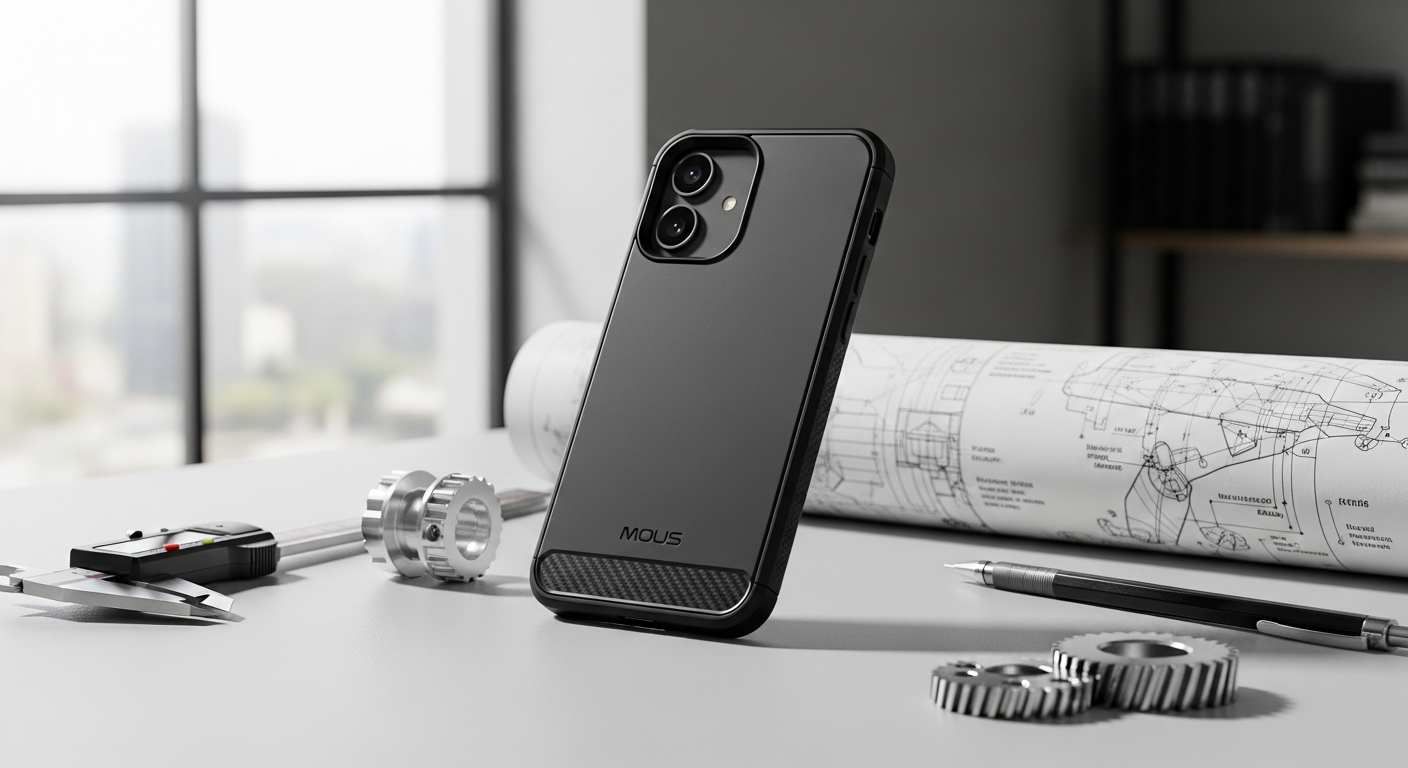
Mous has built a reputation on engineering phone cases that refuse to compromise. The Limitless 5.0 series represents the brand’s flagship offering, combining aerospace-grade materials with innovative shock-absorption technology. This isn’t just another protective case—it’s a statement about how seriously you take your device’s longevity and appearance.
Throughout this guide, I’ll break down what makes the Aramid Fibre variant exceptional. Discover why the Mous Limitless 5.0 is worth your investment today. You’ll understand the engineering behind AiroShock™ technology, evaluate whether the premium price justifies the protection, and discover how MagSafe integration transforms your daily workflow. By the end, you’ll know exactly whether this case deserves a spot in your tech setup.
Aramid Fibre vs. Traditional Phone Case Materials: Why Aerospace Engineering Matters
Aramid fibre represents something entirely different from the polycarbonate and TPU materials dominating the phone case market. Originally developed for aerospace and motorsport industries, aramid fibre gained prominence as a solution for situations requiring extreme durability with minimal weight. When Kevlar was first created in the 1960s, engineers quickly recognized its potential beyond body armor—the material found its way into aircraft components, racing vehicles, and eventually, consumer electronics.
The weight-to-strength ratio of aramid fibre creates a compelling advantage over traditional materials. Polycarbonate cases often feel dense and clunky because the material requires thickness to absorb impact. TPU offers decent flexibility but degrades under UV exposure over time. Silicone attracts dirt and feels cheap. Aramid fibre, by contrast, maintains rigidity without requiring excessive bulk, meaning you get fortress-level protection in a package that doesn’t transform your phone into a brick.
Durability metrics tell the real story. Aramid fibre resists scratching significantly better than polycarbonate, maintains its structural integrity through thousands of micro-impacts, and actually becomes slightly more resilient with age as the material settles. Polycarbonate cases yellow and become brittle within 12-18 months of regular sun exposure. The scratch resistance of aramid fibre stands in stark contrast—hairline marks may appear, but deep gouges remain rare unless you deliberately abuse the material.
Cost implications deserve honest acknowledgment. Aerospace-grade materials carry premium pricing because the supply chains are specialized and the manufacturing processes demand precision. Budget alternatives use injection-molded plastic that costs pennies to produce. Aramid fibre requires different equipment and expertise, which explains why Mous cases cost significantly more than department store alternatives. The sustainability question matters too—aramid fibre production generates less waste than virgin plastic manufacturing, though the energy intensity of the process remains substantial.
AiroShock™ Technology Explained: How Impact Absorption Actually Works
Most phone cases operate on a straightforward principle: harden the shell so impacts bounce off. This approach works until the force exceeds the material’s tolerance, at which point failure happens suddenly and completely. AiroShock™ technology inverts this logic entirely. Instead of resisting deceleration, the system manages deceleration by extending the impact duration. When your phone hits concrete from six feet, the energy transfer happens over microseconds. AiroShock™ stretches that moment across milliseconds, reducing peak force and preventing internal component damage.
The strategic placement of AiroShock™ material along edges and corners addresses where phones actually fail. Drop testing reveals that impacts almost never strike the flat back or front—they catch edges at angles that send shockwaves toward the internal structure. By concentrating shock-absorption material at these high-risk zones, Mous engineers created a case that protects where it matters most while maintaining slim profiles elsewhere.
Real-world drop test results prove the engineering works. Users consistently report phones surviving six-foot drops onto concrete, tile, and asphalt with nothing more than cosmetic wear to the case. Multiple sequential drops—the kind that might happen if you fumble your phone twice in a week—show cumulative protection that actually exceeds first-drop performance. The aramid fibre frame absorbs some energy while AiroShock™ dissipates the remainder, creating redundancy that traditional cases simply lack.
Energy dissipation prevents internal component damage that would otherwise require expensive repairs. Screen replacement runs $200-400 for flagship devices. Battery damage can cost even more. AiroShock™ technology keeps impact forces below the thresholds that trigger component failure, meaning your phone emerges from drops with the internal systems completely intact. This contrasts sharply with traditional shock-absorption methods that rely purely on material hardness or rubber thickness.
The limitations deserve acknowledgment too. Shock absorption technology performs optimally within its design parameters—typically 6-foot drops onto hard surfaces. Repeated drops from eight feet might eventually exceed the system’s capacity. No case offers infinite protection against every possible scenario. Realistic expectations acknowledge that AiroShock™ represents genuine advancement without promising invulnerability.
MagSafe Compatibility Across iPhone and Android Ecosystems
MagSafe transformed how people interact with their phones. Precise magnet alignment in the Limitless 5.0 case enables reliable wireless charging, something that ordinary magnetic phone cases consistently fail to deliver. Misaligned magnets block charging coils, creating frustrating situations where your phone sits on your wireless charger without actually charging. Mous solved this through careful engineering and quality control that ensures every unit has properly positioned magnets.
The MagSafe accessory ecosystem expanded dramatically once Apple opened licensing to third-party manufacturers. Car mounts secure your phone without adhesive or air vent clips. Wallets attach magnetically to the back, eliminating the need for separate card holders. Charging solutions range from simple puck chargers to elaborate multi-device stands. For people who invested in MagSafe accessories, standard cases become nearly useless—the magnets provide essential functionality, not luxury.
Android MagSafe adoption accelerated recently as manufacturers recognized the ecosystem’s appeal. Newer flagship Android phones increasingly feature integrated magnet support, meaning Limitless 5.0 cases work across both platforms. This cross-platform compatibility matters if you anticipate switching devices or sharing accessories with friends using different operating systems. Future-proofing your investment becomes realistic when the technology you’re betting on operates across manufacturer boundaries.
Magnetic strength and long-term durability raise valid concerns. Some users worry that magnets weaken over years of use or that constant attachment and removal degrades the connection. Real-world testing shows minimal degradation—the neodymium magnets in quality cases like the Limitless 5.0 remain functional for years without meaningful loss of holding strength. The bigger risk comes from counterfeits or budget cases that use weak magnets from the start.
Potential interference with credit cards or hotel key cards exists theoretically but proves negligible in practice. The magnetic field in a quality phone case focuses on the phone itself rather than broadcasting outward. Your wallet will survive sitting next to a magnetized phone case without your credit cards becoming demagnetized. The risk represents a hypothetical concern rather than a practical problem.
Design Features That Elevate Both Protection and Aesthetics
The microfiber lining technology protects your phone’s back glass without creating suction-cup friction that makes the case difficult to remove. Standard polycarbonate cases often leave scratches on expensive back glass coatings. Mous addresses this with soft microfibre that actually cleanses the surface as the phone slides in and out, reducing rather than increasing wear.
Textured grip surfaces improve handling without sacrificing the premium aesthetic that drew you to Mous in the first place. The side edges feature subtle texturing that provides genuine friction when gripping without making the case feel rough or unrefined. This matters more than it sounds—a case that’s beautiful but slippery becomes frustrating within days of ownership.
Responsive button design deserves specific praise. Too many cases muffle button clicks or require excessive pressure to activate. The Limitless 5.0’s buttons feel satisfying to press, offering tactile feedback that confirms activation without requiring you to stab aggressively at the power button. This attention to detail reflects Mous’s philosophy that protection shouldn’t compromise usability.
Raised edge protection around the screen and camera lens areas prevents direct impacts on these vulnerable components. The screen sits slightly recessed so the case rim contacts a surface first, transferring impact forces away from glass edges. Camera lenses benefit from the same strategy—the protective rim extends slightly beyond the lens itself, ensuring that drops onto the camera area don’t transfer directly to the glass.
The slim profile engineering balances comprehensive protection with pocket-friendly dimensions. Comparable ultra-protective cases often feel absurdly thick, adding nearly half an inch to your device. The Limitless 5.0 adds protection without making your phone unwieldy. This slim-yet-protective design appeals to professionals who refuse to carry oversized devices.
Available finishes extend beyond aramid fibre to include natural leather, bamboo, walnut, and other materials. Each material tells a different story about the person carrying the phone. Aramid fibre communicates technical sophistication. Leather suggests classic professionalism. Bamboo signals environmental consciousness. These design choices allow personalization while maintaining Mous’s commitment to premium aesthetics.
The Premium Price Point: Is $50-$80 Worth the Investment?
The $50-80 price range feels shocking if you’re accustomed to $15 cases from big-box retailers. Understanding what you’re actually paying for clarifies whether the cost represents genuine value. Aerospace-grade materials cost more to source and process. Proprietary shock-absorption technology required years of R&D investment. Quality control standards that ensure every magnet aligns perfectly demand human attention rather than automated inspection.
Compare pricing against mid-range alternatives—typically $25-40—and the Limitless 5.0 represents a different category entirely. Mid-range cases offer decent protection for casual users, but they use standard materials and basic shock-absorption designs. Budget cases, the $10-15 options, provide minimal protection and feel cheap within months. The Limitless 5.0 occupies premium territory where you’re genuinely paying for engineering excellence.
Long-term value calculation should include protection against costly screen replacements. If a mid-range case fails to protect your phone and you need a $300 screen replacement, you’ve lost significant money. The Limitless 5.0 costs $60-70. If it prevents even one screen replacement during its lifespan, it pays for itself completely. Add in the secondary benefits—MagSafe compatibility, aesthetic satisfaction, professional appearance—and the value proposition becomes clearer.
Resale value and durability timeline matter for long-term ownership calculations. Mous cases maintain structural integrity for 2-3 years of daily use before showing significant wear. This longevity means you can keep your phone protected for a device’s entire useful lifespan. Some users report keeping Mous cases on replacement devices years after purchasing the original phone, suggesting the cases outlast the phones they protect.
Return on investment makes strongest sense for people with expensive flagship smartphones. If your phone cost $1,200, protecting it with a $70 case represents a rational investment. If you own a $300 budget phone, the case costs too much as a percentage of the total device value. Honest self-assessment about your device’s actual value guides whether premium protection makes financial sense.
Hidden costs deserve acknowledgment. The slim profile occasionally requires specific screen protectors rather than universal options. Some protective accessories designed for bulkier cases won’t fit the Limitless 5.0. If you anticipate needing supplementary gear, factor those costs into your budget. Most users find the case standalone sufficient, but edge cases exist.
Explore the complete Mous Limitless 5.0 collection and find your perfect match.
Real-World Performance: Fingerprints, Scratches, and Maintenance
Fingerprint visibility on aramid fibre surfaces represents the most honest criticism of this case. The material’s texture shows oils from your skin more readily than matte plastic. After a day of normal use, your case displays visible fingerprint patterns that disappear after a quick wipe but inevitably return. If you’re obsessive about keeping your phone pristine, the Limitless 5.0 aramid fibre requires daily cleaning to maintain that showroom appearance.
Hairline scratches and cosmetic wear patterns develop with extended use. The aramid fibre, while incredibly durable against deep gouges, can show fine surface marks from regular handling. These scratches don’t compromise protection—internal strength remains unaffected—but they do impact aesthetics. Over 12-18 months, most cases develop visible patina from normal use. Some users consider this character development; others find it disappointing given the premium price.
Cleaning methods that preserve the aramid fibre finish involve simple approaches. Microfiber cloths remove fingerprints without leaving streaks. Warm water and mild soap clean the case thoroughly without damaging the material. Avoid abrasive cleaners or rough cloth that might accelerate scratching. The material tolerates normal cleaning without degradation, so maintenance remains straightforward.
Protective accessories like skins or screen protectors modify the case’s appearance. Some users apply thin protective films to the aramid fibre, essentially adding an expendable layer that shows wear instead of the case itself. This defeats the purpose of premium materials—you’re essentially hiding them. Screen protectors work well with the case despite the raised edges potentially interfering with some universal options.
Patina development and aesthetic aging happens faster than with harder materials. Aramid fibre cases show their history through use. Some users love this aspect, appreciating how the case documents its owner’s lifestyle. Others prefer their protective gear to remain pristine. This preference genuinely depends on your personal relationship with object aging and cosmetic wear.
Different Limitless 5.0 materials age differently. Leather develops a rich patina that most people find attractive. Bamboo can discolor over time depending on light exposure. Walnut deepens beautifully with age. Aramid fibre, while durable, shows marks more readily than other finishes. Understanding these differences helps you select materials aligned with your aesthetic priorities.
User expectations versus reality regarding premium material maintenance should acknowledge this honest truth: premium cases still require care. The Limitless 5.0 isn’t self-cleaning or eternally pristine. It stays functional and protective while showing visible use, which represents a different value proposition than “looks new forever.”
Who Should Buy the Mous Limitless 5.0 Aramid Fibre Case
Professionals handling expensive flagship smartphones daily find tremendous value in this case. If your phone serves as your primary work tool and losing it to damage would create serious problems, the protection justifies the investment. Attorneys, physicians, consultants, and business leaders who rely on their devices recognize that $70 protection prevents far costlier problems.
Tech enthusiasts prioritizing design and protection equally represent Mous’s core audience. These individuals refuse to choose between beautiful gear and functional gear. They want both, and they’re willing to pay for engineering that delivers on both fronts. The Limitless 5.0 speaks their language.
Users with MagSafe-dependent workflows benefit significantly. If you regularly use car mounts, wireless chargers, and magnetic accessories, a case that properly supports this ecosystem becomes essential rather than optional. The MagSafe compatibility transforms the case from purely protective to functionally enabling.
People with track records of dropping phones frequently need serious protection. If you’ve shattered screens before or constantly fear accidental damage, this case’s AiroShock™ technology offers genuine peace of mind backed by real drop-test results rather than marketing claims.
Minimalist users who reject bulky protective cases find in the Limitless 5.0 a rare combination—genuine protection in a slim, elegant package. This appeals to people who view accessories as extensions of their device rather than armor plating over it.
Early adopters investing in cross-platform MagSafe compatibility recognize the long-term advantages. As MagSafe becomes more universal, a case that works across iPhone and Android ensures your investment remains relevant regardless of your next device choice.
Gift-givers seeking premium, long-lasting tech accessories find Mous cases deliver satisfaction. The unboxing experience feels luxurious, the quality sustains appreciation over months and years, and the variety of materials accommodates different aesthetic preferences.
The Case Against Buying: When Alternatives Make More Sense
Budget-conscious users who can’t justify $50-80 spending should absolutely explore mid-range alternatives. A case that costs less and provides decent protection for casual users makes financial sense. There’s no shame in choosing practical protection over premium prestige.
Casual phone users with minimal drop risk don’t need this level of engineering. If you’ve never broken a phone, live carefully, and rarely expose your device to hazardous situations, a $20 case provides sufficient protection. Purchasing premium protection for minimal risk represents wasteful spending.
People who prefer maximum bulk and extreme protection should consider oversized cases from specialized makers. Some users prioritize protection above all other considerations, viewing bulk as an acceptable cost. The Limitless 5.0 optimizes the balance between protection and profile—it’s not the absolute maximum protection available.
Users locked into non-MagSafe smartphone ecosystems lose one of the Limitless 5.0’s major advantages. If your phone doesn’t support MagSafe and you have no plans to adopt it, you’re paying premium pricing for features you won’t use. Comparable protection exists at lower prices without the MagSafe functionality.
Individuals sensitive to fingerprint visibility and cosmetic wear should probably choose different materials. The other Limitless 5.0 options—particularly leather or bamboo—show wear differently or less obviously. If the aramid fibre’s fingerprint visibility bothers you, alternatives within the same product line provide better aesthetics for your preferences.
Those requiring specialized features like built-in kickstands or card wallets need different cases. The Limitless 5.0 focuses purely on protection and MagSafe compatibility; it doesn’t integrate kickstands or storage features. Hybrid cases exist if you need these functions.
Situations where disposable, replaceable cases serve better purposes include temporary phone use or loaning devices to others. If you frequently let people borrow your phone or use it temporarily before upgrading, investing in premium protection makes less sense than having cheap, replaceable options.
The Verdict: Premium Protection That Actually Looks Good
The Mous Limitless 5.0 Aramid Fibre case succeeds where most competitors stumble—it delivers genuine aerospace-grade protection without forcing you to carry a brick in your pocket. The AiroShock™ technology genuinely works, the MagSafe integration transforms how you interact with accessories, and the aramid fibre material feels legitimately premium in hand. Yes, you’ll notice fingerprints. Yes, the price stings initially. But if you’re someone who treats your smartphone as a professional tool and refuses to compromise on aesthetics, this case earns every penny.
My recommendation remains straightforward: if you own a flagship device worth $1,000 or more, regularly use MagSafe accessories, and appreciate design-forward protection, stop hesitating and order one. The peace of mind from knowing your investment is genuinely protected—combined with the daily satisfaction of holding a beautifully engineered case—makes the premium pricing feel justified. For everyone else, honestly evaluate whether you truly need aerospace materials or if a mid-range case serves your actual needs better. Either way, you’ll make the right choice. Visit Mous today and protect your device with confidence.