
Great coffee and tea don’t start with beans or leaves—they start with water. Temperature, flow, and consistency are the quiet details that separate “pretty good” from “wow.” Konesso Electric Kettles are built for that level of control: fast heating, accurate temperature targets, and ergonomic designs that help you pour like a pro whether you’re dialing in a V60 or steeping a delicate green tea.
If you’ve been using a basic kettle and guessing at “hot enough,” this guide will show you how a Konesso upgrade makes flavor pop, astringency disappear, and your brewing feel calm and repeatable.
Why Your Kettle Matters More Than You Think
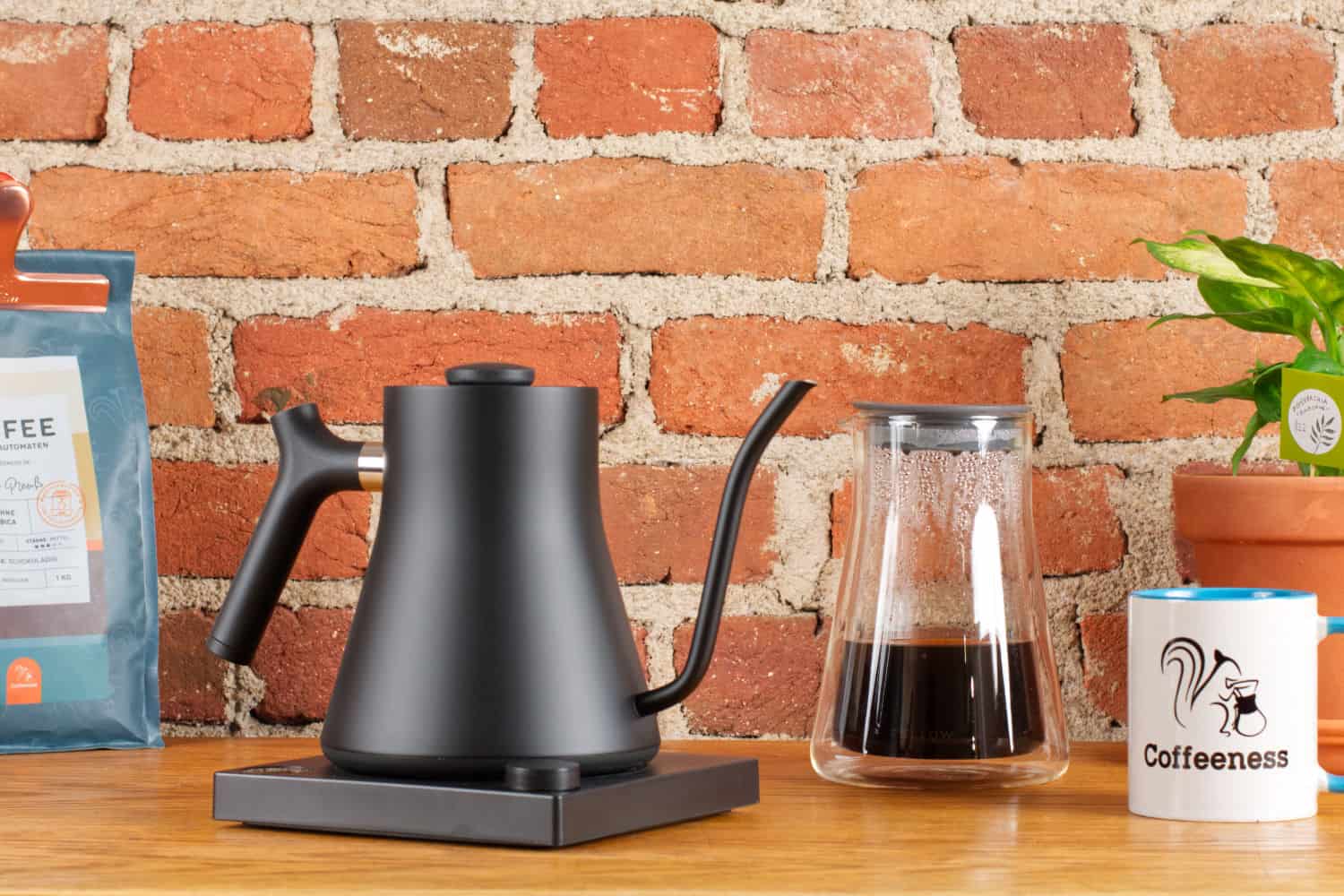
Water extracts flavor—and it’s picky. Too hot and you pull bitterness from coffee and tannins from tea. Too cool and you get flat, sour cups that taste unfinished. A good electric kettle solves three problems at once:
- Temperature accuracy: Hit 60–100°C targets for any tea or coffee method instead of eyeballing steam.
- Speed: Modern elements get you from cold tap to brew-ready in minutes, not forever.
- Control: Gooseneck spouts and balanced handles let you pour at a steady pace for even extraction.
Those three upgrades turn your morning routine from guesswork into a tiny, satisfying ritual.
Variable Temperature: Unlocking Flavor on Purpose
Different drinks, different sweet spots:
- Green tea: 70–80°C
- White tea: 75–85°C
- Oolong: 85–95°C (lighter oolongs on the lower end)
- Black tea & herbal: 95–100°C
- Pour-over coffee (V60, Kalita, Chemex): 92–96°C
- French press / AeroPress: 93–96°C (or cooler for brighter profiles)
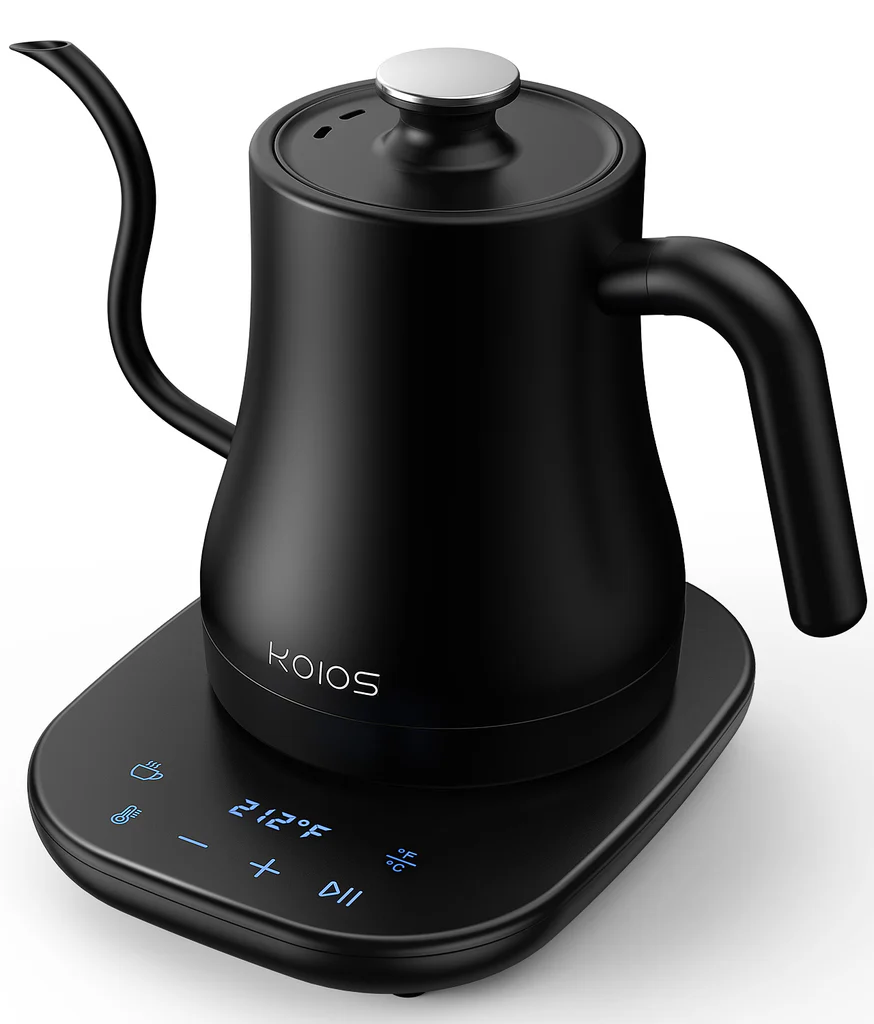
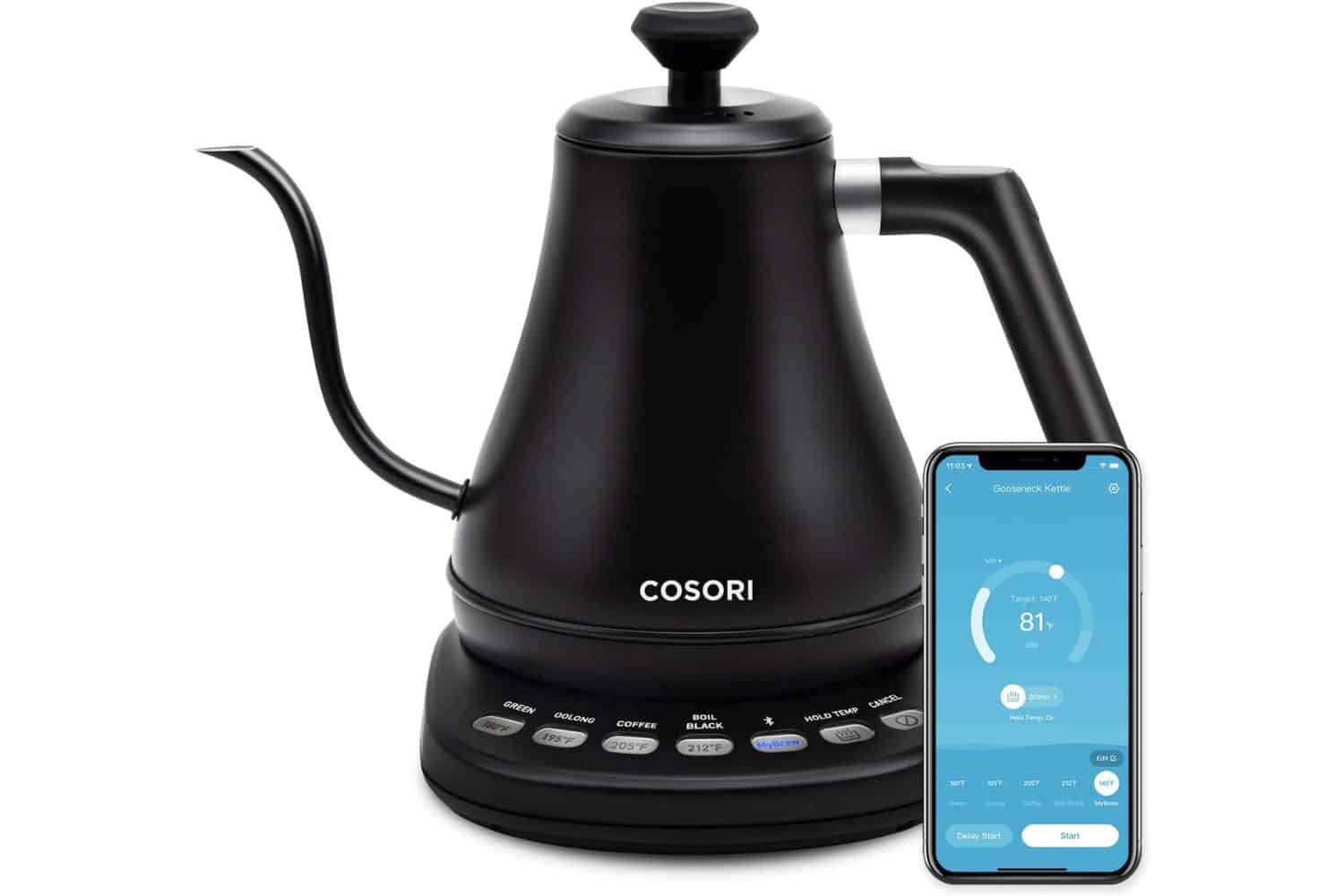
Konesso’s variable-temp kettles let you dial in those ranges with a few taps. Combine that with a keep-warm function and you can brew back-to-back cups without reboiling or drifting off target.
Gooseneck vs. Classic Spout: Which One Do You Need?
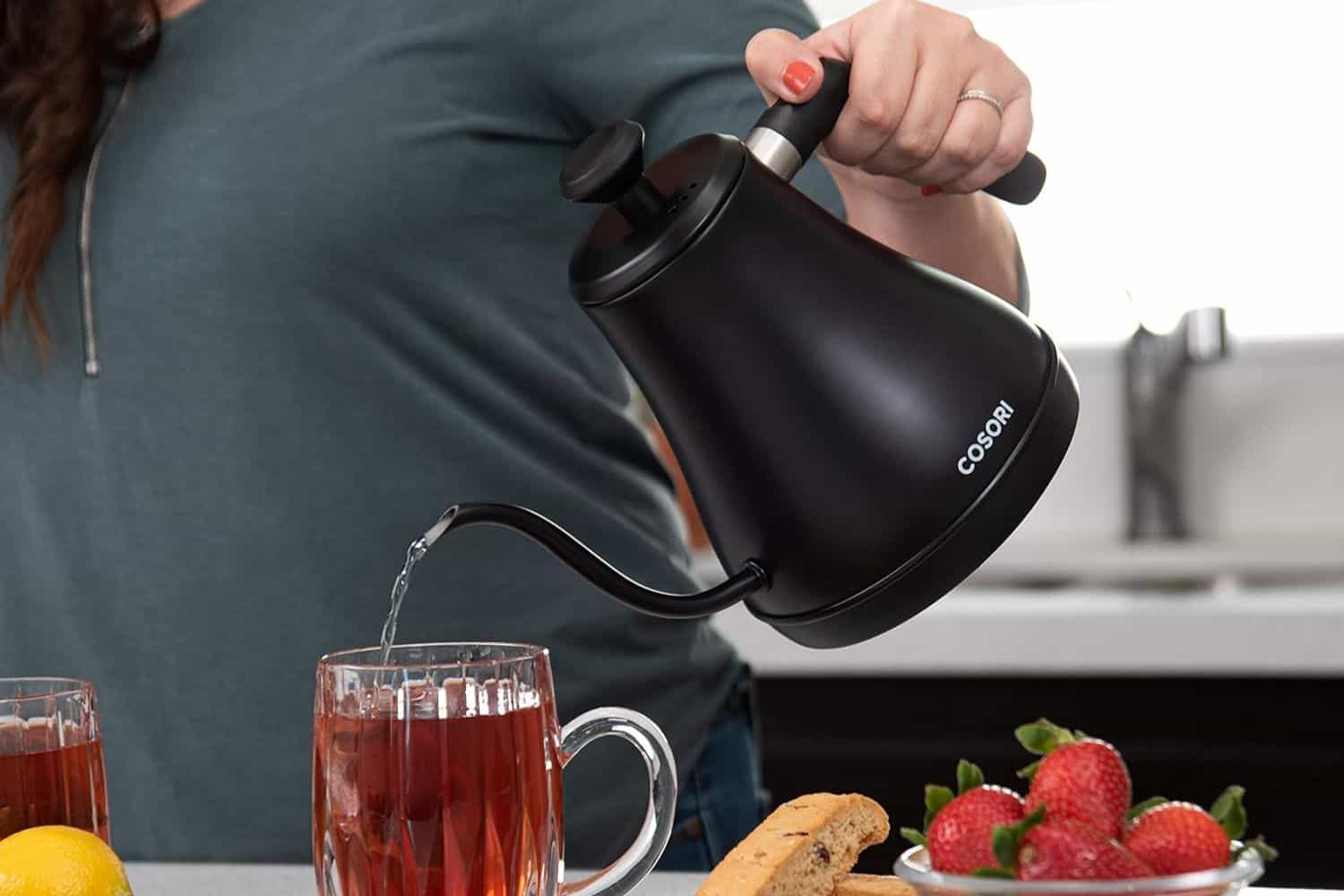
- Gooseneck kettles shine for pour-over coffee. The slim, curved spout and internal flow restrictor keep the stream slow and steady so you can bloom coffee evenly and trace gentle spirals without flooding the bed. If you’re chasing café-level clarity and sweetness, this is your lane.
- Classic spout kettles move more water, fast—perfect for black tea, herbal infusions, noodles, and general kitchen duty. Many models still offer temperature presets, so you don’t lose precision.
If you split your time between tea service and weekend pour-overs, consider a gooseneck for coffee finesse and a classic body for volume and speed. Or choose a well-balanced gooseneck that boils quickly and handles both.
Materials & Build: Stainless, Coatings, and Glass
- Stainless steel is the barista standard: durable, easy to clean, and heat-stable. Look for food-grade interiors and welds that resist scale buildup.
- Glass lets you see the boil and water level at a glance—great for tea counters—but mind careful handling and descaling to keep it crystal clear.
- Non-stick coated interiors can simplify cleanup, though they’re less common on precise pour-over designs. If you prefer uncoated, stainless is your friend.
Whichever you choose, prioritize cool-touch handles, stable bases, and 1.0–1.2 L capacities for daily brewing without feeling bulky.
Power, Speed, and Quiet
Wattage drives preheat time. A 1200–1500 W element typically gets 1 L to near-boil in 3–5 minutes. Many Konesso models balance power with noise control so you’re not announcing every brew session to the whole house. Fast heat is nice; a calm morning is nicer.
Keep-Warm and Temperature Hold
A keep-warm mode (often 30–60 minutes) means your second cup tastes like the first. It’s especially handy for tea flights, guests, or when you’re alternating grinds and recipes while dialing in a new coffee. Choose a kettle that maintains temperature without overshooting—tight hysteresis equals consistent flavor.
Safety Features You Actually Use
- Auto shutoff at boil or when lifted off the base
- Boil-dry protection when the kettle is empty
- Lid lock or controlled venting to prevent sudden steam blasts
- Stable, anti-slip base so the body never skates across wet counters
They’re small details—until the one time you really need them.
How to Brew Better, Fast
Pour-Over Coffee (V60/Kalita/Chemex)
- Heat to 94°C.
- Rinse filter and preheat server; discard water.
- Add coffee (usual start: 1:16 ratio).
- Bloom: Pour 2–3x coffee weight in water, 30–45 seconds.
- Pour in slow spirals, keeping the bed gently agitated without channeling.
- Total brew time: 2:30–3:30 depending on grind and dripper.
French Press
- Heat to 95°C.
- Coarse grind, 1:15–1:16 ratio.
- Add water, stir, steep 4 minutes, skim foam, plunge slowly.
- For cleaner cups, decant immediately.
Green Tea
- Heat to 75–80°C.
- 2 g per 100 ml, steep 60–120 seconds depending on leaf grade.
- Taste at 60 seconds; stop when sweetness peaks.
Oolong & Black Tea
- Oolong: 85–95°C, short steeps, multiple infusions.
- Black: 95–100°C, 2–4 minutes. Stop when body is rich but before bitterness shows.
Konesso’s precise holds keep each round consistent, so your second infusion tastes intentional—not accidental.
Ergonomics: Feel the Flow
A good kettle disappears in your hand. Look for:
- Counter-balanced handles so wrists don’t strain during long pours
- Flow-control geometry (especially on goosenecks) for micro-adjustments—from bloom drips to finishing ribbons
- Clear, readable displays that show set vs. actual temperature at a glance
If your wrist relaxes and your stream stays steady, extraction will follow.
Descaling & Care: Keep It Tasting Clean
Mineral buildup dulls heat transfer and adds off-notes. Make descaling a light habit:
- Every 2–6 weeks (hard water = more often):
- Fill halfway with water + a splash of white vinegar or citric-acid solution.
- Heat to ~60–70°C, power off, soak 15–20 minutes.
- Rinse thoroughly and boil fresh water once to clear aroma.
- Wipe the exterior with a soft cloth; avoid abrasive pads.
- Leave the lid open for a few minutes after use to let steam escape and prevent musty smells.
- If your water is very hard, use filtered water—better taste, less scale.
Small Space or Office? You Still Have Options
Compact bases and 0.8–1.0 L bodies fit desks and studio counters without sacrificing precision. Keep-warm helps when meetings interrupt your perfect tea timer; the set-and-forget temperature means your next pour is still on point.
Sustainability Mindset
A fast, targeted heat saves energy versus boiling more water than you need. Durable stainless construction and replaceable bases extend product life. And when a kettle helps you brew café-quality at home, you reduce single-use cups and impulse takeaway—small choices that add up.
Troubleshooting: Quick Fixes
- Water tastes off: Descale and run one full boil with fresh water. If taste persists, switch to filtered water.
- Slow pour on a gooseneck: Raise the kettle slightly and angle your wrist; if the stream still stutters, check for scale near the spout.
- Overshooting temperature: Set 2–3°C below target; many kettles coast slightly upward and settle right on.
- Kettle clicks off early: Boil-dry sensor may be tripping from scale; descale to improve detection.
- Inconsistent coffee flavor: Calibrate your temperature (94–96°C), stabilize your grind, and pour slower—flow rate is often the hidden variable.
Conclusion
A better kettle is the quietest way to upgrade every cup. Konesso Electric Kettles give you the speed, precision, and pour control that great coffee and tea demand—without turning your counter into a science lab. Choose a variable-temperature model, decide between gooseneck finesse or classic versatility, and set keep-warm so every infusion and every brew hits the same, delicious mark.
Pick your capacity, dial your temperatures, and let the water do justice to what’s in your grinder and your canister.
FAQ
- Which Konesso kettle is best for pour-over coffee?
A variable-temperature gooseneck model gives you slow, steady flow and precise control in the 92–96°C range ideal for most pour-overs. - What temperature should I use for green tea?
Start at 75–80°C to avoid bitterness and highlight sweetness; adjust by 2–3°C to taste. - Do Konesso kettles have keep-warm functions?
Many models include a temperature hold for 30–60 minutes, great for multiple cups or guests. - How often should I descale?
Every 2–6 weeks depending on water hardness. Hard water users should descale more often or brew with filtered water. - Is stainless steel better than glass?
Stainless is more durable and heat-stable; glass offers visibility. Both can make excellent tea and coffee—choose based on your counter style and care preferences. - What capacity should I buy?
1.0–1.2 L suits most homes. If you host often or brew for a crowd, go larger; solo brewers and office desks can use 0.8–1.0 L. - Why does a gooseneck help coffee taste better?
It keeps your pour rate consistent, preventing channeling and uneven extraction—key for clarity and sweetness. - Can I boil to 100°C for black tea?
Yes. Most Konesso variable-temp models hit 100°C for robust black and herbal infusions. - Are the handles cool-touch?
Quality models use insulated, ergonomic handles that stay comfortable during long pours.