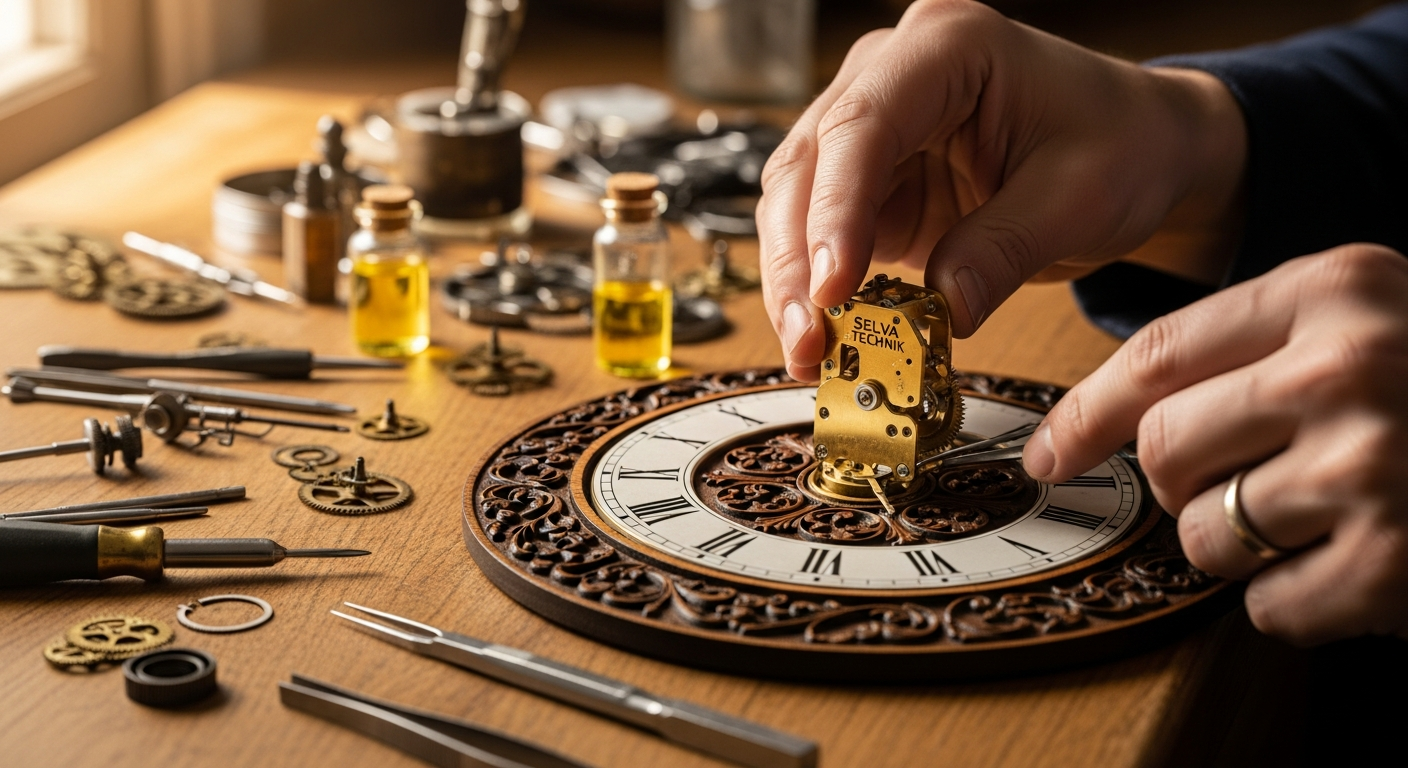

Antique clock restoration is a delicate art—one wrong component choice can derail months of meticulous work. I’ve seen passionate restorers struggle with clock movements that either lack the power to drive ornate hands or produce that maddening tick-tock sound that shatters the serene ambiance of a restored piece. The frustration is real, and it’s expensive.
That’s where the Selva Technik High Torque Sweep Clock Movement WS, ZWL 16mm enters the picture. This German-engineered movement has become the go-to solution for clock restoration specialists and vintage timepiece enthusiasts who refuse to compromise on quality. Selva Technik’s reputation for precision engineering and reliable components means you’re not just buying a movement—you’re investing in authenticity and performance that honors the craftsmanship of the original timepiece.
Discover the Selva Technik High Torque Sweep Movement for your next restoration project.
Why Clock Restorers Choose Sweep Movements Over Ticking Mechanisms
The Aesthetic Advantage
Continuous, smooth second-hand motion fundamentally differs from the traditional tick-tock rhythm that characterizes stepping movements. This distinction matters profoundly in restoration work. The sweep mechanism creates an elegant visual flow that complements the refined craftsmanship of antique clock cases. When you observe a restored timepiece with a sweep movement, the second hand glides with purposeful grace rather than lurching forward in mechanical increments.
Silent Operation Benefits
Silent operation proves invaluable for period-accurate restorations destined for bedrooms, libraries, and offices. Antique clocks were often designed to blend seamlessly into domestic spaces, and a constant ticking sound contradicts that intention. The Selva Technik sweep movement respects this historical context, delivering the serene ambiance your restoration deserves.
Reduced Mechanical Wear
Sweep movements distribute stress more evenly across internal components compared to stepping mechanisms. The stepping motion creates repetitive impact forces that accumulate over time, whereas sweep movement distributes mechanical demands uniformly throughout the motion cycle. This translates to enhanced longevity and fewer service requirements.
Visual Appeal and Original Design Intent
The continuous motion of a sweep mechanism preserves the original design intent of vintage timepieces. Clockmakers of earlier eras often envisioned this fluid motion, and restoring their work with a stepping movement represents a compromise on authenticity.
Psychological Comfort
The absence of constant ticking creates a more pleasant environment. Research consistently demonstrates that low-frequency, repetitive sounds trigger stress responses, whereas the silent operation of sweep movements allows people to appreciate the clock’s presence without subconscious agitation.
High Torque Capability: Powering Complex Hand Assemblies
Understanding Torque Requirements
Different hand weights and materials demand varying levels of rotational force. Brass hands, decorative finishes, and multiple-hand assemblies require substantial power to move reliably. The Selva Technik High Torque movement delivers the mechanical force necessary for these demanding applications without strain.
Why Antique Clocks Demand More Power
Antique clocks often feature heavier hand assemblies than modern reproductions. The thick brass construction, ornamental detailing, and precision-balanced designs of vintage pieces create greater resistance to movement. Standard low-torque movements simply cannot overcome this resistance consistently.
Compatibility with Ornate Hand Sets
Whether your restoration involves delicate steel hands or elaborate brass assemblies, the high torque capability accommodates diverse hand configurations. Heavy-duty materials and decorative finishes no longer represent installation challenges—they become design opportunities.
Multiple Complications Without Mechanical Strain
Clocks featuring chiming, striking, or other mechanical complications demand reliable power delivery. The high torque ensures that primary timekeeping functions maintain accuracy even when secondary mechanisms activate.
Preventing Hand Slippage
Insufficient torque causes visible hand slippage, where the second hand hesitates or moves erratically. This undermines both functionality and aesthetic appeal. The Selva Technik movement eliminates this issue entirely, ensuring precise, consistent hand movement.
Large-Faced Clock Restoration
Larger clock faces inherently require greater force to move the hands across the dial. This movement handles substantial clock faces without performance degradation.
Technical Specifications That Matter for Restoration Work
Compact Dimensions: Fitting Tight Vintage Cases
The 56 x 55 x 15mm footprint represents a carefully engineered balance between power and compactness. Antique clock cases feature limited interior space, and this precise sizing ensures compatibility with tight vintage housings that reject oversized modern movements.
ZWL 16mm Shaft Length: Compatibility Verification
The shaft length directly affects how the movement interfaces with your dial and hand set. The ZWL 16mm specification indicates the distance the shaft extends from the movement housing. Before installation, measure your dial thickness and hand-hole spacing to confirm compatibility. This verification prevents installation errors and ensures proper hand alignment.
Operating Voltage Range and Battery Selection
Operating across 1.25V to 1.7V with a rated voltage of 1.5V means the movement functions reliably with standard AA (LR6) batteries. This voltage flexibility accommodates battery variations without performance loss, and the widespread availability of AA batteries simplifies ongoing maintenance.
Temperature Resilience
The operating range of -10°C to 50°C ensures performance across seasons and climate variations. Whether your restoration will occupy a heated living room or an unheated study, this movement maintains reliable operation throughout the year.
Power Consumption Efficiency
Low power dissipation extends battery life significantly compared to stepping movements. This efficiency reduces the frequency of maintenance interventions and proves particularly valuable for clocks in hard-to-access locations.
AA Battery Standard: Accessibility and Cost-Effectiveness
The AA battery requirement means no specialized power sources or proprietary batteries. Replacement batteries cost mere dollars, and every convenience store stocks them. This accessibility simplifies long-term clock maintenance.
Assessing Compatibility Before Installation
Measuring Clock Case Dimensions
Begin by carefully measuring your clock case interior. Record the depth available for movement installation, the width and height of the case opening, and any protruding internal features that might interfere with movement placement. These measurements prevent purchasing incompatible components.
Verifying Shaft Length Compatibility
Measure your existing dial thickness and the depth of your hand-hole drilling. The ZWL 16mm shaft length must extend sufficiently through the dial while allowing proper hand attachment. If uncertainty exists, consult with movement suppliers who can confirm compatibility based on your specific measurements.
Understanding Hand-Hole Sizing
The diameter of your hand holes affects shaft compatibility. Most vintage clocks feature standard hand-hole sizes, but variations exist. Verify that the 16mm shaft accommodates your hand-hole diameter without excessive play or requiring modification.
Checking Voltage Requirements
Confirm that your power source provides the 1.5V rated voltage. AA batteries deliver appropriate voltage, making this a straightforward compatibility check. Ensure your clock case can accommodate standard AA battery compartments, or verify that your current battery housing is compatible.
Identifying Potential Conflicts
Some vintage clock cases contain internal mechanisms, striking levers, or chiming equipment that occupies space where the movement sits. Map out all existing internal features to prevent installation conflicts. Document any modifications needed to create adequate movement space.
Documentation and Reference Guides
Selva Technik provides technical documentation and compatibility charts. Obtain these references before beginning installation. They clarify shaft specifications, voltage requirements, and dimensional information that prevents costly mistakes.
Installation Best Practices for Restoration Projects
Preparing the Clock Case and Dial
Clean the clock case interior thoroughly, removing decades of dust, debris, and corrosion. Inspect the dial for damage that might impede movement installation. Ensure the dial surface is clean and flat, providing a secure mounting surface for the movement.
Proper Handling Techniques
Handle the movement with care, avoiding contact with internal components. The delicate escapement mechanism and sweep motor require protection from dust and debris. Work in a clean environment, and consider wearing cotton gloves to prevent oils from accumulating on precision surfaces.
Securing Movement Without Over-Tightening
Mount the movement using appropriate fasteners that secure it firmly without crushing delicate components. Apply steady, even pressure rather than forceful tightening. Over-tightened mounting can damage internal mechanisms or warp the movement housing.
Attaching Hands Correctly to the ZWL 16mm Shaft
Hand attachment requires precision. The hour hand mounts first at a specific distance from the movement housing. Follow with the minute hand, ensuring both hands rotate freely without binding against the dial or each other. The second hand completes the assembly, positioned to sweep smoothly around the dial.
Testing Mechanisms Before Final Assembly
Before closing the clock case, power the movement with an AA battery and observe the hand motion. The sweep mechanism should move smoothly, with hands maintaining consistent speed. Test the hand alignment against dial numerals, confirming accuracy before final case assembly.
Troubleshooting Common Installation Issues
Hand binding indicates improper spacing or mounting misalignment. Inconsistent speed suggests battery voltage issues or internal component obstruction. Excessive wobbling reflects loose mounting. Address these problems before case closure by reviewing mounting procedures and battery connections.
Low Power Consumption: Reducing Maintenance Demands
How Sweep Movement Energy Efficiency Extends Battery Life
The sweep mechanism’s smooth, continuous operation distributes power demand evenly, preventing the power surges that characterize stepping movements. This steady-state power consumption extends battery life substantially beyond what stepping movements provide.
Explore Selva Technik’s efficient movement technology for extended battery performance.
Calculating Expected Battery Replacement Intervals
Most AA batteries powering the Selva Technik movement provide 18 to 24 months of continuous operation under normal conditions. Clocks operating intermittently extend this interval considerably. This predictable maintenance schedule simplifies long-term restoration planning.
Comparing Power Consumption Against Traditional Stepping Movements
Stepping movements experience voltage sags during hand advancement, requiring larger batteries or more frequent replacement. The Selva Technik sweep movement maintains consistent power draw, reducing this maintenance burden dramatically.
Cost Savings Over Time
Fewer battery replacements translate to reduced maintenance costs. Over a decade, the savings accumulate meaningfully, particularly for restoration enthusiasts managing multiple clock projects.
Environmental Benefits of Lower Power Dissipation
Efficient power consumption means fewer batteries entering landfills. This environmental consideration appeals to conscientious restorers who value sustainable practices alongside restoration craftsmanship.
Practical Implications for Hard-to-Reach Locations
Clocks mounted in elevated positions, enclosed shelves, or inaccessible areas benefit tremendously from extended battery life. Fewer replacement intervals mean less frequent ladder climbing and risk.
Real-World Restoration Scenarios Where This Movement Excels
19th-Century Parlor Clocks with Ornate Hand Assemblies
Victorian parlor clocks feature elaborate brass hands with intricate detailing and substantial weight. The high torque capability powers these ornamental pieces reliably, delivering the visual impact the original clockmakers intended. The silent sweep operation complements period decor without audible distraction.
Converting Ticking Movements to Silent Sweep Mechanisms
Existing restorations featuring stepping movements that produce objectionable ticking benefit from movement replacement. The Selva Technik sweep movement upgrades these clocks to silent operation while maintaining vintage aesthetics. Compatibility with most vintage clock cases simplifies the conversion process.
Large-Faced Wall Clocks Requiring Substantial Torque
School clocks, factory timekeepers, and architectural wall clocks feature large hands that move across expansive dials. The high torque ensures consistent, reliable hand movement at any scale. These substantial timepieces finally receive components powerful enough to handle their demands.
Period-Appropriate Replacements for Damaged Original Movements
Original movements that corroded, broke, or wore beyond repair require authentic replacements. The Selva Technik movement provides period-appropriate performance without anachronistic technical compromises. The restoration maintains historical integrity while delivering reliable operation.
Multi-Complication Clocks with Chiming and Striking Functions
Clocks featuring mechanical complications demand movement reliability that budget alternatives cannot provide. The Selva Technik power delivery ensures that primary timekeeping remains accurate even as secondary mechanisms activate periodically throughout the day.
Estate Clock Restorations Where Authenticity and Performance Matter Equally
Valuable estate pieces deserve components that honor their heritage while ensuring generations of reliable operation. The Selva Technik movement bridges the authenticity-performance gap, satisfying both aesthetic and functional restoration objectives.
Comparing Selva Technik to Other Movement Options
Quality Standards and German Engineering Reputation
Selva Technik represents the highest standards of German precision engineering. The brand has established its reputation through decades of producing reliable clock components trusted by professionals worldwide. This reputation reflects genuine commitment to quality rather than marketing positioning.
Price-to-Performance Ratio for Professional Restorers
While not the cheapest movement option available, the Selva Technik pricing reflects the quality delivered. Professional restorers consistently choose this movement because the superior performance and reliability justify the investment. Budget alternatives ultimately cost more through repeated replacements and project delays.
Availability and Sourcing Reliability
Selva Technik components enjoy consistent availability through reputable suppliers. This sourcing reliability ensures you can complete projects on schedule without indefinite waiting periods. Budget brands often experience supply disruptions that derail restoration timelines.
Warranty and Customer Support Considerations
Reputable Selva Technik suppliers provide technical support and warranty coverage. When installation questions arise, reliable support resolves issues promptly. Budget alternatives typically offer minimal support, leaving restorers to troubleshoot independently.
Longevity and Durability Compared to Budget Alternatives
Quality construction ensures the Selva Technik movement operates reliably for decades. Budget movements often fail within years, requiring replacement and rework. The lifetime cost favors Selva Technik decisively.
Why Professionals Consistently Choose Selva Technik
Professional restorers stake their reputation on component quality. They repeatedly select Selva Technik because the movement performs consistently, maintains customer satisfaction, and reduces callback service demands. Professional endorsement represents the strongest possible testimonial.
Sourcing the Right Components for Your Restoration Kit
Where to Purchase the Selva Technik High Torque Sweep Movement
Established clock supply retailers carry authentic Selva Technik movements. Verify that suppliers provide technical specifications, warranty information, and responsive customer support. Purchasing from reputable sources ensures component authenticity and sourcing reliability.
Identifying Compatible Hand Sets and Dial Configurations
Clock supply specialists can recommend hand sets compatible with your dial configuration and aesthetic preferences. Authentic vintage reproduction hands enhance restoration authenticity. Match hand materials and finishes to your specific clock era and style.
Selecting Appropriate AA Batteries for Optimal Performance
Standard AA alkaline batteries provide reliable power for most applications. Alkaline batteries outperform carbon-zinc alternatives significantly. Purchase quality batteries from reputable sources to ensure consistent performance.
Sourcing Additional Selva Technik Parts
Beyond the primary movement, restorers may need replacement shafts, washers, or securing mechanisms. Selva Technik suppliers stock these components, enabling efficient parts sourcing without multiple vendors.
Building a Reliable Supplier Relationship
Establish connections with clock supply specialists who understand restoration requirements. Long-term relationships facilitate future projects, provide pricing advantages, and ensure priority access to sought-after components.
Verifying Authenticity and Avoiding Counterfeit Components
Counterfeit clock movements occasionally appear in the market. Purchase exclusively from authorized Selva Technik distributors or highly reputable clock suppliers. Authentic components include proper packaging, documentation, and manufacturer markings.
The Restoration Journey: From Assessment to Completion
Initial Clock Evaluation and Movement Selection Process
Begin by thoroughly inspecting your clock. Measure interior dimensions, verify dial condition, assess hand assembly weight, and document any existing movement damage. These observations guide movement selection and highlight potential installation challenges.
Planning Your Restoration Timeline and Budget
Realistic timelines account for parts sourcing, component arrival, and installation procedures. Budget allocations should cover the movement, compatible hand sets if needed, batteries, and any necessary dial restoration. Planning prevents surprises and ensures satisfying project completion.
Gathering All Necessary Components Before Beginning Work
Complete your parts inventory before starting installation. Having everything on hand prevents project interruptions and maintains workflow momentum. Double-check compatibility specifications against your measurements before commencing installation.
Step-by-Step Installation and Testing Procedures
Follow the installation best practices outlined previously, working methodically through each stage. Document your process with photographs, enabling reference if questions arise during subsequent projects.
Final Adjustments for Accuracy and Smooth Operation
After installation, verify that hands move smoothly without binding. Adjust hand spacing if necessary, ensuring clearance at all positions throughout the dial. Confirm that all hands move in proper synchronization, with the hour hand advancing gradually as minutes accumulate.
Celebrating the Successful Restoration of a Cherished Timepiece
When your restoration reaches completion and the clock runs reliably, the satisfaction proves profound. The combination of technical accomplishment and historical preservation creates a meaningful personal achievement. Your restored timepiece becomes a functional heirloom honoring both original craftsmanship and your dedicated restoration work.
Bringing Precision Back to Life: Your Next Restoration Awaits
The Selva Technik High Torque Sweep Clock Movement WS, ZWL 16mm isn’t just another replacement component—it’s a restoration game-changer that respects both the engineering of vintage timepieces and the vision of today’s craftspeople. The combination of silent sweep operation, powerful torque delivery, and German-engineered reliability means you can tackle ambitious restoration projects with genuine confidence.
Whether you’re breathing new life into a family heirloom or professionally restoring antique clocks for collectors, this movement delivers the precision and performance that separates amateur attempts from masterful restorations. The technical specifications align perfectly with the demands of complex vintage mechanisms, while the low power consumption keeps maintenance simple and cost-effective.
I’ve emphasized compatibility considerations throughout this guide because getting the details right upfront prevents frustration and rework down the line. Your restoration deserves components that honor the original craftsmanship, and Selva Technik provides exactly that.
Ready to transform your next restoration project? Start by measuring your clock case dimensions and verifying shaft compatibility, then source your components thoughtfully. The silent flow of a perfectly restored clock—powered by this exceptional German movement—is a reward that makes every moment of restoration work worthwhile. Your timepiece is waiting for its second chance.
Begin your restoration with Selva Technik’s precision-engineered clock movement today.