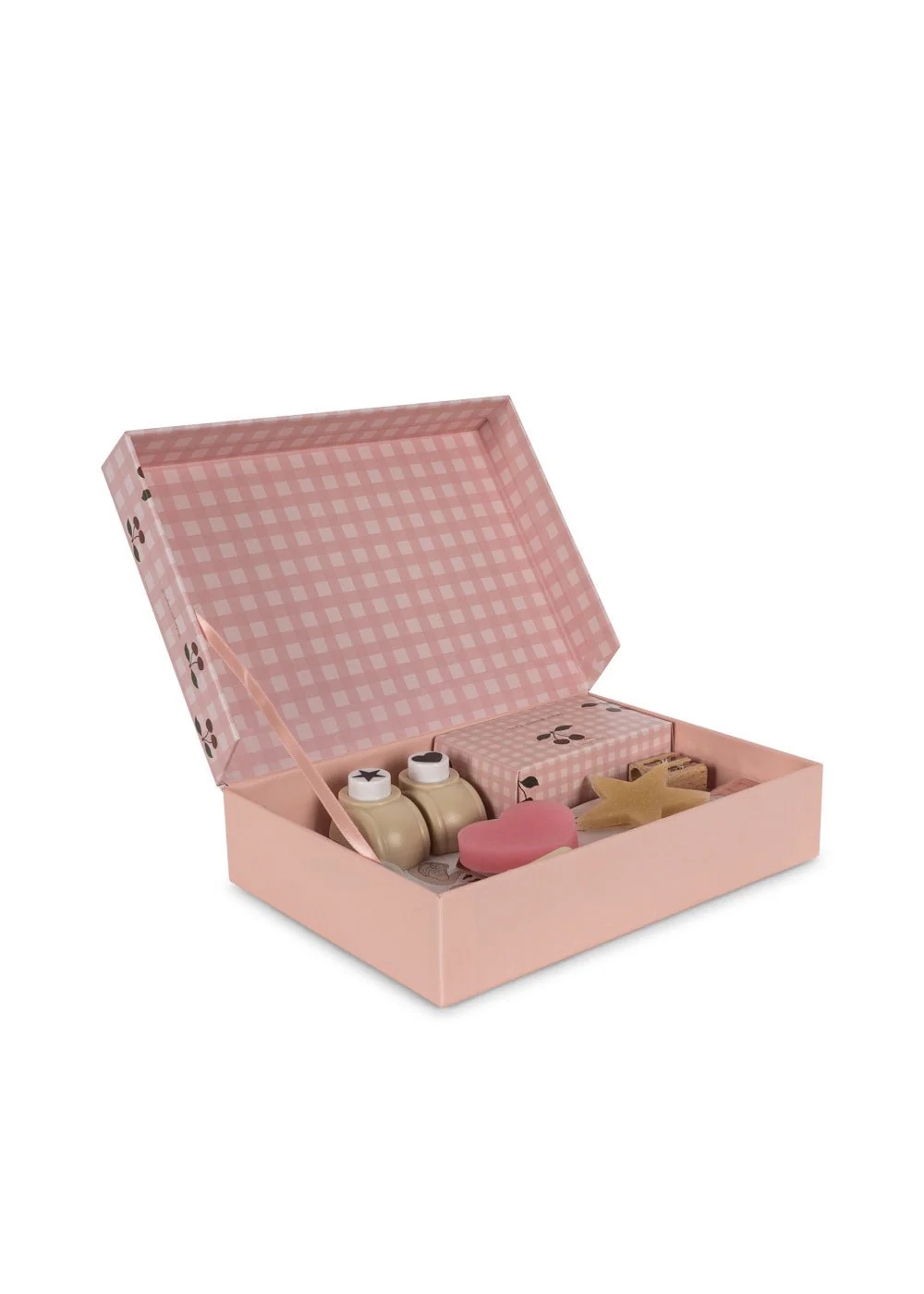

When supplies look lovely and feel considered, kids slow down, focus, and take pride in their work. That’s the quiet magic behind the Stationery Set by Konges Sløjd (Cherry Mix)—a coordinated selection of everyday writing and organizing essentials wrapped in soft, Scandinavian aesthetics. In this guide, we’ll show you how to turn that charm into practical routines: a tidy desk system that runs itself, a handwriting habit that sticks, simple color-coding kids actually remember, and a portable kit that travels from kitchen table to classroom without chaos.
Shop Stationery Set by Konges Sløjd
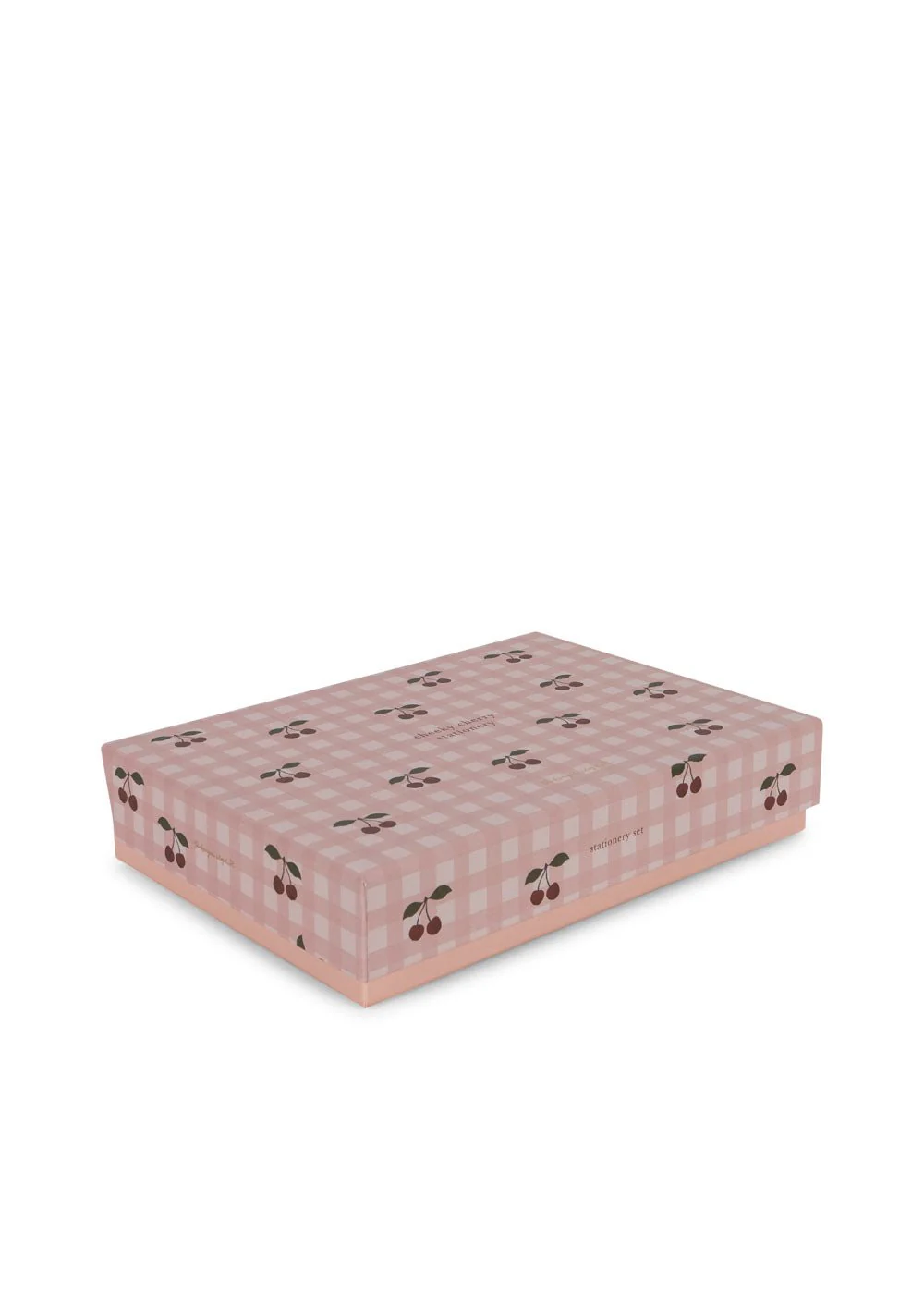
Why This Set Works (and Why “Cute” is Not a Frill)
Pretty supplies aren’t just décor; they’re motivation. Gentle colors and playful cherries invite kids to open the case and begin. That moment—when a child chooses to start—is half the battle. With coordinated pieces in one place, the Stationery Set by Konges Sløjd lowers friction: fewer searches for a missing pen, fewer stalls before writing, fewer distractions from clutter. A consistent look also reinforces routine; when the same tools appear for homework every afternoon, the brain recognizes, “Oh, it’s our study time.”
Set Up a Self-Running Workspace (Three Moves, Ten Minutes)
1) Dock the kit in plain sight. Place the Stationery Set by Konges Sløjd at child eye-level, not buried in a drawer. Visibility combats procrastination.
2) Add a mini “study dock.” Next to the set, keep a timer (phone/sand timer), a thin clipboard or notebook, and a shallow “done” tray. A kitchen table becomes a study desk in seconds.
3) Tape up a two-step start card. On the wall or inside the lid: “Open set → Write date & title.” That tiny ritual flips the brain from idle to action without nagging.
The Handwriting Routine That Actually Sticks
Kids improve handwriting with short, repeatable patterns—never with marathon worksheets. Try this five-minute habit:
- Warm-up lines (60 seconds). Straight lines, curves, and small loops using a single pen or pencil from the set.
- Letter focus (90 seconds). Pick two tricky letters (e.g., b/d) and write 3×3 rows.
- “Word of the day” (60 seconds). Child chooses a new word; write it three times, then add a tiny cherry doodle for fun.
- Sentence stretch (60 seconds). Use the word in one neat sentence.
- Gold check (30 seconds). Circle the best letter or word; say what made it best (size, spacing, shape).
Because the Stationery Set by Konges Sløjd keeps everything within reach, this routine starts fast and ends with a tiny celebration—motivation built in.
Shop Stationery Set by Konges Sløjd
Color-Coding Kids Remember (Keep it to Two or Three Hues)
Color is a powerful memory aid—but only if it’s consistent. Give each color a job for two weeks:
- Red/Pink = Important words. Titles, names, headings.
- Green = Examples. One example per concept gets a green underline or dot.
- Blue = Questions. Anything confusing gets a tiny blue mark to revisit.
Stop there. Too many colors overwhelm younger learners. The Stationery Set by Konges Sløjd makes this easy to sustain because all the tools share a soft, cohesive palette—no visual noise.
A Teacher-Approved Desk Setup (Quiet, Tidy, Fast to Reset)
Place the case on the top-right corner of the desk. During independent work, the lid becomes a staging tray with one writing tool and one color. Everything else stays nestled until needed. When the teacher calls time, tools go back in the tray, lid closes, case returns to the top-right. Five seconds, no rattling, no scatter. For group tables, assign each table a color sticker that matches a pen in the Stationery Set by Konges Sløjd so stray items find home easily.
The Cherry Checklist: A Morning Launch in 90 Seconds
- Open & count: Quick glance—are all pieces present?
- Test the tip: Make one line; if it skips, swap the tool now, not at school.
- Pack the same pocket: Case goes in the same backpack spot every day. Muscle memory prevents “I left it on the counter!” moments.
Consistency is kinder than reminders. The Stationery Set by Konges Sløjd thrives on predictability—same place, same start.
Build a Portable Homework Station (Anywhere = Study Space)
Not every home has a desk. Your portable setup:
- The Stationery Set by Konges Sløjd
- A slim clipboard or spiral notebook
- A small timer
- A shallow “done” tray (folder or basket)
Start each session with the Two-Minute Start: (1) write date & title, (2) highlight two keywords in the directions, (3) set 10 minutes and begin. The first 30 seconds matter most; they cancel the urge to avoid.
Shop Stationery Set by Konges Sløjd
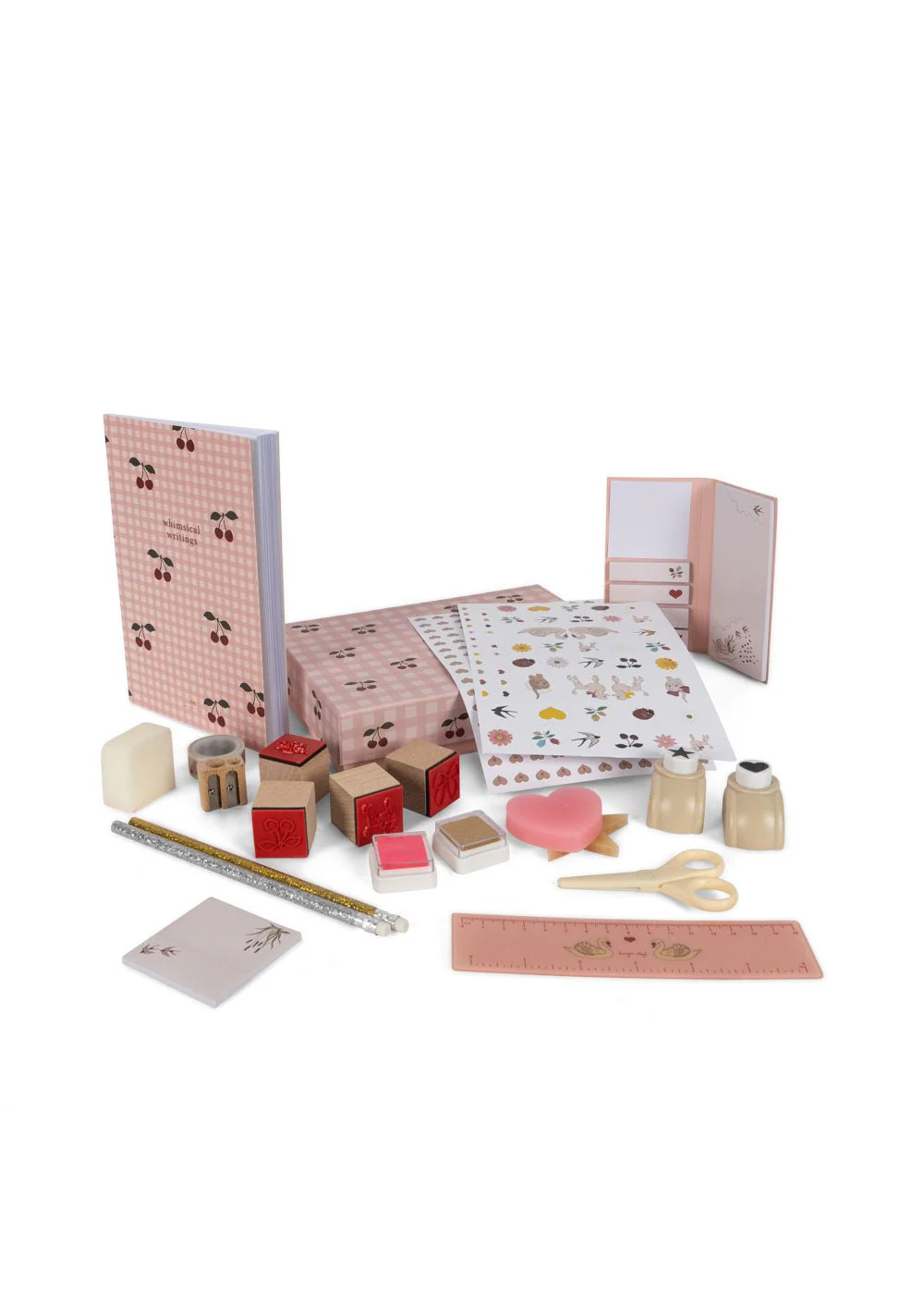
Gentle Creativity Prompts (Because Drawing Unlocks Words)
Pair a tiny sketch with writing so the page never feels cold:
- Cherry Story: Draw three cherries with different faces (happy, surprised, sleepy). Write one sentence for each emotion.
- Mini-Map: Sketch today’s setting (kitchen, playground, library); label three objects; describe one in a sentence.
- Before/After: Draw two boxes—before and after an event; write a 3–4 sentence bridge between them.
Use one pen + one color from the set; constraint builds momentum.
One Hybrid Block (Bullets + Guidance): The 5-Point “Calm Work” Code
- Tools below eyes. Hands busy, eyes on the page or the speaker.
- Two tools only. One to write, one for color coding.
- Timer on. Short sprints (8–12 minutes) with stretch breaks are better than long slogs.
- Sticky question. If stuck, write the question on a mini note instead of freezing.
- Reset in 10 seconds. Tools back in the Stationery Set by Konges Sløjd, lid closed, workspace clear.
Executive Function, Made Friendly
This set does quiet heavy lifting for planning and focus:
- Chunking: Keeping just two tools out reduces switching costs.
- External memory: A small sticky captures “what to remember next,” freeing working memory.
- Visual scanning: Consistent color jobs (e.g., green for examples) make review feel like a treasure hunt, not re-reading.
Shop Stationery Set by Konges Sløjd
Age-by-Age Tweaks (Keep the System, Adjust the Pieces)
- Early Elementary: Fewer choices. One pencil, one bright color, one eraser. Add a visual “start card” inside the lid: draw a tiny cherry next to “Write date,” another next to “Two keywords.”
- Upper Elementary/Middle: Add page flags, a fine-liner for neat headings, and a ruler. Keep color jobs steady across subjects: red/pink = title, green = example, blue = question.
- Teens: Go minimalist. Favorite pen, one highlighter, ruler, page flags. Use the set to support evidence coding in essays and quick diagrams in science.
Travel, Activities, and Out-of-Class Life
The Stationery Set by Konges Sløjd transforms wait-time into creative time. For the car, pair it with a lap desk; for lessons or tutoring, slide it into a tote with a notebook. The same color rules apply everywhere, which means skills transfer—no re-teaching just because the location changed.
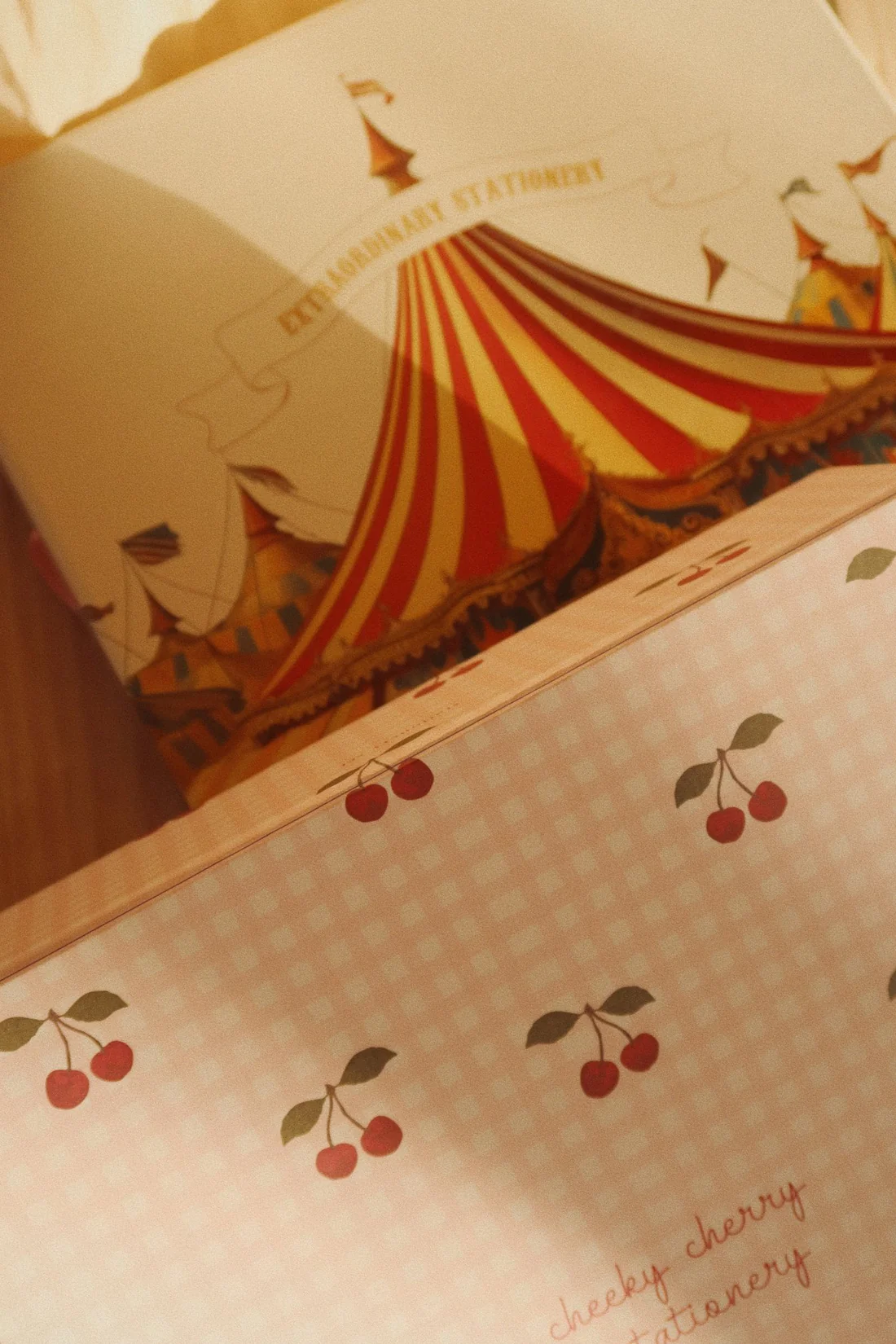
Care & Durability (Make It Last the Year)
- No overstuffing. Keep to the set’s core contents; extras live at home and rotate in.
- Wipe & dry. A soft cloth removes ink smudges; let the inside dry before restocking.
- Label lightly. Initials on the underside or a tiny washi dot avoids mix-ups at school.
- Store upright in backpacks. Along the spine is safest; prevents pressing and bent tips.
Troubleshooting (When Lovely Still Meets Real Life)
- Pieces wander: Color-code tools with a tiny matching dot; lost items find home faster.
- Too many choices: Revert to the “two-tools-out” rule for a week—one pen, one color.
- Staring at the page: Begin with a 60-second cherry doodle; write a caption; then continue the assignment.
- Messy resets: Practice a 10-second clean-up race; celebrate quiet, complete resets with a simple sticker chart.
For Parents & Teachers: Communication That Builds Confidence
Snap a photo of one color-coded page per week and send it home or file digitally. Over time, those photos become a portfolio of progress (and a study guide before tests). Post the color legend on the fridge or classroom wall so everyone speaks the same language: “Remember—green marks examples!”
Conclusion
The promise of the Stationery Set by Konges Sløjd (Cherry Mix) is bigger than a beautiful case—it’s a system for calm, consistent learning. Keep the set visible, tie a two-step start to every task, and give colors steady jobs. Use tiny sketches to unlock writing and five-minute handwriting sessions to build skill without tears. End each session with a quick reset and the case closed at the top-right of the desk. Do that, and homework stops being a scene; it becomes a rhythm: open, start, color, finish, reset—sweet, simple, and school-ready.
Shop Stationery Set by Konges Sløjd
FAQ
- What’s included in the Stationery Set by Konges Sløjd (Cherry Mix)?
Contents can vary by retailer and batch. Expect a coordinated selection of everyday writing and organizing pieces. Check the product page for the current breakdown. - Is the set school-compliant?
In most classrooms, compact, quiet tools are welcome. If your school has restrictions (e.g., scissors, correction fluids), confirm with your teacher. - How do I keep the kit from getting cluttered?
Cap the contents to the original pieces, do a 60-second Friday reset (dump, test, wipe, re-nest), and store extras at home. - Will color-coding really help my child remember?
Yes—when colors keep the same jobs for weeks, they become cues. Children learn to scan for green examples or blue questions rather than re-read everything. - What age range is this set best for?
Early elementary through middle school. Adjust how many tools you allow on the desk at once; younger kids thrive with fewer choices. - My child resists handwriting practice. Tips?
Use the five-minute routine: quick lines, two letters, a fun word, one sentence, a “best” circle. Pair effort with a tiny doodle reward. - Can we use the set for travel and activities?
Absolutely. Add a lap desk and a notebook; the same start routine works anywhere—tutoring, library, car rides. - What if pieces get lost at school?
Label subtly (initials or a washi dot) and keep the set in the same backpack pocket daily. Consistency plus labeling brings items back.