
What Defines the Hamburger Profil and Why It Endures
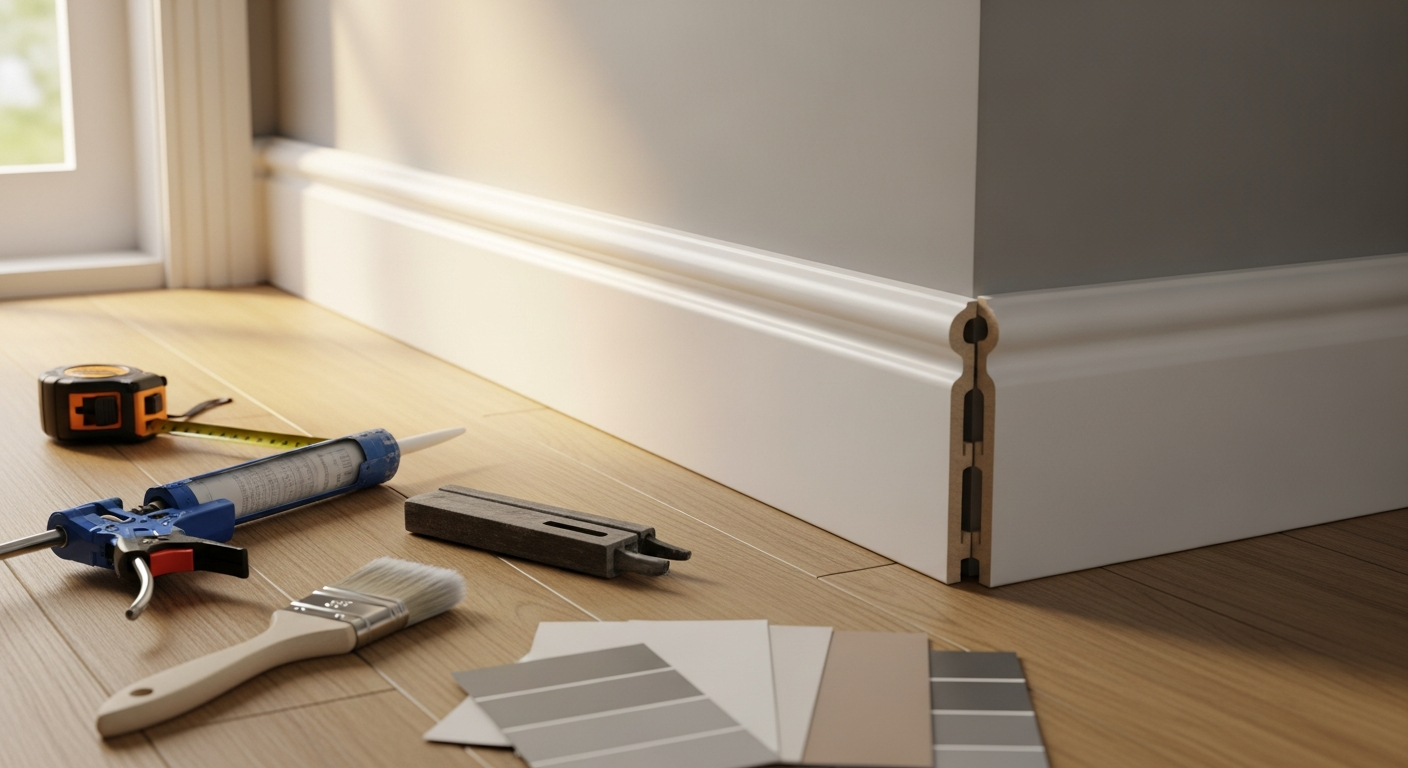
The Hamburger Profil, also known as the Berliner Profil, represents a design legacy spanning decades of European interior craftsmanship. This distinctive profile emerged from German design traditions, becoming a benchmark for elegant skirting solutions that bridge classical and contemporary aesthetics. The profile’s defining characteristic lies in its gently curved contours—subtle curves that create dimension without overwhelming a space.
What makes this profile remarkable is its psychological effect on how we perceive rooms. The flowing lines draw the eye downward in a way that feels natural, almost architectural, establishing visual anchors that ground the entire space. These curves create a sense of refinement, transforming what could be a purely functional element into a design statement.
The Elegant Curves and Visual Depth They Create
The curved contours of the Hamburger Profil function as subtle sculptural elements along your baseboards. Unlike flat, minimalist profiles that disappear into the background, these curves catch light at different angles throughout the day, creating shadow play that adds depth. In morning light, the shadows deepen the curves; in evening light, they soften. This interplay of light and shadow prevents the skirting from appearing flat or utilitarian.
The profile’s elegance stems from its proportional restraint. The curves aren’t exaggerated or ornamental—they’re refined, suggesting classical architecture without demanding attention. This restraint is precisely what makes the Hamburger Profil work across such varied interior contexts.
Versatility Across Architectural Contexts
Period properties with original cornicing and plasterwork benefit tremendously from Hamburger Profil boards. The profile respects historical design language while offering practical advantages that solid plaster alternatives cannot match. The clean, consistent geometry complements Victorian, Edwardian, and mid-century interiors with equal authenticity.
Contemporary and minimalist spaces gain unexpected warmth from these profiles. Rather than contradicting modern aesthetics, the gentle curves humanize stark, geometric rooms. They provide visual continuity without introducing pattern or color, fitting seamlessly into Scandinavian, industrial, and transitional design schemes.
Room Perception and Spatial Psychology
Skirting profiles influence how we instinctively read a room’s proportions and character. The Hamburger Profil’s moderate height and curved detail create psychological anchoring—they make rooms feel intentionally finished rather than haphazardly assembled. The profile draws attention downward briefly before releasing it, preventing the eye from fixating on baseboards while ensuring they contribute meaningfully to overall design coherence.
Rooms with proper skirting profiles consistently feel more curated and professional. This isn’t magic—it’s the result of visual continuity and refined detail working in concert with your walls, flooring, and furnishings.
Comparative Profile Analysis
Straight, minimalist profiles offer clean lines and uncompromising modernity, excelling in contemporary spaces where every element must justify its presence. Rounded profiles provide soft transitions without the pronounced character of the Hamburger design. Ornate, heavily detailed profiles demand attention and work best in classical period interiors where architectural richness is expected and desired.
The Hamburger Profil occupies an ideal middle ground. It’s sophisticated enough for traditional properties yet restrained enough for modern spaces. When compared to straight profiles in contemporary settings, Hamburger boards add dimension without fussiness. When compared to ornate profiles in period properties, they provide classical references without historical pretension.
White Finishes: RAL 9016 Versus RAL 9010
The distinction between RAL 9016 (traffic white) and RAL 9010 (pure white) affects the final aesthetic more subtly than many realize. RAL 9010 pure white sits at the extreme end of the white spectrum—completely neutral, almost clinical. This choice suits minimalist interiors, modern spaces, and walls painted in cool undertones.
RAL 9016 traffic white carries a whisper of warmth, a barely perceptible softness that prevents the skirting from feeling sterile. This finish works beautifully in spaces with warm-toned walls, in rooms with abundant natural light, and in traditionally designed interiors where complete purity would feel cold. The choice between these finishes shapes whether your skirting boards recede quietly into your design or anchor it with subtle presence.
Sizing and Dimension Guide: Finding Your Perfect Fit
Standard Heights and Ceiling Proportions
Leistenhammer’s height range spans 60 mm to 145 mm, accommodating everything from tight apartment ceilings to grand period properties. The relationship between skirting height and ceiling height isn’t arbitrary—it’s rooted in classical architectural proportions. Standard guidance suggests skirting heights of approximately 7-10% of your room’s total height for balanced visual proportion.
In rooms with 2.4-meter ceilings (standard in most modern homes), a 100-110 mm skirting board creates harmonious proportions. Higher ceilings—3 meters or more—benefit from 120-145 mm boards. Lower ceilings, particularly in basement conversions or attic rooms, work better with more modest 60-80 mm profiles to avoid overwhelming the vertical space.
Thickness Variations and Installation Impact
The 16-19 mm thickness range affects both installation stability and visual prominence. Thicker boards (19 mm) project further from the wall, creating more dramatic shadow lines and greater visual presence. They’re also more forgiving during installation, accommodating minor wall imperfections without requiring additional preparation.
Thinner boards (16 mm) recede slightly, suiting minimalist aesthetics where visual restraint matters. They’re ideal for spaces where you don’t want skirting boards announcing themselves. The thickness choice influences which installation method works best—thicker boards handle screw mounting more confidently, while thinner boards benefit from solid adhesive backing to prevent flexing.
Selecting Dimensions for Your Space
Room size, architectural style, and personal preference all inform dimension selection. Large, open rooms can handle taller boards without appearing bottom-heavy. Smaller rooms risk feeling cramped with overly prominent skirting. Traditional properties generally call for taller, more substantial boards that respect period proportions. Contemporary spaces often favor more modest heights that emphasize horizontal flow.
Personal preference matters too. Some homeowners instinctively favor presence and prominence; others prefer skirting that quietly completes a room without demanding visual attention. Your preference isn’t wrong—it’s simply a design choice that should reflect your comfort with visual elements.
Practical Clearance Considerations
Doorway clearances require genuine attention. Skirting boards positioned too high can interfere with door swings or create awkward transitions where doors don’t clearance properly. Measure your doorway architecture before finalizing dimensions. Furniture placement similarly demands consideration—if substantial pieces sit against walls, overly prominent skirting can create visual tension or awkward gaps behind furniture legs.
Baseboard compatibility matters in kitchens and utility spaces where kickboards might already exist. Verify that your chosen skirting board height works alongside existing fixtures and trim elements, preventing visual conflict or functional compromise.
Custom Sizing for Non-Standard Applications
Leistenhammer accommodates custom sizing for applications falling outside standard ranges. Period property conversions, unusually proportioned rooms, or specialized architectural requirements can be addressed through custom specifications. Explore Leistenhammer’s complete dimension options to find your ideal fit.
Visual Transformation Through Dimension Selection
Different heights fundamentally alter how rooms present themselves. A 60 mm board creates a delicate baseline appropriate for intimate spaces. A 100 mm board establishes classical proportion in standard residential contexts. A 145 mm board makes a statement, anchoring generous spaces with substantial visual weight. Room photography, before and after, consistently demonstrates how skirting height selection shapes the overall visual impact—often more dramatically than most homeowners anticipate.
Installation Methods: Flexibility Meets Functionality
Adhesive Installation for Permanent Solutions
Gluing skirting boards creates seamless, permanent installations that minimize future maintenance needs. Quality wood adhesives or specialized skirting board adhesives ensure strong bonding without visible fasteners. This approach works best on solid wall surfaces—concrete, plaster, or drywall—where the wall provides stable backing.
Proper surface preparation determines adhesive success. Clean walls of dust, debris, and flaking paint. Slightly dampen porous surfaces to prevent excessive adhesive absorption. Apply adhesive in beads along the back, maintaining consistent bead spacing to ensure full contact. Press the board firmly into position and hold or brace it until initial set occurs—typically 24 hours for full cure.
Screw and Nail Mounting: When to Use Each
Screw mounting offers superior holding power and allows straightforward removal or adjustment if necessary. This method suits renters or homeowners anticipating future modifications. Stud finding becomes important—fastening into wall studs provides maximum security. Space screws at 400-600 mm intervals for optimal support.
Nail mounting works well for permanent installations where subsequent removal isn’t anticipated. Quality finishing nails (typically 40-50 mm for standard skirting) minimize visible damage. The disadvantage: removing nailed boards risks wall damage. Consequently, this method suits homeowners committed to keeping skirting boards indefinitely.
Clip-Mounting Systems for Flexible Solutions
Innovative clip systems revolutionized skirting board installation, particularly for renters or temporary installations. Specialized mounting clips attach to walls permanently, while skirting boards simply slide into the clips—removable without wall damage. This approach costs slightly more upfront but pays dividends when flexibility matters.
Clip systems work exceptionally well in rental properties, temporary installations, or spaces where future modifications seem likely. Installation remains straightforward, though precision matters more than with adhesive or fastener approaches.
Cable Channel Benefits and Wire Management
Many Leistenhammer skirting boards incorporate practical cable channels on the reverse side, providing concealed pathways for electrical wires, network cables, and other household infrastructure. This integration eliminates the need for separate cable management solutions, maintaining clean aesthetics while keeping essential wiring organized.
Cable channels prove particularly valuable in open-plan living spaces where visible wiring disrupts visual continuity. They’re equally useful in home offices where network cables and power cords multiply. The channel design typically accommodates standard household cables without requiring modification to the board itself.
Accessory Requirements and Tool Inventory
Successful installation requires appropriate accessories. Mounting clips (if using clip systems), quality adhesives or fasteners, finishing materials for joints and corners, and basic tools constitute the minimum inventory. Caulk or specialized skirting board filler addresses gaps or imperfections where skirting meets walls or corners, creating seamless finished appearance.
For screw or nail mounting, consider a stud finder to locate secure fastening points. A miter saw simplifies cutting boards for corners and doorways. A level ensures straight installation, preventing unsightly tilting. These tools represent standard DIY equipment found in most home workshops.
Installation Across Different Wall Types
Drywall installations require standard approaches—either adhesive backing with minimal fastening or screw mounting into studs for maximum security. Plaster walls demand care during fastening to prevent cracking; adhesive methods often work better than mechanical fastening for historical plaster. Concrete or brick walls benefit from adhesive application, as fastening options become more complicated.
Each wall type presents distinct challenges. Understanding your wall composition before beginning installation prevents frustration and ensures success.
MDF vs. Solid Wood: Why Material Choice Matters
Structural Stability and Environmental Resilience
MDF demonstrates remarkable resistance to warping, cracking, and swelling—common problems plaguing solid hardwood in variable climates. Solid wood expands and contracts with humidity fluctuations, creating visible gaps and warping over time. MDF’s engineered composition provides dimensional stability that solid wood simply cannot match.
This structural consistency proves particularly valuable in homes with significant seasonal temperature or humidity variation. Solid hardwood in such environments requires protective finishes and careful maintenance. MDF delivers reliable performance without the environmental sensitivity that makes solid wood problematic in challenging climates.
Moisture Sensitivity and Environmental Thresholds
MDF’s primary weakness involves moisture exposure. Sustained humidity above 65-70% causes swelling and deformation. This limitation makes MDF unsuitable for bathrooms, kitchens, and other high-humidity spaces unless specifically manufactured as moisture-resistant MDF.
Moisture-resistant MDF variants address this concern through special resin treatments that improve water resistance substantially. These alternatives cost more than standard MDF but work reliably in challenging environments. Solid wood, conversely, handles moisture exposure moderately well if properly finished and sealed.
Impact Resistance and Realistic Durability Expectations
MDF’s lower density makes it more susceptible to impact damage than solid hardwood. In high-traffic areas—homes with active children, pets, or commercial spaces—this characteristic creates genuine concerns. A dropped object or sharp impact can dent MDF, whereas solid wood typically absorbs similar impacts without visible damage.
Realistic expectation-setting matters here. MDF works beautifully in low-impact residential spaces where careful handling is standard. It requires more caution in high-traffic commercial applications or busy family homes where accidental damage seems inevitable.
Repair and Maintenance Differences
Solid wood damage—scratches, dents, minor cracks—repairs relatively seamlessly with staining and finishing. The wood grain absorbs repair materials naturally. MDF damage is far more problematic. Significant gouges or impact damage can’t be repaired invisibly; filled areas remain visually distinct, and grain pattern variations make seamless restoration nearly impossible.
Ongoing maintenance similarly differs. Solid wood may require periodic refinishing to maintain appearance. MDF requires primarily dusting and careful cleaning; its painted or foil-finished surface doesn’t demand active maintenance beyond basic care.
Cost-Benefit Analysis and True Value Proposition
At €2.00 to €6.00 per linear meter, MDF skirting boards cost substantially less than solid hardwood alternatives. For a typical residential project (100-200 linear meters), the material savings alone can amount to €500-2,000 or more. This price difference makes MDF practically mandatory for budget-conscious homeowners or landlords managing rental properties.
The value proposition extends beyond initial cost. MDF’s ease of installation reduces labor expenses. Its consistent composition eliminates costly selection and sorting that sometimes applies to solid wood. Its dimensional stability prevents costly callbacks and adjustments that plague installations using problematic wood stock. When examined across total project cost—materials plus labor—MDF delivers superior value without quality sacrifice.
Longevity and Lifespan Extension
Properly installed MDF skirting boards reliably last 15-25 years or longer under normal residential conditions. This timeframe adequately covers most homeowners’ tenure in properties, making MDF’s lifespan practically equivalent to solid wood for most applications. Environmental control matters significantly—maintaining relative humidity between 45-55% and avoiding direct moisture exposure dramatically extends MDF longevity.
Solid wood’s reputation for superior longevity often reflects installation in stable historical environments rather than genuine material superiority. In modern homes with controlled climate environments, MDF performs comparably to solid wood while costing substantially less.
Aesthetic Versatility Across Interior Styles
Contemporary Minimalism and Clean Profiles
Minimalist interiors benefit from white MDF Hamburger Profil boards precisely because the profile’s restraint matches minimalist design philosophy. The gentle curves add subtle visual interest without introducing ornament or pattern. In spaces emphasizing simplicity and essential elements, quality skirting boards underscore intentionality rather than contradicting it.
White finishes recede quietly into minimalist backgrounds, allowing walls, flooring, and carefully selected furnishings to command attention. The profile’s presence is felt rather than seen—it completes the room without demanding focus.
Traditional and Period Properties
Period properties demand skirting boards that respect historical design language. The Hamburger Profil emerged from European classical traditions, making it authentically appropriate for Victorian, Edwardian, Georgian, and Art Deco properties. White finishes maintain this authenticity while providing practical advantages over authentic period reproduction materials.
Period properties often benefit from taller skirting boards (100-145 mm) that honor classical proportions and original architectural detail. The Hamburger Profil’s curves reference period design languages without replicating heavy ornamental approaches that can feel theatrical in modern contexts.
Scandinavian and Farmhouse Aesthetics
Both design movements embrace white as a foundational color and value simplicity with subtle character. Scandinavian design’s minimalist precision finds perfect expression in the Hamburger Profil’s refined curves. Farmhouse aesthetics, with their emphasis on comfort and lived-in elegance, similarly benefit from white skirting boards that bridge rustic and refined sensibilities.
These styles intentionally celebrate foundational elements—walls, flooring, skirting, trim—as design features rather than background infrastructure. Quality white skirting becomes an aesthetic choice rather than mere functional necessity.
Transitional Interiors and Style Bridging
Transitional design deliberately blends traditional and contemporary elements, and white skirting boards function as perfect mediators. The Hamburger Profil’s classical references satisfy traditional sensibilities while its proportional restraint suits modern preferences. This balance makes transitional spaces more achievable and visually cohesive.
Color Coordination and Design Coherence
White skirting boards coordinate seamlessly with virtually any wall color, but subtle relationships matter. Cool-toned walls pair beautifully with RAL 9010 pure white skirting. Warm-toned walls benefit from RAL 9016 traffic white’s subtle warmth. The relationship between skirting color and surrounding colors influences whether skirting boards appear as visual anchors or seamless transitions.
Dark or richly colored walls create dramatic contrast with white skirting—a sophisticated choice that grounds bold color statements. Light, neutral walls allow white skirting to dissolve into the background, emphasizing spaciousness and simplicity.
Lighting Effects and Room Brightness
White skirting boards interact dramatically with lighting conditions. Natural light reveals subtle surface variations and profile curves throughout the day. Artificial lighting in evening hours creates different shadows and perceived brightness levels. Quality white skirting consistently amplifies perceived room brightness, making spaces feel larger and more open than equivalent spaces with darker baseboards.
This brightness amplification proves particularly valuable in smaller rooms, north-facing spaces with limited natural light, and contemporary interiors where perceived spaciousness matters aesthetically and psychologically.
Cost Considerations and Budget Planning
Pricing Structure and Dimension-Based Variation
Leistenhammer’s pricing spans €2.00 to €6.00 per linear meter, with pricing primarily determined by board height and thickness. The most economical options (60 mm height, 16 mm thickness) cluster at the lower end of this range. Taller, thicker boards (145 mm height, 19 mm thickness) approach the upper price point. Understanding this relationship helps you anticipate costs accurately before beginning projects.
Standard residential selections typically fall between €3.00 and €5.00 per linear meter—moderate pricing that reflects quality without premium positioning. Specialty finishes or custom orders may exceed standard pricing parameters.
Linear Meter Calculation and Project Budgeting
Accurate measurement determines project costs with precision. Calculate the perimeter of each room requiring skirting, subtracting doorway widths and any sections where skirting doesn’t apply. A typical bedroom (3.5m × 4m) with one standard doorway requires approximately 14 linear meters. A family room (5m × 6m) with multiple openings might require 18-20 linear meters.
Once you’ve established your linear meter requirements, multiply by your chosen board’s per-meter cost. This calculation provides accurate material costs without surprise expenses.
Volume Discounts and Bulk Purchasing
Larger projects frequently qualify for volume discounts that reduce per-meter costs. A whole-house renovation (400+ linear meters) negotiates better pricing than single-room projects. If you’re undertaking substantial work, explicitly inquire about volume discount structures with Leistenhammer or authorized retailers.
Bulk purchasing also streamlines logistics and ensures consistent product batches—important when matching boards across multiple rooms or future additions.
Installation Labor Cost Implications
Professional installation typically costs €15-30 per linear meter, depending on region and project complexity. This expense doubles or triples if walls require preparation, board cutting, or complicated corner work. Total project costs (materials plus labor) can reach €40-50 per linear meter for professionally installed, high-quality skirting in labor-intensive installations.
DIY installation eliminates labor costs entirely, making it financially attractive for confident homeowners. The time investment—typically 2-4 hours for a moderately sized room—requires willingness to engage in careful, methodical work.
Long-Term Value and Maintenance Savings
Quality MDF skirting boards with proper installation require minimal maintenance beyond occasional dusting and careful cleaning. Unlike solid wood that periodically requires refinishing, MDF’s factory finish typically performs without active intervention across the lifespan of the installation.
The initial investment in quality materials and proper installation prevents costly callbacks, repairs, and premature replacement. This long-term perspective transforms what appears as a significant expense into a practical, lasting value proposition.
Hidden Costs and Contingency Planning
Unforeseen expenses commonly emerge during installation. Adhesives, caulk, filler materials, corner moldings, and specialized tools occasionally exceed budget allowances. Wall preparation might demand plastering, patching, or priming beyond initial estimates. Professionals often recommend budgeting 10-15% additional contingency for unforeseen expenses.
Conservative budgeting prevents mid-project financial stress and ensures quality completion without compromise.
Practical Advantages That Justify the Investment
Smooth Consistency and Painting Performance
MDF’s engineered composition delivers a perfectly smooth surface that accepts paint flawlessly. Factory-finished boards arrive ready for installation, while unfinished options provide blank canvases for custom color coordination. This consistency prevents the grain visibility, knots, and surface irregularities that sometimes complicate solid wood finishing.
The smooth surface enables decorative finishes—specialty paints, glazing techniques, or contrasting colors—that perform beautifully on MDF without technical complications.
Installation Simplicity and Labor Efficiency
MDF’s uniformity, manageable weight, and forgiving dimensional consistency make installation straightforward for homeowners and professionals alike. Unlike solid wood that requires stock selection, acclimation periods, and careful hand-fitting, MDF boards arrive ready for immediate installation.
This simplicity reduces installation time substantially—a factor that matters whether you’re undertaking DIY projects or paying professional labor. Faster installation means lower labor costs and faster project completion.
Predictable Outcomes and Professional Appearance
The engineered consistency of MDF ensures that your boards will perform identically across your entire project. There’s no guesswork about whether future boards will match earlier installations, no concerns about hidden defects affecting appearance. This predictability enables confident project planning and guarantees professional results.
Handling Characteristics and DIY Feasibility
MDF’s lighter weight compared to solid hardwood makes it genuinely manageable for individual homeowners or small crews. A board can be positioned and adjusted without excessive physical effort. This accessibility makes DIY installation genuinely feasible for homeowners lacking professional experience.
The material’s forgiving characteristics—it won’t splinter or crack like solid wood during cutting and fitting—build confidence during installation and minimize frustration for less experienced installers.
Aesthetic Compatibility and Design Integration
White MDF skirting boards integrate seamlessly across virtually all interior design approaches. The color compatibility, profile elegance, and material finish quality ensure professional aesthetic integration regardless of your design preferences or existing décor.
Minimal Ongoing Maintenance
Beyond occasional dusting and careful cleaning, MDF skirting boards demand virtually no ongoing maintenance. No refinishing cycles, no periodic staining or sealing, no seasonal adjustments. This low-maintenance characteristic appeals strongly to busy homeowners or property managers juggling multiple responsibilities.
Limitations and When to Choose Alternatives
Moisture Vulnerability in High-Humidity Environments
Standard MDF fails reliably in bathrooms, kitchens, laundry rooms, and other high-humidity spaces. Sustained moisture exposure causes swelling, deformation, and aesthetic deterioration that compromises the entire installation. This limitation eliminates MDF as a viable option for approximately 30-40% of typical residential spaces.
Moisture-resistant MDF variants (specially manufactured with enhanced water-resistant resins) address this limitation substantially. These alternatives cost more than standard MDF but perform reliably in challenging environments. Alternatively, solid wood offers superior moisture resistance, though at substantially higher cost.
Impact Susceptibility in High-Traffic Contexts
MDF’s lower density makes it genuinely vulnerable to impact damage in high-traffic commercial spaces, busy family homes with active children, or pet-inhabited properties. Dropped objects, furniture movement, or enthusiastic play create visible damage that proves difficult or impossible to repair invisibly.
In such environments, solid hardwood provides superior durability despite higher costs. The investment in damage-resistant materials prevents costly replacement of undermined installations.
Repair Challenges and Permanent Damage Limitations
Significant MDF damage—deep gouges, impact dents, or moisture-related swelling—cannot be repaired seamlessly. Filled areas remain visually distinct, and the repaired board looks noticeably altered compared to original factory finish. This limitation means damaged sections often require board replacement rather than simple repair.
In solid wood, comparable damage repairs relatively invisibly through staining and finishing. This repairability influences long-term value in high-risk environments.
Moisture-Resistant MDF as Practical Alternative
Moisture-resistant MDF offers compromise solutions for challenging environments. These boards tolerate humidity exposure up to approximately 85% relative humidity—sufficient for many kitchens and bathrooms if proper ventilation exists. Costs run approximately 20-30% higher than standard MDF while remaining substantially less expensive than solid wood.
For homeowners facing moisture-prone spaces, moisture-resistant MDF deserves serious consideration before defaulting to solid wood or avoiding skirting boards entirely.
Solid Wood for Long-Term Durability Priorities
In heritage properties where century-long durability matters, or in environments where impact resistance proves essential, solid hardwood justifies its premium cost. The superior longevity, repairability, and damage resistance combine to create long-term value despite initial expense.
Hybrid Solutions Combining Benefits
Some installers combine MDF in low-risk areas with solid wood or moisture-resistant alternatives in challenging zones. This hybrid approach delivers cost efficiency while ensuring material appropriateness across varied environments. Planning becomes more complex, but results justify the additional coordination.
Real-World Applications: Where Hamburger Profil Boards Excel
Residential Renovations Across Multiple Rooms
Bedrooms, living rooms, hallways, and studies—standard residential spaces consistently benefit from white MDF Hamburger Profil installations. These rooms combine relatively predictable environmental conditions, moderate foot traffic, and aesthetic priority that makes quality skirting boards worthwhile investments.
Whole-house renovations leverage volume discounts while establishing design continuity across connected spaces. Consistent skirting creates visual flow that unifies disparate rooms into coherent design narratives.
Open-Plan Living and Visual Continuity
Modern open-plan layouts eliminate traditional room divisions, creating spatial challenge for visual coherence. Continuous white skirting establishes visual grounding that ties multiple functional zones together. The consistent baseline anchors furniture arrangements and creates psychological room definition even without walls.
Open-plan spaces demonstrate skirting boards’ ability to establish architectural order in spaces lacking traditional structure.
Period Property Restoration and Historical Authenticity
Victorian, Edwardian, and Georgian properties benefit substantially from skirting boards that respect period design language while providing modern performance. The Hamburger Profil’s classical references honor historical aesthetics while MDF’s stability ensures reliable performance across centuries of changing climate patterns.
Period property owners frequently discover that modern MDF skirting boards outperform authentic period reproduction materials while appearing period-appropriate.
New Build Projects and Foundation Establishment
New construction benefits from establishing quality standards from the beginning. Quality skirting boards contribute to perception of overall build quality, influencing buyer confidence and perceived value. Professional-grade installations establish design foundations that subsequent décor and styling build upon naturally.
Developers and builders incorporating quality skirting recognize the subtle but significant impact on property perception and market value.
Commercial and Professional Spaces
Offices, retail environments, medical practices, and professional spaces all benefit from polished skirting boards that communicate competence and attention to detail. Commercial environments demand durability and appearance that budget alternatives cannot deliver. Quality MDF skirting provides professional aesthetics without excessive cost.
Rental office spaces particularly benefit from MDF’s cost-effectiveness combined with professional appearance.
Rental Properties and Return on Investment
Property managers recognize that quality finishing details—including skirting boards—influence tenant perception, rental appeal, and lease duration. Investment in quality boards pays dividends through reduced turnover and ability to command slightly higher rents. The modest investment in proper skirting returns value through improved property appeal.
Making Your Final Selection: A Practical Checklist
Assessing Your Space Fundamentally
Begin with honest evaluation of your specific context. Measure ceiling heights throughout your property. Examine wall conditions—smooth drywall, textured plaster, or uneven surfaces all influence installation approach. Identify your architectural style and existing design elements that skirting boards must complement or enhance.
Photograph your spaces from multiple angles. These images help visualize how different board heights and finishes will integrate with existing décor.
Determining Dimension Requirements
Calculate appropriate heights using the 7-10% rule—your skirting height should represent roughly 7-10% of total room height. Apply this calculation room by room, recognizing that architectural variation might justify different selections in different spaces.
Consider thickness based on aesthetic priority. Minimalist sensibilities favor thinner boards; traditional sensibilities benefit from more substantial profiles.
Assessing Installation Capabilities Honestly
Evaluate your realistic DIY capacity. Do you possess basic tools, confidence with measurements, and patience for methodical work? Or would professional installation better serve your project? There’s no shame in recognizing that professional installation prevents frustration and guarantees quality results.
Hybrid approaches—DIY installation in simple, straightforward spaces combined with professional help in complex areas—sometimes optimize both cost and results.
Evaluating Moisture Environment
Walk through your spaces honestly assessing moisture exposure. Which rooms feature consistent humidity above 65-70%? Which rooms combine excellent ventilation with low moisture? Standard MDF works beautifully in dry environments; moisture-resistant alternatives serve high-humidity spaces.
This assessment determines whether standard MDF suffices or whether alternative materials deserve consideration.
Confirming Project Budget
Calculate total material costs by measuring linear meters and multiplying by per-meter pricing. Add accessory costs (adhesives, caulk, clips if applicable) and labor costs (professional installation or your time investment). Establish a total project budget, including contingency for unforeseen expenses.
Conservative budgeting prevents mid-project compromise and ensures quality completion.
Sourcing and Ordering
Identify Leistenhammer authorized retailers in your region. Request samples showing finish quality and profile characteristics. Confirm product specifications match your dimensional requirements and environmental conditions. Verify delivery timelines and return policies before committing to orders.
Requesting samples prevents surprises when boards arrive—the reality of color, finish quality, and profile appearance should match your expectations.
Timeline Planning
Account for delivery timelines—typically 1-2 weeks for standard stock. Add installation duration—a skilled installer completes approximately 15-25 linear meters daily, suggesting a small bedroom completes in a day while larger projects require multiple days. Include additional time for finishing work, drying periods, and final details.
Realistic timeline expectations prevent frustration and allow proper project pacing.
The Smart Finishing Touch Your Home Deserves
Selecting the right white MDF Hamburger Profil skirting board transforms more than just the base of your walls—it establishes the entire visual foundation of your interior space. Whether you’re renovating a period property that demands classical elegance or creating a contemporary sanctuary that requires clean, minimalist lines, these boards deliver exceptional results. The combination of Leistenhammer’s seven decades of expertise, the timeless Hamburger design, and MDF’s practical advantages creates a compelling case for this investment. At €2.00 to €6.00 per linear meter, you’re accessing professional-grade materials without the premium price tag of solid wood. The installation flexibility—whether gluing, screwing, nailing, or clip-mounting—means you can adapt your approach to your specific circumstances. Take time to measure your spaces accurately, assess your moisture environment, and determine which dimensions align with your design vision. Connect with authorized Leistenhammer retailers to explore their white MDF Hamburger Profil selections, request samples, and confirm specifications for your project.