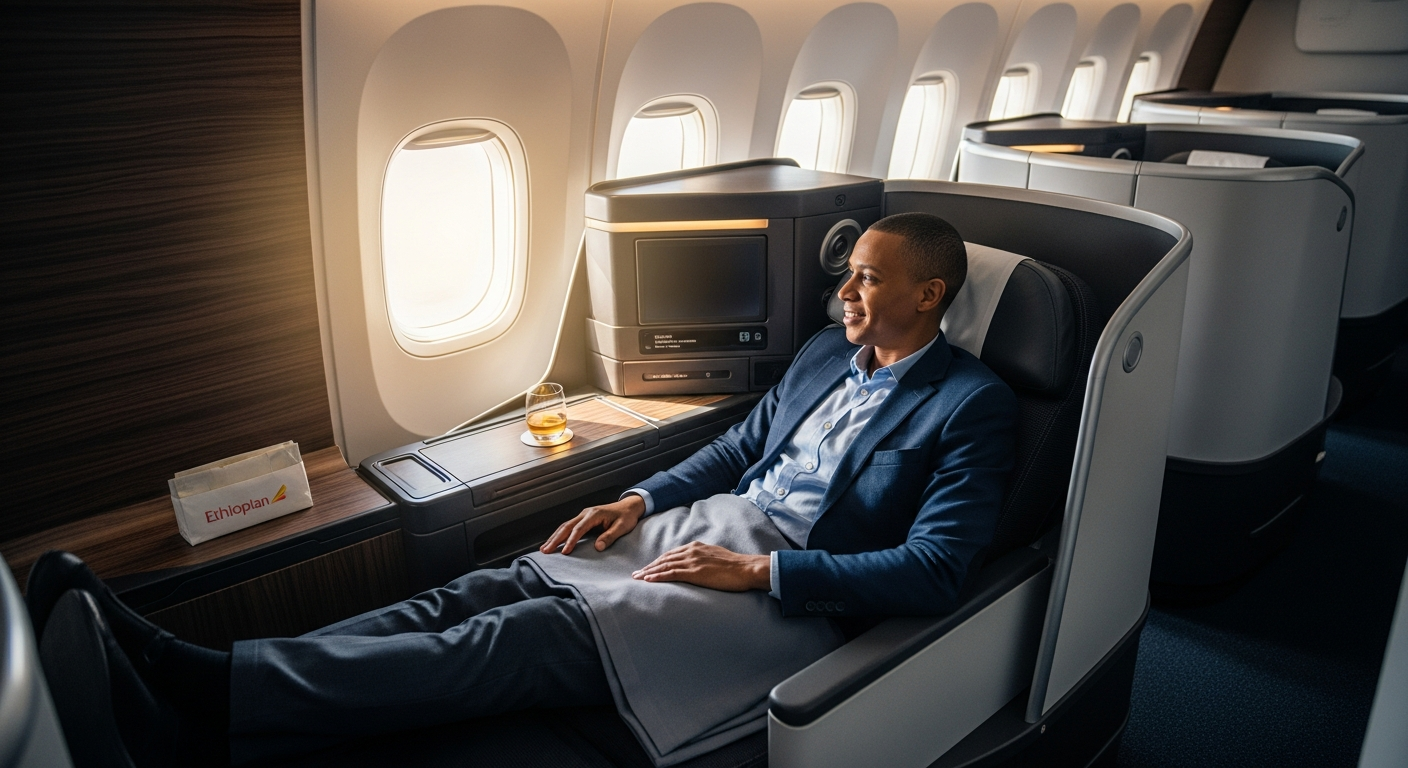

When a business class product wins “Best in Africa” five years running, you have to wonder: what are travelers actually getting for their money? Ethiopian Airlines’ Cloud Nine cabin has become the darling of budget-conscious premium travelers, but behind the accolades lies a more nuanced story—one that reveals both genuine value and some rough edges worth understanding before you commit your hard-earned miles or cash.
Cloud Nine Business Class occupies an interesting position in the premium travel landscape. It’s not a luxury flagship like Singapore Airlines or Qatar Airways, yet it consistently outperforms expectations at its price point. The product combines modern aircraft like the Boeing 787 Dreamliner with African hospitality and a network that connects you to places most premium cabins ignore. This combination has created something genuinely different in the market.
Discover the full potential of Ethiopian Airlines Cloud Nine Business Class today.
The Lie-Flat Seat Experience: What You’re Actually Sleeping In
Fully Lie-Flat Configurations Across Modern Aircraft
Ethiopian Airlines’ newer aircraft deliver the modern business class experience travelers expect. The Boeing 787 Dreamliner and Airbus A350-900 both feature fully lie-flat seats, transforming your overnight flight into a legitimate sleeping opportunity rather than an exercise in creative positioning.
The 2-2-2 Configuration and What It Means
The 2-2-2 seating arrangement strikes a balance between capacity and comfort. You’ll have either direct aisle access or a middle seat paired with one neighbor. This setup eliminates the feeling of being boxed in by multiple rows of human traffic, though it doesn’t offer the privacy of herringbone or staggered configurations found on some competitors.
Seat Variation Across the Fleet
Here’s where consistency becomes complicated. Newer aircraft feature pod-style seats with superior privacy screens and modern recline mechanisms. Older aircraft still in service offer fully flat beds, but with designs that lack the sleek enclosure of newer models. Before booking, checking which specific aircraft operates your route matters more than the route itself.
Comfort Details That Actually Impact Sleep
The bedding package—duvet and pillow included—provides genuine comfort for long-haul sleep. Mattress quality varies by seat generation, with newer models offering better support. Seat width gives you adequate personal space without the squeeze of premium economy, and the recline mechanism functions smoothly on maintained aircraft.
Storage and Personal Space Management
Compartments beneath the seat and integrated storage solutions keep your valuables accessible without cluttering the cabin. Aisle access considerations matter more than you’d think; certain seats position you close to the lavatory corridor, which means periodic traffic and light disturbance during rest periods.
Entertainment Screens and Viewing Comfort
Seat-back screens on modern aircraft deliver adequate size and resolution for movies and television. Screen positioning allows comfortable viewing whether reclined or sitting upright, though the library selection—we’ll address this later—sometimes disappoints.
Power and Connectivity at Your Seat
Multiple USB ports and power outlets keep devices charged throughout the flight. This practical amenity prevents the frustration of searching for functional charging points or rationing battery life.
Pricing Strategy and Redemption Value: The Real Cost Comparison
Cash Pricing on Major Routes
Ethiopian Airlines prices Cloud Nine competitively against African carriers and below European legacy airlines. A business class ticket from Washington D.C. to Addis Ababa typically ranges from $4,500 to $7,500 depending on season and booking window, significantly less than equivalent pricing on United or Air France.
Frequent Flyer Miles: Where the Real Value Emerges
Miles redemptions represent Ethiopian’s strongest value proposition. Business class awards typically cost between 60,000 and 100,000 miles one-way, compared to 150,000+ miles on many Star Alliance partners. This differential makes Ethiopian an attractive redemption option for skilled frequent flyers.
Premium Economy as the Alternative
Ethiopian’s Premium Economy seats recline to 6’8″ rather than fully flat. The price differential between Premium Economy and Business Class on the same route typically ranges from 30-50%, making the upgrade calculation straightforward for extended flights where lie-flat sleep matters.
Seasonal Pricing and Strategic Booking
Peak travel seasons (December holidays, summer months) push prices higher with less frequent promotional availability. Booking 2-3 months in advance usually captures better pricing than last-minute purchases. Shoulder seasons offer occasional error fares that savvy bookers exploit.
Fuel Surcharges and Hidden Costs
Ethiopian applies fuel surcharges to international business class tickets, typically adding $200-400 depending on oil prices and route length. These appear as separate line items on your booking confirmation, so budget accordingly.
Upgrade Pricing from Economy and Premium Economy
Upgrading from economy to business class via paid upgrade typically costs $1,500-3,000 depending on route and availability. Premium Economy upgrades run significantly less, around $800-1,500, making them tempting if you’re already seated in the higher cabin.
Star Alliance Redemption Opportunities
Ethiopian Airlines’ Star Alliance membership unlocks redemption options on partner airlines using Ethiopian miles. However, partner redemption rates typically exceed Ethiopian’s own award pricing, reducing this strategy’s appeal unless promotional pricing appears.
One-Way Versus Round-Trip Pricing Strategies
Booking two one-way tickets sometimes beats round-trip pricing, especially when outbound and return flights operate on different aircraft or during different seasons. This flexibility also allows you to avoid less desirable return flights without losing value.
How Ethiopian Stacks Against Middle Eastern Competition
Qatar Airways and Emirates offer more premium experiences at higher prices. Ethiopian undercuts both on cost while delivering 85-90% of the experience, creating genuine value for price-conscious premium travelers.
Start comparing prices for your next Ethiopian Airlines Cloud Nine booking.
Lounge Access and Pre-Flight Amenities
The Cloud Nine Lounge in Addis Ababa
The Addis Ababa Cloud Nine Lounge spans 3,000 square meters of space, making it genuinely spacious. High ceilings and natural light create an airy atmosphere. However, the facility shows its age—furnishings and décor lack the contemporary polish of newer lounges at European hubs. It functions well but won’t impress travelers accustomed to Singapore’s Changi or Doha’s Al Mourjan.
Lounge Hours and Accessibility
The lounge operates during extended hours to accommodate Ethiopian’s flight schedule. Access requires business class tickets or eligible frequent flyer status. Arrive early on morning departures; afternoon departures typically see lighter crowds.
Shower Facilities and Amenities
Shower suites are available but can develop queues during peak hours. Spa services don’t match the caliber of premium Asian carriers, though basic massage options occasionally appear. Fresh towels and basic toiletries are provided.
Food and Beverage Service Quality
The buffet includes Ethiopian and international options. Ethiopian injera dishes, stews, and fresh breads showcase local cuisine authentically. International selections cater to less adventurous palates. Beverage service covers wine, spirits, coffee, and soft drinks at respectable quality levels.
Business Center and Workspace
Computer terminals and printing services exist but aren’t state-of-the-art. WiFi coverage reaches the business center, though speed varies during peak hours. Workspace seating is adequate but not abundant.
WiFi Speed and Reliability
Lounge WiFi typically delivers 5-8 Mbps during off-peak hours, acceptable for email but frustrating for video calls or large file transfers. Peak hour speeds drop further. This represents one of the lounge’s more notable limitations.
International Airport Lounge Access
Star Alliance lounge access on connecting flights provides alternatives at major hubs. However, Ethiopian’s own lounge presence outside Addis Ababa remains limited, forcing reliance on partner lounges at many international airports.
Star Alliance Network Benefits
Business class tickets grant access to numerous Star Alliance lounges globally, significantly expanding your pre-flight experience options on connections.
Day Pass Availability
Non-business class travelers can purchase lounge day passes, typically around $50-75 USD. This option works for premium economy passengers considering whether the experience justifies upgrade costs.
Peak Time Crowding
During morning departure waves, the lounge reaches capacity with 500+ passengers. Seating becomes scarce and shower queues form. Later departure times offer noticeably better lounge experiences.
In-Flight Dining: Ethiopian Cuisine Meets International Standards
Premium Meal Service Structure
Service begins shortly after takeoff on long-haul flights. A pre-dinner beverage and appetizer arrive first, followed by main course options and dessert. This paced approach prevents feeling rushed while maintaining service flow.
Ethiopian Cuisine Authenticity
Ethiopian dishes represent the menu’s highlight. Misir wot (red lentil stew), kitfo (Ethiopian steak tartare), and fresh injera demonstrate genuine culinary commitment beyond tokenism. These aren’t diluted versions created for Western palates; they’re authentically prepared.
International Menu Selections
Each meal service offers non-Ethiopian options—risotto, seafood, beef selections—accommodating various preferences. The international offerings maintain respectable quality without reaching the sophistication of Middle Eastern carriers’ international menus.
Wine and Beverage Selection
The wine list includes African and international selections at reasonable quality. Champagne service begins with welcome drinks. Bar service provides spirits, cognac, and after-dinner options throughout the flight.
Real Glassware and Service Standards
Real glass, porcelain plates, and metal cutlery replace plastic throughout. This touches something psychological—premium service requires premium materials. Cloth napkins and proper plating elevate the experience beyond typical airline dining.
The Coffee Ceremony Experience
On some flights, cabin crew performs a traditional Ethiopian coffee ceremony—roasting green beans, grinding coffee, and serving it in small cups. This cultural element appears inconsistently but represents genuine differentiation when offered. It’s authentic hospitality rather than choreographed theater.
Dietary Accommodation Options
Special meals (vegetarian, vegan, kosher, halal) require advance notice during booking. Most routes accommodate these requests adequately, though consistency varies by catering location.
Meal Timing Flexibility
The fixed meal service timing doesn’t always align with passenger preferences. Some business class cabins offer on-demand options; Ethiopian’s approach remains more traditional, serving all passengers within similar timeframes.
Snack and Beverage Service Between Meals
Cabin crew offers drinks, cookies, and light snacks between main service periods. Sleep-focused passengers appreciate having food available without formal service interrupting rest.
Entertainment, Connectivity, and Onboard Technology
Personal Entertainment System Specifications
Seat-back screens measure 10-16 inches depending on aircraft type and seat generation. Resolution supports HD content adequately, though it won’t rival the largest IFE systems on newer aircraft like Emirates’ Boeing 777s.
Content Library Assessment
The movie selection includes recent releases and older classics across multiple genres. Television shows cover documentaries, series, and children’s programming. The library typically refreshes monthly but remains modest compared to premium carriers. Music streaming offers thousands of tracks across genres. Games provide basic entertainment for shorter flights but lack sophisticated offerings.
Content Update Frequency
Monthly updates keep content fresh, though the rotation cycle means repeat content across multiple flights. Seasonal programming appears during holidays.
Complimentary WiFi Availability
Modern aircraft feature complimentary WiFi for business class passengers. Coverage varies—some flights deliver consistent connectivity while others experience intermittent service, particularly on African routes with limited ground infrastructure.
WiFi Speed and Reliability Issues
WiFi speeds typically range from 2-6 Mbps when functioning properly. Slowness frustrates streaming-focused passengers. Aircraft flying older routes with less sophisticated satellite connectivity experience more reliability issues.
Control Options
Seat-back controls provide primary navigation, while remote controls offer secondary access. Some seats feature both options; others limit you to one method. Intuitive menu systems prevent frustration, though some older seat configurations feature outdated interface designs.
Noise-Canceling Headphones
Premium headphones aren’t provided; passengers must bring personal devices. Some newer aircraft offer basic headphones for those without their own equipment.
Power Connectivity for Personal Devices
USB ports and power outlets at each seat keep personal devices charged. This practical amenity prevents the frustration of managing battery life across 10+ hour flights.
Streaming Service Compatibility
Some newer aircraft allow direct streaming from Netflix or Spotify using personal devices via onboard WiFi, though reliability depends on connection strength.
Comparison to Other 787 Implementations
Other carriers’ Boeing 787 business class implementations sometimes feature larger screens and more extensive content libraries. Ethiopian’s system functions adequately without matching industry-leading options.
Baggage Allowance and Luggage Handling
Checked Baggage Allowance
Business class passengers receive two checked bags at 32 kg (70 lbs) each. This generous allowance exceeds most US domestic airlines and matches international business class standards. Additional checked bags incur fees.
Carry-On Specifications
Two carry-on pieces are allowed—typically a roller bag and personal item. Size restrictions follow standard international dimensions (22x14x9 inches for roller bags). Enforcement is generally lenient, allowing slightly oversized bags.
Priority Baggage Handling and Delivery
Priority baggage tags appear on business class luggage, theoretically accelerating baggage loading and delivery. In practice, delivery speed depends on airport infrastructure—Addis Ababa excels while some regional airports process baggage more slowly.
Baggage Tracking Technology
Baggage can be tracked through Ethiopian Airlines’ website and app, providing transparency on location throughout the journey. Real-time tracking doesn’t match leading carriers but provides better visibility than many African airlines.
Oversized Luggage Policies
Items exceeding standard dimensions (golf clubs, musical instruments, oversized artwork) require advance notice. Fees typically range from $100-200 depending on size and weight.
Fragile Item Handling
Fragile items receive special handling if declared. However, ultimate responsibility rests with proper packing—delicate items require professional protective materials.
Baggage Loss and Delay Compensation
Ethiopian follows international liability standards (approximately $1,600 per passenger for lost baggage). Compensation processes require proper documentation and patience; claims resolution sometimes extends 6-8 weeks.
Lounge Baggage Storage
Baggage can be stored in the Cloud Nine Lounge during layovers, allowing passengers to shower and rest without managing luggage.
Connecting Flight Baggage Handling
Baggage on connecting flights within Ethiopian’s network transfers to final destinations through interline agreements. Through-booking simplifies baggage routing, though delays on the first flight risk missing baggage connections.
Competitor Comparison
Most international carriers provide identical baggage allowances. Ethiopian’s allowance matches rather than exceeds competitors, offering no baggage-specific advantage.
The Addis Ababa Stopover Advantage: Free Hotel and Visa Benefits
Free Hotel Accommodation Eligibility
Layovers of 8 hours or more qualify for complimentary hotel accommodation. This policy represents one of Ethiopian Airlines’ most valuable benefits, fundamentally changing the economics of connecting through Addis Ababa.
Hotel Quality and Location
The hotel partner, typically a 4-star property, offers comfortable rooms in central Addis Ababa. Properties aren’t luxury flagships but exceed airport hotel standards significantly. Locations provide reasonable proximity to attractions and restaurants.
Free Transit Visa Waiver
Certain nationalities receive visa waivers or free transit visas for layovers, eliminating visa fees and application hassles. This benefit proves especially valuable for US, European, and Australian passport holders.
City Tours and Sightseeing
Ground arrangements can include guided city tours covering historical landmarks like Holy Trinity Cathedral and Mercato (the sprawling market). Tours aren’t complimentary but cost substantially less than independent arrangements.
Ground Transportation
Hotel transfers from the airport are included—no negotiating taxi prices or arranging rideshares. Return transfers to the airport are similarly handled, simplifying logistics.
Meal Vouchers During Layover
Some booking classes include meal vouchers ($15-25) toward hotel restaurant service. This modest allowance requires supplementing from personal funds for substantial meals.
Comparative Value Against African Competitors
Few African carriers offer equivalent stopover benefits. This advantage alone justifies routing connections through Addis Ababa even when flying to nearby destinations.
Booking and Advance Procedures
Hotel arrangements must typically be requested during or immediately after booking. Some automated systems handle requests; others require email coordination with Ethiopian’s stopover desk.
Seasonal Hotel Availability
Peak seasons (December holidays, summer months) sometimes limit hotel availability. Advance communication prevents disappointment from unavailable options.
Strategic Multi-Destination Routing
The stopover benefit transforms round-trip flights into multi-destination adventures. Booking Addis Ababa connections enables visiting Ethiopia while traveling to final destinations without additional airfare.
Service Quality and Cabin Crew Experience
Cabin Crew Training Standards
Ethiopian invests in formal crew training programs covering safety protocols and service standards. Training reflects professionalism without matching the exhaustive programs of Singapore Airlines or Cathay Pacific.
Language Capabilities
Flight attendants typically speak English, Amharic, and sometimes French or additional languages. Communication rarely becomes problematic, though some crew members’ English proficiency varies.
Response Time and Attentiveness
Call button response times typically fall within 5-10 minutes during meal service and 2-3 minutes during other periods. Service doesn’t reach the hovering attentiveness of luxury carriers but remains adequately responsive.
Service Consistency Across Routes
Service quality varies meaningfully between routes. Frequently-traveled routes (Addis-New York, Addis-London) experience more consistent service than regional African routes. Peak-season vs. off-season variations also appear.
Cultural Hospitality and Warmth
Cabin crew demonstrates genuine friendliness reflecting African hospitality cultures. This warmth feels authentic rather than scripted, creating a pleasant service environment. Passengers frequently note this as a distinguishing positive.
Special Requests and Personalization
Crew members accommodate special requests reasonably well—pre-ordered meals, seat preferences, celebration assistance. Expectations should remain realistic; you’re unlikely to receive the level of personalization premium carriers provide.
Business Class-Specific Amenities
Business class passengers receive priority attention during boarding, meal service, and amenity distribution. Amenity kits aren’t consistently provided; their availability depends on aircraft type and route.
Crew Appearance and Uniform Standards
Uniforms are professional and well-maintained. Grooming standards are enforced, and crew appearance generally reflects premium airline standards.
Passenger Review Patterns
Reviews consistently praise crew friendliness and professionalism while occasionally mentioning service inconsistencies during peak periods. Negative reviews rarely cite poor crew behavior; complaints center on operational issues rather than crew performance.
Global Premium Carrier Comparison
Service quality approaches premium carriers’ standards without matching the perfection of Singapore Airlines or the anticipatory service of Cathay Pacific. Ethiopian crews provide professional, friendly service within reasonable expectations.
Network Connectivity: Where Cloud Nine Takes You
African Destinations in Business Class
Ethiopian serves most major African capitals in business class, including Nairobi, Lagos, Johannesburg, Cairo, and Dakar. Frequency varies by destination; major hubs offer daily service while secondary cities receive fewer flights.
Major International Hubs
Addis Ababa functions as Ethiopian’s primary hub, with secondary hubs developing in Nairobi and Kigali. These hubs concentrate international connections and enable network efficiency.
US Gateway Cities
Washington D.C., New York JFK, and Chicago O’Hare connect to North American destinations. Washington D.C. represents the strongest route with multiple daily frequencies. New York offers good connectivity to East Coast destinations. Chicago serves Midwest travel.
European Connections
London, Paris, Frankfurt, Rome, and Amsterdam receive business class service. Frequency tends toward 4-5 weekly flights rather than daily service, limiting convenience compared to major carriers’ European networks.
Asian Route Expansion
Tokyo, Shanghai, and Hong Kong flights have been added or expanded, representing strategic network growth. These routes position Ethiopian competitively for Asian connections despite limited frequency.
Middle East Connectivity
Partnership agreements with Gulf carriers provide onward connections from Addis Ababa, avoiding the need for Ethiopian to operate every route independently.
Domestic Ethiopian Connections
Addis Ababa connects to Addis Ababa-based domestic points like Lalibela (UNESCO heritage site) and Axum. These connections enable unique travel experiences inaccessible on most airline networks.
Seasonal Route Variations
Some routes operate seasonally (winter sun routes, summer peak season routes) rather than year-round, affecting availability and pricing.
Codeshare Partnerships
Star Alliance partnerships provide connecting flight options beyond Ethiopian’s own operations. These codeshares expand network reach but sometimes require switching airlines.
Strategic Value for African Business Travelers
The network particularly advantages African professionals conducting intra-continent business—something few carriers prioritize. Connections between African capitals that would require multiple layovers on Western carriers become streamlined through Addis Ababa.
Aircraft Variation and Consistency Issues
Boeing 787 Dreamliner Configuration
Ethiopian’s 787s feature lie-flat business class with modern pod designs. Wide-body fuselage delivers impressive cabin ambiance. Business class passengers experience the aircraft’s advanced cabin pressure system (pressurization equivalent to 6,000 feet altitude instead of typical 8,000 feet), reducing jet lag perception.
Airbus A350-900 Specifications
A350 business class features comparable lie-flat seating in different configurations. Larger windows and advanced cabin lighting systems create distinct atmospheres compared to 787s. Both aircraft deliver modern, premium experiences.
Older Aircraft Still Operating
Some African routes still operate on older wide-body aircraft (older 777s, 767s) featuring business class that reclines rather than fully lies flat. These aircraft represent older-generation premium products—perfectly functional but notably less sophisticated than modern alternatives.
Fleet Modernization Timeline
Ethiopian continues adding 787s and A350s while gradually retiring older aircraft. This process will take several years; older aircraft remain in service through at least 2026-2027.
Seat Pitch and Width Variations
Modern aircraft feature 78-80 inch pitch (fully reclined length). Older aircraft sometimes feature 75-76 inch pitch. Width generally measures 6’3-6’5″ on modern lie-flat seats, adequate for most passengers.
Cabin Pressure and Humidity Differences
Modern aircraft (787, A350) feature superior cabin pressure systems creating subjectively less fatiguing flight experiences. This technical advantage translates to passengers feeling fresher upon arrival.
Noise Level Comparison
787s notably reduce cabin noise through advanced nacelle technology. Passengers report distinctly quieter cabins on 787 flights compared to older aircraft, meaningfully improving sleep quality.
Fuel Efficiency and Flight Smoothness
Modern aircraft feature superior fuel efficiency and advanced autopilot systems. These technical improvements translate to flights feeling smoother, particularly in turbulent weather.
Retirement Dates for Older Aircraft
Ethiopian hasn’t publicly announced specific retirement dates, though gradual replacement continues. Expect older aircraft to remain in service through the 2026-2027 period before full fleet modernization.
Checking Your Specific Flight’s Aircraft
Ethiopian’s website and seat maps typically indicate aircraft type. Confirming your aircraft before travel allows you to set realistic expectations. This single action—verifying aircraft type—might prove more important than almost any other pre-flight decision.
Frequent Flyer Program Integration and Elite Benefits
Ethiopian Airlines Frequent Flyer Structure
The Frequent Flyer program uses traditional mileage earning and redemption. Elite tiers include Silver, Gold, Platinum, and Diamond, with increasing benefits at each level.
Elite Tier Benefits for Business Class Flyers
Business class flying accelerates elite status achievement. Gold and Platinum status grant priority boarding, baggage allowances, lounge access, and upgrade availability. Diamond status provides the most extensive benefits.
Mileage Earning Rates
Business class flights earn miles at favorable rates—typically earning 100% of distance flown or higher depending on promotional periods. A business class transatlantic flight easily earns 8,000+ miles.
Partner Airline Earning
Star Alliance flights enable earning Ethiopian miles, expanding earning opportunities beyond Ethiopian-operated flights. This integration increases earning velocity for frequent business travelers.
Lounge Access Through Elite Status
Gold, Platinum, and Diamond status grant lounge access to Ethiopian’s Cloud Nine Lounge and Star Alliance lounges globally. This benefit compounds as you achieve higher tiers.
Upgrade Availability and Guaranteed Upgrades
Higher elite tiers receive automatic complimentary upgrade entitlements or guaranteed upgrade availability. Platinum and Diamond status provide meaningful upgrade privileges.
Mileage Redemption Sweet Spots
Booking business class awards during off-peak periods sometimes reduces mileage requirements from standard 100,000 miles to 60,000-80,000 miles. Monitoring promotional award calendars reveals these sweet spots.
Status Match Opportunities
Ethiopian occasionally offers status match programs for elite members from other carriers, accelerating entry to higher tiers. These programs vary by promotion and eligibility criteria.
Credit Card Partnerships and Earning Bonuses
Co-branded credit cards with select banks offer accelerated earning and sign-up bonuses. Availability varies by geography and banking partnerships.
Star Alliance Frequent Flyer Benefits
Star Alliance elite membership provides complementary benefits across multiple carriers, expanding your privilege portfolio beyond Ethiopian. This integration creates comprehensive frequent flyer value.
Real Traveler Reviews: The Honest Assessment
SKYTRAX Satisfaction Ratings
Ethiopian’s consistent “Best Business Class in Africa” SKYTRAX awards reflect strong passenger satisfaction. The airline maintains 7.5+ rating scores in customer review categories, competitive among African carriers though lower than premium global carriers.
Common Praise Points
Reviewers consistently highlight value for money, friendliness of cabin crew, generous baggage allowances, and the lie-flat bed experience. The Addis Ababa stopover benefit receives frequent praise as a unique advantage.
Recurring Complaint Themes
WiFi unreliability appears in approximately 30% of negative reviews. Inconsistent in-flight entertainment library receives criticism. Some passengers note older aircraft experiences didn’t meet expectations. Catering inconsistencies emerge occasionally, particularly on less-frequently-flown routes.
Route-Specific Experience Variations
Addis-New York and Addis-London routes (Ethiopian’s most frequent) show consistently positive reviews. Addis-secondary African city routes sometimes feature criticism around less-modern aircraft and inconsistent service. Route selection meaningfully impacts passenger satisfaction.
First-Time vs. Repeat Traveler Perspectives
First-time business class passengers frequently rate Ethiopian highly—the fully reclined bed and premium service far exceed their previous travel experiences. Repeat business class passengers often compare Ethiopian unfavorably to Singapore Airlines, Qatar Airways, or other luxury competitors. Perspective dramatically influences satisfaction.
Value Perception Across Traveler Types
African business travelers rate value highest, appreciating the network and competitive pricing. Luxury-focused travelers rate value lowest, focusing on what’s absent rather than what’s included. Budget-conscious premium travelers rate value exceptionally high.
Upgrade Experience from Economy
Passengers upgrading from economy typically express delight. The contrast from economy’s compressed space to business class’s fully reclined bed creates powerful satisfaction. This explains positive reviews from upgrade passengers.
Comparison Reviews Against Competitors
Direct comparisons to Qatar Airways, Emirates, and Singapore Airlines consistently place Ethiopian as offering 70-85% of the experience at 40-60% of the price. This positions Ethiopian attractively for value-conscious travelers.
Social Media Sentiment
Twitter and Instagram discussions reflect similar themes—appreciation for value and crew friendliness balanced against technology inconsistencies and dated facilities. Overall sentiment tilts positive, particularly among African business travelers.
Verified Booking Review Sources
Trustpilot, Google Reviews, and airline seat review websites (Seat Guru, Skytrax) host extensive Ethiopian business class reviews. Verified booking reviews carry higher credibility than unconfirmed posts.
When Cloud Nine Falls Short: Honest Limitations
Inconsistent Product Quality Across Aircraft Types
The aircraft you’re assigned determines your experience more than almost any other factor. Modern 787s and A350s deliver premium experiences. Older wide-bodies feel dated. This unpredictability frustrates repeat flyers expecting consistency.
Dated Lounge Facilities
Despite its impressive size, the Addis Ababa Cloud Nine Lounge reflects its construction date. Seating styles, décor, and bathroom facilities lack contemporary polish. Passengers accustomed to Singapore’s Changi or Doha’s Al Mourjan find it pedestrian.
WiFi Reliability Challenges
WiFi inconsistency emerges repeatedly in reviews. Some flights deliver adequate connectivity; others disconnect unpredictably. This unpredictability frustrates productivity-focused passengers.
In-Flight Entertainment Library Limitations
The movie selection, while respectable, doesn’t rival premium carriers’ extensive libraries. Recent blockbuster selection sometimes lags other carriers by months. Passengers planning entertainment-focused flights might feel underwhelmed.
Catering Inconsistencies on Specific Routes
Service quality varies meaningfully by route. High-frequency routes maintain quality control. Lesser-traveled routes sometimes feature inconsistent meal quality or limited main course variety.
Service Variability During Peak Periods
Peak travel seasons strain cabin crew resources. Service during these periods occasionally drops below standard expectations, though rarely reaches truly poor levels.
Seat Privacy Concerns on Older Aircraft
Older business class seats lack modern privacy screens, creating less-secluded sleeping environments. Business travelers seeking complete privacy find these configurations frustrating.
Ground Handling Delays at Certain Airports
Some regional airports experience slow baggage processing or boarding procedures. Addis Ababa typically functions smoothly; secondary African airports sometimes create delays.
Booking and Customer Service Accessibility
Online booking systems occasionally frustrate international customers. Customer service accessibility varies by region; North American customers sometimes struggle reaching representative assistance. This contrasts with competitors’ omnichannel support.
Absence of Premium Amenities
Amenity kits (with skincare products), pajamas, and premium toiletries aren’t consistently provided. Luxury carriers include these items; Ethiopian provides basic necessities only, creating perception gaps for first-time business class flyers transitioning from economy.
Making Your Cloud Nine Decision
Here’s what emerges after examining Ethiopian Airlines’ Cloud Nine Business Class comprehensively: it’s a genuinely compelling option if you understand what you’re getting—and what you’re not. The lie-flat seats deliver real sleep on long-haul flights, the pricing rarely breaks the bank, and that Addis Ababa stopover hotel transforms connecting flights into actual travel experiences rather than uncomfortable transitions. The SKYTRAX awards aren’t marketing fluff; they reflect real passenger satisfaction with a product that punches above its weight class.
But let’s be honest about the trade-offs. You won’t find the cutting-edge luxury of Singapore Airlines, the consistent perfection of Qatar Airways, or the amenity abundance of carriers charging double the price. The WiFi can frustrate you, the entertainment library won’t blow your mind, and your seat experience depends partly on which aircraft you’re assigned. Service consistency varies, particularly on less-traveled routes. The real question isn’t whether Cloud Nine is perfect—it’s whether it matches your travel priorities and budget reality.
For African business travelers, frequent flyers chasing value, or anyone planning a strategic stopover in Addis Ababa, this cabin deserves serious consideration. For luxury seekers who demand flawless execution at every touchpoint, you might want to look elsewhere. Start by checking which aircraft operates your specific route, lock in your booking when prices dip, and approach the experience with realistic expectations. Cloud Nine might surprise you—just not in the ways the marketing suggests.
Book your Ethiopian Airlines Cloud Nine experience and experience African hospitality firsthand.