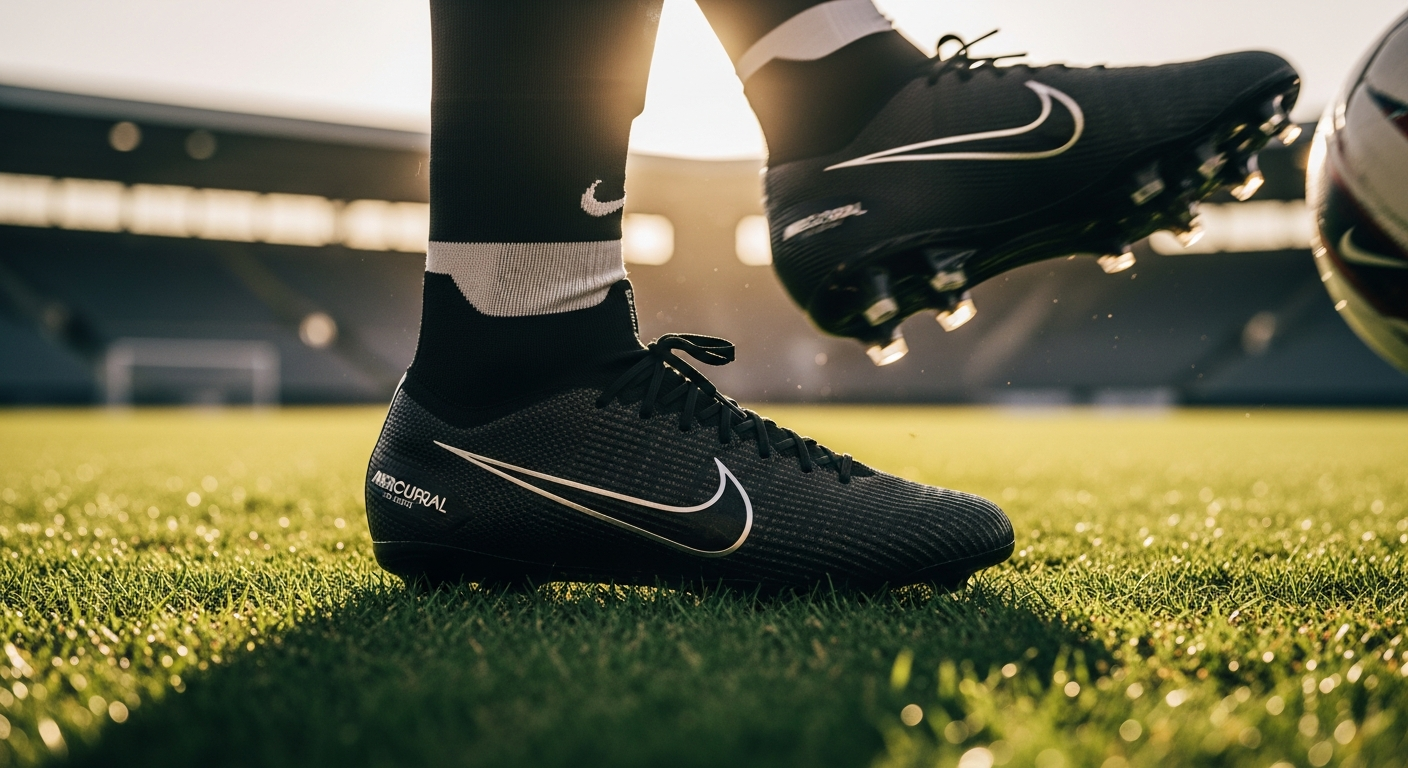

Cristiano Ronaldo has scored over 890 career goals, and Erling Haaland continues to shatter records with his lightning-quick acceleration. What do these elite strikers have in common? They’ve both trusted the Nike Mercurial Vapor 16 Elite FG to deliver the explosive speed and precision touch that separates champions from the rest.
Speed isn’t just an advantage in modern football—it’s become the defining characteristic of attacking dominance. The Mercurial line has been Nike’s answer to speed-obsessed footballers for decades, constantly evolving to meet the demands of the world’s fastest players. The Vapor 16 Elite FG represents the pinnacle of this evolution, combining three revolutionary upper materials—Flyknit, Atomknit, and Gripknit—with a full-length Air Zoom unit designed specifically for elite athletes.
Discover the Nike Mercurial Vapor 16 Elite FG and transform your attacking play today.
This isn’t a boot for everyone; it’s engineered for strikers, wingers, and attacking midfielders who live by their pace and precision. This guide breaks down exactly what makes these boots such a weapon for attacking players, from the sticky Gripknit touch that transforms dribbling into an art form to the aggressive stud pattern that powers explosive directional changes. You’ll also discover the critical fit considerations, surface compatibility, and whether the €139.99-$270 price tag delivers genuine value for your playing style.
The Gripknit Revolution: Mastering Ball Control at Elite Speeds
How Gripknit’s Sticky Upper Material Enhances First Touch and Dribbling Precision
The Gripknit upper material represents a significant leap forward in boot technology. This innovative fabric creates an exceptionally sticky surface that transforms how the ball responds to your touch. When you receive the ball with your first touch, the Gripknit grips it immediately, reducing bobble and giving you instant control. Dribbling becomes more responsive—each contact with the ball feels connected, allowing you to manipulate its movement with minimal adjustments.
The Role of Gripknit in Wet and Dry Conditions Maintaining Consistent Ball Contact
One of Gripknit’s standout advantages is its performance consistency across varying weather conditions. In dry conditions, the material’s naturally sticky texture provides exceptional grip. During wet matches, when traditional leather or synthetic surfaces become slippery, Gripknit maintains that crucial contact with the ball. This weather-resistant consistency means attacking players don’t need to adjust their technique based on pitch conditions—the boot adapts instead.
Comparison to Traditional Leather and Synthetic Uppers in Terms of Touch and Feedback
Traditional leather boots offer a softer feel but can lose grip when wet. Standard synthetic uppers provide durability but often deliver a more disconnected touch. Gripknit strikes a different balance—it’s engineered to be both responsive and sticky simultaneously. Players transitioning from conventional uppers often notice the immediate difference: ball control feels sharper, and the feedback loop between boot and ball becomes more direct.
Why the Gripknit Feel Might Not Suit Every Player’s Preference
The sticky nature of Gripknit isn’t universally beloved. Some players prefer a slicker upper that allows the ball to glide across the surface rather than stick to it. If your playing style relies on quick flicks, one-touch passes with a sliding motion, or a looser ball-to-foot relationship, Gripknit’s grip might feel restrictive. This material works best for players who prioritize controlled touches and precise manipulation over fluid, flowing movements.
Real-World Application: How Attacking Players Use Superior Touch to Create Separation From Defenders
In competitive matches, superior touch translates directly to tactical advantage. With Gripknit control, attacking players can receive the ball in tight spaces and execute a first-touch turn with minimal ball travel. This creates space between you and your marker, giving you the fractional second needed to accelerate or execute a penetrating pass. Professional strikers exploit this advantage constantly—receiving the ball with one touch, pivoting away from pressure, and creating a shooting or crossing opportunity.
Flyknit and Atomknit Integration: The Anatomy of a Featherweight Upper
Flyknit’s Sock-Like Fit and Breathability for Extended Match Performance
Flyknit technology wraps around your foot like a second skin. Unlike rigid boot structures, Flyknit adapts to your foot’s natural contours, creating a sensation of wearing a sock rather than a shoe. This sock-like quality serves multiple purposes: it provides a secure fit without pressure points, it’s inherently breathable, and it reduces overall weight. During a 90-minute match, this breathability becomes crucial—your foot stays cooler, reducing fatigue and maintaining comfort even during intense periods of play.
Atomknit’s Dual Role in Reducing Weight While Enhancing Structural Support
Atomknit functions as a complementary material to Flyknit, further reducing boot weight while providing structural reinforcement. Where Flyknit handles the flexible, adaptive aspects, Atomknit adds targeted support in areas requiring stability. This dual-material approach means the boot weighs significantly less than traditional constructions without sacrificing the support needed for explosive movements, rapid directional changes, and sustained sprinting.
The Thinnest Mercurial Upper Ever: What This Means for Ball-to-Foot Connection
By reducing material thickness through innovative Flyknit and Atomknit layering, Nike has brought players closer to the ball than ever before in the Mercurial line. A thinner upper means less material between your foot and the ball, resulting in enhanced ball-to-foot connection. When you’re executing precision passes or controlling the ball at speed, this direct connection becomes measurable—you feel the ball’s movement more acutely and can make micro-adjustments with greater precision.
Material Layering Strategy and How It Contributes to Overall Boot Responsiveness
The layering of Flyknit, Atomknit, and Gripknit isn’t arbitrary. Each material sits in a strategic position to maximize responsiveness. Gripknit handles the outermost contact with the ball, Flyknit provides the flexible base layer, and Atomknit delivers internal support. This thoughtful construction allows forces to transfer efficiently from your foot through the boot materials to the ball, creating a responsive system that amplifies your input.
Durability Considerations With the Lightweight Material Combination
Lightweight doesn’t mean fragile. The Vapor 16 Elite FG’s materials are engineered for professional-level durability despite their reduced weight. However, the thin upper does mean these boots require care—they’re not designed for abuse. Proper maintenance, avoiding surfaces they’re not designed for (like artificial turf with FG studs), and storage in appropriate conditions will preserve their performance characteristics throughout a season.
Air Zoom Propulsion: The Engine Behind Explosive Acceleration
Full-Length Air Zoom Unit Tuning for Elite-Level Athletes
The full-length Air Zoom unit running the entire length of the sole represents a significant engineering commitment. Unlike boots that concentrate cushioning in the heel or midfoot, this design distributes responsive propulsion across your entire foot. For elite athletes, this means consistent energy return whether you’re pushing off from your heel during a sprint or accelerating from the midfoot during a quick lateral cut.
How Responsive Cushioning Translates to Explosive First Steps and Rapid Directional Changes
Air Zoom technology provides immediate responsiveness—the cushioning compresses and rebounds rapidly, propelling you forward with minimal delay. During the first step of a sprint, this responsive rebound is crucial. You plant your foot, the Air Zoom compresses, and the energy return accelerates your acceleration. For rapid directional changes, the same principle applies: the cushioning responds instantly to your foot’s movement, allowing quick cuts without energy loss.
Energy Return Technology: Maximizing Power Output During Acceleration and Deceleration
The physics of Air Zoom involves storing and returning energy. When you decelerate—cutting hard or making a sudden stop—the Air Zoom compresses, absorbing that impact. As you transition to acceleration in a new direction, that stored energy rebounds, adding extra power to your push-off. This energy efficiency means explosive movements cost you less effort, allowing you to maintain maximum intensity throughout a match.
Comparison to Standard Cushioning Systems in Competitor Speed Boots
Standard foam-based cushioning systems in competitor speed boots provide decent responsiveness but often feel more dense and less reactive. Air Zoom’s tuned air chamber provides superior rebound characteristics. If you’ve worn boots with traditional cushioning, the difference in acceleration clarity becomes apparent—your first step feels sharper, your directional changes feel quicker, and sustained sprinting feels less demanding.
The Relationship Between Air Zoom Performance and Quick-Cut Agility
Quick-cut agility depends on responsive underfoot feel. With Air Zoom propulsion, your foot transitions from one direction to another without the typical lag associated with traditional cushioning. This responsiveness is what separates elite speed boots from standard options—the difference isn’t subtle, and attacking players feel it immediately during match play.
FG Stud Configuration: Designed for Firm Ground Domination
Wave-Shaped Traction Pattern Combined With Chevron and Blade Studs
The stud configuration combines three design elements: a wave-shaped traction pattern, chevron studs, and blade studs. The wave pattern distributes pressure across the sole, preventing concentrated stress points. Chevron studs provide lateral stability during sideways movements, while blade studs offer aggressive grip for forward acceleration. Together, these elements create a comprehensive traction system optimized for firm natural grass.
Why the Aggressive Stud Design Excels on Firm Natural Grass Surfaces
Firm ground requires aggressive stud penetration to provide consistent grip. The Vapor 16 Elite FG’s studs are shaped and positioned to bite into firm turf effectively, creating a stable platform for explosive movements. The aggression of the stud design means you’ll never experience uncertainty during acceleration or cutting—the studs grip reliably, allowing you to focus entirely on execution rather than worrying about your footing.
Grip, Stability, and Traction During Explosive Movements and Sudden Stops
During explosive acceleration, aggressive studs prevent slipping, allowing maximum force transfer from your muscles to the ground. For sudden stops, the stud configuration resists the rotational forces generated when you decelerate hard, maintaining stability. This combination of aggressive grip during forward movement and lateral stability during directional changes creates a secure platform for all attacking movements.
All Conditions Control (ACC) Technology for Weather-Resistant Performance
ACC technology treats the upper surface to maintain consistency across wet and dry conditions. Even when rain makes the pitch slippery, the stud grip remains effective, and the treated upper maintains its performance characteristics. This weather resistance means the boots perform at their peak regardless of match conditions, ensuring consistent performance across varying climate scenarios.
Critical Limitation: Why FG Studs Aren’t Suitable for Artificial Turf Play
Artificial turf creates a critical incompatibility with FG studs. The aggressive, long studs designed for firm grass can catch on artificial turf fibers, creating discomfort or even twisting sensations that risk injury. Additionally, studs that penetrate artificial surfaces deeply can create excessive friction and heat. If your primary pitch is artificial turf, the Vapor 16 Elite FG isn’t the right choice—you’d need an AG (artificial ground) or SG (soft ground) variant instead.
The Narrow Fit Factor: Is This Boot Right for Your Foot Shape?
Understanding the Intentional Narrow Width Design Philosophy
Nike engineered the Vapor 16 Elite FG with a deliberately narrow width. This design choice prioritizes the locked-in feel that speed-focused players demand. A narrow fit prevents your foot from shifting inside the boot during quick movements, maintaining the direct connection between your foot and the ball. For players with naturally narrow feet or those who prefer a snug fit, this design delivers on its promise.
Break-In Period Expectations and How the Flyknit Upper Molds to the Foot
Out of the box, expect initial tightness. The Flyknit upper is engineered to be snug, but it gradually molds to your foot’s shape. After two or three training sessions, the upper begins adapting. After a full week of regular wear, most players report that the initial tightness has resolved, replaced by a comfortable, locked-in sensation. This break-in period is normal and expected—patience during this phase pays dividends once the boot settles.
Fit Comparison Across Different Foot Types (Narrow, Medium, Wide)
For players with narrow feet, the Vapor 16 Elite FG fits beautifully straight away. Players with medium-width feet typically experience manageable initial tightness that resolves during break-in. Players with wider feet face a genuine challenge—the narrow design may never feel entirely comfortable, and choosing a size up to accommodate width can create other fit issues like heel slipping. Wide-footed players should seriously consider alternative models.
Sizing Recommendations and Potential Solutions for Players With Wider Feet
Standard guidance: order your true size and expect initial snugness to resolve during break-in. If you have wider feet, consider ordering a half-size larger, though be aware this may create heel movement. An alternative is exploring Nike’s other speed boot models, which sometimes offer slightly wider options while maintaining similar performance characteristics. Consulting with a specialized football boot retailer can help determine if the Vapor 16 Elite FG works for your foot shape.
The Locked-In Feel Advantage for Speed-Focused Players Versus Comfort-First Alternatives
The narrow fit delivers a locked-in sensation that speed-focused players absolutely love. Your foot feels secure and connected to the boot, creating confidence during explosive movements. This security comes at the cost of roominess compared to comfort-first boots. If you’re willing to sacrifice some cushioning and space for that locked-in feel and the performance advantages it provides, the Vapor 16 Elite FG excels. If comfort is your priority, other options might better suit your needs.
Professional Athlete Endorsement: The Ronaldo and Haaland Factor
Why Elite Strikers Gravitate Toward the Mercurial Vapor 16 Elite FG
Cristiano Ronaldo and Erling Haaland didn’t choose these boots arbitrarily. Both players built their careers on explosive speed and precision finishing, making them ideal matches for what the Vapor 16 Elite FG delivers. Ronaldo’s 890+ career goals came from creating space through pace and executing precise finishes. Haaland’s record-breaking goal tallies depend on explosive acceleration into dangerous spaces. Both players require boots that amplify their natural advantages—speed, agility, and control.
Performance Credentials Backed by Top-Level Professional Adoption
When world-class strikers choose a specific boot, it’s because that equipment objectively supports their playing style. These athletes have access to unlimited resources and can use any equipment they prefer. Their consistent choice of the Mercurial line reflects genuine performance benefits, not contractual obligations alone. This professional-level validation carries weight—these boots are literally trusted by players operating at the sport’s highest level.
The Psychological Advantage of Wearing Boots Trusted by World-Class Players
There’s measurable psychology in wearing the same boots as Ronaldo or Haaland. That knowledge influences your confidence, your willingness to take risks, and your belief in your boot’s capabilities. While psychology alone doesn’t improve your speed or ball control, it does affect how you utilize the boots’ features. Confidence translates to better execution, making the psychological advantage tangible.
How Professional Endorsement Influences Boot Development and Innovation Cycles
Professional players directly influence Nike’s development priorities. When elite strikers provide feedback on prototype boots, that feedback shapes the final product. Ronaldo’s input on responsive underfoot feel, Haaland’s requirements for explosive acceleration—these professional demands drive innovation. The Vapor 16 Elite FG exists, in part, because the world’s fastest strikers demanded boots that delivered exactly what this model provides.
Separating Marketing Hype From Genuine Performance Benefits
Professional endorsement creates marketing opportunity, but it also reflects genuine performance. The Vapor 16 Elite FG isn’t hyped beyond its capabilities—it delivers on its speed-focused promises through engineering. The endorsement amplifies awareness, but the performance credentials stand independent of marketing. Players choosing these boots should do so based on their fit, their playing style, and their pitch conditions, not simply because elite players wear them.
Experience the same elite performance that powers Ronaldo and Haaland—get your pair now.
Price-to-Performance Analysis: Is €139.99-$270 Worth the Investment?
Competitive Pricing Within the Elite Speed Boot Category
At €139.99 on Futbol Emotion FR and $260-$270 USD elsewhere, the Vapor 16 Elite FG sits at the premium end of the speed boot market. Comparable competitors like the Adidas Predator and Puma Future offer similar pricing. For an elite-level boot featuring cutting-edge materials (Flyknit, Atomknit, Gripknit) and Air Zoom technology, this price point is consistent with market standards for top-tier equipment.
Long-Term Value Assessment for Serious, Committed Footballers
For players training multiple times weekly and competing regularly, elite boots become investments in performance and injury prevention. The Vapor 16 Elite FG’s materials and technology directly support athletic performance. If a player wears these boots for an entire season of competitive play, the cost per match or per training hour becomes reasonable when measured against the performance gains and injury risk reduction that quality equipment provides.
Feature-to-Cost Ratio Compared to Mid-Tier and Budget Alternatives
Mid-tier boots (€60-€100) offer reasonable construction and acceptable performance but lack the material innovations and technology of elite models. Budget boots (under €60) sacrifice durability, performance, and comfort. The Vapor 16 Elite FG’s premium price directly reflects its advanced materials and engineering. The feature-to-cost ratio is favorable when compared to direct competitors, though it demands a serious commitment to speed-focused play to justify the premium.
When the Premium Price Tag Justifies the Investment (Playing Level, Frequency, Surface Access)
The investment makes sense for: attacking players competing at competitive club levels, players training multiple times weekly, and players with reliable access to firm natural grass pitches. The premium features directly support these use cases. For casual players, recreational leagues, or mixed-surface environments, mid-tier alternatives deliver better value. Honest assessment of your playing level, training frequency, and pitch access should determine whether this investment makes financial sense.
Cost Considerations for Casual Versus Competitive Players
Casual players might better invest €60-€100 in a mid-tier boot and spend the saved money on additional training or coaching. Competitive players, however, extract measurable value from elite equipment—the performance gains compound across a season, and the durability of premium materials means longer effective lifespan. For serious players, the €139.99-$270 investment delivers genuine value; for recreational players, it represents unnecessary expense.
Surface Compatibility and Playing Environment Considerations
Optimal Performance on Firm Natural Grass Pitches
The Vapor 16 Elite FG excels on firm, well-maintained natural grass pitches. The aggressive FG stud configuration digs into firm turf predictably, providing consistent grip and traction. If your home pitch is a quality natural grass surface, these boots will perform at their peak. The conditions where they excel—firm, dry-to-damp natural grass—represent the ideal scenario where you’ll experience all the benefits the design offers.
Why FG Studs Can Cause Discomfort or Get Caught on Artificial Surfaces
Artificial turf creates friction and unexpected resistance with long FG studs. The studs can catch on synthetic fibers, creating sudden resistance that can twist your ankle or cause unexpected stops. Additionally, artificial surfaces generate heat through friction with aggressive studs. If you play primarily on artificial turf, FG boots represent a compatibility mismatch—you’d need an AG (artificial ground) variant designed specifically for synthetic surfaces.
Guidance for Players With Mixed-Surface Playing Environments
Mixed-surface situations create genuine challenges. If you play half your matches on firm grass and half on artificial turf, the FG stud configuration becomes problematic. You’d need to decide: commit to the natural grass advantages and accept reduced performance on artificial surfaces, or choose a more versatile AG stud configuration that performs acceptably on both surfaces while not excelling on either. There’s no perfect solution—the choice depends on which surface represents your primary playing environment.
Alternative Mercurial Models for Different Pitch Conditions
Nike offers Mercurial models with different stud configurations. AG (artificial ground) versions feature shorter, more numerous studs optimized for artificial turf. SG (soft ground) variants provide long studs for waterlogged natural pitches. Before purchasing the Vapor 16 Elite FG, confirm your primary pitch condition—choosing the wrong stud configuration compromises performance and potentially increases injury risk.
Assessing Your Home Pitch Conditions Before Committing to Purchase
Spend time observing your primary pitch. Is it firm or soft? Natural grass or artificial? Well-maintained or worn? These observations directly determine whether FG studs are appropriate. If you have doubt about your pitch conditions, consult with teammates or your club’s groundskeeper. Making this assessment before purchase prevents the frustration and expense of buying boots incompatible with your playing environment.
Breaking In Your Mercurial Vapor 16 Elite FG: Practical Strategies
Initial Snugness and What to Expect During the First Few Sessions
Expect these boots to feel snug—even tight—during the first wearing. The Flyknit upper hasn’t yet adapted to your foot’s shape, and the narrow design is intentionally snug. This initial tightness is normal. Don’t immediately assume the fit is wrong or that you need a larger size. Instead, approach the break-in period with the expectation that the boots will gradually loosen and mold to your feet.
Gradual Molding Process and Timeline for Achieving Optimal Fit
The molding process begins immediately. After your first training session, you’ll notice slight improvement. By the second or third session, the upper becomes noticeably more comfortable. By the end of the first full week of regular wear, most players report that the initial tightness has largely resolved, replaced by a comfortable locked-in sensation. The complete molding process—achieving the boot’s intended feel—typically takes 10-14 days of regular use.
Techniques for Accelerating the Break-In Period Without Compromising Comfort
Wear the boots during training sessions first, not match play, to allow your feet to adapt without high-pressure situations. Gradually increase wearing time—don’t jump from zero to 90 minutes immediately. Some players use a heat gun on low setting to gently warm the upper, accelerating the molding process, though this requires caution to avoid damaging materials. Others wear slightly thicker socks during break-in to reduce initial pressure points.
Identifying When Fit Issues Are Normal Versus Requiring Size Adjustment
Normal break-in involves initial tightness that gradually improves. Problematic fit includes persistent pain in specific areas, heel slipping that doesn’t improve, or continued discomfort after 10-14 days of regular wear. If normal break-in tightness doesn’t resolve after two weeks, or if you experience sharp pain rather than gentle tightness, a size adjustment is warranted. Contact the retailer about exchange options before assuming fit failure.
Maintenance Tips for Preserving the Upper Materials and Gripknit Performance
After matches or training, clean the Gripknit upper with a soft brush and mild soap—avoid harsh chemicals that can degrade the material. Air dry naturally; avoid direct heat sources that can warp the Flyknit structure. Store boots in a cool, dry environment away from direct sunlight. The specialized materials require care, but proper maintenance ensures the boots maintain their performance characteristics throughout their lifespan.
The Verdict: Are These Boots Your Speed Advantage?
The Nike Mercurial Vapor 16 Elite FG isn’t a compromise boot—it’s a specialized weapon for attacking players who’ve committed to speed and precision as their primary competitive advantage. The Gripknit upper delivers that rare combination of sticky ball control and responsive touch, while the Air Zoom unit generates the explosive acceleration that separates elite strikers from the pack. The featherweight construction and thinnest upper in Mercurial history create a direct connection to the ball that speed-obsessed players crave.
Yes, the narrow fit demands careful sizing consideration, and yes, you absolutely need firm natural grass to unlock their full potential. If you’re playing primarily on artificial turf or have wider feet, alternative models deserve serious consideration. However, if you’re an attacking player with access to quality natural grass pitches, serious about improving your speed-based play, and willing to invest in premium equipment, these boots deliver measurable performance gains.
The endorsement from Ronaldo and Haaland isn’t marketing fluff—it’s evidence that Nike has engineered something genuinely special for speed-obsessed footballers. The €139.99-$270 price tag stings, but for committed players operating at competitive levels, it’s the cost of competitive advantage. Your next breakthrough moment on the pitch might just be powered by these boots.
Step into elite performance with the Nike Mercurial Vapor 16 Elite FG—your speed advantage awaits.