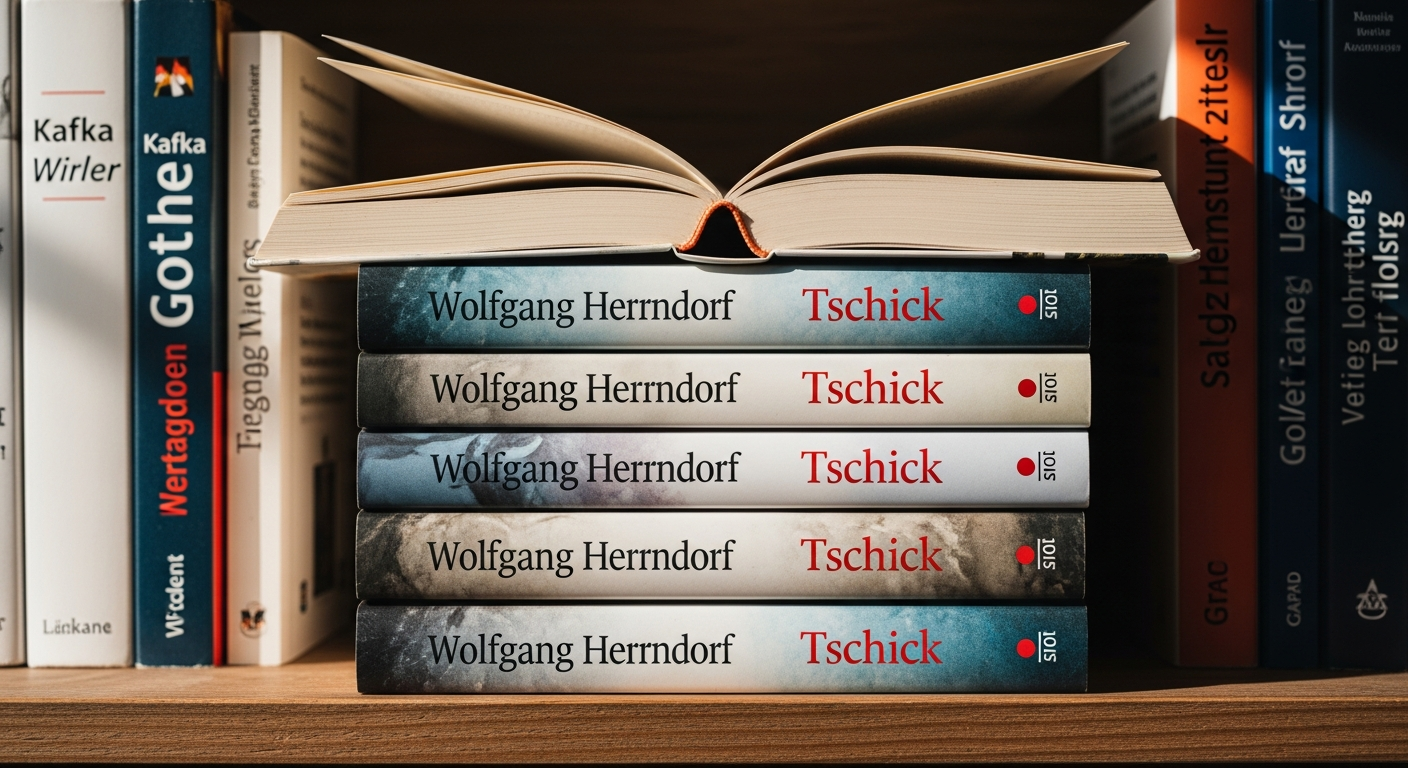

Used book sales have exploded in recent years, and one title keeps dominating the charts: Tschick by Wolfgang Herrndorf. This contemporary classic consistently ranks among the top purchases on Medimops.de, and the reason is compelling—affordability meets literary excellence. The combination of a gripping story and rock-bottom prices makes it irresistible for budget-savvy readers across Germany.
Originally published in 2010, Tschick has become more than just a young adult novel; it’s a cultural phenomenon. The book’s critical acclaim, film adaptation, and presence in school curricula have cemented its status as essential reading. Yet here’s what fascinates me: the used book market has made this award-winning novel accessible to an entirely new audience who might otherwise skip it due to cost.
Discover affordable copies of Tschick on Medimops today.
The Economics of Used Books: Why Tschick Costs Less Than Your Coffee
New copies of Tschick typically retail for €15-€18, while used editions on Medimops rarely exceed €10. Most quality-checked secondhand copies fall between €2-€8, depending on condition. This price differential represents real savings for readers—you’re looking at 50-80% off the original purchase price without sacrificing quality.
Price comparison between new and used editions on Medimops
A brand-new hardcover or crisp paperback demands a premium. On Medimops, the same novel arrives at your door significantly cheaper because it’s completed one reading cycle. The platform’s pricing model rewards both sellers and buyers: customers access literature at fraction-of-retail cost, and previous owners recover some of their initial investment.
How used book pricing works on secondhand platforms
Sellers list books at competitive prices based on condition, market demand, and shipping costs. Medimops aggregates these listings, allowing customers to choose from multiple copies at various price points. The platform’s quality-checking process justifies the pricing structure—you’re not gambling on mystery condition.
Savings potential for bulk purchases or classroom orders
Teachers outfitting classroom libraries discover substantial savings through bulk ordering. A teacher purchasing 30 copies at €5 each invests €150 versus €450-€540 for new editions. Schools with limited budgets suddenly have the financial flexibility to assign contemporary literature rather than falling back on aging classics.
Value proposition for students and young readers with limited budgets
Teenagers receiving pocket money or students working part-time jobs face genuine financial constraints. A €5 used copy becomes feasible; a €17 new copy doesn’t. This economic accessibility explains why Tschick dominates Medimops bestseller lists—it’s literature that won’t strain young readers’ wallets.
Understanding the Road Trip Narrative That Captivates Multiple Age Groups
The story centers on Maik Klingenberg, a shy 14-year-old from a wealthy but dysfunctional family, and Andrej “Tschick” Tschichatschow, an eccentric Russian immigrant classmate. Their unplanned summer journey through Eastern Germany in a stolen Lada becomes far more than a plot device—it’s a canvas for exploring identity, belonging, and freedom.
The dual-protagonist structure and why it resonates
Maik and Tschick function as emotional mirrors. Maik represents the isolated insider, wealthy but emotionally abandoned; Tschick embodies the outsider, materially disadvantaged but spiritually free. This dynamic creates tension that propels readers through the narrative. Their friendship develops authentically, never falling into predictable beats.
Coming-of-age themes that appeal beyond the young adult category
Adults reading Tschick recognize themselves in the teenagers’ confusion about identity and purpose. The novel doesn’t condescend to its young protagonists or offer easy answers. Instead, it captures the genuine disorientation of adolescence—the feeling that the world operates by rules you don’t understand and didn’t consent to follow.
Humor, authenticity, and emotional depth in the storytelling
Wolfgang Herrndorf writes teenage voices with remarkable authenticity. The humor emerges naturally from situations rather than forced wisecracks. Chapters balance comedic misadventures with moments of genuine vulnerability, creating rhythms that mirror actual adolescent experience.
How the Eastern Germany setting adds cultural and geographical intrigue
The Lada is quintessentially Eastern European, and the journey through Brandenburg and beyond carries specific cultural weight for German readers. The setting grounds the story in place while suggesting themes about division, connection, and the arbitrary nature of borders.
The stolen Lada as a symbol of freedom and rebellion
The car represents more than transportation—it’s liberation made tangible. The act of stealing it signals Maik and Tschick’s rejection of the rules that govern their daily lives. Yet the Lada constantly threatens to break down, introducing friction that prevents the adventure from becoming pure fantasy.
Why adult readers find themselves equally invested in the teenage journey
Parents recognize their own children in these characters. Teachers see their students reflected on the page. Adults remember the specific ache of adolescence—the hunger for autonomy, the terror of meaninglessness, the tentative hope that friendship might be enough. These emotions don’t expire when you turn 25 or 40.
Explore Tschick’s timeless narrative on Medimops with used copies starting at just a few euros.
Quality Assurance on Medimops: What to Expect From Your Used Copy
Buying used books online carries inherent uncertainty. Medimops addresses this through systematic quality-checking. Every secondhand copy receives condition assessment before listing, giving buyers concrete information about what they’re purchasing.
Medimops’ quality-checking process for secondhand books
The platform employs trained staff who inspect books for structural integrity, page condition, and damage. A book with loose binding, water damage, or extensively marked pages won’t be listed as “very good” condition. This process creates accountability that distinguishes Medimops from casual peer-to-peer sales.
Condition ratings and what they mean for readability
Medimops uses standardized condition descriptors. “Very good” means minimal wear, perhaps slightly creased dust jacket. “Good” indicates some age-appropriate wear but fully readable pages. “Acceptable” suggests visible wear but no impact on readability. Understanding these categories helps you make informed purchasing decisions.
Paperback durability and typical page counts
Tschick typically arrives as a 250-300 page paperback. Paperbacks inherently show wear differently than hardcovers—spine creasing and cover edge wear appear earlier. However, paperbacks remain durable enough for multiple reading cycles. The pages themselves rarely deteriorate significantly unless exposed to moisture or rough handling.
Potential wear-and-tear factors and acceptable imperfections
A slightly bent corner or creased spine doesn’t affect readability. Faded cover art or minor scuffs represent cosmetic imperfection rather than functional damage. What matters is whether pages remain legible and binding holds securely. Medimops’ quality standards accept these minor imperfections while flagging actual damage.
How to assess condition descriptions before purchasing
Read seller notes carefully. If a listing mentions water damage, creased pages, or broken binding, consider whether that affects your reading experience. Many readers don’t mind cosmetic imperfections on books they plan to actually read rather than display. Your tolerance for wear shapes which condition level offers best value.
Comparison of quality standards between Medimops and other used book platforms
Medimops’ centralized quality control exceeds many peer-to-peer platforms where individual sellers determine condition ratings. While other marketplaces exist, Medimops’ standardization and seller accountability create confidence that justifies its position as Germany’s leading used book platform.
From Classroom Staple to Sustainable Reading Choice
Tschick occupies a unique position in German education. It’s not an ancient canonical text assigned by tradition, but a contemporary novel that speaks directly to current adolescents’ experiences. Schools recognize this relevance, making it a curriculum fixture.
Tschick’s integration into German school curricula
Teachers throughout Germany assign Tschick in middle and high school classrooms. The novel’s accessible language makes it manageable for students still developing reading comprehension, while its thematic depth satisfies educators seeking literary substance. School adoption drives consistent demand.
Why educators recommend the used book market for required reading
Educational budgets face constant pressure. Assigning a required text available affordably on Medimops costs dramatically less than distributing new copies. A teacher can assign Tschick to 30 students for approximately €150 in used copies rather than €450+ for new editions. This economic reality drives institutional adoption of used book platforms.
Sustainable consumption through secondhand literature
Every used book purchased extends that object’s lifecycle. The resources invested in manufacturing, printing, and shipping occur only once; subsequent readers benefit from that environmental investment without requiring additional production. Choosing used books represents conscious environmental participation.
Reducing carbon footprint by extending book lifecycles
Paper manufacturing consumes resources and energy. Distribution networks generate transportation emissions. By reading books second, third, or fourth-hand, you amortize these environmental costs across multiple readers. A book read by five people through secondhand markets has one-fifth the per-reader environmental impact of five separate new purchases.
Supporting the circular economy through platforms like Medimops
Medimops functions as circular economy infrastructure. Books circulate rather than accumulating in landfills. Money flows between individuals in a decentralized network rather than concentrating with large publishers. This economic model proves more sustainable than traditional retail systems.
Environmental benefits of buying used versus new publications
The environmental calculus favors used books decisively. Manufacturing new paper, printing ink, glue, and binding materials all carry environmental costs. Transportation for new books through multiple distribution channels multiplies emissions. Used books skip these production stages entirely while delivering identical reading experiences.
The Film Adaptation Effect: How 2016’s Tschick Movie Boosted Book Sales
In 2016, director Fatih Akin adapted Tschick for cinema. This film brought the novel to broader cultural attention, introducing the story to audiences who might never encounter it as literature.
Release of the film adaptation and its cultural impact
The film arrived as a major German production with significant marketing. It performed respectably at the box office and garnered positive critical reception. For many viewers, the movie represented their first encounter with Maik and Tschick’s story, often triggering curiosity about the source material.
Increased demand for the source material post-2016
Book sales typically spike following film releases. Audiences who enjoyed the movie often seek the novel to experience the complete narrative and deeper characterization. Publishers reported sustained interest in Tschick following the film’s theatrical run.
How visual storytelling drives readers back to the original novel
Film necessarily compresses narrative and accelerates pacing. The 2016 Tschick movie captures the adventure’s emotional arc but omits the interiority that makes the novel powerful. Viewers recognizing this gap seek the book to access Maik’s internal monologue and the psychological dimensions the film couldn’t fully explore.
Comparing the book experience versus the cinematic interpretation
The novel’s strength lies precisely in its narrative voice—readers experience events filtered through Maik’s teenage consciousness. The film translates this visually, but written narrative offers unique intimacy. Readers of both versions often note that the book provides richer psychological insight into character motivation and emotional complexity.
Why readers seek the book after watching the film
Post-film readers arrive with visual reference points. They’ve seen the Lada, watched the landscape roll past, observed the actors’ performances. Rather than distracting from reading, this foundation accelerates engagement. Readers jump immediately into the narrative rather than spending mental energy constructing settings and appearances.
The lasting influence of adaptations on used book market trends
Film adaptations create durable demand spikes. Years after theatrical release, viewers discovering films on streaming platforms still seek source materials. This explains why Tschick maintains bestseller status on Medimops—the 2016 adaptation continues introducing new readers to the novel.
Themes That Transcend Age: Alienation, Identity, and First Love
Tschick explores emotional territory that resonates across demographics. The novel examines belonging, self-discovery, and connection with remarkable honesty.
Social class commentary and wealth critique in the narrative
Maik’s wealthy family—his parents living separately, his father in pharmaceutical sales, his mother in Berlin with a younger partner—represents privilege that doesn’t translate to emotional security. Money hasn’t protected Maik from isolation and confusion. Tschick’s working-class background and immigrant status position him as outsider, yet he possesses authenticity and freedom that wealth cannot purchase. The novel subtly critiques how material advantage becomes emotional disadvantage.
Alienation and belonging as central emotional threads
Both protagonists experience profound alienation. Maik feels disconnected from peers, teachers, and family. Tschick, the new kid from a different country, inhabits outsider status literally and socially. Their friendship emerges from shared alienation—recognizing in each other someone equally unmoored from conventional belonging. The narrative suggests that alienation, properly understood, creates possibility rather than only suffering.
First love subplot and its authentic teenage portrayal
Maik develops feelings for Tatjana, a classmate. The novel doesn’t treat this as central plot, but as genuine teenage experience—overwhelming, poorly-timed, ultimately unresolved. Herrndorf captures the specific torture of adolescent crushes: the certainty of feeling combined with inability to act. Readers recognize their own teenage selves in Maik’s internal turmoil.
Identity formation through friendship and adventure
Maik and Tschick discover who they are partly through escaping contexts that define them. The road trip becomes identity laboratory. Away from school, family, and familiar geography, they experiment with different versions of themselves. The novel suggests that identity isn’t discovered as fixed essence but constructed through experience and relationship.
How these universal themes explain the book’s broad appeal
Parents see their children’s struggles toward identity. Teachers recognize adolescent alienation from their classroom perspectives. Adults remember their own teenage confusion. These themes persist across time because they’re fundamental to growing up. Tschick doesn’t solve these dilemmas—it validates them as real and important.
Relevance to contemporary readers facing similar existential questions
Current teenagers navigate identity formation amid social media, educational pressure, and economic uncertainty. While Tschick was published in 2010, the core emotional experiences remain relevant. Adolescents still confront questions about belonging, still feel alienated, still discover themselves through friendship. The novel’s specificity to 2010 Germany becomes almost irrelevant given the universal emotional accuracy.
Why Tschick Won the German Youth Literature Award
Literary prizes matter. They signal quality to readers, justify educational purchases, and validate authors’ artistic achievement. Tschick’s award recognition explains much of its sustained prominence.
The German Youth Literature Award’s prestige and selection criteria
The German Youth Literature Award represents the German literature establishment’s assessment that a book merits recognition. Selection panels consider literary merit, thematic significance, age-appropriateness, and cultural relevance. Tschick’s award represents institutional validation that the novel achieves serious literary artistry while remaining accessible to young readers.
Critical recognition and its effect on long-term book sales
Awards create halo effects that extend far beyond the year of recognition. Teachers more readily assign award-winning books. Parents feel confident purchasing them as gifts. Librarians shelve them prominently. Years later, the award continues influencing purchasing decisions. Tschick’s accolade has sustained commercial viability for well over a decade.
Literary merit versus commercial success in young adult fiction
Young adult fiction often faces dismissive criticism from literary establishments that privilege adult literature. Awards validate that young adult novels can achieve artistic sophistication. Tschick’s recognition affirms that Herrndorf created literature worthy of serious attention, not mere commercial fiction for adolescents.
How awards influence purchasing decisions on secondhand platforms
When you browse Medimops, seeing that a book won the German Youth Literature Award provides confidence. You know the novel received expert evaluation and emerged deemed excellent. This validation justifies the purchase decision, particularly for budget-conscious readers choosing between multiple titles.
The book’s status as a contemporary classic in German literature
Tschick occupies an unusual position: a very recent novel (by literary standards) already recognized as classic. It’s not historical artifact but living literature, still read when published, still teaching current students. This contemporary-classic status creates sustained demand across educational and recreational reading markets.
Validation that used copies represent quality literature worth reading
A €5 used copy of an award-winning novel represents exceptional value. The award validates that you’re purchasing genuine literature, not disposable entertainment. This knowledge transforms the used copy from budget substitute into conscious choice supporting both your reading goals and environmental values.
Building Your Reading Collection Without Breaking the Bank
For readers committed to building substantial personal libraries, the economics of used books become transformative. Strategic purchasing through Medimops allows accumulating quality literature at sustainable cost.
Strategic purchasing of multiple titles through Medimops
Medimops offers shipping discounts for bulk orders. Purchasing multiple books in single transaction reduces per-book shipping cost. Savvy readers consolidate purchases, ordering several titles simultaneously rather than individual transactions. Tschick often functions as anchor purchase in such orders—a reliable, affordable title that pairs well with other young adult fiction or contemporary literature.
Creating a young adult fiction collection affordably
Young adult literature encompasses diverse genres and themes. Building a collection representing various authors, styles, and perspectives traditionally required substantial investment. Used book platforms democratize this access. A reader might now assemble a collection of 20-30 quality young adult novels for the cost of five new copies.
Gifting used copies as thoughtful, budget-friendly presents
Tschick makes excellent gift for teenage readers, book clubs, or anyone discovering young adult literature. Purchasing used copies allows giving multiple copies without guilt about cost. A parent might gift the book to their teenager and their teenager’s friend; a teacher might gift individual copies to standout students. Used copies make generous gifting economically feasible.
Building classroom libraries with limited educational budgets
Teachers with modest budgets for classroom libraries face constant resource scarcity. Used book platforms transform this equation. Money spent on used copies extends vastly further than new book budgets, allowing teachers to create substantive libraries rather than acquiring token volumes.
Stacking purchases to maximize shipping value
Medimops shipping economics reward bulk purchasing. A reader ordering single €5 book might pay €3-€4 shipping, reducing value. That same reader ordering five books might pay €4-€5 shipping, distributing cost across multiple items. Strategic purchasing recognizes these economic incentives.
Long-term investment in quality literature through secondhand buying
Viewing used books as long-term investment reframes the purchasing decision. Books retain value and remain readable indefinitely. A €5 investment in Tschick creates lasting possession—a book you read, potentially reread, gift to friends, and eventually pass to the next generation. This longevity transforms used books from temporary consumption into genuine investment.
The Lasting Appeal: Why Tschick Remains a Medimops Bestseller
When you strip away the hype, Tschick endures because it genuinely moves readers—teenagers discovering themselves, adults remembering what that felt like, and everyone in between craving an authentic story about friendship and freedom. The used book market on Medimops has democratized access to this award-winning novel, transforming it from a luxury purchase into an affordable staple.
The book maintains its position as a bestseller precisely because it combines literary excellence with economic accessibility. The quality-checked used copies you’ll find on Medimops deliver the same powerful reading experience as new editions, minus the unnecessary expense. Whether you’re a teacher outfitting a classroom, a student building your collection, or an adult reader rediscovering young adult fiction, Tschick on Medimops represents the perfect intersection of value, sustainability, and storytelling.
The 2016 film adaptation introduced countless readers to the story, and the film continues drawing new audiences to the source material. The award recognition validates that you’re purchasing genuine literature, not disposable entertainment. The themes—alienation, identity, first love, and the search for belonging—remain perpetually relevant. Meanwhile, the novel’s accessibility on secondhand platforms removes financial barriers that might otherwise prevent readers from discovering it.
Building a reading collection no longer requires choosing between breadth and budget. Tschick exemplifies how used book platforms enable both. Strategic purchasing on Medimops allows accumulating quality literature while supporting sustainable consumption practices. Every secondhand copy purchased extends book lifecycles, reducing environmental impact while preserving the economic accessibility that democratizes literature.